Why laser cutting services still miss tight-tolerance parts
Even with advanced laser cutting services, tight-tolerance parts still fail when material behavior, fixture strategy, and downstream processes are underestimated. For buyers comparing custom sheet metal fabrication, micro machining, cnc turning centers, additive manufacturing services, and industrial 3d printing, understanding where precision breaks down is critical to cost, quality, and delivery performance.
Why do tight-tolerance parts still miss spec after laser cutting?
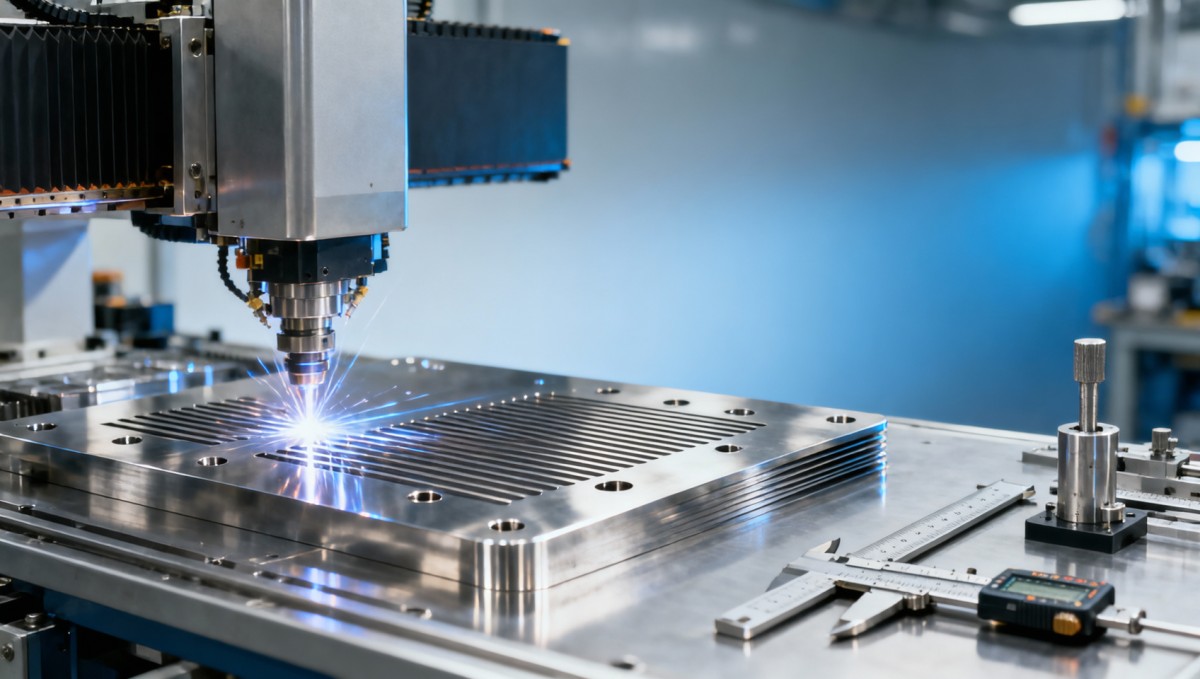
In procurement reviews, laser cutting services are often treated as a mature, low-risk process. That assumption works for general brackets, covers, and structural parts, but it breaks down when drawings call for flatness control, narrow slot widths, micro features, or positional tolerances in the ±0.05 mm to ±0.20 mm range. At that point, the process is no longer just about cutting speed. It becomes a system question involving material condition, machine stability, nesting strategy, thermal input, and downstream handling.
This is why experienced technical evaluators often see an unexpected pattern: the CAD file looks correct, the laser machine is modern, the supplier confirms capability, yet the delivered parts still drift out of tolerance. In many cases, the cut edge is acceptable, but the final geometry changes after stress release, unloading, deburring, forming, welding, coating, or even during packaging. Tight-tolerance performance is therefore not a single-machine promise. It is a controlled chain of 4 to 6 production stages.
For operators and project managers, the practical issue is repeatability. A supplier may produce 5 sample parts that look fine, then lose consistency across 200, 2,000, or 20,000 pieces. Repeatability becomes harder when stainless steel, aluminum, galvanized sheet, copper alloys, or high-strength steel respond differently to heat and clamping. Material thickness bands such as 0.5 mm to 3 mm and 3 mm to 10 mm can behave like entirely different process families.
For enterprise decision-makers and finance approvers, the hidden risk is cost leakage. A part that misses tolerance may trigger rework, delayed assembly, scrap, expedited freight, added inspection hours, and supplier dispute management. What looked like a competitive unit price can become expensive after just 1 failed pilot batch or 1 delayed launch window. This is exactly the kind of cross-functional supply risk that requires deeper market intelligence instead of price-only sourcing.
Where precision usually breaks down
- Material variability: sheet stock from different mills or lots may vary in residual stress, hardness, coating condition, or flatness, even when nominal thickness appears identical.
- Heat input management: thin sections, small holes, and tight internal corners can distort when process parameters favor throughput over dimensional stability.
- Fixture and support planning: unsupported areas may shift during cutting, especially in larger blanks, skeletal nests, or parts with asymmetric geometry.
- Downstream operations: bending, tapping, welding, and surface finishing can stack tolerances beyond what the laser stage alone can absorb.
What a buyer should ask before approving a supplier
A strong supplier discussion should move beyond “Can you cut this drawing?” and into process evidence. Ask how tolerance is maintained across first article, pilot, and mass production. Ask what thickness range is routinely controlled, how kerf compensation is validated, whether the supplier distinguishes between cut tolerance and final assembly tolerance, and which dimensions are inspected at incoming, in-process, and final stages. These questions reveal whether the vendor understands tight-tolerance manufacturing or only standard cutting output.
This is where a platform like TradeNexus Pro adds value for global sourcing teams. Instead of browsing broad supplier directories with shallow capability claims, buyers can align sourcing decisions with sector-specific process insight, supplier positioning, and technical evaluation logic across advanced manufacturing, smart electronics, healthcare technology, and supply chain digitization. That matters when a “tight tolerance” claim must be tested against actual production conditions, not sales language.
How laser cutting compares with other precision manufacturing routes
Many sourcing teams compare laser cutting services with custom sheet metal fabrication, micro machining, cnc turning centers, additive manufacturing services, and industrial 3d printing without separating shape creation from precision control. The right question is not which process is more advanced. The right question is which process holds the required geometry, surface condition, material behavior, and volume economics for the target part family over a realistic lead time of 7 to 20 working days.
Laser cutting is highly competitive for 2D sheet profiles, medium-volume runs, and parts that later move into bending or welding. It is less suitable when the core requirement depends on ultra-small internal features, turned cylindrical precision, deep 3D complexity, or very tight feature-to-feature tolerances that require machining reference surfaces. In those cases, micro machining, CNC turning, or hybrid manufacturing may reduce risk even if unit cost initially appears higher.
The comparison below helps procurement teams, quality managers, and technical reviewers distinguish process fit from marketing language. It is especially useful when RFQs bundle multiple technologies under one vendor and the buyer needs to know which process should own the critical dimensions.
The key takeaway is simple: laser cutting services remain excellent for speed, scalability, and cost-efficient profile generation, but not every precision problem is a cutting problem. Some are reference, fixturing, or post-process problems. If the drawing includes slots narrower than material thickness, multiple datum-sensitive features, or flatness requirements after coating, another route or hybrid workflow may be the safer procurement decision.
A practical comparison framework for cross-functional teams
Use these 4 filters before selecting a process
- Feature risk: Are the critical dimensions edge-based, hole-based, or surface-reference based?
- Material response: Does the chosen alloy deform easily under thermal or mechanical input?
- Volume and lead time: Is the job a 10-piece prototype, a 500-piece pilot, or a 10,000-piece rollout?
- Downstream integration: Will the part be bent, welded, sealed, coated, or assembled to mating components?
Which technical variables matter most in tight-tolerance laser cutting?
When quality teams review failed parts, they often find that the laser itself was only one variable. Material lot condition, sheet flatness, nozzle wear, assist gas stability, focus position, and nesting density all influence dimensional output. A shop that performs well on 1.0 mm mild steel may struggle on 2.0 mm stainless or reflective aluminum. That is why capability should be reviewed by material family, thickness band, and feature type rather than by a single generic statement.
Critical dimensions also behave differently. A long external profile may hold within print, while a small hole, internal radius, or feature near a corner fails due to local heat concentration. In practice, buyers should separate at least 3 categories during technical review: cut-edge dimensions, positional dimensions between features, and final-state dimensions after forming or finishing. A supplier who cannot separate these categories may be overestimating process capability.
Inspection method matters too. A caliper may be enough for general dimensions, but tighter features often require optical inspection, CMM verification, or functional gauges. If the acceptance plan is vague, disputes appear later. For quality control and safety managers, it is usually better to define 5 key characteristics up front than to inspect 50 dimensions inconsistently after delivery.
The table below summarizes technical factors that frequently decide whether a laser-cut part remains in tolerance through the full production cycle.
For technical assessors, this table is a practical pre-award checklist. It helps separate suppliers that understand tight-tolerance parts from those that merely own modern equipment. If a vendor cannot explain how these variables are managed across prototype, pilot, and serial production, the sourcing risk remains high regardless of machine brand or quoted lead time.
Common tolerance traps in real projects
- Assuming a flat blank will remain flat after aggressive deburring or powder coating.
- Treating prototype success over 3 to 10 parts as proof of stable volume production.
- Failing to specify whether tolerances apply before or after forming and assembly.
- Selecting the cheapest quote without checking process ownership of critical dimensions.
What should procurement, quality, and finance teams evaluate before placing an order?
A robust sourcing decision should balance technical feasibility, commercial terms, and delivery resilience. For procurement teams, the challenge is not only finding a supplier for laser cutting services, but identifying whether that supplier can support the complete tolerance chain with clear accountability. For quality teams, the focus is inspection and control. For finance, the focus is total cost exposure over the first 30, 60, and 90 days of supply performance.
In practical terms, buyers should evaluate at least 5 dimensions: process capability, material traceability, inspection discipline, change-control responsiveness, and recovery plan if a batch fails. These dimensions are more predictive than price alone. A vendor with a slightly higher piece price may reduce total landed risk if they shorten NCR closure time, support first article approval efficiently, and maintain stable lead times during material shortages.
This is particularly relevant in cross-border B2B supply chains where timing, communication, and technical alignment can affect launch schedules. TradeNexus Pro is positioned for this decision environment because its focus is not generic supplier listing. It supports a more strategic sourcing view across advanced manufacturing and supply chain shifts, helping buyers compare process logic, market context, and operational implications before procurement becomes a cost-of-failure problem.
A 6-point pre-order checklist
- Define 3 to 5 critical dimensions on the drawing and state whether they apply before or after secondary operations.
- Request material identification details, including thickness band, surface condition, and lot consistency expectations.
- Confirm the inspection method for each key characteristic, such as caliper, optical system, gauge, or CMM.
- Ask for pilot quantity planning, for example 10 to 50 parts before a full production release.
- Clarify lead time windows for sample approval, production, rework, and replacement shipments.
- Verify how engineering changes are managed if tolerance issues appear during trial assembly.
How finance teams should view cost risk
The lowest quote can become the highest-cost award when hidden quality losses are included. Re-inspection, line stoppage, premium shipping, emergency rework, and supplier replacement effort often appear outside the original PO value. For finance approvers, it is useful to compare total scenario cost across at least 3 cases: clean launch, moderate rework, and batch rejection. This approach creates a more realistic basis for vendor selection than unit price ranking alone.
Distributors, agents, and channel partners should use the same logic. If a reseller absorbs claims from end customers, tolerance instability can damage margin and account trust quickly. In many industrial categories, recovering from 1 failed rollout takes far longer than preventing it through a more disciplined supplier review.
FAQ: what do buyers and engineers ask most about tight-tolerance laser cutting services?
How should I define a tight-tolerance part in sheet metal sourcing?
In sourcing practice, a part becomes tight-tolerance when standard shop assumptions no longer protect function. That usually means dimensions in the low tenths of a millimeter, strict hole location, controlled flatness, or interfaces that must align with seals, fasteners, electronics, or mating assemblies. The more the part depends on fit, motion, or alignment after 2 to 4 downstream steps, the more carefully the tolerance chain must be reviewed.
Are laser cutting services suitable for high-precision production, or only prototypes?
They are suitable for many high-precision applications, but only when design rules, material behavior, and secondary operations are compatible with the process. Prototype success is useful, but it is not enough. Buyers should confirm whether the supplier can repeat the same control over 50, 500, or 5,000 parts, and whether inspection records remain stable across multiple lots. Stable production matters more than a single successful sample run.
What lead time should I expect for samples and production?
Lead time depends on material availability, drawing maturity, quantity, and whether secondary operations are included. In many commercial situations, samples may take around 3 to 7 working days after final drawing release, while production can range from 1 to 3 weeks. If the project includes forming, welding, coating, or special inspection, buyers should build additional review time instead of assuming that raw cutting speed defines delivery performance.
When should I switch from laser cutting to micro machining or another process?
Consider switching when the design includes extremely small holes, critical internal geometry, tight feature-to-feature relationships, or post-process flatness that laser cutting cannot hold economically. Also consider a switch when the part’s functional surfaces must be referenced from machined datums rather than cut edges. Hybrid planning is common: laser cutting for rough profile generation, followed by machining for critical features.
Why work with TradeNexus Pro when evaluating precision manufacturing options?
When procurement teams search for laser cutting services, custom sheet metal fabrication, additive manufacturing services, or industrial 3d printing, the real challenge is not information shortage. It is information quality. TradeNexus Pro helps decision-makers move from fragmented claims to structured market intelligence by focusing on the sectors shaping next-generation supply chains, including advanced manufacturing, smart electronics, green energy, healthcare technology, and supply chain SaaS.
That focus matters because tight-tolerance sourcing decisions are rarely isolated. They affect supplier qualification, product launch timing, compliance risk, quality cost, and channel performance. TNP supports a more informed decision path by connecting technical analysis with commercial context. For buyers, that means better visibility into process suitability. For project leaders, it means faster comparison across sourcing options. For executives, it means stronger confidence in where cost, risk, and supply resilience actually sit.
If you are evaluating whether laser cutting services can reliably support a tight-tolerance part, the next step should be specific. Bring the drawing, target material, annual volume, inspection expectation, and downstream process sequence into the conversation. That enables a meaningful review of tolerance feasibility, supplier fit, and potential alternative routes such as micro machining, cnc turning centers, or hybrid manufacturing.
What you can contact us about
- Parameter confirmation for sheet thickness, feature size, flatness expectations, and critical tolerance zones.
- Process selection between laser cutting services, custom sheet metal fabrication, micro machining, CNC turning, and additive manufacturing services.
- Lead time planning for sample builds, pilot runs, scale-up batches, and replacement scenarios.
- Evaluation of inspection methods, acceptance criteria, and practical quality checkpoints for supplier alignment.
- Commercial review support for quotation logic, risk comparison, and total-cost decision framing.
If your team is balancing tolerance risk, budget pressure, and delivery deadlines, contact TradeNexus Pro with your application details. A focused discussion around geometry, material, quantity, secondary operations, and acceptance criteria can help you identify whether the current laser cutting route is viable, whether a hybrid process is smarter, and what questions should be resolved before RFQ, sampling, or final supplier approval.
Get weekly intelligence in your inbox.
No noise. No sponsored content. Pure intelligence.
 Apr 19, 20262026 Dongguan Whole-House Customization List Released2026 Dongguan Whole-House Customization List Released
 Apr 19, 2026Global Shipping Alliances Launch Green Slot Priority for Asia-Europe RoutesGlobal Shipping Alliances Launch Green Slot Priority for Asia-Europe Routes
 Apr 19, 2026Vietnam Imposes AD Duties on Chinese Electronic ComponentsVietnam Imposes AD Duties on Chinese Electronic Components
 Apr 19, 2026Dongguan Victor Tops Local Full-Home Customization ListDongguan Victor Tops Local Full-Home Customization List
 Apr 19, 2026Guosheng Zhike Launches High-Precision Mold Machine Project in TaizhouGuosheng Zhike Launches High-Precision Mold Machine Project in Taizhou
 Apr 19, 2026CRRC Changchun Wins Jiaxing Urban Rail EMU ProjectCRRC Changchun Wins Jiaxing Urban Rail EMU Project
 Apr 19, 2026China Releases Green Design Guidelines 2026 for Industrial ProductsChina Releases Green Design Guidelines 2026 for Industrial Products
 Apr 19, 2026CATL Establishes $3B Era Resources Group for Global Mineral ControlCATL Establishes $3B Era Resources Group for Global Mineral Control
 Apr 19, 2026Shanghai Electric Gas Turbine Backlog Extends to 2028Shanghai Electric Gas Turbine Backlog Extends to 2028
 Apr 19, 2026Hormuz Strait Reopens, China Fertilizer Export Quota Easing ExpectedHormuz Strait Reopens, China Fertilizer Export Quota Easing Expected
 Apr 18, 2026TradeNexus Pro Launches Global Compliance RadarTradeNexus Pro Launches Global Compliance Radar
 Apr 18, 2026JIS T 2304:2026 Takes Effect June 1, 2026 for IVD SoftwareJIS T 2304:2026 Takes Effect June 1, 2026 for IVD Software
 Pathway for Rehab Devices with AI Modules") Apr 18, 2026FDA Updates 510(k) Pathway for Rehab Devices with AI ModulesFDA Updates 510(k) Pathway for Rehab Devices with AI Modules
Apr 18, 2026FDA Updates 510(k) Pathway for Rehab Devices with AI ModulesFDA Updates 510(k) Pathway for Rehab Devices with AI Modules Apr 18, 2026India BIS Approves 3 Chinese IoT Labs for IS 16444:2026 CertificationIndia BIS Approves 3 Chinese IoT Labs for IS 16444:2026 Certification
 Apr 18, 2026THE Alliance Launches Green Slot Priority for China PortsTHE Alliance Launches Green Slot Priority for China Ports
 Apr 18, 2026TÜV Rheinland Releases Dual-Standard ESS Certification Guide for ChinaTÜV Rheinland Releases Dual-Standard ESS Certification Guide for China
 Apr 18, 2026Vietnam Imposes AD Duties on Chinese Electronic ComponentsVietnam Imposes AD Duties on Chinese Electronic Components
 Apr 18, 2026SASO Launches PV Carbon Footprint Labeling from July 2026SASO Launches PV Carbon Footprint Labeling from July 2026
 Apr 18, 2026U.S. Adds 17 Smart Warehouse Robot Components to Export Control ListU.S. Adds 17 Smart Warehouse Robot Components to Export Control List
 Apr 18, 2026EU Enforces EN IEC 62443-4-2:2026 for Industrial Control Devices from 18 Apr 2026EU Enforces EN IEC 62443-4-2:2026 for Industrial Control Devices from 18 Apr 2026
 Apr 17, 2026Electronic Health Records Software: What Makes It Worth Switching?Electronic Health Records Software: What Makes It Worth Switching?
 Apr 17, 2026How to Avoid Common Smart Thermostat Installation MistakesHow to Avoid Common Smart Thermostat Installation Mistakes
 Apr 17, 2026Smart Thermostats: Which Features Actually Cut Energy Bills?Smart Thermostats: Which Features Actually Cut Energy Bills?
 Apr 17, 2026Are Portable Monitors Worth It for Field Work in 2026?Are Portable Monitors Worth It for Field Work in 2026?
 Apr 17, 2026Portable Monitors: What Should You Check Before Buying?Portable Monitors: What Should You Check Before Buying?
 Apr 17, 2026How to Compare Lithium Ion Battery Costs Without MistakesHow to Compare Lithium Ion Battery Costs Without Mistakes
 Apr 17, 2026Lithium Ion Batteries: Which Specs Matter Most in Use?Lithium Ion Batteries: Which Specs Matter Most in Use?