Industrial 3D printing materials that fail under heat cycling
In industrial 3d printing, materials that perform well at room temperature can crack, warp, or lose strength under repeated heat cycling. For buyers, engineers, and quality teams comparing additive manufacturing services with laser cutting services, custom sheet metal fabrication, micro machining, or cnc turning centers, understanding thermal failure is essential to safer design, lower lifecycle cost, and more reliable production decisions.
Why heat cycling breaks some industrial 3D printing materials
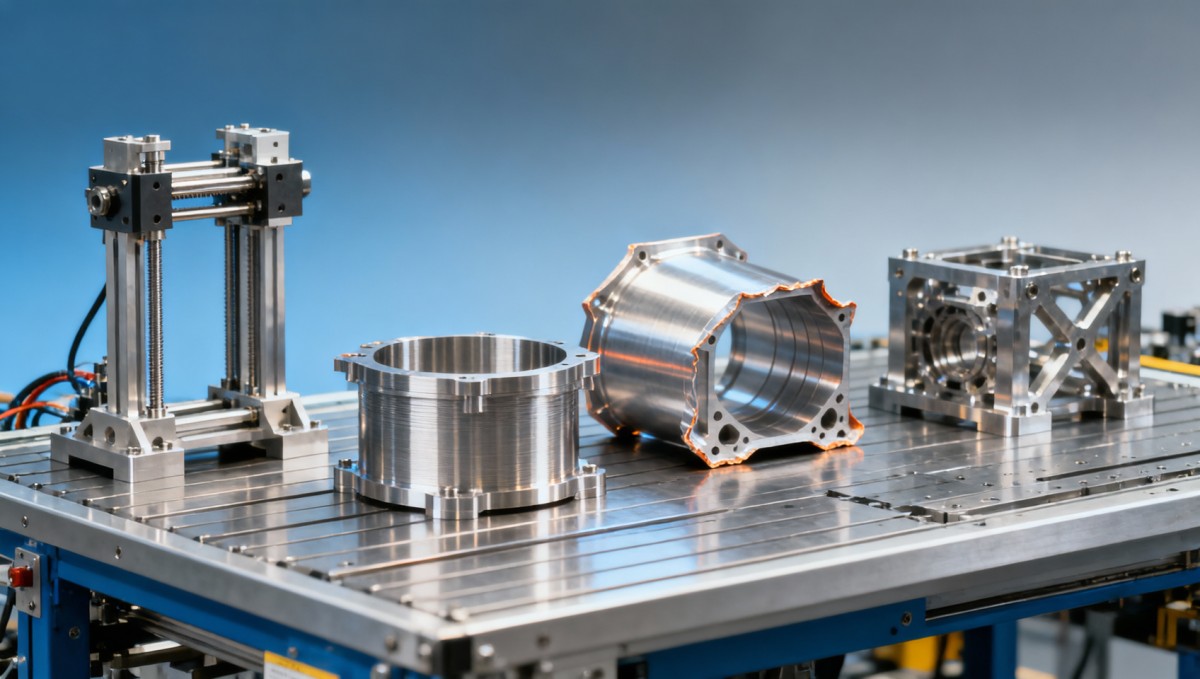
Heat cycling means a part is exposed to repeated temperature swings, such as from ambient conditions to 80°C, 120°C, or even 200°C, then cooled again. In industrial 3D printing, failure often starts because the material expands and contracts unevenly across layers, infill structures, or fiber-loaded zones. That mismatch creates internal stress long before a visible crack appears.
For operators and technical evaluators, the key issue is not simply peak temperature. A polymer that survives one short exposure at 120°C may still fail after 500 to 2,000 thermal cycles if it has weak interlayer adhesion, residual stress from printing, or poor dimensional stability. This is why thermal fatigue matters more than one-time heat resistance in production environments.
The risk becomes higher in sectors such as smart electronics, healthcare technology, and advanced manufacturing, where housings, fixtures, ducts, and jigs may sit near heaters, motors, sterilization equipment, or hot process lines. A part that drifts by even ±0.3 mm to ±0.8 mm after repeated heating can create assembly errors, leakage, or quality escapes.
This is also where procurement teams often make a costly comparison mistake. They compare unit price only, without comparing thermal duty cycle, replacement frequency, and downtime exposure over 6 to 12 months. TradeNexus Pro helps decision-makers frame the problem correctly by connecting material behavior, supply risk, and application fit rather than treating additive manufacturing as a generic low-volume option.
- Thermal expansion mismatch between layers, inserts, and adjacent assemblies can trigger warping.
- Repeated cycling accelerates microcracks, especially around corners, holes, and thin walls below 2–3 mm.
- Moisture absorption in some polymers amplifies failure when heat and humidity act together.
- Post-processing quality, annealing conditions, and build orientation can change performance significantly.
What failure looks like in real industrial use
Heat-cycled failure is not always dramatic. In many factories it starts as small changes: a printed bracket needs more force to fit, a fixture loses repeatability after 3 to 4 weeks, or a cover develops edge lift near fasteners. These are early signs that the selected 3D printing material is outside its reliable thermal envelope.
Quality and safety managers should treat discoloration, creeping deformation, layer edge whitening, and fastener loosening as inspection triggers. These symptoms may appear before a measurable loss in tensile strength is recorded, especially when parts are loaded intermittently rather than continuously.
Which materials are most likely to fail under repeated thermal stress?
Not all industrial 3D printing materials fail in the same way. Some soften, some shrink, some become brittle, and some keep strength but lose dimensional accuracy. For sourcing teams comparing additive parts against machined metal or custom sheet metal fabrication, the practical question is which material family carries the highest thermal cycling risk for the actual duty profile.
As a general rule, commodity thermoplastics and lower-grade resin systems are more vulnerable when exposed to repeated heating above their realistic service range. Fiber-filled materials can improve stiffness, but they can also introduce anisotropic movement if print settings, wall thickness, and load path are not aligned. The result is often hidden stress concentration instead of stable performance.
The table below summarizes common industrial material behaviors under heat cycling. It is not a substitute for part-specific validation, but it gives buyers and engineers a useful screening tool before moving into RFQ, prototyping, or pilot production.
A useful takeaway is that “high-temperature material” is not the same as “heat-cycling safe material.” Procurement teams should ask for actual use-case data: cycle range, dwell time, number of cycles, humidity level, and whether the part carries static or dynamic load. Without those 5 basic inputs, material selection remains incomplete.
Where metal alternatives outperform printed polymers
If the part faces constant thermal cycling, tight tolerance retention, and safety-critical load transfer, subtractive or formed metal options often become more economical over the lifecycle. Laser cutting services, cnc turning centers, micro machining, and custom sheet metal fabrication can reduce uncertainty when thermal expansion, fatigue life, and inspection traceability are central requirements.
That does not mean industrial 3D printing should be excluded. It means the material and process must match the thermal duty. TNP frequently sees the strongest outcomes when printed parts are used for flow guides, ergonomic aids, and low-force assemblies, while metal is reserved for wear points, heat sinks, and structurally constrained interfaces.
Three technical red flags before approving a printed part
- The supplier quotes only a maximum temperature but cannot discuss cycle count, soak time, or load condition.
- The part includes sharp transitions, thin ribs, or embedded hardware without thermal stress review.
- No plan exists for sample validation over 50, 100, or 500 cycles before release to production.
How to evaluate thermal reliability before purchase or production release
For project managers and financial approvers, the smartest way to reduce risk is to use a structured evaluation workflow instead of relying on brochure claims. In most industrial programs, 4 steps are enough to expose major failure risks: define the thermal profile, screen candidate materials, build pilot samples, and verify after cycling with dimensional and visual inspection.
The thermal profile should include at least 6 items: minimum temperature, maximum temperature, ramp rate if relevant, dwell time, number of cycles, and applied load during the cycle. Many failures happen because teams test at temperature but not under real clamp force, vibration, or chemical exposure. A part that looks stable on a bench may behave differently on a live line.
Below is a practical procurement and engineering checklist that works well when comparing industrial 3D printing materials against alternative manufacturing routes. It helps align design, quality, sourcing, and cost review in one framework instead of passing the part from team to team without a common decision basis.
When companies skip this screening, they often discover failure after installation, when replacement costs are highest. A disciplined 2–4 week validation window is usually less expensive than emergency redesign, expedited rework, or repeated supplier changeovers. For distributors and integrators, this also protects after-sales credibility with end users.
Recommended 4-step validation path
- Define the real operating profile, including temperature range, cycle frequency, load, and nearby chemicals or cleaning agents.
- Request material and process recommendations from at least 2 qualified suppliers, not just one printing bureau.
- Test pilot parts for fit, dimension, and visible damage after a planned cycle block such as 50–200 cycles.
- Compare printed and non-printed alternatives on full lifecycle cost, replacement frequency, and lead time resilience.
This approach supports both engineering confidence and financial clarity. It also creates a clearer basis for supplier negotiation, because quote discussions can include performance checkpoints instead of only unit price and delivery date.
Cost, alternatives, and when to switch away from additive manufacturing
Industrial 3D printing can be cost-effective for low-volume runs, rapid redesign, and complex geometries. However, once heat cycling drives high replacement rates, the visible piece price becomes misleading. A bracket replaced every 6 weeks may be more expensive over 12 months than a machined aluminum part with a higher initial quote but stable service life.
The comparison should include at least 4 cost layers: part price, downtime impact, inspection burden, and inventory strategy. Printed parts can still win if lead time is 3–7 days, geometry changes are frequent, and the thermal load is moderate. But if a component sits near heat sources every shift, custom sheet metal fabrication or cnc turning centers may reduce total risk.
For mixed assemblies, a hybrid strategy often works best. Teams may print low-stress guides and covers while moving brackets, threaded interfaces, and thermally exposed supports to metal. This reduces cost inflation while protecting the most failure-sensitive points. TNP readers often use this model when managing pilot lines, export equipment packages, and multi-site rollout programs.
Another overlooked factor is supply continuity. Specialized high-performance 3D printing materials can have longer replenishment cycles than standard aluminum or stainless stock. If your project requires 2-week restart capability after a design change, alternative processes may offer more predictable sourcing depending on region and vendor base.
Decision signals that justify a process change
- The part fails dimensional inspection after fewer than 100 thermal cycles.
- Replacement frequency exceeds one planned maintenance interval.
- The assembly includes threaded fasteners, seals, or load-bearing interfaces near repeated heat exposure.
- The business case depends on stable output and low operator intervention across multiple sites.
Common alternatives by application type
Laser cutting services are often suitable for flat brackets, covers, and guards. Custom sheet metal fabrication works well for enclosures and formed supports. Micro machining fits small, precise thermal interfaces. CNC turning centers are preferred for rotational parts, bushings, and threaded geometry. The right choice depends on thermal load, tolerance, quantity band, and maintenance logic rather than a single manufacturing trend.
In short, additive manufacturing remains valuable, but not every thermally exposed industrial part should stay printed. The best procurement outcomes come from comparing function, service environment, and failure cost in one model.
FAQ and practical guidance for buyers, engineers, and quality teams
The questions below reflect common search intent from research teams, plant users, technical evaluators, and project owners trying to reduce thermal failure risk in industrial 3D printing. They are also useful for distributors and sourcing managers preparing RFQs or supplier review packs.
How do I know whether a printed material is suitable for heat cycling?
Start with the real service profile, not the advertised material limit. Confirm the temperature band, number of cycles, dwell time, mechanical load, humidity, and any chemical cleaning process. If your application involves repeated cycling above roughly 60°C–100°C, ask for part-specific validation rather than relying on generic data sheets. Also check whether build orientation and post-processing were controlled.
Which printed parts are most vulnerable?
Thin-wall brackets, snap features, threaded zones, sealing surfaces, and parts with metal inserts are usually the first to fail. Geometry with sharp corners, uneven wall thickness, or cantilever loads is especially sensitive. If the function depends on stable alignment within ±0.2 mm to ±0.5 mm, thermal cycling should be treated as a critical qualification factor.
When should we choose metal fabrication instead of industrial 3D printing?
Choose metal earlier when the part is safety-related, carries structural load, sits near sustained heat, or must hold tolerance across hundreds or thousands of cycles. This is common in machine frames, thermal shields, fastening interfaces, and rotating assemblies. In those cases, laser cutting services, micro machining, cnc turning centers, or custom sheet metal fabrication often create a lower-risk total cost path.
What should procurement ask suppliers before approving samples?
At minimum, ask 5 questions: what is the recommended service temperature range, what cycle conditions were considered, what post-processing was applied, what dimensional drift should be expected, and what lead time applies for repeat builds or design revisions. These questions improve quote quality and reduce surprises during scale-up.
Why work with TradeNexus Pro when thermal material decisions affect cost and risk?
TradeNexus Pro supports global B2B teams that need more than surface-level supplier listings. When industrial 3D printing materials fail under heat cycling, the issue crosses functions: engineering, sourcing, quality, operations, and budget control. TNP helps decision-makers interpret these signals within broader manufacturing and supply chain realities, especially across advanced manufacturing, smart electronics, healthcare technology, green energy, and supply chain software ecosystems.
For readers comparing additive manufacturing with laser cutting services, custom sheet metal fabrication, micro machining, or cnc turning centers, TNP offers a stronger decision context. That includes practical evaluation logic, supplier-facing question frameworks, and clearer visibility into where process capability, lead time, and application risk intersect. This is especially useful when procurement teams must justify a process change to technical reviewers and finance stakeholders within one approval cycle.
If your team is assessing thermally exposed printed parts, you can use TNP as a strategic resource for parameter confirmation, process comparison, application screening, and sourcing direction. Typical consultation topics include 3 to 5 candidate material routes, prototype-versus-production decision points, expected lead-time windows such as 7–15 days or 2–4 weeks, and how to balance design flexibility against replacement risk.
Contact TradeNexus Pro if you need support with material selection, thermal risk review, alternative manufacturing pathways, supplier shortlisting, RFQ structuring, sample planning, delivery timeline discussion, or quote-stage technical clarification. A well-defined inquiry can save multiple revision cycles and help your team avoid approving parts that look viable in the lab but fail on the line.
Get weekly intelligence in your inbox.
No noise. No sponsored content. Pure intelligence.
 Apr 19, 20262026 Dongguan Whole-House Customization List Released2026 Dongguan Whole-House Customization List Released
 Apr 19, 2026Global Shipping Alliances Launch Green Slot Priority for Asia-Europe RoutesGlobal Shipping Alliances Launch Green Slot Priority for Asia-Europe Routes
 Apr 19, 2026Vietnam Imposes AD Duties on Chinese Electronic ComponentsVietnam Imposes AD Duties on Chinese Electronic Components
 Apr 19, 2026Dongguan Victor Tops Local Full-Home Customization ListDongguan Victor Tops Local Full-Home Customization List
 Apr 19, 2026Guosheng Zhike Launches High-Precision Mold Machine Project in TaizhouGuosheng Zhike Launches High-Precision Mold Machine Project in Taizhou
 Apr 19, 2026CRRC Changchun Wins Jiaxing Urban Rail EMU ProjectCRRC Changchun Wins Jiaxing Urban Rail EMU Project
 Apr 19, 2026China Releases Green Design Guidelines 2026 for Industrial ProductsChina Releases Green Design Guidelines 2026 for Industrial Products
 Apr 19, 2026CATL Establishes $3B Era Resources Group for Global Mineral ControlCATL Establishes $3B Era Resources Group for Global Mineral Control
 Apr 19, 2026Shanghai Electric Gas Turbine Backlog Extends to 2028Shanghai Electric Gas Turbine Backlog Extends to 2028
 Apr 19, 2026Hormuz Strait Reopens, China Fertilizer Export Quota Easing ExpectedHormuz Strait Reopens, China Fertilizer Export Quota Easing Expected
 Apr 18, 2026TradeNexus Pro Launches Global Compliance RadarTradeNexus Pro Launches Global Compliance Radar
 Apr 18, 2026JIS T 2304:2026 Takes Effect June 1, 2026 for IVD SoftwareJIS T 2304:2026 Takes Effect June 1, 2026 for IVD Software
 Pathway for Rehab Devices with AI Modules") Apr 18, 2026FDA Updates 510(k) Pathway for Rehab Devices with AI ModulesFDA Updates 510(k) Pathway for Rehab Devices with AI Modules
Apr 18, 2026FDA Updates 510(k) Pathway for Rehab Devices with AI ModulesFDA Updates 510(k) Pathway for Rehab Devices with AI Modules Apr 18, 2026India BIS Approves 3 Chinese IoT Labs for IS 16444:2026 CertificationIndia BIS Approves 3 Chinese IoT Labs for IS 16444:2026 Certification
 Apr 18, 2026THE Alliance Launches Green Slot Priority for China PortsTHE Alliance Launches Green Slot Priority for China Ports
 Apr 18, 2026TÜV Rheinland Releases Dual-Standard ESS Certification Guide for ChinaTÜV Rheinland Releases Dual-Standard ESS Certification Guide for China
 Apr 18, 2026Vietnam Imposes AD Duties on Chinese Electronic ComponentsVietnam Imposes AD Duties on Chinese Electronic Components
 Apr 18, 2026SASO Launches PV Carbon Footprint Labeling from July 2026SASO Launches PV Carbon Footprint Labeling from July 2026
 Apr 18, 2026U.S. Adds 17 Smart Warehouse Robot Components to Export Control ListU.S. Adds 17 Smart Warehouse Robot Components to Export Control List
 Apr 18, 2026EU Enforces EN IEC 62443-4-2:2026 for Industrial Control Devices from 18 Apr 2026EU Enforces EN IEC 62443-4-2:2026 for Industrial Control Devices from 18 Apr 2026
 Apr 17, 2026Electronic Health Records Software: What Makes It Worth Switching?Electronic Health Records Software: What Makes It Worth Switching?
 Apr 17, 2026How to Avoid Common Smart Thermostat Installation MistakesHow to Avoid Common Smart Thermostat Installation Mistakes
 Apr 17, 2026Smart Thermostats: Which Features Actually Cut Energy Bills?Smart Thermostats: Which Features Actually Cut Energy Bills?
 Apr 17, 2026Are Portable Monitors Worth It for Field Work in 2026?Are Portable Monitors Worth It for Field Work in 2026?
 Apr 17, 2026Portable Monitors: What Should You Check Before Buying?Portable Monitors: What Should You Check Before Buying?
 Apr 17, 2026How to Compare Lithium Ion Battery Costs Without MistakesHow to Compare Lithium Ion Battery Costs Without Mistakes
 Apr 17, 2026Lithium Ion Batteries: Which Specs Matter Most in Use?Lithium Ion Batteries: Which Specs Matter Most in Use?