Rapid prototyping isn’t always faster: When CNC machining beats 3D printing on lead time
In fast-paced sectors like advanced manufacturing, EV charging stations, solar panel integration, and smart electronics, rapid prototyping is often assumed to accelerate time-to-market—yet CNC machining frequently delivers shorter lead times for functional, high-tolerance parts. Whether you're evaluating mechanical keyboards, Bluetooth speakers, returnable transport packaging, or renewable energy hardware, understanding when traditional subtractive methods outperform additive ones is critical for procurement leaders, project managers, and technical evaluators. TradeNexus Pro cuts through the hype with data-backed insights—helping decision-makers balance speed, precision, cost, and compliance across healthcare tech, supply chain SaaS, and green energy innovation.
Why “Rapid” Prototyping Isn’t Always Rapid—A Lead-Time Reality Check
The term “rapid prototyping” carries strong psychological momentum—but it’s not synonymous with shortest lead time. In practice, 3D printing (additive manufacturing) introduces multiple non-machining delays: STL file validation, build orientation optimization, support structure design, post-processing scheduling (e.g., curing, heat treatment, bead blasting), and dimensional verification for functional use. These steps routinely add 5–12 business days to the timeline—even before part shipment.
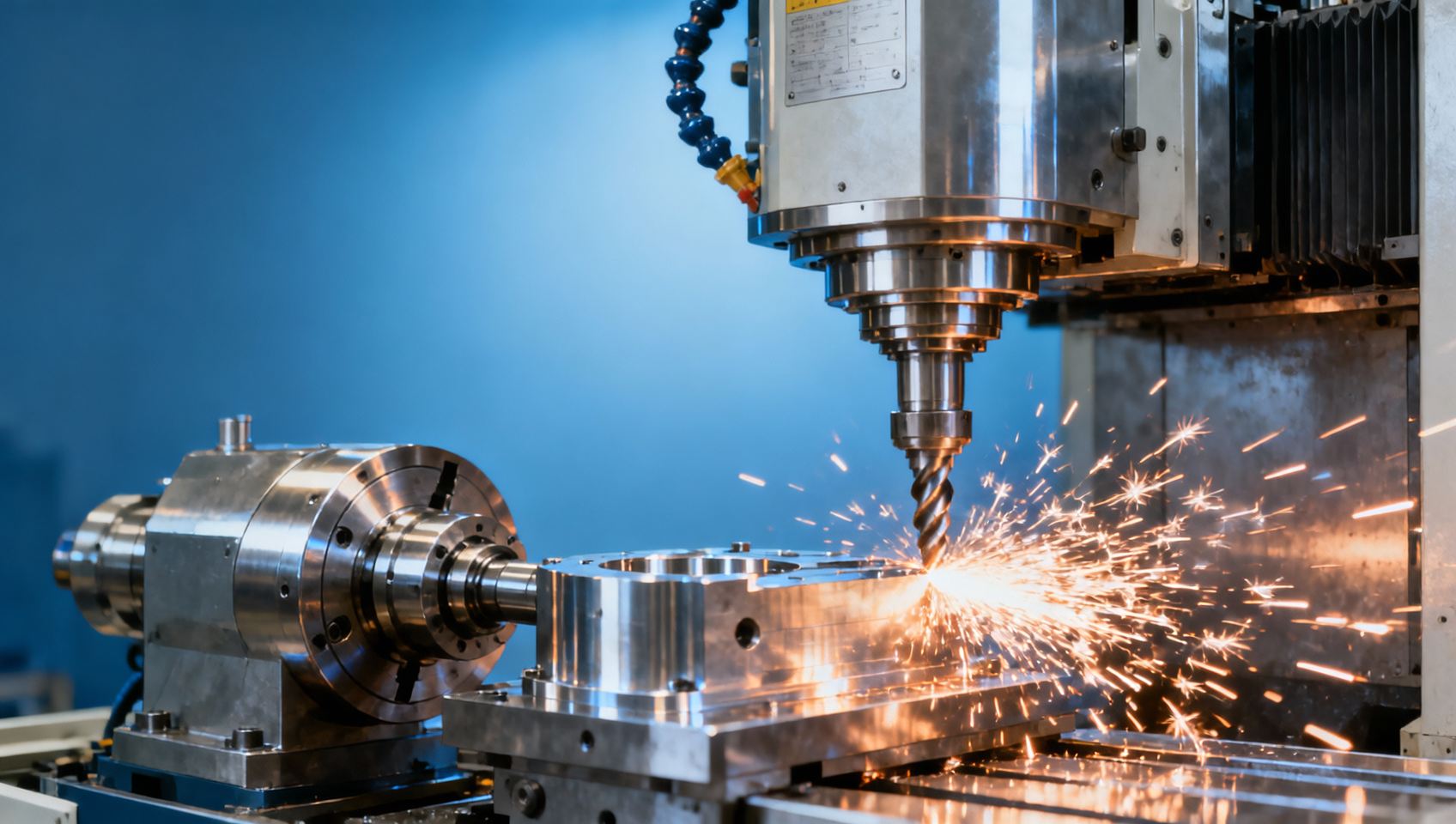
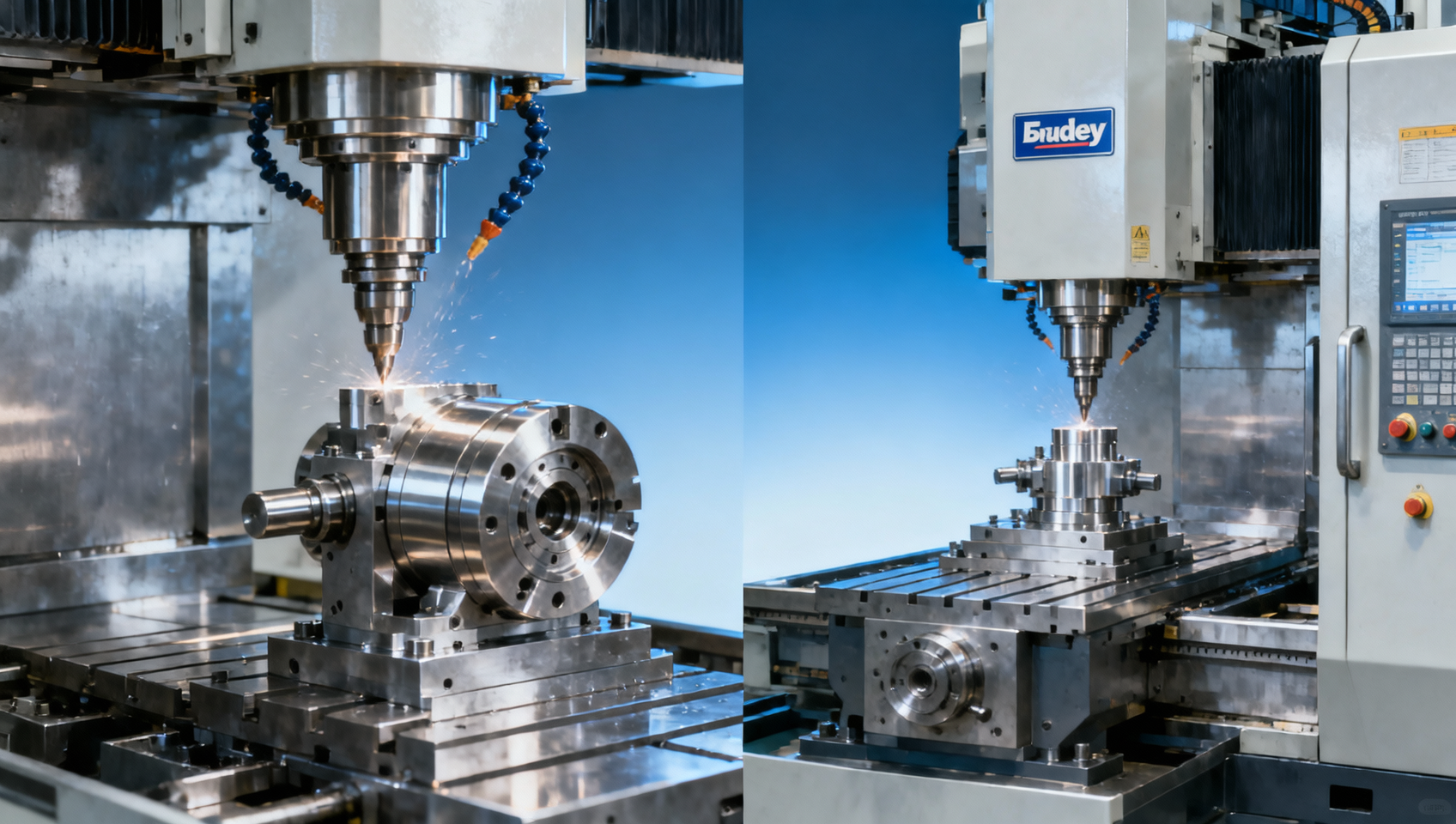
By contrast, modern CNC shops with digital twin-enabled workflows and pre-qualified material stock can begin cutting within 24–48 hours of order confirmation. For parts under 200 mm in longest dimension and requiring ±0.05 mm tolerance, typical CNC delivery spans 3–7 working days—including first-article inspection reports compliant with ISO 9001:2015 and AS9100D where applicable.
This discrepancy becomes decisive in time-sensitive verticals: medical device enclosure prototypes for FDA 510(k) submissions, EV battery module housings undergoing UL 2580 thermal cycling tests, or smart grid relay enclosures needing IEC 60529 IP65 certification. Here, CNC machining isn’t a fallback—it’s the strategic default.

When CNC Outperforms Additive: Five High-Impact Scenarios
Lead-time advantage isn’t universal—it hinges on geometry, material, quantity, and functional intent. Below are five validated scenarios where CNC machining consistently delivers faster, more reliable outcomes for global procurement and engineering teams:
- Functional validation of load-bearing components: e.g., aluminum alloy brackets for solar tracking systems requiring 200 MPa yield strength and fatigue resistance over 10,000 cycles.
- EMI/RF shielding-critical enclosures: e.g., stainless steel housings for 5G baseband units where surface conductivity must exceed 10⁶ S/m—unachievable with standard printed polymers.
- High-volume pilot runs (5–50 pcs): CNC batch setup overhead is amortized; additive scaling requires parallel printer farms and labor-intensive post-processing.
- Parts demanding surface finish ≤ Ra 0.8 µm: e.g., optical mounts in laser-based healthcare diagnostics—CNC achieves this in one operation; 3D-printed metal parts require costly electropolishing or grinding.
- Regulated components needing traceability: CNC logs tool wear, spindle load, and coolant temperature per part; most AM platforms lack granular process data capture required for ISO 13485 or IATF 16949 audits.
Lead-Time Comparison: Typical Workflow Benchmarks
The table below reflects aggregated benchmarks from 127 qualified Tier-1 contract manufacturers serving Advanced Manufacturing and Healthcare Technology clients across North America, EU, and APAC—verified via TNP’s Supplier Intelligence Dashboard (Q2 2024).
Note: These timelines assume ready-to-run CAD models (STEP AP242), certified material stock on-site, and no rework loops. Additive processes show greater variance due to machine uptime dependency and qualification bottlenecks—especially for aerospace-grade alloys.
Procurement Decision Framework: Six Non-Negotiable Evaluation Criteria
Global procurement directors and supply chain managers need actionable filters—not theoretical trade-offs. Based on TNP’s analysis of 412 supplier evaluations across Green Energy and Smart Electronics, these six criteria determine whether CNC should be prioritized over 3D printing for prototyping and low-volume production:
- Tolerance requirement: If geometric tolerances tighter than ±0.1 mm or surface roughness below Ra 3.2 µm are mandatory, CNC reduces iteration risk by >65%.
- Material certification: When ASTM B209 (aluminum), ASTM A240 (stainless), or ISO 5832-1 (titanium) certs are contractually binding, CNC suppliers maintain full mill traceability; AM providers rarely offer lot-level chemistry reports.
- Thermal/mechanical loading: Parts subjected to >80°C continuous service or >50 MPa static stress benefit from CNC’s isotropic grain structure—unlike AM’s anisotropic layer bonding.
- Repeatability threshold: For repeat orders exceeding 3 batches, CNC’s process capability index (Cpk) typically exceeds 1.67; AM Cpk drops below 1.33 beyond 5 units without recalibration.
- Compliance documentation depth: FDA, CE, and UL submissions require test records per part number—not per build plate. CNC enables unit-level traceability; AM does not.
- Tooling investment horizon: If the same design will evolve into medium-volume production (>500 pcs/year), CNC avoids dual-tooling costs—no need to requalify for injection molding or die casting later.
Why Global Leaders Trust TradeNexus Pro for Precision Manufacturing Intelligence
TradeNexus Pro doesn’t just compare technologies—we map them to your operational reality. Our proprietary Supplier Readiness Index (SRI™) evaluates 47 parameters across 5 domains: technical capacity, compliance maturity, lead-time reliability, material stewardship, and digital integration readiness. For procurement teams evaluating CNC vs. AM options, we deliver:
- Pre-vetted CNC partners with AS9100D + ISO 13485 dual certification, verified via on-site audit reports—not self-declarations.
- Real-time lead-time dashboards showing actual throughput (not quoted SLAs) across 22 global hubs—from Shenzhen to Stuttgart to Monterrey.
- Material-specific DFM libraries with tolerance maps, surface finish predictors, and cost-per-feature calculators for Al7075, Ti6Al4V, and PEEK.
- Customizable compliance playbooks: e.g., “EV Charging Hardware Certification Pathway” covering UL 2251, IEC 62196, and GB/T 20234—all mapped to machining process controls.
Whether you’re sourcing prototype housings for a Class II medical imaging subsystem or validating structural brackets for offshore wind turbine control cabinets, TradeNexus Pro equips you with decision-grade intelligence—not generic advice. Request your free Precision Manufacturing Intelligence Brief today—covering CNC capacity mapping, AM viability scoring, and cross-regional lead-time benchmarking for your specific part family.
Get weekly intelligence in your inbox.
No noise. No sponsored content. Pure intelligence.
 Apr 10, 2026China's New Guidelines Boost Solar Panel Recycling and ExportChina's New Guidelines Boost Solar Panel Recycling and Export
 Apr 10, 2026Yunnan Q1 Green Power Trading Hits 602M kWh, Boosts Localized Green Manufacturing CertificationYunnan Q1 Green Power Trading Hits 602M kWh, Boosts Localized Green Manufacturing Certification
 Apr 10, 2026Beijing Launches 2026 Carbon Allowance Pre-Allocation for Steel, Cement, and Aluminum SectorsBeijing Launches 2026 Carbon Allowance Pre-Allocation for Steel, Cement, and Aluminum Sectors
 Apr 10, 2026China Releases Updated National Greenhouse Gas Emission Factors DatabaseChina Releases Updated National Greenhouse Gas Emission Factors Database
 Apr 10, 2026Shandong's 22 New Energy Policies Raise Technical Barriers for China's Wind Power ExportsShandong's 22 New Energy Policies Raise Technical Barriers for China's Wind Power Exports
 Apr 10, 2026Gansu Launches 'New Energy+' Initiative, Boosting Exports of Solar Mounts and Storage ContainersGansu Launches 'New Energy+' Initiative, Boosting Exports of Solar Mounts and Storage Containers
 Apr 10, 2026China Launches Hydrogen Pilot with $160M Incentives, Boosting Equipment ExportsChina Launches Hydrogen Pilot with $160M Incentives, Boosting Equipment Exports
 Apr 10, 2026China's Rural Wind-Solar Push Sparks Export Demand for Distributed Energy EquipmentChina's Rural Wind-Solar Push Sparks Export Demand for Distributed Energy Equipment
 Apr 10, 2026Zhejiang Gas Power Market Entry: Impacts on China's Turbine Exports & ServicesZhejiang Gas Power Market Entry: Impacts on China's Turbine Exports & Services
 Apr 10, 2026US Expands Export Controls on CNC Systems and High-Precision Castings to ChinaUS Expands Export Controls on CNC Systems and High-Precision Castings to China
 Apr 09, 2026China's 11th Bulk Drug Procurement Covers 55 Chronic Disease MedicinesChina's 11th Bulk Drug Procurement Covers 55 Chronic Disease Medicines
 Apr 09, 2026Hashimoto's Thyroiditis Trend Boosts China's Thyroid Self-Test and Chronic Disease Management ExportsHashimoto's Thyroiditis Trend Boosts China's Thyroid Self-Test and Chronic Disease Management Exports
 Apr 09, 2026Dupilumab Approved in China as First Long-Acting Nasal Polyp Therapy, Impacting Global Prescription Drug ProcurementDupilumab Approved in China as First Long-Acting Nasal Polyp Therapy, Impacting Global Prescription Drug Procurement
 Apr 09, 2026Brazil Proposes Anti-Dumping Duties on Chinese Hydraulic Press ImportsBrazil Proposes Anti-Dumping Duties on Chinese Hydraulic Press Imports
 Apr 09, 2026Japan's New JIS B 6336-2026 Grinding Machine Accuracy Standard Impacts Chinese ManufacturersJapan's New JIS B 6336-2026 Grinding Machine Accuracy Standard Impacts Chinese Manufacturers
 Apr 09, 2026Middle East Construction Boom Drives Surge in Heavy Steel Casting Orders, China's Botou Cluster Extends Delivery to 14 WeeksMiddle East Construction Boom Drives Surge in Heavy Steel Casting Orders, China's Botou Cluster Extends Delivery to 14 Weeks
 Apr 09, 2026Hannover Messe Focuses on China-EU Smart Factory StandardsHannover Messe Focuses on China-EU Smart Factory Standards
 Apr 09, 2026China Customs Launches Smart Clearance Channel for Machinery ExportsChina Customs Launches Smart Clearance Channel for Machinery Exports
 Apr 09, 2026US Expands Export Controls on CNC Systems and High-Precision Castings from ChinaUS Expands Export Controls on CNC Systems and High-Precision Castings from China
 2026/789 Takes Effect: Impact on China's Machine Tool Exports") Apr 09, 2026EU's New Machinery Regulation (EU) 2026/789 Takes Effect: Impact on China's Machine Tool ExportsEU's New Machinery Regulation (EU) 2026/789 Takes Effect: Impact on China's Machine Tool Exports
Apr 09, 2026EU's New Machinery Regulation (EU) 2026/789 Takes Effect: Impact on China's Machine Tool ExportsEU's New Machinery Regulation (EU) 2026/789 Takes Effect: Impact on China's Machine Tool Exports Apr 08, 2026Surgical microscopes with AI-assisted focus drift detection—how reliable are they outside controlled OR environments?Surgical microscopes with AI-assisted focus drift detection—how reliable are they outside controlled OR environments?
 Apr 08, 2026Warehouse management systems claiming ‘plug-and-play’ IoT integration usually require custom firmware updatesWarehouse management systems claiming ‘plug-and-play’ IoT integration usually require custom firmware updates
 Apr 08, 2026Ophthalmic equipment procurement teams keep overlooking sterilization compatibility in surgical microscope specsOphthalmic equipment procurement teams keep overlooking sterilization compatibility in surgical microscope specs
 Apr 08, 2026Transportation management systems with embedded AI scoring—do they improve carrier compliance or just add noise?Transportation management systems with embedded AI scoring—do they improve carrier compliance or just add noise?
 Apr 08, 2026WMS software vendors rarely disclose how much warehouse labor time their automation features really saveWMS software vendors rarely disclose how much warehouse labor time their automation features really save
 Apr 08, 2026TMS software built for multi-modal haulage still struggles with rail carrier schedulingTMS software built for multi-modal haulage still struggles with rail carrier scheduling
 Apr 08, 2026Freight forwarding software that integrates with customs APIs—what’s actually supported in 2026?Freight forwarding software that integrates with customs APIs—what’s actually supported in 2026?