Custom PCB Boards: How to Choose Materials, Layers, and Finish
Selecting custom PCB boards is a technical decision that directly affects product reliability, signal integrity, manufacturability, and lifecycle cost. For engineering evaluators, the challenge is not only comparing prices, but also matching substrate materials, layer stackups, copper weight, surface finish, and compliance requirements to real operating conditions. This guide breaks down the key factors behind PCB material selection, multilayer design, and finish options, helping procurement and technical teams make evidence-based choices for advanced electronics, industrial systems, and next-generation connected devices.
Why Custom PCB Boards Require a Cross-Functional Evaluation
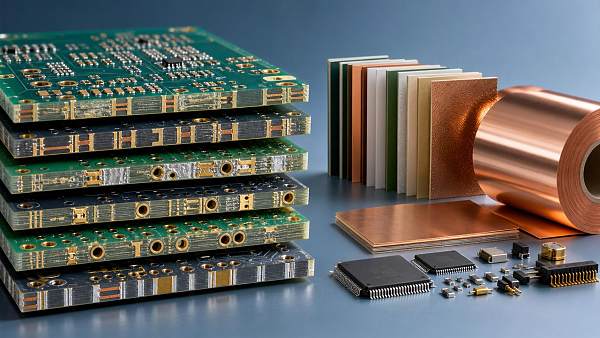
Custom PCB boards sit between electrical design, mechanical constraints, thermal management, sourcing risk, and production economics. A board that passes schematic review may still fail during assembly, vibration exposure, field operation, or regulatory inspection.
Technical evaluators therefore need a structured decision model. The right approach connects application requirements with measurable fabrication choices, rather than treating the PCB as a commodity line item.
Key Questions Before Comparing Suppliers
- What operating temperature, humidity, vibration, voltage, and current conditions will the board face in service?
- Does the design involve high-speed signals, controlled impedance, RF performance, or dense component placement?
- Which markets require documentation, such as RoHS, REACH, IPC class expectations, or UL material recognition?
- Is the project a prototype, pilot run, mature production program, or long-life industrial platform?
TradeNexus Pro helps enterprise teams frame these questions across advanced manufacturing, smart electronics, green energy, healthcare technology, and supply chain software ecosystems. That context matters when custom PCB boards become part of global sourcing decisions.
How to Choose PCB Materials for Real Operating Conditions
Material choice is the foundation of custom PCB boards. It influences dielectric behavior, heat resistance, dimensional stability, copper adhesion, drilling quality, and long-term reliability under electrical and environmental stress.
FR-4 remains widely used because it balances cost and process maturity. However, high-frequency devices, automotive electronics, power converters, and medical instruments may require enhanced Tg, low-loss laminates, polyimide, or metal-core structures.
The following table compares common material choices for custom PCB boards across practical evaluation criteria used by engineering and procurement teams.
Material selection should not start with the most advanced option. It should start with the weakest failure mode: heat, frequency loss, bending, voltage clearance, or humidity exposure.
Material Parameters Evaluators Should Request
- Glass transition temperature, especially when lead-free reflow or repeated thermal cycling is expected.
- Dielectric constant and dissipation factor for high-speed, RF, or precision sensing applications.
- Coefficient of thermal expansion, particularly for BGAs, fine-pitch packages, and mixed-material assemblies.
- Comparative tracking index and flame rating when safety or insulation performance is critical.
Layer Stackup: When More Layers Are Worth the Cost
Layer count is one of the most visible cost drivers in custom PCB boards, but the cheapest stackup may create expensive problems. Routing congestion, emissions, crosstalk, and poor return paths often appear when designs outgrow two-layer layouts.
A good stackup improves routing discipline and electrical behavior. Power and ground planes reduce impedance variation, support thermal spreading, and help control electromagnetic interference.
Practical Layer Selection Guidelines
- Use two layers for low-density circuits, simple sensors, relay boards, and cost-sensitive prototypes with limited high-speed routing.
- Move to four layers when designs need stable ground reference, better EMI behavior, or compact routing around microcontrollers.
- Consider six to eight layers for high-speed interfaces, mixed-signal products, dense connectors, or controlled impedance requirements.
- Specify ten or more layers only when electrical performance, package density, or form factor justifies extra fabrication complexity.
For technical evaluators, the important question is not “How many layers can the supplier make?” It is “Can the supplier document and hold the stackup tolerances the design requires?”
Copper Weight, Vias, and Manufacturability
Copper weight affects current capacity, etching precision, trace spacing, and thermal performance. Heavy copper may be necessary for power electronics, but it can limit fine-line routing.
Via strategy also matters. Blind, buried, microvia, and via-in-pad options can improve density, yet they require tighter process capability and more careful reliability review.
Surface Finish: Which Option Fits Assembly and Lifecycle Needs?
Surface finish protects exposed copper and determines solderability, flatness, storage behavior, and compatibility with fine-pitch components. For custom PCB boards, finish selection should align with assembly method and service conditions.
HASL may be acceptable for less dense assemblies, while ENIG is often preferred for flatness, fine-pitch pads, and longer shelf life. OSP can reduce cost but requires stronger handling discipline.
This comparison helps evaluators match common surface finishes with design requirements, assembly constraints, and procurement trade-offs.
Finish selection should be documented early. Changing it later can affect assembly yield, inspection criteria, storage rules, and qualification status.
Procurement Checklist for Custom PCB Boards
Procurement teams often receive Gerber files, a short bill of materials, and a target date. That is not enough for custom PCB boards intended for regulated, harsh, or high-speed environments.
A complete request should include design files, stackup requirements, impedance notes, copper weight, finish, test expectations, lot traceability needs, and packaging preferences.
Supplier Review Checklist
- Confirm fabrication capability for minimum trace width, spacing, drill size, aspect ratio, and registration tolerance.
- Ask for stackup documentation, material declarations, and impedance control methodology when electrical performance is critical.
- Clarify electrical testing scope, including flying probe, fixture testing, continuity, isolation, and acceptance criteria.
- Review engineering change communication, nonconformance reporting, and corrective action process before volume orders.
- Evaluate lead time realism, not only quoted delivery, especially for low-loss laminates or special finishes.
TradeNexus Pro supports evaluators by connecting technical requirements with market intelligence. That helps teams understand supplier capability, material availability, and cross-border supply conditions before commitment.
Application Scenarios Across Advanced Industries
Custom PCB boards are used differently across sectors. A board for a battery management system has different design priorities than one used in wearable diagnostics or automated factory equipment.
Evaluators should translate industry use cases into electrical, thermal, mechanical, and compliance requirements. This avoids under-specification in demanding environments and over-specification in cost-sensitive products.
The table below outlines sector-specific requirements that commonly influence custom PCB boards in strategic B2B projects.
A sector-based view helps reduce procurement ambiguity. It gives technical teams a stronger basis for comparing custom PCB boards beyond unit price.
Compliance, Documentation, and Risk Control
Compliance is not a decorative requirement. It affects product access, audit readiness, customer approval, and long-term supplier management.
Common references include IPC-A-600 for acceptability of printed boards, IPC-6012 for rigid board qualification, RoHS for restricted substances, and REACH for chemical obligations in relevant markets.
Documents to Request Before Approval
- Material declaration or compliance statement aligned with the destination market and customer requirements.
- Certificate of conformance listing revision, quantity, finish, test status, and shipment reference.
- Impedance test report for controlled impedance custom PCB boards used in high-speed or RF systems.
- Microsection or quality evidence when vias, plating thickness, or high-reliability construction is critical.
Documentation should be proportional to risk. A quick prototype may need basic confirmation, while industrial, healthcare, or energy systems may require stronger traceability.
Cost Drivers and Alternatives Without Sacrificing Reliability
Cost pressure is real, especially when budgets are fixed and delivery windows are tight. However, reducing PCB cost without engineering review can shift expenses into rework, delayed launch, or field returns.
The most effective savings often come from design-for-manufacturing adjustments, panel utilization, standard material selection, and early supplier feedback.
Where Cost Usually Changes
- Layer count and stackup complexity strongly affect lamination cycles, yield, and inspection effort.
- Special laminates, heavy copper, and tight impedance tolerance can increase both material and process costs.
- Small drill sizes, microvias, via-in-pad, and tight spacing may reduce supplier options and increase lead time.
- Surface finish selection changes cost, shelf life, solderability, and assembly handling requirements.
A practical alternative may be changing the stackup from six layers to four only after signal integrity, grounding, and routing density are verified. Material downgrades should be treated with similar caution.
FAQ: Technical Evaluation of Custom PCB Boards
How do I know whether FR-4 is enough?
FR-4 is often sufficient for standard control, sensing, and digital boards. If the application involves high heat, high frequency, long life, or repeated thermal cycling, request Tg, Dk, Df, and CTE data before approval.
When should custom PCB boards use controlled impedance?
Controlled impedance is important for USB, Ethernet, RF, high-speed memory, differential pairs, and timing-sensitive interfaces. The supplier should provide stackup data, trace geometry assumptions, and test methodology.
What is the most common purchasing mistake?
The most common mistake is comparing quotes without confirming construction details. Two suppliers may quote the same custom PCB boards differently because materials, finish, copper thickness, and testing scope differ.
How long does PCB sourcing usually take?
Lead time depends on complexity, material availability, quantity, testing, and finish. Simple prototypes may move quickly, while special laminates, HDI features, or detailed documentation can extend sourcing and approval time.
Why Choose TradeNexus Pro for PCB Supplier Intelligence
Choosing custom PCB boards is easier when technical evaluation and market intelligence are connected. TradeNexus Pro provides sector-focused insight for procurement directors, supply chain managers, and engineering decision-makers.
Our editorial and analyst framework tracks advanced manufacturing, green energy, smart electronics, healthcare technology, and supply chain SaaS, helping teams understand technology shifts and supplier capability signals.
Consult Us Before Your Next PCB Decision
- Review material, layer, copper, and finish parameters against your operating environment.
- Clarify sourcing risks, delivery expectations, sample support, and documentation requirements.
- Compare custom PCB boards for prototype, pilot, and production-stage procurement decisions.
- Discuss certification needs, quotation assumptions, and technical questions before supplier engagement.
If your team is evaluating custom PCB boards for industrial systems, connected devices, energy equipment, or healthcare technology, TradeNexus Pro can help structure the decision with sharper technical and supply-chain context.
Get weekly intelligence in your inbox.
No noise. No sponsored content. Pure intelligence.
 Oct 24, 2026Tesla Q3 2026 Storage Deployments Rank Second Highest as Revenue Falls 16%Tesla Q3 2026 Storage Deployments Rank Second Highest as Revenue Falls 16%
 Oct 24, 2026Freight Forwarding Services Pricing: Comparing Quotes Beyond Base RatesFreight Forwarding Services Pricing: Comparing Quotes Beyond Base Rates
 Oct 23, 2026IndexBox Issues Off-Grid Solar Outlook to 2035, Forecasting 8.2% CAGRIndexBox Issues Off-Grid Solar Outlook to 2035, Forecasting 8.2% CAGR
 Oct 23, 2026NSF/ANSI 49 Biosafety Cabinets: Product Certification vs. Field TestingNSF/ANSI 49 Biosafety Cabinets: Product Certification vs. Field Testing
 Oct 22, 2026Mitsubishi Electric Develops Industry-First Humanoid Robot–CNC Machining SystemMitsubishi Electric Develops Industry-First Humanoid Robot–CNC Machining System
 Oct 22, 2026Aerospace Aluminum Machining: How to Control Distortion in Thin-Wall PartsAerospace Aluminum Machining: How to Control Distortion in Thin-Wall Parts
 Oct 21, 2026Genesis Energy commissions 200 MWh battery storage system at HuntlyGenesis Energy commissions 200 MWh battery storage system at Huntly
 Oct 21, 2026Buying AMI Smart Meters Wholesale: Compatibility Checks and Total CostsBuying AMI Smart Meters Wholesale: Compatibility Checks and Total Costs
 Oct 20, 2026Werner Enterprises Issues Q3 Earnings Warning as Costs RiseWerner Enterprises Issues Q3 Earnings Warning as Costs Rise
 Oct 20, 2026Are Digital Twins Viable for SMEs? Costs, Use Cases, and Data RequirementsAre Digital Twins Viable for SMEs? Costs, Use Cases, and Data Requirements
 Oct 19, 2026Choosing a Wholesale Servo Motor Exporter: Traceability and Warranty ChecksChoosing a Wholesale Servo Motor Exporter: Traceability and Warranty Checks
 Oct 18, 2026Syringe Manufacturing Equipment: Evaluating Throughput and Assembly AccuracySyringe Manufacturing Equipment: Evaluating Throughput and Assembly Accuracy
 Oct 17, 2026Air Freight Forwarding Services: How to Compare Quotes for Urgent ShipmentsAir Freight Forwarding Services: How to Compare Quotes for Urgent Shipments
 Oct 16, 2026Wholesale Solar Panels: How to Compare Bulk Quotes by Total Landed CostWholesale Solar Panels: How to Compare Bulk Quotes by Total Landed Cost
 Oct 15, 2026Supply Chain Intelligence for Sourcing: How to Vet New SuppliersSupply Chain Intelligence for Sourcing: How to Vet New Suppliers
 Oct 14, 2026How energy costs shape smart manufacturing investment in EuropeHow energy costs shape smart manufacturing investment in Europe
 Oct 14, 2026How skills shortages slow smart manufacturing in Southeast AsiaHow skills shortages slow smart manufacturing in Southeast Asia
 Oct 14, 2026How CNC wire-cut machining maintains tight tolerances in thick partsHow CNC wire-cut machining maintains tight tolerances in thick parts
 Oct 14, 2026Can automated feeding stabilize metal forming in smart factories?Can automated feeding stabilize metal forming in smart factories?
 Oct 14, 2026Can CT inspection detect internal defects in metal additive parts?Can CT inspection detect internal defects in metal additive parts?
 Oct 14, 2026When does additive manufacturing reduce lead time for spare parts?When does additive manufacturing reduce lead time for spare parts?
 Oct 14, 2026How production volume affects ROI on an automated painting lineHow production volume affects ROI on an automated painting line
 Oct 14, 2026What data does manufacturing bottleneck analysis consulting need?What data does manufacturing bottleneck analysis consulting need?
 Oct 14, 2026When should you hire a consultant for manufacturing bottlenecks?When should you hire a consultant for manufacturing bottlenecks?
 Oct 14, 2026What Are Electronics Exporters' Top Supply Chain Resilience Gaps in 2026?What Are Electronics Exporters' Top Supply Chain Resilience Gaps in 2026?
 Oct 14, 2026How Do You Measure AI Adoption Maturity in a Traditional Factory?How Do You Measure AI Adoption Maturity in a Traditional Factory?
 Oct 14, 2026Are Chinese AI-Assisted Surgical Devices Gaining Global Trust?Are Chinese AI-Assisted Surgical Devices Gaining Global Trust?