Electronics Trends for OEMs: Which Component and Design Shifts Matter Most in 2025?
As 2025 gets closer, electronics trends for OEMs are no longer defined by performance alone. Supply resilience, redesign speed, power efficiency, and component transparency now shape real commercial value.
That shift matters because electronics programs increasingly sit inside larger industrial systems. A board choice can affect sourcing risk, certification timelines, maintenance cost, and even market-entry strategy.
In practical terms, the most important electronics trends for OEMs in 2025 are the ones that influence both design architecture and supplier decisions. The market is rewarding products that are smarter, leaner, easier to qualify, and less exposed to disruption.
Why 2025 looks different from earlier design cycles
Recent years taught OEMs that technical roadmaps cannot be separated from trade conditions. Lead-time shocks, regional policy changes, and uneven fab capacity changed how electronics programs are evaluated.
What is changing now is the response. Design teams are building flexibility into products earlier, while commercial teams want clearer visibility into component longevity, second-source options, and compliance exposure.
This is also why intelligence platforms such as TradeNexus Pro are gaining relevance. In sectors like smart electronics, advanced manufacturing, healthcare technology, and green energy, fragmented data is no longer enough.
Decision quality improves when market signals, supplier credibility, and technology adoption can be read together. That is the real context behind current electronics trends for OEMs.
The component shifts that deserve the closest attention
Not every new part category will materially change competitiveness. The stronger signals are coming from components that improve integration, reduce power loss, or simplify redesign under uncertain supply conditions.
Power devices are moving up the priority list
Silicon carbide and gallium nitride continue to expand beyond niche use. They matter most where thermal limits, switching efficiency, and compact designs affect total system performance.
This is especially relevant in industrial controls, energy systems, charging infrastructure, robotics, and high-density power supplies. Here, electronics trends for OEMs are closely tied to energy cost and footprint reduction.
Smarter microcontrollers are replacing fragmented logic
Embedded intelligence is moving downward into more affordable device tiers. OEMs increasingly want MCUs and edge processors with built-in security, connectivity, and local analytics support.
The point is not novelty. It is about reducing external component count, improving firmware control, and keeping products upgradeable after launch.
Passive components now carry strategic weight
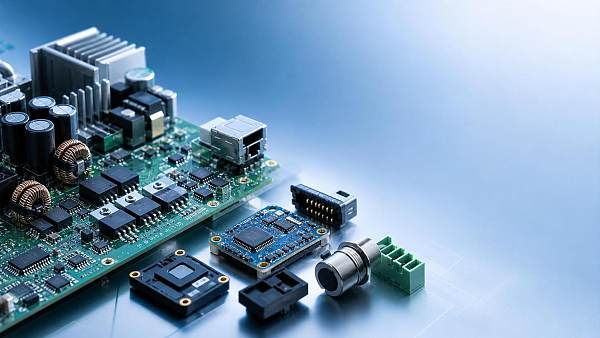
Capacitors, inductors, resistors, connectors, and magnetic parts rarely lead headlines, yet they still create bottlenecks. Voltage derating, miniaturization, and temperature stability have become board-level business issues.
In many categories, the best reading of electronics trends for OEMs starts with ordinary parts that are suddenly hard to replace without requalification.
Sensors are becoming more application-specific
Sensor demand is not just growing. It is becoming more specialized. Industrial, medical, mobility, and building applications increasingly need better calibration, lower drift, and cleaner data handling.
That makes sensor selection less about unit price and more about lifecycle reliability, environmental fit, and integration burden.
Design priorities are shifting from performance to resilience
A useful way to read electronics trends for OEMs is to ask what design teams are optimizing for. The answer in 2025 is broader than speed, cost, or size.
More OEMs are also treating software and hardware as one commercial system. A component may be technically available, but still unattractive if toolchain support, patch management, or protocol compatibility is weak.
That is why the design side of electronics trends for OEMs increasingly includes lifecycle support, not just schematic performance.
Where these trends show up first
The impact is not limited to consumer hardware. Several industries are already turning component and design choices into competitive filters.
Industrial equipment and smart factories
Controllers, drives, gateways, and machine interfaces need longer product lives and stable qualification paths. Here, electronics trends for OEMs center on ruggedness, field serviceability, and secure connectivity.
Green energy and power conversion
Inverters, storage systems, and charging hardware benefit directly from better switching devices, thermal design, and monitoring electronics. Efficiency gains here can materially improve project economics.
Healthcare technology
Medical and diagnostic devices place more weight on traceability, stable sourcing, and documentation quality. Small component changes can trigger major validation work, so predictability matters as much as innovation.
Connected commercial devices
Terminals, sensors, edge devices, and embedded platforms increasingly need low-power intelligence and secure updates. This is one of the clearest areas where electronics trends for OEMs intersect with digital services.
How to evaluate the shifts without overreacting
The challenge is not spotting every new technology. It is separating structural change from short-term noise. A disciplined review usually starts with a few grounded questions.
- Does the new component reduce system complexity or just move it elsewhere?
- Is there credible multi-region supply, or only a promising roadmap?
- Will adoption create new certification, firmware, or thermal challenges?
- Can the design support substitution without a full platform rewrite?
- What does the supplier’s documentation and lifecycle policy actually show?
This is where structured market intelligence becomes useful. TradeNexus Pro’s editorial model is relevant because electronics decisions increasingly sit at the intersection of technology, regional supply conditions, and credibility signals.
A supplier profile that looks strong on price may still appear weak on compliance history, cross-border visibility, or ecosystem support. In 2025, that gap can become expensive later.
What deserves attention in the next review cycle
The most useful response to electronics trends for OEMs is not a broad redesign mandate. It is a sharper framework for comparison.
Start by mapping critical components against availability risk, qualification burden, and expected platform life. Then review whether current architectures support modular changes, secure updates, and realistic second sourcing.
It also helps to track which trends are maturing inside adjacent sectors. Developments in green energy, smart electronics, healthcare technology, and industrial automation often signal where component expectations will move next.
The OEMs that will look strongest in 2025 are not necessarily those adopting every new device first. They are the ones turning electronics trends for OEMs into better sourcing discipline, stronger design optionality, and clearer long-term decision standards.
That makes the next step fairly practical: review the bill of materials, test assumptions behind key platforms, and compare technology choices in a market context rather than in isolation.
Get weekly intelligence in your inbox.
No noise. No sponsored content. Pure intelligence.
 Oct 24, 2026Tesla Q3 2026 Storage Deployments Rank Second Highest as Revenue Falls 16%Tesla Q3 2026 Storage Deployments Rank Second Highest as Revenue Falls 16%
 Oct 24, 2026Freight Forwarding Services Pricing: Comparing Quotes Beyond Base RatesFreight Forwarding Services Pricing: Comparing Quotes Beyond Base Rates
 Oct 23, 2026IndexBox Issues Off-Grid Solar Outlook to 2035, Forecasting 8.2% CAGRIndexBox Issues Off-Grid Solar Outlook to 2035, Forecasting 8.2% CAGR
 Oct 23, 2026NSF/ANSI 49 Biosafety Cabinets: Product Certification vs. Field TestingNSF/ANSI 49 Biosafety Cabinets: Product Certification vs. Field Testing
 Oct 22, 2026Mitsubishi Electric Develops Industry-First Humanoid Robot–CNC Machining SystemMitsubishi Electric Develops Industry-First Humanoid Robot–CNC Machining System
 Oct 22, 2026Aerospace Aluminum Machining: How to Control Distortion in Thin-Wall PartsAerospace Aluminum Machining: How to Control Distortion in Thin-Wall Parts
 Oct 21, 2026Genesis Energy commissions 200 MWh battery storage system at HuntlyGenesis Energy commissions 200 MWh battery storage system at Huntly
 Oct 21, 2026Buying AMI Smart Meters Wholesale: Compatibility Checks and Total CostsBuying AMI Smart Meters Wholesale: Compatibility Checks and Total Costs
 Oct 20, 2026Werner Enterprises Issues Q3 Earnings Warning as Costs RiseWerner Enterprises Issues Q3 Earnings Warning as Costs Rise
 Oct 20, 2026Are Digital Twins Viable for SMEs? Costs, Use Cases, and Data RequirementsAre Digital Twins Viable for SMEs? Costs, Use Cases, and Data Requirements
 Oct 19, 2026Choosing a Wholesale Servo Motor Exporter: Traceability and Warranty ChecksChoosing a Wholesale Servo Motor Exporter: Traceability and Warranty Checks
 Oct 18, 2026Syringe Manufacturing Equipment: Evaluating Throughput and Assembly AccuracySyringe Manufacturing Equipment: Evaluating Throughput and Assembly Accuracy
 Oct 17, 2026Air Freight Forwarding Services: How to Compare Quotes for Urgent ShipmentsAir Freight Forwarding Services: How to Compare Quotes for Urgent Shipments
 Oct 16, 2026Wholesale Solar Panels: How to Compare Bulk Quotes by Total Landed CostWholesale Solar Panels: How to Compare Bulk Quotes by Total Landed Cost
 Oct 15, 2026Supply Chain Intelligence for Sourcing: How to Vet New SuppliersSupply Chain Intelligence for Sourcing: How to Vet New Suppliers
 Oct 14, 2026How energy costs shape smart manufacturing investment in EuropeHow energy costs shape smart manufacturing investment in Europe
 Oct 14, 2026How skills shortages slow smart manufacturing in Southeast AsiaHow skills shortages slow smart manufacturing in Southeast Asia
 Oct 14, 2026How CNC wire-cut machining maintains tight tolerances in thick partsHow CNC wire-cut machining maintains tight tolerances in thick parts
 Oct 14, 2026Can automated feeding stabilize metal forming in smart factories?Can automated feeding stabilize metal forming in smart factories?
 Oct 14, 2026Can CT inspection detect internal defects in metal additive parts?Can CT inspection detect internal defects in metal additive parts?
 Oct 14, 2026When does additive manufacturing reduce lead time for spare parts?When does additive manufacturing reduce lead time for spare parts?
 Oct 14, 2026How production volume affects ROI on an automated painting lineHow production volume affects ROI on an automated painting line
 Oct 14, 2026What data does manufacturing bottleneck analysis consulting need?What data does manufacturing bottleneck analysis consulting need?
 Oct 14, 2026When should you hire a consultant for manufacturing bottlenecks?When should you hire a consultant for manufacturing bottlenecks?
 Oct 14, 2026What Are Electronics Exporters' Top Supply Chain Resilience Gaps in 2026?What Are Electronics Exporters' Top Supply Chain Resilience Gaps in 2026?
 Oct 14, 2026How Do You Measure AI Adoption Maturity in a Traditional Factory?How Do You Measure AI Adoption Maturity in a Traditional Factory?
 Oct 14, 2026Are Chinese AI-Assisted Surgical Devices Gaining Global Trust?Are Chinese AI-Assisted Surgical Devices Gaining Global Trust?