How to Size Hydro Turbine Generators for Off Grid Power: Head, Flow, and Load Basics
Sizing hydro turbine generators for off grid power begins with three linked variables: head, flow, and load. When one is misunderstood, the whole system can drift toward poor efficiency, unstable voltage, or unnecessary capital cost.
That matters more today because remote energy projects are under pressure to deliver resilience, lower diesel dependence, and stronger lifecycle economics. In green energy planning, hydro turbine generators for off grid sites remain one of the most durable options when water resources are consistent.
For decision-focused platforms such as TradeNexus Pro, this topic sits at the intersection of renewable infrastructure, supplier evaluation, and technical due diligence. Clear sizing logic helps turn a promising site into a bankable, maintainable power asset.
Why sizing decisions shape project outcomes
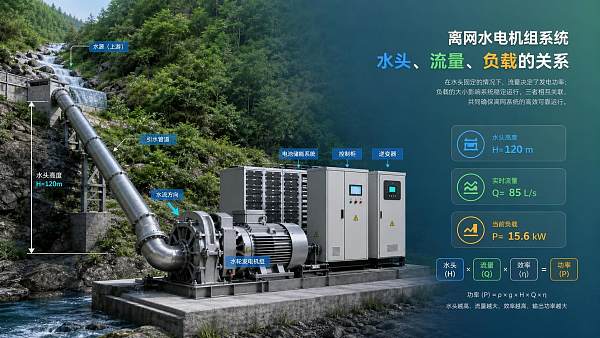
A hydro system is rarely limited by generator nameplate alone. The real constraint is how much water energy can be converted, how often that resource is available, and how closely generation matches the site’s demand profile.
Oversizing is a common mistake. It can push budgets up, complicate civil works, and create operating points where the turbine runs below its best efficiency range.
Undersizing creates different problems. The site may face chronic shortages during peak use, more battery cycling, or frequent backup generator starts, which weakens the economics of off grid power.
This is why hydro turbine generators for off grid applications should be sized as part of an integrated energy system, not as an isolated equipment purchase.
Head, flow, and load in practical terms
Head is the vertical drop available between the water intake and the turbine. It represents the pressure potential of the water column after friction losses are considered.
Flow is the volume of water moving through the system over time. It determines how much water energy is actually available to the turbine in daily and seasonal operating conditions.
Load is the electrical demand the system must serve. That includes base demand, short peak demand, startup surges, and any planned growth in consumption.
Simple sizing often starts with the familiar relationship between hydraulic power and electrical output. In rough terms, more head and more flow mean more potential power, but only after real efficiency losses are included.
Net head is the number that really counts
Many early assessments rely on gross head because it is easy to observe on a map. That is useful for screening, but not for final selection.
The turbine responds to net head, which is gross head minus hydraulic losses through the intake, penstock, bends, valves, and fittings. Small design choices can change output more than expected.
A longer penstock may reduce civil complexity but increase friction losses. A narrower pipe lowers material cost but can reduce the effective head seen by the turbine.
For hydro turbine generators for off grid systems, this balance should be modeled before equipment selection. Otherwise, the chosen unit may never operate at its advertised performance point.
Why turbine type follows site conditions
High-head, low-flow sites often suit Pelton or Turgo configurations. Medium-head conditions may favor Francis or crossflow designs, depending on variability and maintenance priorities.
Low-head, higher-flow locations may call for Kaplan-style solutions or other low-head turbine arrangements. The sizing exercise and turbine choice are tightly linked.
Flow data should reflect the worst month, not only the best week
Flow is often the most uncertain input. A site visit during a strong rainy period can create a false sense of abundance.
What matters for dependable off grid generation is the flow duration pattern across seasons. Minimum dependable flow is usually more valuable than occasional high flow when the goal is stable electricity.
This is especially relevant in regions where water use rules, climate variability, or upstream demand can alter the available resource. A strong annual average does not guarantee reliable off grid power.
In practical screening, it helps to separate three cases: dry-season design flow, normal operating flow, and high-water conditions that the civil system must safely withstand.
- Use measured flow records where possible, not visual estimates alone.
- Check whether ecological flow requirements limit water diversion.
- Confirm sediment levels, because abrasive water affects long-term performance.
- Model seasonal output, not just peak installed capacity.
Load profiling is where many off grid designs succeed or fail
A remote power system should be sized against how electricity is consumed, not how users describe it in general terms. Daily demand curves are more useful than a single total kilowatt figure.
Base load is critical because hydro turbine generators for off grid sites perform best when serving predictable, continuous demand. Short spikes can be managed differently through storage or auxiliary generation.
Motor starting currents also deserve attention. Pumps, compressors, crushers, refrigeration units, and workshop equipment can briefly demand much more power than their running load suggests.
Where the site includes future expansion, sizing should account for phased growth. A modular design strategy may be stronger than installing one large unit too early.
A useful sizing view
Sizing is no longer only an engineering calculation
In current global supply chains, equipment selection also touches sourcing transparency, spare parts access, control system compatibility, and supplier credibility. These issues can be as decisive as raw efficiency.
That is where market intelligence becomes useful. TradeNexus Pro, through its green energy and advanced manufacturing focus, reflects a broader industry shift toward decision-grade technical content rather than shallow product listings.
For hydro turbine generators for off grid projects, procurement quality often depends on questions such as documented performance curves, materials suitability, after-sales support, and regional installation experience.
A credible supplier should be able to explain how the unit performs across changing head and flow conditions, not only under ideal test points.
Typical project scenarios and what they imply
Different sites call for different sizing priorities. The same nominal output can represent very different risk profiles depending on geography, use pattern, and operating constraints.
- Mountain facilities often have strong head but limited flow. Efficiency at lower water volumes becomes a core selection issue.
- Agricultural or community systems may face seasonal demand swings. Load management can matter as much as turbine capacity.
- Industrial outposts usually need better power quality and startup tolerance for rotating equipment.
- Hybrid microgrids may size hydro as the stable anchor, with solar and batteries covering variability and daytime peaks.
Seen this way, hydro turbine generators for off grid use are not a single product category. They are part of a site-specific infrastructure decision.
A practical path for the next decision
A workable next step is to organize the project around verified inputs. Confirm net head, build a realistic flow profile, and map hourly demand before comparing turbine options.
Then review the commercial side with equal discipline. Compare supplier data quality, control integration, maintenance access, and delivery risk alongside efficiency claims.
When hydro turbine generators for off grid projects are sized with both technical and sourcing discipline, the result is usually simpler: better uptime, fewer surprises, and a power system that fits the site instead of fighting it.
That is the point where a concept becomes a decision. From there, feasibility studies, supplier shortlists, and lifecycle comparisons become far easier to judge with confidence.
Get weekly intelligence in your inbox.
No noise. No sponsored content. Pure intelligence.
 Oct 12, 2026How Predictive Maintenance AI Detects Machine Failures Before Unplanned DowntimeHow Predictive Maintenance AI Detects Machine Failures Before Unplanned Downtime
 Oct 10, 2026How to Scope Packaging Automation for High-Mix Lines Without Creating BottlenecksHow to Scope Packaging Automation for High-Mix Lines Without Creating Bottlenecks
 Oct 08, 2026How Digital Health Improves Diagnostic Accuracy and Workflow in Clinical LabsHow Digital Health Improves Diagnostic Accuracy and Workflow in Clinical Labs
 Oct 07, 2026Selecting Voice Picking Systems for German Warehouses: Integration, Languages and ROISelecting Voice Picking Systems for German Warehouses: Integration, Languages and ROI
 Oct 06, 2026How to Choose Last Mile Dispatch Software for On-Time Delivery at ScaleHow to Choose Last Mile Dispatch Software for On-Time Delivery at Scale
 Oct 05, 2026Vietnam’s Consumer Electronics Market: Demand Shifts and Sourcing OpportunitiesVietnam’s Consumer Electronics Market: Demand Shifts and Sourcing Opportunities
 Oct 04, 2026Digital Health Investment Priorities for Providers: Improving Access, Outcomes, and EfficiencyDigital Health Investment Priorities for Providers: Improving Access, Outcomes, and Efficiency
 Oct 03, 2026How to Specify an FR4 Custom PCB Board for High-Voltage and High-Heat DesignsHow to Specify an FR4 Custom PCB Board for High-Voltage and High-Heat Designs
 Oct 02, 2026ERP Software Market Intelligence: Adoption, Pricing, and Vendor Signals to WatchERP Software Market Intelligence: Adoption, Pricing, and Vendor Signals to Watch
 Oct 01, 2026How to Select Calibrated Temperature Data Loggers for GMP Cold Storage MonitoringHow to Select Calibrated Temperature Data Loggers for GMP Cold Storage Monitoring
 Sep 30, 2026Custom Molded Rubber Pricing: What Drives Unit Cost and Tooling Fees?Custom Molded Rubber Pricing: What Drives Unit Cost and Tooling Fees?
 Sep 29, 2026How to Evaluate Energy Management Software Vendors for Multi-Site OperationsHow to Evaluate Energy Management Software Vendors for Multi-Site Operations
 Sep 28, 2026How to Select a DIN Rail Smart Meter for Multi-Circuit Energy MonitoringHow to Select a DIN Rail Smart Meter for Multi-Circuit Energy Monitoring
 Sep 27, 2026TWS Earbuds in Vietnam: Demand Drivers, Price Tiers, and Retail Channel OpportunitiesTWS Earbuds in Vietnam: Demand Drivers, Price Tiers, and Retail Channel Opportunities
 Sep 26, 2026How UAE Clinics Can Qualify a Smart Glucometer Supplier for Accuracy and ComplianceHow UAE Clinics Can Qualify a Smart Glucometer Supplier for Accuracy and Compliance
 Sep 25, 2026Buying Aesthetic Lasers in the USA: FDA Status, Wavelengths, and Service SupportBuying Aesthetic Lasers in the USA: FDA Status, Wavelengths, and Service Support
 Sep 24, 2026Laser Cutting Brass Sheet: How to Prevent Burrs and Heat Marks on Thin PartsLaser Cutting Brass Sheet: How to Prevent Burrs and Heat Marks on Thin Parts
 Sep 23, 2026How to Choose Lightweight ANC Headphones for Comfortable All-Day TravelHow to Choose Lightweight ANC Headphones for Comfortable All-Day Travel
 Sep 22, 2026IPX5 TWS Bluetooth Earbuds: What Protection Do They Offer for Workouts?IPX5 TWS Bluetooth Earbuds: What Protection Do They Offer for Workouts?
 Sep 21, 2026What to Look for in a Grid Integration Company for Utility-Scale Solar ProjectsWhat to Look for in a Grid Integration Company for Utility-Scale Solar Projects
 Sep 20, 2026Microgrid Controller Pricing: What Drives Cost in Commercial Energy Projects?Microgrid Controller Pricing: What Drives Cost in Commercial Energy Projects?
 Sep 19, 2026How to Choose a GaN Charger for Laptops Without Compromising Power or PortabilityHow to Choose a GaN Charger for Laptops Without Compromising Power or Portability
 Sep 18, 2026Floating Solar Farm Costs: CAPEX, OPEX, and the Site Factors That Shape ROIFloating Solar Farm Costs: CAPEX, OPEX, and the Site Factors That Shape ROI
 Sep 17, 2026Drone Delivery Solutions for Last-Mile Routes: Site, Payload, and Range PlanningDrone Delivery Solutions for Last-Mile Routes: Site, Payload, and Range Planning
 Sep 16, 2026When Low-Volume Electronics Manufacturing Makes More Sense Than Mass ProductionWhen Low-Volume Electronics Manufacturing Makes More Sense Than Mass Production
 Sep 15, 2026Wholesale WiFi Smart Switches: What Buyers Should Verify Before OrderingWholesale WiFi Smart Switches: What Buyers Should Verify Before Ordering
 Sep 14, 2026How to Select IoT Sensors for Reliable Monitoring in Harsh Industrial EnvironmentsHow to Select IoT Sensors for Reliable Monitoring in Harsh Industrial Environments