Industrial IoT Applications in Manufacturing: 7 Use Cases That Improve OEE and Visibility
Why Industrial IoT Applications Matter More in Real Factory Conditions

Industrial IoT applications create value when they connect equipment data to operating decisions, not when they simply add more dashboards.
In manufacturing, that distinction matters because OEE losses rarely come from one source. Downtime, slow cycles, quality escapes, and material delays often overlap.
The practical question is not whether IIoT is useful. It is where industrial IoT applications deliver measurable visibility first, and where rollout becomes expensive noise.
This is especially relevant across advanced manufacturing, green energy, smart electronics, healthcare technology, and supply chain software environments.
On platforms such as TradeNexus Pro, industrial analysis increasingly focuses on decision-grade signals: adoption fit, implementation limits, supplier maturity, and long-term operating impact.
Different Production Contexts Need Different Industrial IoT Applications
A high-mix electronics line does not need the same data model as a continuous metals process or a regulated medical device plant.
Some facilities need second-level machine visibility. Others need batch genealogy, energy load balancing, or supplier-linked traceability across multiple sites.
That is why industrial IoT applications should be judged by production rhythm, asset criticality, quality risk, and integration depth.
A common mistake is treating every connected sensor project as a smart factory initiative. In practice, the best-performing programs start with one constrained business problem.
Seven Use Cases That Improve OEE and Visibility
1. Real-time machine monitoring where downtime is poorly classified
Many sites know downtime exists but cannot separate blocked time, starved time, minor stops, and maintenance events with enough accuracy.
Industrial IoT applications help by capturing machine states directly from PLCs, edge devices, or retrofit sensors. That improves availability calculations and exposes hidden losses.
The key judgment point is data granularity. If state logic is weak, dashboards look precise but still mislead operations teams.
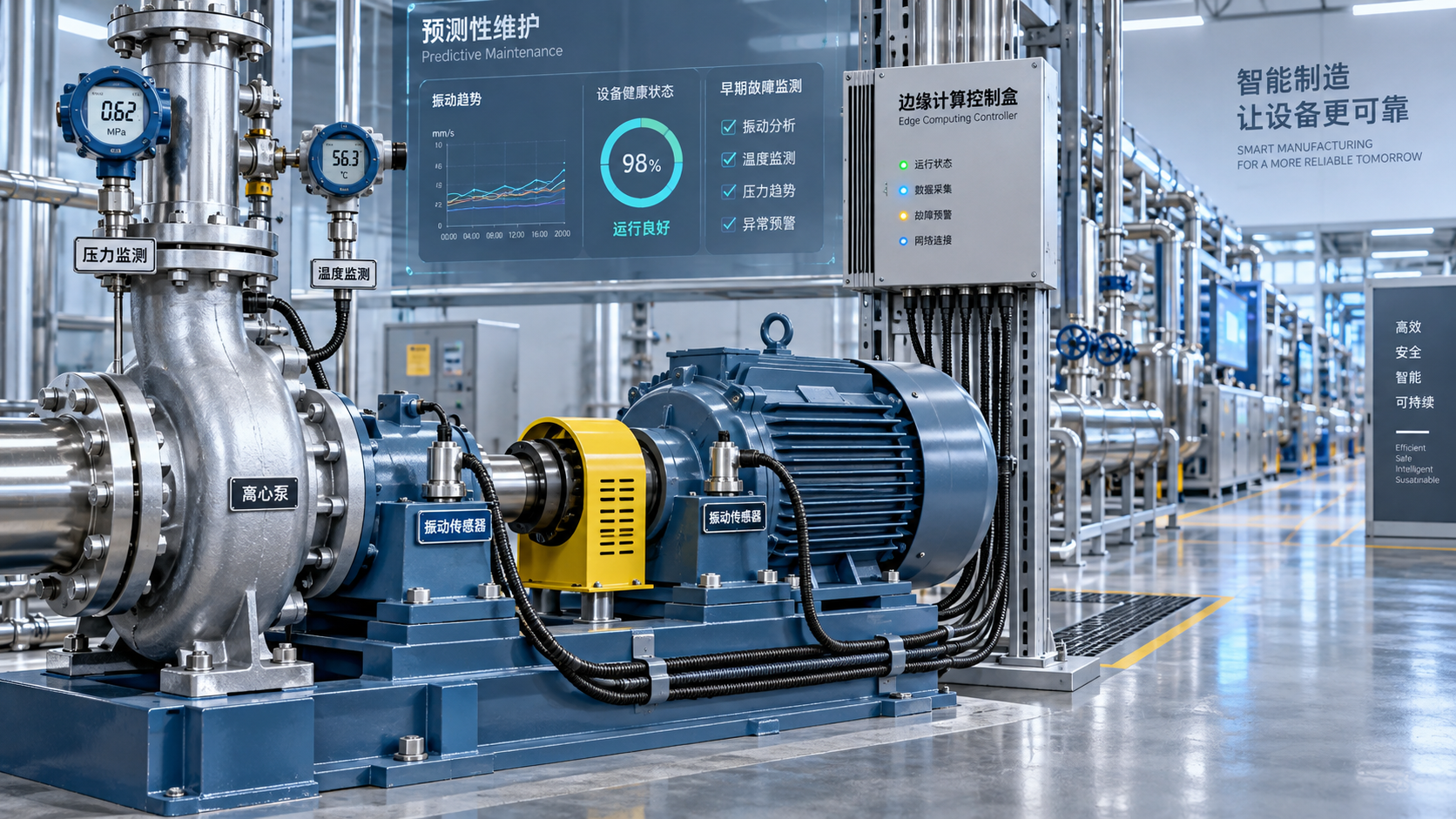
2. Predictive maintenance for assets that stop production, not every asset
Condition monitoring is one of the most discussed industrial IoT applications, but value depends on asset criticality and failure economics.
Vibration, temperature, pressure, and current data work best on constrained assets where unexpected failure causes major line disruption or safety exposure.
More common success comes from reducing unplanned stoppages on compressors, motors, pumps, furnaces, or high-speed rotating equipment.
A frequent misread is installing predictive systems on noncritical machines while bottleneck equipment still lacks basic maintenance discipline.
3. In-line quality monitoring when scrap appears too late
When quality issues surface only at final inspection, OEE suffers twice. Time is lost, and defective material has already consumed capacity.
Industrial IoT applications can connect torque data, dimensional checks, temperature curves, vision outputs, and process thresholds to each unit or batch.
This matters in electronics, precision parts, battery production, and healthcare-related manufacturing where small deviations become expensive failures later.
The right question is whether the system can trigger correction before large scrap accumulation, not merely document defects afterward.
4. Changeover optimization in high-mix environments
Factories running frequent product switches often lose more OEE to setup instability than to major mechanical failure.
Here, industrial IoT applications track recipe downloads, parameter confirmation, tool readiness, first-pass yield, and actual versus planned setup time.
The benefit is not only faster changeovers. It is repeatable changeovers with fewer startup defects and less dependence on tribal knowledge.
5. Energy visibility when utility cost affects operating decisions
In energy-intensive sectors, industrial IoT applications increasingly support OEE by showing how machines consume power during idle, run, warmup, and off-spec periods.
This is especially relevant for metals, thermal processing, clean manufacturing, and battery-related operations where energy cost directly changes margin.
Useful deployment links equipment states with energy meters. Otherwise, teams see total consumption but cannot tie it to avoidable operating behavior.
6. Material and WIP traceability across lines and sites
Visibility problems often begin before a machine stops. Missing material, uncertain lot status, and poor WIP location control create hidden waiting time.
Industrial IoT applications combine barcode, RFID, sensor events, and MES data to show where material sits, which order is blocked, and which lot touched which process.
That supports both throughput and compliance, particularly where traceability spans suppliers, contract manufacturing, and regional distribution channels.
7. Remote performance management for multi-site operations
The final use case is less about a single machine and more about management consistency. Multi-site businesses need comparable data definitions before they need more sensors.
Industrial IoT applications enable remote benchmarking, exception alerts, and standardized OEE views across plants, contract partners, and regional production networks.
This matters when supplier reliability, regional policy shifts, or cross-border expansion make distributed visibility a strategic requirement rather than an IT project.
Where Industrial IoT Applications Are Often Misjudged
The biggest implementation errors are usually basic.
- Chasing full connectivity before defining one measurable loss category.
- Comparing vendors on interface claims without checking real protocol compatibility.
- Ignoring operator workflow, alarm fatigue, and maintenance response capacity.
- Looking at hardware cost alone while underestimating integration and data modeling effort.
- Assuming similar lines need identical thresholds, even when product mix and tolerances differ.
In actual projects, industrial IoT applications fail less from bad technology than from weak problem framing and poor change discipline.
How to Decide Which Use Case Fits First
A practical rollout sequence usually starts by mapping losses against three filters: controllability, financial impact, and data availability.
If the loss is frequent, expensive, and already visible in partial form, industrial IoT applications can often deliver faster payback.
If the process is unstable, undocumented, or highly manual, standard work may need attention before advanced analytics.
- Define one operational question per pilot.
- Align data points with an OEE or traceability outcome.
- Check edge connectivity, legacy equipment access, and cybersecurity constraints.
- Set review windows for action quality, not dashboard usage alone.
This is also where curated industry intelligence becomes useful. Platforms like TradeNexus Pro help compare technology maturity, sector adoption patterns, and implementation context across markets.
A Smarter Next Step for OEE and Visibility
The strongest industrial IoT applications are usually the least abstract. They solve a specific visibility gap that already limits throughput, quality, maintenance, or coordination.
Before expanding across the factory, it helps to document which losses matter most, what data is already available, and where integration risk is highest.
From there, compare use cases by operational fit, not by marketing breadth. That approach produces better OEE gains, cleaner visibility, and more credible scaling decisions.
Get weekly intelligence in your inbox.
No noise. No sponsored content. Pure intelligence.
 Oct 12, 2026How Predictive Maintenance AI Detects Machine Failures Before Unplanned DowntimeHow Predictive Maintenance AI Detects Machine Failures Before Unplanned Downtime
 Oct 10, 2026How to Scope Packaging Automation for High-Mix Lines Without Creating BottlenecksHow to Scope Packaging Automation for High-Mix Lines Without Creating Bottlenecks
 Oct 08, 2026How Digital Health Improves Diagnostic Accuracy and Workflow in Clinical LabsHow Digital Health Improves Diagnostic Accuracy and Workflow in Clinical Labs
 Oct 07, 2026Selecting Voice Picking Systems for German Warehouses: Integration, Languages and ROISelecting Voice Picking Systems for German Warehouses: Integration, Languages and ROI
 Oct 06, 2026How to Choose Last Mile Dispatch Software for On-Time Delivery at ScaleHow to Choose Last Mile Dispatch Software for On-Time Delivery at Scale
 Oct 05, 2026Vietnam’s Consumer Electronics Market: Demand Shifts and Sourcing OpportunitiesVietnam’s Consumer Electronics Market: Demand Shifts and Sourcing Opportunities
 Oct 04, 2026Digital Health Investment Priorities for Providers: Improving Access, Outcomes, and EfficiencyDigital Health Investment Priorities for Providers: Improving Access, Outcomes, and Efficiency
 Oct 03, 2026How to Specify an FR4 Custom PCB Board for High-Voltage and High-Heat DesignsHow to Specify an FR4 Custom PCB Board for High-Voltage and High-Heat Designs
 Oct 02, 2026ERP Software Market Intelligence: Adoption, Pricing, and Vendor Signals to WatchERP Software Market Intelligence: Adoption, Pricing, and Vendor Signals to Watch
 Oct 01, 2026How to Select Calibrated Temperature Data Loggers for GMP Cold Storage MonitoringHow to Select Calibrated Temperature Data Loggers for GMP Cold Storage Monitoring
 Sep 30, 2026Custom Molded Rubber Pricing: What Drives Unit Cost and Tooling Fees?Custom Molded Rubber Pricing: What Drives Unit Cost and Tooling Fees?
 Sep 29, 2026How to Evaluate Energy Management Software Vendors for Multi-Site OperationsHow to Evaluate Energy Management Software Vendors for Multi-Site Operations
 Sep 28, 2026How to Select a DIN Rail Smart Meter for Multi-Circuit Energy MonitoringHow to Select a DIN Rail Smart Meter for Multi-Circuit Energy Monitoring
 Sep 27, 2026TWS Earbuds in Vietnam: Demand Drivers, Price Tiers, and Retail Channel OpportunitiesTWS Earbuds in Vietnam: Demand Drivers, Price Tiers, and Retail Channel Opportunities
 Sep 26, 2026How UAE Clinics Can Qualify a Smart Glucometer Supplier for Accuracy and ComplianceHow UAE Clinics Can Qualify a Smart Glucometer Supplier for Accuracy and Compliance
 Sep 25, 2026Buying Aesthetic Lasers in the USA: FDA Status, Wavelengths, and Service SupportBuying Aesthetic Lasers in the USA: FDA Status, Wavelengths, and Service Support
 Sep 24, 2026Laser Cutting Brass Sheet: How to Prevent Burrs and Heat Marks on Thin PartsLaser Cutting Brass Sheet: How to Prevent Burrs and Heat Marks on Thin Parts
 Sep 23, 2026How to Choose Lightweight ANC Headphones for Comfortable All-Day TravelHow to Choose Lightweight ANC Headphones for Comfortable All-Day Travel
 Sep 22, 2026IPX5 TWS Bluetooth Earbuds: What Protection Do They Offer for Workouts?IPX5 TWS Bluetooth Earbuds: What Protection Do They Offer for Workouts?
 Sep 21, 2026What to Look for in a Grid Integration Company for Utility-Scale Solar ProjectsWhat to Look for in a Grid Integration Company for Utility-Scale Solar Projects
 Sep 20, 2026Microgrid Controller Pricing: What Drives Cost in Commercial Energy Projects?Microgrid Controller Pricing: What Drives Cost in Commercial Energy Projects?
 Sep 19, 2026How to Choose a GaN Charger for Laptops Without Compromising Power or PortabilityHow to Choose a GaN Charger for Laptops Without Compromising Power or Portability
 Sep 18, 2026Floating Solar Farm Costs: CAPEX, OPEX, and the Site Factors That Shape ROIFloating Solar Farm Costs: CAPEX, OPEX, and the Site Factors That Shape ROI
 Sep 17, 2026Drone Delivery Solutions for Last-Mile Routes: Site, Payload, and Range PlanningDrone Delivery Solutions for Last-Mile Routes: Site, Payload, and Range Planning
 Sep 16, 2026When Low-Volume Electronics Manufacturing Makes More Sense Than Mass ProductionWhen Low-Volume Electronics Manufacturing Makes More Sense Than Mass Production
 Sep 15, 2026Wholesale WiFi Smart Switches: What Buyers Should Verify Before OrderingWholesale WiFi Smart Switches: What Buyers Should Verify Before Ordering
 Sep 14, 2026How to Select IoT Sensors for Reliable Monitoring in Harsh Industrial EnvironmentsHow to Select IoT Sensors for Reliable Monitoring in Harsh Industrial Environments