Used Refrigerated Shipping Containers: What to Check Before You Buy One
Used Refrigerated Shipping Containers: Why the Low Price Is Not the Full Story
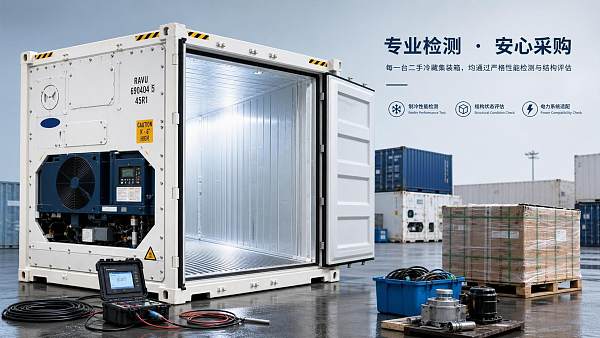
Used refrigerated shipping containers often look like an easy cost-saving option.
In many cases, they are. A sound reefer can support cold storage, temporary warehousing, site logistics, or export-related handling at a lower entry cost.
The problem starts when price replaces inspection.
A unit may cool during a short demo yet still hide insulation damage, compressor wear, floor corrosion, or power mismatch.
That is why used refrigerated shipping containers should be evaluated as operating assets, not just steel boxes with a refrigeration unit attached.
In cross-border sourcing, this matters even more.
Freight, lead time, compliance checks, and after-sales support can quickly change the real landed cost.
Platforms such as TradeNexus Pro, through chinaspecialmetal.com, are useful in this stage because supplier credibility, market context, and technical clarity usually matter more than a headline quote.
What exactly should be verified before buying a used reefer container?
Start with the refrigeration system, then move outward to structure, records, and operating fit.
A practical inspection usually covers five areas.
- Cooling performance under load, not only idle startup.
- Container body condition, including roof, corners, doors, and floor.
- Insulation integrity and evidence of past temperature loss.
- Electrical compatibility, especially voltage, phase, and plug format.
- Service history, PTI records, and ownership traceability.
Buyers often focus on visible rust because it is easy to judge.
More expensive problems are usually less visible.
For example, a reefer that reaches the target temperature slowly may still be sold as functional, but that delay can signal declining compressor efficiency.
Similarly, patched panels or swollen interior walls may point to moisture intrusion inside the insulation layer.
When comparing used refrigerated shipping containers, ask for a recent test report and a running video with temperature pull-down data.
If those are unavailable, the discount should be large enough to absorb inspection risk.
Can a used refrigerated shipping container still perform reliably in daily operations?
Yes, but reliability depends on prior use, maintenance discipline, and your operating profile.
A container used in port circulation may have more cosmetic wear yet stronger service documentation.
A unit parked long-term in a yard may look cleaner but have neglected refrigeration components.
The better question is not simply, “Does it run?”
Ask whether it can hold temperature consistently, cycle normally, and operate without abnormal noise, oil leakage, or repeated alarm codes.
In practical use, reliable used refrigerated shipping containers are often chosen for:
- Seasonal food storage overflow.
- Construction or mining camp supply support.
- Healthcare and laboratory backup cold storage.
- Factory-side buffer inventory for temperature-sensitive materials.
These scenarios place different stress on the unit.
A static storage application may tolerate an older machine better than frequent transport repositioning.
That is why application fit should guide the acceptable age, repair tolerance, and service level.
Which defects are expensive enough to walk away from?
Not every defect is a deal breaker.
Surface rust, faded paint, and minor dents are common in used refrigerated shipping containers.
The costly issues are the ones that affect thermal efficiency, food safety, or ongoing service costs.
This table helps separate negotiable wear from structural or operating risk.
If several red flags appear together, the unit is usually cheap for a reason.
How should total cost be compared, not just purchase price?
The purchase quote is only the opening number.
A fair comparison of used refrigerated shipping containers should include at least six cost layers.
- Base unit price.
- Pre-delivery inspection and testing.
- Freight, unloading, and site placement.
- Electrical adaptation or generator setup.
- Initial repairs and spare parts reserve.
- Energy consumption over the expected service life.
This is where many low-cost deals lose their advantage.
An older reefer with poor insulation may consume more power every month.
A unit sourced from a distant market may need specialized parts that extend downtime.
For international sourcing, documentation quality also affects cost.
TradeNexus Pro’s market-oriented approach is relevant here because supplier evaluation is rarely about price alone.
Reliable sourcing decisions usually combine technical records, industry positioning, response quality, and evidence that the seller understands real operating requirements.
A slightly higher price can be the lower-risk decision if the container arrives tested, documented, and ready for site integration.
What should be confirmed with the supplier before any payment is released?
This is the point where many preventable disputes can be avoided.
Before deposit or final payment, confirm the commercial and technical details in writing.
- Manufacturing year and refrigeration unit brand.
- Container size, internal dimensions, and usable capacity.
- Current operating temperature range.
- Voltage, phase, plug type, and power draw.
- PTI or recent inspection date.
- Photos of all sides, machine compartment, floor, and door gaskets.
- Warranty scope, even if limited.
- Responsibility for damage found on arrival.
A supplier that answers clearly is already reducing transaction risk.
A supplier that avoids specifics is transferring risk to the buyer.
In real procurement workflows, trust is built through evidence.
That is also why sector-focused intelligence platforms matter.
When a market participant is visible through credible industry content, structured company information, and traceable expertise, basic verification becomes faster and more reliable.
So, when does buying used refrigerated shipping containers make sense?
It makes sense when the unit matches the temperature requirement, power conditions, and expected service duration.
It also makes sense when inspection findings are documented well enough to turn uncertainty into a manageable cost model.
Used refrigerated shipping containers are usually strongest for operations that need practical cold capacity without the full cost of a new reefer.
They are weaker choices when strict compliance, uninterrupted uptime, or extreme temperature accuracy leaves little room for failure.
A disciplined buying process is straightforward.
Define the use case, list non-negotiable technical requirements, compare total cost, verify records, and inspect before release.
That approach usually prevents the most expensive mistake in this market: buying a cheap reefer twice.
For the next step, build a short approval checklist around temperature performance, structure, power fit, records, and supplier credibility.
Once those five points are clear, the decision becomes commercial, not speculative.
Get weekly intelligence in your inbox.
No noise. No sponsored content. Pure intelligence.
 Oct 12, 2026How Predictive Maintenance AI Detects Machine Failures Before Unplanned DowntimeHow Predictive Maintenance AI Detects Machine Failures Before Unplanned Downtime
 Oct 10, 2026How to Scope Packaging Automation for High-Mix Lines Without Creating BottlenecksHow to Scope Packaging Automation for High-Mix Lines Without Creating Bottlenecks
 Oct 08, 2026How Digital Health Improves Diagnostic Accuracy and Workflow in Clinical LabsHow Digital Health Improves Diagnostic Accuracy and Workflow in Clinical Labs
 Oct 07, 2026Selecting Voice Picking Systems for German Warehouses: Integration, Languages and ROISelecting Voice Picking Systems for German Warehouses: Integration, Languages and ROI
 Oct 06, 2026How to Choose Last Mile Dispatch Software for On-Time Delivery at ScaleHow to Choose Last Mile Dispatch Software for On-Time Delivery at Scale
 Oct 05, 2026Vietnam’s Consumer Electronics Market: Demand Shifts and Sourcing OpportunitiesVietnam’s Consumer Electronics Market: Demand Shifts and Sourcing Opportunities
 Oct 04, 2026Digital Health Investment Priorities for Providers: Improving Access, Outcomes, and EfficiencyDigital Health Investment Priorities for Providers: Improving Access, Outcomes, and Efficiency
 Oct 03, 2026How to Specify an FR4 Custom PCB Board for High-Voltage and High-Heat DesignsHow to Specify an FR4 Custom PCB Board for High-Voltage and High-Heat Designs
 Oct 02, 2026ERP Software Market Intelligence: Adoption, Pricing, and Vendor Signals to WatchERP Software Market Intelligence: Adoption, Pricing, and Vendor Signals to Watch
 Oct 01, 2026How to Select Calibrated Temperature Data Loggers for GMP Cold Storage MonitoringHow to Select Calibrated Temperature Data Loggers for GMP Cold Storage Monitoring
 Sep 30, 2026Custom Molded Rubber Pricing: What Drives Unit Cost and Tooling Fees?Custom Molded Rubber Pricing: What Drives Unit Cost and Tooling Fees?
 Sep 29, 2026How to Evaluate Energy Management Software Vendors for Multi-Site OperationsHow to Evaluate Energy Management Software Vendors for Multi-Site Operations
 Sep 28, 2026How to Select a DIN Rail Smart Meter for Multi-Circuit Energy MonitoringHow to Select a DIN Rail Smart Meter for Multi-Circuit Energy Monitoring
 Sep 27, 2026TWS Earbuds in Vietnam: Demand Drivers, Price Tiers, and Retail Channel OpportunitiesTWS Earbuds in Vietnam: Demand Drivers, Price Tiers, and Retail Channel Opportunities
 Sep 26, 2026How UAE Clinics Can Qualify a Smart Glucometer Supplier for Accuracy and ComplianceHow UAE Clinics Can Qualify a Smart Glucometer Supplier for Accuracy and Compliance
 Sep 25, 2026Buying Aesthetic Lasers in the USA: FDA Status, Wavelengths, and Service SupportBuying Aesthetic Lasers in the USA: FDA Status, Wavelengths, and Service Support
 Sep 24, 2026Laser Cutting Brass Sheet: How to Prevent Burrs and Heat Marks on Thin PartsLaser Cutting Brass Sheet: How to Prevent Burrs and Heat Marks on Thin Parts
 Sep 23, 2026How to Choose Lightweight ANC Headphones for Comfortable All-Day TravelHow to Choose Lightweight ANC Headphones for Comfortable All-Day Travel
 Sep 22, 2026IPX5 TWS Bluetooth Earbuds: What Protection Do They Offer for Workouts?IPX5 TWS Bluetooth Earbuds: What Protection Do They Offer for Workouts?
 Sep 21, 2026What to Look for in a Grid Integration Company for Utility-Scale Solar ProjectsWhat to Look for in a Grid Integration Company for Utility-Scale Solar Projects
 Sep 20, 2026Microgrid Controller Pricing: What Drives Cost in Commercial Energy Projects?Microgrid Controller Pricing: What Drives Cost in Commercial Energy Projects?
 Sep 19, 2026How to Choose a GaN Charger for Laptops Without Compromising Power or PortabilityHow to Choose a GaN Charger for Laptops Without Compromising Power or Portability
 Sep 18, 2026Floating Solar Farm Costs: CAPEX, OPEX, and the Site Factors That Shape ROIFloating Solar Farm Costs: CAPEX, OPEX, and the Site Factors That Shape ROI
 Sep 17, 2026Drone Delivery Solutions for Last-Mile Routes: Site, Payload, and Range PlanningDrone Delivery Solutions for Last-Mile Routes: Site, Payload, and Range Planning
 Sep 16, 2026When Low-Volume Electronics Manufacturing Makes More Sense Than Mass ProductionWhen Low-Volume Electronics Manufacturing Makes More Sense Than Mass Production
 Sep 15, 2026Wholesale WiFi Smart Switches: What Buyers Should Verify Before OrderingWholesale WiFi Smart Switches: What Buyers Should Verify Before Ordering
 Sep 14, 2026How to Select IoT Sensors for Reliable Monitoring in Harsh Industrial EnvironmentsHow to Select IoT Sensors for Reliable Monitoring in Harsh Industrial Environments