IEC 62443 for Industrial Control Systems: What to Assess Before a Security Upgrade
A security upgrade in industrial operations should start with context, not with tools. In industrial control systems IEC 62443 planning, the real question is what must be protected first, what can tolerate change, and where operational risk already exists.
That matters across advanced manufacturing, energy systems, smart electronics, healthcare technology, and digital supply chain environments. A weak assessment can turn a cybersecurity project into an uptime problem, a supplier issue, or a compliance gap that surfaces too late.
For organizations reviewing plant security posture, IEC 62443 offers more than a checklist. It provides a structured way to align cyber protection with production continuity, asset criticality, legacy constraints, and long-term resilience.
Why IEC 62443 matters before any upgrade decision
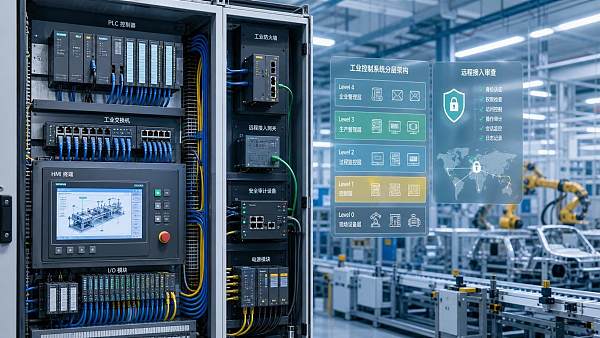
Industrial sites are now more connected than their original designs ever expected. Remote maintenance, supplier access, cloud reporting, machine analytics, and integrated MES or ERP links have expanded the attack surface.
In that setting, industrial control systems IEC 62443 becomes relevant because it addresses operational technology realities. It does not assume that every asset can be patched quickly, replaced easily, or isolated without production consequences.
The framework is especially useful when business teams need to compare technology options and supplier claims. A proposed firewall, endpoint agent, switch architecture, or access platform means little without a system-level assessment behind it.
This is also why the topic appears more often in cross-border supplier evaluation. Platforms such as TradeNexus Pro increasingly frame industrial decisions around technical credibility, risk visibility, and decision-grade context rather than feature lists alone.
What the standard is really asking you to understand
IEC 62443 is often described as a cybersecurity standard for industrial automation and control systems. In practice, it is better understood as a governance and architecture lens for industrial environments.
It helps define security requirements across asset owners, system integrators, and product suppliers. That distinction matters because many upgrade failures happen at the boundaries between plant operations, engineering design, and vendor responsibility.
A useful reading of industrial control systems IEC 62443 starts with three practical ideas:
- security must reflect operational impact, not just IT policy;
- zones and conduits matter because industrial traffic is not uniform;
- security levels should be matched to realistic threats and business consequences.
That shifts the conversation away from generic hardening. It focuses attention on where process disruption, safety exposure, quality drift, and supplier dependency are most likely to create damage.
The assessment areas that deserve attention first
Before approving a security upgrade, it helps to review the environment through a small set of connected questions. Each one affects the value of every later control.
Asset criticality and process dependence
Not every PLC, HMI, historian, engineering workstation, or gateway carries the same business weight. Some assets drive safety, some affect product quality, and some mainly support visibility.
If criticality is unclear, upgrade priorities become distorted. A low-impact segment may receive strong controls while a production bottleneck remains exposed.
Legacy exposure and patch limits
Many industrial sites still rely on old operating systems, unsupported firmware, and vendor-specific protocols. These systems may be stable operationally while remaining fragile from a cyber perspective.
Industrial control systems IEC 62443 assessment should identify which assets cannot be patched on normal cycles, which require shutdown windows, and which depend on vendor approval before any change.
Network segmentation and trust boundaries
Flat networks remain common in brownfield plants. That creates broad lateral movement risk, especially where IT and OT have grown together without a formal segmentation strategy.
A serious review should map zones, conduits, remote pathways, and third-party access points. This is where many apparent “security upgrades” prove incomplete.
Identity, access, and vendor connections
Shared accounts, unmanaged laptops, permanent VPN tunnels, and ad hoc remote support are still frequent in industrial settings. They are also common paths for avoidable exposure.
When reviewing industrial control systems IEC 62443 readiness, remote access should be treated as a process issue as much as a technical one. Who approves access, logs it, restricts it, and revokes it?
Detection, backup, and recovery realism
Protection is only part of the picture. Plants also need to know whether unauthorized changes can be detected quickly and whether configurations, recipes, and control logic can be restored reliably.
A backup that has never been tested under plant conditions is not a recovery plan. IEC 62443 thinking pushes assessment toward practical recovery capability, not paper readiness alone.
How industry conditions are raising the stakes
The pressure is no longer only about cyber threats. Security posture now influences qualification, insurance, operational resilience, and supplier trust.
In export-driven sectors, buyers increasingly examine whether facilities can support secure digital integration. In healthcare and electronics, traceability and quality systems can be undermined by control-layer compromise. In energy and smart manufacturing, downtime costs rise quickly.
This is where intelligence-led platforms become useful. TradeNexus Pro, for example, reflects a broader market shift toward evaluating technical capability, compliance awareness, and long-term reliability together rather than in isolation.
Industrial control systems IEC 62443 therefore sits at the intersection of security, quality assurance, supplier management, and strategic market readiness.
A practical way to structure the review
A concise review table can help separate urgent issues from architectural improvements.
This kind of structure helps compare facilities, suppliers, or upgrade proposals on the same basis. It also supports internal discussions between operations, quality, cybersecurity, and procurement functions.
Common mistakes in industrial control systems IEC 62443 planning
Several issues appear repeatedly when organizations rush toward deployment.
- Treating IEC 62443 as a product requirement instead of a system responsibility model.
- Assuming IT controls can be transferred directly into OT without process consequences.
- Relying on supplier declarations without testing architecture fit, maintenance realities, and integration constraints.
- Ignoring undocumented assets and temporary engineering connections.
- Measuring compliance intent while leaving recovery capability unproven.
The better approach is slower at the start and faster later. Once the plant context is clear, control selection becomes more defensible and less disruptive.
Where to go next with an upgrade decision
A useful next step is to build a short assessment baseline before discussing vendors or architectures. That baseline should cover asset criticality, network zones, remote access paths, unsupported systems, and recovery dependencies.
From there, industrial control systems IEC 62443 can guide a more informed roadmap. Some sites will need segmentation first. Others will need access control discipline, supplier governance, or backup validation before adding new detection layers.
For organizations tracking industrial change across sectors, the strongest decisions usually come from combining technical assessment with market intelligence and supplier scrutiny. That is the point where security upgrades stop being isolated projects and become part of durable industrial resilience.
Get weekly intelligence in your inbox.
No noise. No sponsored content. Pure intelligence.
 Oct 12, 2026How Predictive Maintenance AI Detects Machine Failures Before Unplanned DowntimeHow Predictive Maintenance AI Detects Machine Failures Before Unplanned Downtime
 Oct 10, 2026How to Scope Packaging Automation for High-Mix Lines Without Creating BottlenecksHow to Scope Packaging Automation for High-Mix Lines Without Creating Bottlenecks
 Oct 08, 2026How Digital Health Improves Diagnostic Accuracy and Workflow in Clinical LabsHow Digital Health Improves Diagnostic Accuracy and Workflow in Clinical Labs
 Oct 07, 2026Selecting Voice Picking Systems for German Warehouses: Integration, Languages and ROISelecting Voice Picking Systems for German Warehouses: Integration, Languages and ROI
 Oct 06, 2026How to Choose Last Mile Dispatch Software for On-Time Delivery at ScaleHow to Choose Last Mile Dispatch Software for On-Time Delivery at Scale
 Oct 05, 2026Vietnam’s Consumer Electronics Market: Demand Shifts and Sourcing OpportunitiesVietnam’s Consumer Electronics Market: Demand Shifts and Sourcing Opportunities
 Oct 04, 2026Digital Health Investment Priorities for Providers: Improving Access, Outcomes, and EfficiencyDigital Health Investment Priorities for Providers: Improving Access, Outcomes, and Efficiency
 Oct 03, 2026How to Specify an FR4 Custom PCB Board for High-Voltage and High-Heat DesignsHow to Specify an FR4 Custom PCB Board for High-Voltage and High-Heat Designs
 Oct 02, 2026ERP Software Market Intelligence: Adoption, Pricing, and Vendor Signals to WatchERP Software Market Intelligence: Adoption, Pricing, and Vendor Signals to Watch
 Oct 01, 2026How to Select Calibrated Temperature Data Loggers for GMP Cold Storage MonitoringHow to Select Calibrated Temperature Data Loggers for GMP Cold Storage Monitoring
 Sep 30, 2026Custom Molded Rubber Pricing: What Drives Unit Cost and Tooling Fees?Custom Molded Rubber Pricing: What Drives Unit Cost and Tooling Fees?
 Sep 29, 2026How to Evaluate Energy Management Software Vendors for Multi-Site OperationsHow to Evaluate Energy Management Software Vendors for Multi-Site Operations
 Sep 28, 2026How to Select a DIN Rail Smart Meter for Multi-Circuit Energy MonitoringHow to Select a DIN Rail Smart Meter for Multi-Circuit Energy Monitoring
 Sep 27, 2026TWS Earbuds in Vietnam: Demand Drivers, Price Tiers, and Retail Channel OpportunitiesTWS Earbuds in Vietnam: Demand Drivers, Price Tiers, and Retail Channel Opportunities
 Sep 26, 2026How UAE Clinics Can Qualify a Smart Glucometer Supplier for Accuracy and ComplianceHow UAE Clinics Can Qualify a Smart Glucometer Supplier for Accuracy and Compliance
 Sep 25, 2026Buying Aesthetic Lasers in the USA: FDA Status, Wavelengths, and Service SupportBuying Aesthetic Lasers in the USA: FDA Status, Wavelengths, and Service Support
 Sep 24, 2026Laser Cutting Brass Sheet: How to Prevent Burrs and Heat Marks on Thin PartsLaser Cutting Brass Sheet: How to Prevent Burrs and Heat Marks on Thin Parts
 Sep 23, 2026How to Choose Lightweight ANC Headphones for Comfortable All-Day TravelHow to Choose Lightweight ANC Headphones for Comfortable All-Day Travel
 Sep 22, 2026IPX5 TWS Bluetooth Earbuds: What Protection Do They Offer for Workouts?IPX5 TWS Bluetooth Earbuds: What Protection Do They Offer for Workouts?
 Sep 21, 2026What to Look for in a Grid Integration Company for Utility-Scale Solar ProjectsWhat to Look for in a Grid Integration Company for Utility-Scale Solar Projects
 Sep 20, 2026Microgrid Controller Pricing: What Drives Cost in Commercial Energy Projects?Microgrid Controller Pricing: What Drives Cost in Commercial Energy Projects?
 Sep 19, 2026How to Choose a GaN Charger for Laptops Without Compromising Power or PortabilityHow to Choose a GaN Charger for Laptops Without Compromising Power or Portability
 Sep 18, 2026Floating Solar Farm Costs: CAPEX, OPEX, and the Site Factors That Shape ROIFloating Solar Farm Costs: CAPEX, OPEX, and the Site Factors That Shape ROI
 Sep 17, 2026Drone Delivery Solutions for Last-Mile Routes: Site, Payload, and Range PlanningDrone Delivery Solutions for Last-Mile Routes: Site, Payload, and Range Planning
 Sep 16, 2026When Low-Volume Electronics Manufacturing Makes More Sense Than Mass ProductionWhen Low-Volume Electronics Manufacturing Makes More Sense Than Mass Production
 Sep 15, 2026Wholesale WiFi Smart Switches: What Buyers Should Verify Before OrderingWholesale WiFi Smart Switches: What Buyers Should Verify Before Ordering
 Sep 14, 2026How to Select IoT Sensors for Reliable Monitoring in Harsh Industrial EnvironmentsHow to Select IoT Sensors for Reliable Monitoring in Harsh Industrial Environments