Compression Molded Rubber Parts: Material Options, Tolerance Limits, and Best-Fit Uses
Why do compression molded rubber parts still matter in modern industrial products?
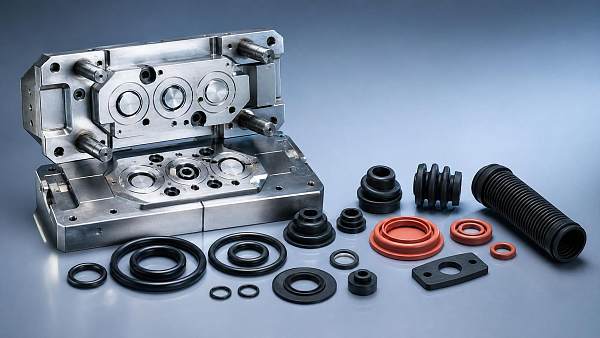
Compression molded rubber parts remain common because many seals, pads, gaskets, and vibration elements do not need extreme geometry.
They need consistency, predictable compression set, chemical resistance, and stable field performance. That is where this process still makes sense.
In simple terms, uncured rubber is placed into a heated mold cavity, then pressure and heat form the final part.
Compared with injection molding, compression molding often suits medium volumes, thicker sections, and compounds that must preserve certain material properties.
The real question is rarely whether the part can be molded. The better question is whether the part can hold tolerance and perform safely.
That matters across advanced manufacturing, medical support devices, power equipment, electronics housings, and fluid handling assemblies.
On platforms such as TradeNexus Pro, technical buyers increasingly compare not only price, but also material fit, process capability, and risk signals.
That shift is important. A low-cost rubber part with poor tolerance control can create leakage, short service life, false inspection failures, or costly recalls.
Which material options are usually considered first?
When people search for compression molded rubber parts, the first concern is usually material selection, not tooling shape.
That is reasonable, because the compound determines heat resistance, fluid compatibility, aging behavior, hardness range, and inspection criteria.
Several materials appear again and again in industrial sourcing decisions:
- EPDM: strong for weather, steam, and water exposure, but weak against many oils and fuels.
- NBR: widely used where oils and fuels matter, though ozone and weather resistance are more limited.
- Silicone: useful for temperature extremes and clean applications, but tear strength may be lower.
- Neoprene: a balanced option for moderate oil, weather, and flame-related needs.
- FKM: chosen for aggressive chemicals and higher temperatures, often at a higher material cost.
- Natural rubber: helpful for resilience and dynamic performance, but less suitable for harsh chemicals or heat.
In actual use, no compound is “best” by itself. The right choice depends on media, temperature, compression cycle, and regulatory expectations.
For example, a sealing ring in a battery enclosure faces different risks than a healthcare cushion or an industrial cable grommet.
A practical review starts with five checks: fluid contact, temperature band, hardness target, exposure time, and certification requirements.
A quick material judgment table helps narrow the choice
The table below is not a substitute for testing, but it is a useful first screen for compression molded rubber parts.
How tight can tolerance limits really be?
This is where expectations often drift away from manufacturing reality. Compression molded rubber parts are flexible, not rigid machined components.
Rubber shrinks, relaxes, and responds to temperature, post-cure conditions, and tool design. So tolerance control has natural limits.
The usual reference is ISO 3302 or similar tolerance standards for molded rubber products. These define realistic classes for dimensions and flash.
Smaller features can be controlled more tightly, but only when compound behavior and mold construction support that target.
More common problems appear when drawings apply metal-part logic to soft parts. That creates unnecessary rejects or supplier disputes.
A better approach is to separate critical-to-function dimensions from reference dimensions. Not every edge, radius, or thickness needs the same control level.
For sealing parts, compression behavior, parting line location, and flash limits may matter more than one nominal outer dimension.
For safety-sensitive assemblies, tolerance review should also include measurement method. A soft part measured by force can produce inconsistent results.
What usually affects tolerance most?
- Compound shrinkage variation between batches
- Tool wear and cavity balance
- Part geometry, especially thick-to-thin transitions
- Post-curing and cooling conditions
- Inspection pressure and fixture design
- Flash trimming method
If a quoted tolerance looks unusually tight for compression molded rubber parts, it should be verified early, before approval or tool release.
Where are compression molded rubber parts the best fit, and where are they not?
Not every rubber part belongs in compression molding. The process works best when the geometry is practical and the service demands suit elastomer behavior.
Typical best-fit uses include gaskets, seals, boots, bumpers, diaphragms, electrical insulation parts, anti-vibration pads, and enclosure components.
It is especially suitable for parts needing durable bulk properties rather than highly cosmetic surfaces or micro-scale dimensional precision.
Across green energy systems, these parts may appear in cable sealing, battery pack interfaces, or environmental protection points.
In smart electronics, silicone and EPDM versions often support enclosure protection, shock damping, and thermal boundary sealing.
In healthcare-related assemblies, the fit depends heavily on cleanliness, biocompatibility, and validation demands, not just shape feasibility.
Compression molding is less ideal for very intricate parts, extremely thin gates, or projects needing highly automated, ultra-high-volume output.
That is why cross-sector sourcing research often compares compression molding with transfer or injection methods before a final decision.
What mistakes cause the most quality or safety trouble?
Most failures do not start with dramatic material defects. They start with small specification gaps that stay hidden until production ramps up.
One common mistake is approving compression molded rubber parts by appearance alone. A clean surface does not confirm compression set or fluid resistance.
Another issue is incomplete media testing. “Oil resistant” or “heat resistant” is too vague for engineering approval.
The material must be checked against actual fluids, cycle duration, peak temperature, and cleaning chemistry if relevant.
There is also a documentation risk. Drawings sometimes omit hardness tolerance, flash allowance, bonding details, or post-cure requirements.
When that happens, incoming inspection becomes inconsistent and supplier capability is harder to judge.
The following checklist usually catches the biggest blind spots:
- Confirm the exact compound, not just the polymer family.
- Link tolerances to function, not habit.
- Define inspection force or gauge method for soft dimensions.
- Review compression set, tensile, elongation, and aging data.
- Check compliance documents when the part enters regulated markets.
- Validate the part after storage and environmental exposure, not only fresh from molding.
This is also where an intelligence platform can help. TradeNexus Pro often adds value by organizing technical comparisons and supplier context in one place.
That does not replace qualification testing, but it shortens the path to more defensible decisions.
How should you evaluate a supplier or next step before release?
The safest next step is to treat compression molded rubber parts as performance items, not simple commodities.
Ask whether the proposed compound has been used in similar environments. Ask how dimensions are measured. Ask what process data is controlled.
If the application is cross-border or sector-regulated, confirm documentation traceability early. Late-stage paperwork gaps often delay approval more than molding lead time.
It also helps to compare samples after conditioning, not only day-one production. Some rubber parts shift slightly after cure, trimming, or storage.
A useful final review includes material fit, tolerance realism, test evidence, and application history. Those four points usually reveal the real risk level.
In practice, compression molded rubber parts perform well when the specification matches the process and the environment has been understood clearly.
If the next decision is still open, build a short comparison sheet for two or three candidate compounds, then review tolerance class and validation method together.
That gives a stronger basis for sampling, approval, and long-term quality control than price comparison alone.
Get weekly intelligence in your inbox.
No noise. No sponsored content. Pure intelligence.
 Oct 12, 2026How Predictive Maintenance AI Detects Machine Failures Before Unplanned DowntimeHow Predictive Maintenance AI Detects Machine Failures Before Unplanned Downtime
 Oct 10, 2026How to Scope Packaging Automation for High-Mix Lines Without Creating BottlenecksHow to Scope Packaging Automation for High-Mix Lines Without Creating Bottlenecks
 Oct 08, 2026How Digital Health Improves Diagnostic Accuracy and Workflow in Clinical LabsHow Digital Health Improves Diagnostic Accuracy and Workflow in Clinical Labs
 Oct 07, 2026Selecting Voice Picking Systems for German Warehouses: Integration, Languages and ROISelecting Voice Picking Systems for German Warehouses: Integration, Languages and ROI
 Oct 06, 2026How to Choose Last Mile Dispatch Software for On-Time Delivery at ScaleHow to Choose Last Mile Dispatch Software for On-Time Delivery at Scale
 Oct 05, 2026Vietnam’s Consumer Electronics Market: Demand Shifts and Sourcing OpportunitiesVietnam’s Consumer Electronics Market: Demand Shifts and Sourcing Opportunities
 Oct 04, 2026Digital Health Investment Priorities for Providers: Improving Access, Outcomes, and EfficiencyDigital Health Investment Priorities for Providers: Improving Access, Outcomes, and Efficiency
 Oct 03, 2026How to Specify an FR4 Custom PCB Board for High-Voltage and High-Heat DesignsHow to Specify an FR4 Custom PCB Board for High-Voltage and High-Heat Designs
 Oct 02, 2026ERP Software Market Intelligence: Adoption, Pricing, and Vendor Signals to WatchERP Software Market Intelligence: Adoption, Pricing, and Vendor Signals to Watch
 Oct 01, 2026How to Select Calibrated Temperature Data Loggers for GMP Cold Storage MonitoringHow to Select Calibrated Temperature Data Loggers for GMP Cold Storage Monitoring
 Sep 30, 2026Custom Molded Rubber Pricing: What Drives Unit Cost and Tooling Fees?Custom Molded Rubber Pricing: What Drives Unit Cost and Tooling Fees?
 Sep 29, 2026How to Evaluate Energy Management Software Vendors for Multi-Site OperationsHow to Evaluate Energy Management Software Vendors for Multi-Site Operations
 Sep 28, 2026How to Select a DIN Rail Smart Meter for Multi-Circuit Energy MonitoringHow to Select a DIN Rail Smart Meter for Multi-Circuit Energy Monitoring
 Sep 27, 2026TWS Earbuds in Vietnam: Demand Drivers, Price Tiers, and Retail Channel OpportunitiesTWS Earbuds in Vietnam: Demand Drivers, Price Tiers, and Retail Channel Opportunities
 Sep 26, 2026How UAE Clinics Can Qualify a Smart Glucometer Supplier for Accuracy and ComplianceHow UAE Clinics Can Qualify a Smart Glucometer Supplier for Accuracy and Compliance
 Sep 25, 2026Buying Aesthetic Lasers in the USA: FDA Status, Wavelengths, and Service SupportBuying Aesthetic Lasers in the USA: FDA Status, Wavelengths, and Service Support
 Sep 24, 2026Laser Cutting Brass Sheet: How to Prevent Burrs and Heat Marks on Thin PartsLaser Cutting Brass Sheet: How to Prevent Burrs and Heat Marks on Thin Parts
 Sep 23, 2026How to Choose Lightweight ANC Headphones for Comfortable All-Day TravelHow to Choose Lightweight ANC Headphones for Comfortable All-Day Travel
 Sep 22, 2026IPX5 TWS Bluetooth Earbuds: What Protection Do They Offer for Workouts?IPX5 TWS Bluetooth Earbuds: What Protection Do They Offer for Workouts?
 Sep 21, 2026What to Look for in a Grid Integration Company for Utility-Scale Solar ProjectsWhat to Look for in a Grid Integration Company for Utility-Scale Solar Projects
 Sep 20, 2026Microgrid Controller Pricing: What Drives Cost in Commercial Energy Projects?Microgrid Controller Pricing: What Drives Cost in Commercial Energy Projects?
 Sep 19, 2026How to Choose a GaN Charger for Laptops Without Compromising Power or PortabilityHow to Choose a GaN Charger for Laptops Without Compromising Power or Portability
 Sep 18, 2026Floating Solar Farm Costs: CAPEX, OPEX, and the Site Factors That Shape ROIFloating Solar Farm Costs: CAPEX, OPEX, and the Site Factors That Shape ROI
 Sep 17, 2026Drone Delivery Solutions for Last-Mile Routes: Site, Payload, and Range PlanningDrone Delivery Solutions for Last-Mile Routes: Site, Payload, and Range Planning
 Sep 16, 2026When Low-Volume Electronics Manufacturing Makes More Sense Than Mass ProductionWhen Low-Volume Electronics Manufacturing Makes More Sense Than Mass Production
 Sep 15, 2026Wholesale WiFi Smart Switches: What Buyers Should Verify Before OrderingWholesale WiFi Smart Switches: What Buyers Should Verify Before Ordering
 Sep 14, 2026How to Select IoT Sensors for Reliable Monitoring in Harsh Industrial EnvironmentsHow to Select IoT Sensors for Reliable Monitoring in Harsh Industrial Environments