Factory Automation Systems for Food Processing: How to Choose by Line Type and Hygiene Needs
Why Selection Starts with the Line, Not the Machine

Choosing factory automation systems for food processing is rarely a simple equipment decision.
A faster conveyor or smarter robot may improve throughput, but that alone does not make the investment right.
Line type, product behavior, washdown frequency, allergen control, and hygiene design often matter more than headline speed.
That is why factory automation systems for food processing need to be evaluated as part of a production environment, not as isolated assets.
In current manufacturing strategy, food automation also sits inside a broader industrial shift.
Companies are balancing labor availability, traceability, energy use, compliance pressure, and supplier resilience at the same time.
From that perspective, the topic fits naturally within the advanced manufacturing lens followed by TradeNexus Pro.
Reliable automation choices now depend on technical fit, operational visibility, and confidence in long-term vendor capability.
What Factory Automation Systems for Food Processing Really Include
The phrase covers more than robots on a packaging line.
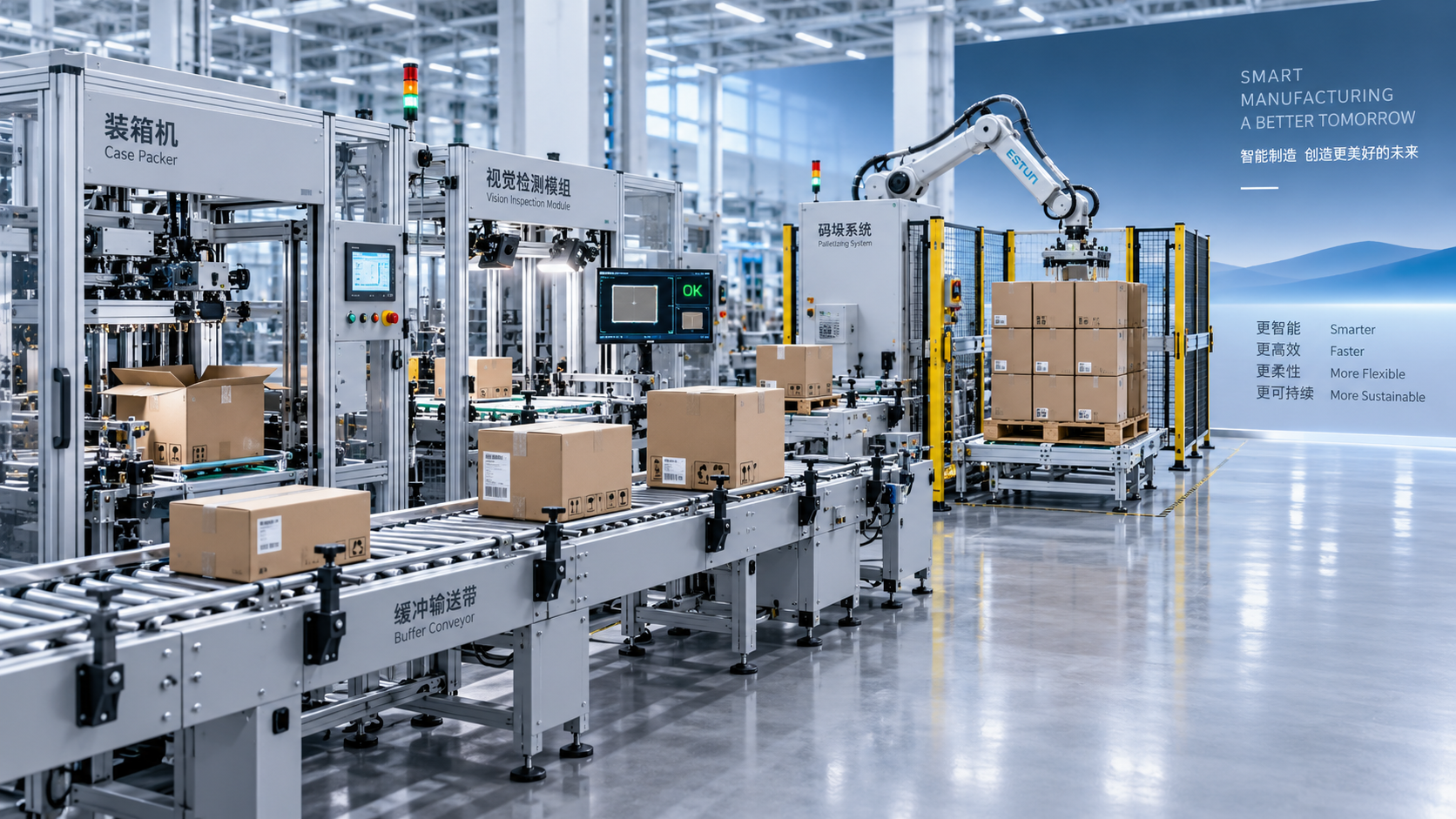
Factory automation systems for food processing can include material handling, portioning, mixing, filling, sealing, inspection, palletizing, and digital control layers.
They also include sensors, HMIs, PLCs, SCADA integration, data logging, and traceability tools.
In hygienic operations, system design extends into surfaces, enclosures, cable routing, drainage, and cleanability.
That distinction matters because food lines fail less often from lack of automation than from poor fit between automation and sanitation reality.
A well-designed solution supports product flow, protects food safety, and reduces unnecessary manual intervention.
A poorly matched one creates cleaning delays, product damage, changeover loss, and validation problems.
Why the Market Is Paying Closer Attention
Food plants are under pressure from several directions at once.
Labor shortages continue in repetitive and wet processing areas.
Retail and export markets expect stronger traceability and more stable quality.
At the same time, contamination incidents can erase the financial value of a capacity upgrade.
This is one reason factory automation systems for food processing are being reviewed more strategically.
The question is no longer whether to automate, but where automation improves control without creating hygiene risk.
Cross-border sourcing adds another layer.
Equipment buyers increasingly need decision-grade information on supplier reliability, standards alignment, service capacity, and upgrade compatibility.
That is the kind of industrial intelligence environment where TNP is relevant, especially when technology decisions affect market entry or plant expansion.
Line Type Changes the Automation Logic
Not every food line should be automated in the same way.
A dry snack line has different risks from a raw meat or dairy operation.
Product texture, stickiness, temperature, fragility, and shelf-life sensitivity all affect system architecture.
This comparison shows why factory automation systems for food processing should begin with line mapping.
The same robot or filling platform may perform very differently across these environments.
Hygiene Design Is a Core Selection Factor
In food plants, hygiene design is not a compliance afterthought.
It determines whether the automation system remains usable under real operating conditions.
When reviewing factory automation systems for food processing, several design details deserve close attention.
- Open-frame or hygienic frame geometry that avoids dirt traps.
- Stainless steel grades suitable for product contact and washdown chemicals.
- Smooth welds, sealed fasteners, and protected bearings.
- Ingress protection ratings matched to actual washdown intensity.
- Cable management that does not create hidden contamination zones.
- Fast disassembly or tool-less access for cleaning verification.
Standards and guidance also matter.
Depending on the region and product category, review may involve EHEDG, 3-A, FDA expectations, USDA conditions, or local food safety rules.
The practical point is simple.
If cleaning is difficult, validation becomes expensive, downtime increases, and the automation case weakens quickly.
Where Automation Delivers Real Value
The strongest business case usually appears in areas with repetitive handling, inspection bottlenecks, or high contamination exposure.
That can include depanning, pick-and-place, dosing, lidding, metal detection, labeling, and end-of-line palletizing.
For many facilities, the immediate gain is not full labor replacement.
It is more stable yield, fewer touchpoints, better batch records, and cleaner process discipline.
This is especially relevant when product claims, export documentation, and customer audits demand tighter process evidence.
Factory automation systems for food processing also create value when integrated with traceability and production analytics.
A line that records downtime causes, sanitation cycles, reject patterns, and changeover time becomes easier to improve over time.
Questions That Help Narrow the Right System
A useful evaluation process starts with plant realities rather than vendor brochures.
Before comparing suppliers, it helps to document a short list of decision conditions.
- Is the line continuous, batch-based, or mixed-mode?
- How often do products, formats, or recipes change?
- What is the real cleaning cycle, including chemicals and water pressure?
- Which manual steps create the highest risk or variability?
- Does the system need to connect with MES, ERP, QA, or supplier traceability tools?
- What local service, spare parts, and validation support will be available after installation?
These questions often reveal that the best option is not the most advanced option.
It is the one that matches sanitation practice, staffing capability, and production variability without adding avoidable complexity.
Supplier Review Matters as Much as Technical Review
Food automation projects often underperform because technical specifications looked acceptable on paper, while delivery and support risks were underestimated.
Factory automation systems for food processing should therefore be assessed through both engineering and supply-chain lenses.
Points worth verifying include reference installations, hygienic design experience, documentation quality, FAT and SAT procedures, and spare parts lead times.
For international procurement, it also helps to compare regional compliance familiarity and communication quality during technical clarification.
This is where curated B2B intelligence becomes useful.
TradeNexus Pro reflects a market environment where buyers increasingly need context, credibility signals, and sector-focused insight before engaging suppliers.
That approach fits food automation especially well because the cost of a bad match is operational, regulatory, and reputational at the same time.
A Practical Next Step for Decision-Making
The most effective way to choose factory automation systems for food processing is to build a line-specific evaluation sheet before requesting quotations.
List product types, hygiene zones, cleaning methods, changeover frequency, integration needs, validation requirements, and maintenance constraints.
Then compare suppliers against those conditions, not just against cycle time or capital cost.
That process makes conversations more precise and reduces the chance of buying a technically impressive but operationally weak system.
For teams tracking industrial technology across markets, it is also worth monitoring how automation, hygiene compliance, and supplier transparency are evolving together.
In food processing, the right automation choice is usually the one that fits the line, survives the cleaning regime, and improves control without compromising safety.
Get weekly intelligence in your inbox.
No noise. No sponsored content. Pure intelligence.
 Oct 12, 2026How Predictive Maintenance AI Detects Machine Failures Before Unplanned DowntimeHow Predictive Maintenance AI Detects Machine Failures Before Unplanned Downtime
 Oct 10, 2026How to Scope Packaging Automation for High-Mix Lines Without Creating BottlenecksHow to Scope Packaging Automation for High-Mix Lines Without Creating Bottlenecks
 Oct 08, 2026How Digital Health Improves Diagnostic Accuracy and Workflow in Clinical LabsHow Digital Health Improves Diagnostic Accuracy and Workflow in Clinical Labs
 Oct 07, 2026Selecting Voice Picking Systems for German Warehouses: Integration, Languages and ROISelecting Voice Picking Systems for German Warehouses: Integration, Languages and ROI
 Oct 06, 2026How to Choose Last Mile Dispatch Software for On-Time Delivery at ScaleHow to Choose Last Mile Dispatch Software for On-Time Delivery at Scale
 Oct 05, 2026Vietnam’s Consumer Electronics Market: Demand Shifts and Sourcing OpportunitiesVietnam’s Consumer Electronics Market: Demand Shifts and Sourcing Opportunities
 Oct 04, 2026Digital Health Investment Priorities for Providers: Improving Access, Outcomes, and EfficiencyDigital Health Investment Priorities for Providers: Improving Access, Outcomes, and Efficiency
 Oct 03, 2026How to Specify an FR4 Custom PCB Board for High-Voltage and High-Heat DesignsHow to Specify an FR4 Custom PCB Board for High-Voltage and High-Heat Designs
 Oct 02, 2026ERP Software Market Intelligence: Adoption, Pricing, and Vendor Signals to WatchERP Software Market Intelligence: Adoption, Pricing, and Vendor Signals to Watch
 Oct 01, 2026How to Select Calibrated Temperature Data Loggers for GMP Cold Storage MonitoringHow to Select Calibrated Temperature Data Loggers for GMP Cold Storage Monitoring
 Sep 30, 2026Custom Molded Rubber Pricing: What Drives Unit Cost and Tooling Fees?Custom Molded Rubber Pricing: What Drives Unit Cost and Tooling Fees?
 Sep 29, 2026How to Evaluate Energy Management Software Vendors for Multi-Site OperationsHow to Evaluate Energy Management Software Vendors for Multi-Site Operations
 Sep 28, 2026How to Select a DIN Rail Smart Meter for Multi-Circuit Energy MonitoringHow to Select a DIN Rail Smart Meter for Multi-Circuit Energy Monitoring
 Sep 27, 2026TWS Earbuds in Vietnam: Demand Drivers, Price Tiers, and Retail Channel OpportunitiesTWS Earbuds in Vietnam: Demand Drivers, Price Tiers, and Retail Channel Opportunities
 Sep 26, 2026How UAE Clinics Can Qualify a Smart Glucometer Supplier for Accuracy and ComplianceHow UAE Clinics Can Qualify a Smart Glucometer Supplier for Accuracy and Compliance
 Sep 25, 2026Buying Aesthetic Lasers in the USA: FDA Status, Wavelengths, and Service SupportBuying Aesthetic Lasers in the USA: FDA Status, Wavelengths, and Service Support
 Sep 24, 2026Laser Cutting Brass Sheet: How to Prevent Burrs and Heat Marks on Thin PartsLaser Cutting Brass Sheet: How to Prevent Burrs and Heat Marks on Thin Parts
 Sep 23, 2026How to Choose Lightweight ANC Headphones for Comfortable All-Day TravelHow to Choose Lightweight ANC Headphones for Comfortable All-Day Travel
 Sep 22, 2026IPX5 TWS Bluetooth Earbuds: What Protection Do They Offer for Workouts?IPX5 TWS Bluetooth Earbuds: What Protection Do They Offer for Workouts?
 Sep 21, 2026What to Look for in a Grid Integration Company for Utility-Scale Solar ProjectsWhat to Look for in a Grid Integration Company for Utility-Scale Solar Projects
 Sep 20, 2026Microgrid Controller Pricing: What Drives Cost in Commercial Energy Projects?Microgrid Controller Pricing: What Drives Cost in Commercial Energy Projects?
 Sep 19, 2026How to Choose a GaN Charger for Laptops Without Compromising Power or PortabilityHow to Choose a GaN Charger for Laptops Without Compromising Power or Portability
 Sep 18, 2026Floating Solar Farm Costs: CAPEX, OPEX, and the Site Factors That Shape ROIFloating Solar Farm Costs: CAPEX, OPEX, and the Site Factors That Shape ROI
 Sep 17, 2026Drone Delivery Solutions for Last-Mile Routes: Site, Payload, and Range PlanningDrone Delivery Solutions for Last-Mile Routes: Site, Payload, and Range Planning
 Sep 16, 2026When Low-Volume Electronics Manufacturing Makes More Sense Than Mass ProductionWhen Low-Volume Electronics Manufacturing Makes More Sense Than Mass Production
 Sep 15, 2026Wholesale WiFi Smart Switches: What Buyers Should Verify Before OrderingWholesale WiFi Smart Switches: What Buyers Should Verify Before Ordering
 Sep 14, 2026How to Select IoT Sensors for Reliable Monitoring in Harsh Industrial EnvironmentsHow to Select IoT Sensors for Reliable Monitoring in Harsh Industrial Environments