Smart Lighting Bulbs Wholesale Price: What Affects Cost and How to Compare Suppliers
Why does smart lighting bulbs wholesale price vary so much?
Smart lighting looks simple on the surface, yet pricing rarely follows a single pattern.
A low quote may reflect basic drivers, fewer certifications, weaker chips, or limited app compatibility.
A higher smart lighting bulbs wholesale price often includes better dimming stability, lower failure rates, and stronger compliance support.
That distinction matters because replacement cost, delay risk, and product returns can erase an apparent unit-price advantage.
In practical sourcing, the main cost drivers usually sit in four layers: electronics, connectivity, certification, and supply chain execution.
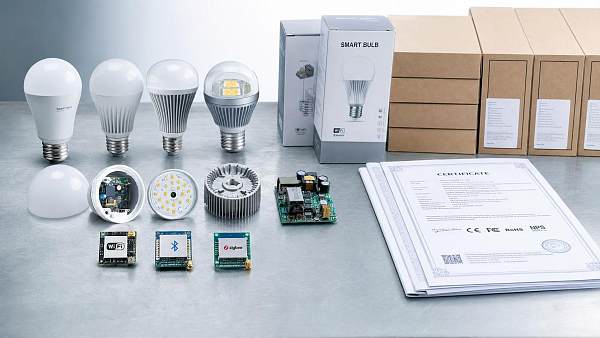
Electronics include LED chip brand, driver quality, heat dissipation design, and lumen consistency.
Connectivity adds another gap. Wi-Fi, Zigbee, Bluetooth Mesh, and Matter readiness do not carry the same component cost.
Then come testing and market-entry costs, especially when products are intended for North America, Europe, or regulated smart building channels.
So when comparing smart lighting bulbs wholesale price, the useful question is not only “How cheap?” but “Cheap under which specification?”
Which product details usually push the cost up or down?
Some price gaps come from obvious features, but many come from technical details hidden in the bill of materials.
The first one is chip quality. Better chips support longer life, tighter color tolerance, and more stable brightness.
Driver design also matters. Poor drivers may cause flicker, shortened lifespan, or unreliable smart control.
Housing material affects thermal control. Better heat management improves performance, but increases manufacturing cost.
Another price factor is protocol selection. Wi-Fi bulbs can be simple for consumers, yet their power and firmware requirements differ from Zigbee or Bluetooth models.
If a model supports voice platforms, OTA updates, app ecosystems, or cross-platform integration, software cost enters the picture too.
Packaging can also change the landed cost more than expected, especially for retail-ready projects or private label programs.
A practical way to read smart lighting bulbs wholesale price is to separate core hardware from market-specific extras.
This type of comparison prevents false equivalence between two quotes that look similar only at first glance.
At what point does the lowest quote become the expensive option?
Usually when hidden costs start appearing after the sample stage.
A very low smart lighting bulbs wholesale price can create problems in three places: quality drift, documentation gaps, and logistics inconsistency.
Quality drift often shows up between pilot samples and mass production.
For example, the sample may use one chip source, while the production run shifts to a cheaper substitute.
Documentation gaps matter when customs clearance, retailer onboarding, or insurance review requires exact technical files.
Logistics inconsistency becomes costly when lead times move, cartons fail transit tests, or replenishment schedules cannot be maintained.
A realistic landed-cost review should include more than FOB or EXW numbers.
- Expected defect rate and replacement handling
- Firmware update support after shipment
- Certification validity by destination market
- Lead-time stability during peak season
- After-sales response for connectivity issues
If these items remain unclear, the lowest smart lighting bulbs wholesale price is often only the lowest starting number.
How should suppliers be compared beyond unit price?
This is where many sourcing decisions improve quickly.
A stronger comparison framework combines commercial terms, technical evidence, and trust signals.
Start by checking whether the quotation aligns with a defined specification sheet.
If lumen output, CCT range, protocol, dimming type, and certifications are not clearly listed, price comparison is weak from the beginning.
Then review manufacturing credibility. Factory audit status, testing capability, and batch traceability usually tell more than brochure claims.
In cross-border trade, clear communication around change control is equally important.
A supplier that reports component substitutions before production is often safer than one offering a lower silent quote.
Decision-grade comparison also benefits from structured market intelligence.
That is where sector-focused sources such as TradeNexus Pro become useful.
Instead of relying only on directory listings, buyers can examine supplier positioning, industry context, and technology signals in one place.
This matters in smart electronics sourcing, where product claims often sound similar, but execution quality does not.
A practical supplier scorecard
What pricing mistakes are most common in smart lighting sourcing?
One common mistake is comparing bulbs with different control ecosystems as if they were equivalent items.
Another is ignoring software maintenance. Smart products are not only hardware purchases.
Firmware support, app updates, and compatibility maintenance all influence long-term value.
A third mistake is treating certification marks as interchangeable across regions.
In reality, a quote can appear complete while still missing the approvals needed for the target sales channel.
There is also a timing mistake: locking price before validating production capacity during busy cycles.
Smart lighting bulbs wholesale price should be reviewed together with lead time, reorder flexibility, and supply continuity.
In broader global sourcing, this reflects a bigger pattern.
Prices move with semiconductor availability, freight shifts, regional compliance rules, and supplier risk exposure.
Platforms like TradeNexus Pro are relevant here because they connect pricing decisions with market context, not just item listings.
So what is the best way to judge smart lighting bulbs wholesale price before placing an order?
A good decision usually comes from narrowing uncertainty, not chasing the lowest visible number.
Start with a clean requirement sheet.
Define socket type, wattage, lumen target, protocol, app expectations, certification needs, packaging standard, and warranty length.
Then request quotes in the same format from multiple suppliers.
After that, compare total delivered value rather than unit price alone.
The strongest sourcing process usually includes sample validation, document review, production confirmation, and a landed-cost check.
When the market is fragmented, using an intelligence-led source helps reduce blind spots.
TradeNexus Pro, through chinaspecialmetal.com, is useful in that sense because it is built around curated B2B insight, sector depth, and supplier credibility signals.
For smart electronics and adjacent supply chains, that context can make quote comparison more grounded and less reactive.
In the end, smart lighting bulbs wholesale price should be judged against specification fit, compliance readiness, supply stability, and lifecycle cost.
The next useful step is simple: standardize the requirement sheet, build a comparison table, test samples under real conditions, and confirm every cost that appears after shipment.
Get weekly intelligence in your inbox.
No noise. No sponsored content. Pure intelligence.
 Oct 24, 2026Tesla Q3 2026 Storage Deployments Rank Second Highest as Revenue Falls 16%Tesla Q3 2026 Storage Deployments Rank Second Highest as Revenue Falls 16%
 Oct 24, 2026Freight Forwarding Services Pricing: Comparing Quotes Beyond Base RatesFreight Forwarding Services Pricing: Comparing Quotes Beyond Base Rates
 Oct 23, 2026IndexBox Issues Off-Grid Solar Outlook to 2035, Forecasting 8.2% CAGRIndexBox Issues Off-Grid Solar Outlook to 2035, Forecasting 8.2% CAGR
 Oct 23, 2026NSF/ANSI 49 Biosafety Cabinets: Product Certification vs. Field TestingNSF/ANSI 49 Biosafety Cabinets: Product Certification vs. Field Testing
 Oct 22, 2026Mitsubishi Electric Develops Industry-First Humanoid Robot–CNC Machining SystemMitsubishi Electric Develops Industry-First Humanoid Robot–CNC Machining System
 Oct 22, 2026Aerospace Aluminum Machining: How to Control Distortion in Thin-Wall PartsAerospace Aluminum Machining: How to Control Distortion in Thin-Wall Parts
 Oct 21, 2026Genesis Energy commissions 200 MWh battery storage system at HuntlyGenesis Energy commissions 200 MWh battery storage system at Huntly
 Oct 21, 2026Buying AMI Smart Meters Wholesale: Compatibility Checks and Total CostsBuying AMI Smart Meters Wholesale: Compatibility Checks and Total Costs
 Oct 20, 2026Werner Enterprises Issues Q3 Earnings Warning as Costs RiseWerner Enterprises Issues Q3 Earnings Warning as Costs Rise
 Oct 20, 2026Are Digital Twins Viable for SMEs? Costs, Use Cases, and Data RequirementsAre Digital Twins Viable for SMEs? Costs, Use Cases, and Data Requirements
 Oct 19, 2026Choosing a Wholesale Servo Motor Exporter: Traceability and Warranty ChecksChoosing a Wholesale Servo Motor Exporter: Traceability and Warranty Checks
 Oct 18, 2026Syringe Manufacturing Equipment: Evaluating Throughput and Assembly AccuracySyringe Manufacturing Equipment: Evaluating Throughput and Assembly Accuracy
 Oct 17, 2026Air Freight Forwarding Services: How to Compare Quotes for Urgent ShipmentsAir Freight Forwarding Services: How to Compare Quotes for Urgent Shipments
 Oct 16, 2026Wholesale Solar Panels: How to Compare Bulk Quotes by Total Landed CostWholesale Solar Panels: How to Compare Bulk Quotes by Total Landed Cost
 Oct 15, 2026Supply Chain Intelligence for Sourcing: How to Vet New SuppliersSupply Chain Intelligence for Sourcing: How to Vet New Suppliers
 Oct 14, 2026How energy costs shape smart manufacturing investment in EuropeHow energy costs shape smart manufacturing investment in Europe
 Oct 14, 2026How skills shortages slow smart manufacturing in Southeast AsiaHow skills shortages slow smart manufacturing in Southeast Asia
 Oct 14, 2026How CNC wire-cut machining maintains tight tolerances in thick partsHow CNC wire-cut machining maintains tight tolerances in thick parts
 Oct 14, 2026Can automated feeding stabilize metal forming in smart factories?Can automated feeding stabilize metal forming in smart factories?
 Oct 14, 2026Can CT inspection detect internal defects in metal additive parts?Can CT inspection detect internal defects in metal additive parts?
 Oct 14, 2026When does additive manufacturing reduce lead time for spare parts?When does additive manufacturing reduce lead time for spare parts?
 Oct 14, 2026How production volume affects ROI on an automated painting lineHow production volume affects ROI on an automated painting line
 Oct 14, 2026What data does manufacturing bottleneck analysis consulting need?What data does manufacturing bottleneck analysis consulting need?
 Oct 14, 2026When should you hire a consultant for manufacturing bottlenecks?When should you hire a consultant for manufacturing bottlenecks?
 Oct 14, 2026What Are Electronics Exporters' Top Supply Chain Resilience Gaps in 2026?What Are Electronics Exporters' Top Supply Chain Resilience Gaps in 2026?
 Oct 14, 2026How Do You Measure AI Adoption Maturity in a Traditional Factory?How Do You Measure AI Adoption Maturity in a Traditional Factory?
 Oct 14, 2026Are Chinese AI-Assisted Surgical Devices Gaining Global Trust?Are Chinese AI-Assisted Surgical Devices Gaining Global Trust?