EV Charging Stations Quick Installation Guide for Site Prep and Safety
For operators and facility teams, a smooth charger rollout starts long before the first vehicle plugs in.
This EV charging stations quick installation guide highlights site preparation, electrical checks, access planning, and safety practices for reliable daily operation.
From workplace parking to fleet depots, the right installation workflow reduces downtime, avoids compliance gaps, and improves user confidence.
EV Charging Stations Quick Installation Guide for Scenario-Based Site Readiness
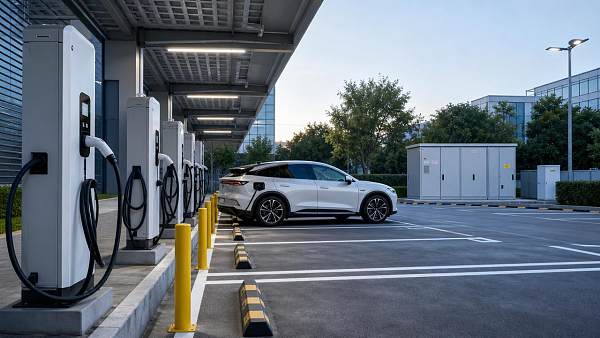
Every charging site has a different duty cycle, traffic pattern, power constraint, and safety exposure.
A workplace charger may serve predictable daytime parking, while a fleet depot may demand overnight high-volume charging.
Retail sites often need visibility, payment access, lighting, and short dwell-time convenience.
Mixed-use facilities must balance public access, resident use, maintenance windows, and load management.
This EV charging stations quick installation guide treats installation as a scenario decision, not only an electrical task.
Why Site Context Changes Charger Installation Decisions
The same charger model can perform very differently across two locations.
Power availability, parking geometry, conduit distance, user behavior, and weather exposure all affect installation quality.
Early site judgment helps identify whether Level 2, DC fast charging, or phased deployment is more practical.
It also supports stronger budgeting because trenching, switchgear upgrades, permits, and signage can exceed hardware costs.
A practical EV charging stations quick installation guide should begin with demand, not with charger selection.
Core Site Questions Before Installation
- How many vehicles will charge daily?
- What is the expected parking dwell time?
- Is charging private, public, restricted, or mixed?
- Can the existing electrical service support peak load?
- Will future chargers require spare capacity today?
Workplace Parking: Prioritize Access, Load Balance, and User Flow
Workplace charging usually has long dwell time and moderate charging urgency.
Level 2 chargers often fit this scenario because vehicles remain parked for several hours.
The main judgment point is not speed alone, but charger sharing and parking turnover.
Locate chargers where cables reach vehicles safely without crossing pedestrian paths or active traffic lanes.
If the parking area is far from electrical rooms, conduit runs can become a major cost driver.
This EV charging stations quick installation guide recommends early mapping of panels, stalls, bollards, lighting, and accessible routes.
Workplace Installation Checks
- Confirm dedicated circuits and available panel capacity.
- Plan cable reach without creating trip hazards.
- Use clear signage for charging-only spaces.
- Consider networked load management for multiple chargers.
Fleet Depot Charging: Design Around Duty Cycles and Reliability
Fleet sites require a stronger match between charger output and vehicle operating schedules.
Missed charging windows can disrupt routes, deliveries, service coverage, or asset utilization.
Site preparation should evaluate simultaneous charging, battery size, departure times, and backup charging options.
Electrical service upgrades may require utility coordination, transformer review, switchgear space, and demand charge analysis.
A robust EV charging stations quick installation guide should include contingency planning for charger faults and scheduled maintenance.
Fleet Depot Installation Checks
- Group chargers by vehicle route and departure priority.
- Reserve electrical capacity for expansion phases.
- Protect equipment from reversing vehicles and loading activity.
- Integrate charging software with fleet scheduling when practical.
Retail and Public Sites: Make Charging Visible, Safe, and Simple
Retail and public charging depend heavily on convenience and perceived safety.
Drivers expect clear wayfinding, reliable payment, adequate lighting, and unobstructed parking spaces.
DC fast charging may suit highway, grocery, hospitality, and commercial corridor locations.
However, higher charger power also increases grid impact, equipment footprint, and permitting complexity.
This EV charging stations quick installation guide recommends assessing visibility alongside electrical feasibility.
A technically acceptable stall can still fail if it is hard to find, poorly lit, or frequently blocked.
Public Site Installation Checks
- Place chargers near lighting, cameras, and active storefronts.
- Confirm cellular or wired network connectivity.
- Provide weather-resistant cable management.
- Use pavement markings to reduce unauthorized parking.
Mixed-Use Facilities: Balance Private Demand and Shared Access
Mixed-use properties combine residential, commercial, visitor, and service vehicle charging needs.
This creates scheduling, billing, access control, and maintenance challenges.
Installation planning should define who can charge, when charging is available, and how costs are allocated.
Networked chargers can help manage user permissions, reporting, and energy use.
The best layout usually avoids hidden corners, narrow ramps, and locations exposed to frequent impact.
In this scenario, an EV charging stations quick installation guide should include property rules and long-term governance.
Different Scenario Requirements at a Glance
Site Preparation Steps That Prevent Installation Delays
Good site preparation turns uncertainty into a manageable installation sequence.
Start with a physical walk-through, then confirm drawings, utility data, and code requirements.
Mark proposed charger positions, conduit routes, protective bollards, accessible paths, and equipment clearances.
Underground utility locating is essential before trenching, coring, or saw-cutting begins.
This EV charging stations quick installation guide also recommends checking drainage and snow removal patterns.
- Complete a load assessment and demand forecast.
- Verify panel, transformer, breaker, and conduit capacity.
- Confirm permits, inspections, and utility approval timelines.
- Prepare mounting surfaces, foundations, or wall structures.
- Plan network connectivity before commissioning.
Electrical Checks for Safer Charger Commissioning
Electrical readiness is the core of safe EV charger installation.
Circuit sizing must match charger specifications, continuous load rules, and local electrical codes.
Grounding, bonding, overcurrent protection, disconnect access, and labeling should be verified before energization.
For outdoor installations, enclosures and fittings must match expected weather exposure.
Commissioning should include voltage checks, communication tests, payment tests, fault response, and charging session validation.
A disciplined EV charging stations quick installation guide reduces troubleshooting after the site opens.
Safety Practices for Daily Operation
Installation safety continues after chargers are commissioned.
Clear operating rules reduce misuse, cable damage, parking conflict, and avoidable maintenance calls.
Cable holsters should return connectors above standing water, snow buildup, and vehicle wheel paths.
Protective posts, wheel stops, and curb placement help prevent collision damage.
Emergency contact information should be visible near chargers, especially at public and after-hours locations.
- Inspect connectors, cables, screens, and enclosures regularly.
- Keep access aisles, signs, and pavement markings visible.
- Document fault codes and maintenance actions.
- Schedule preventive checks before seasonal demand peaks.
Common Scenario Misjudgments That Increase Cost
Many delays come from assumptions made before installation starts.
One common mistake is placing chargers near convenient parking, but far from electrical infrastructure.
Another mistake is ignoring future expansion when trenching is already open.
Some sites underestimate network connectivity, especially in garages, basements, and remote lots.
Public locations may also overlook lighting, security perception, and payment support.
This EV charging stations quick installation guide encourages documenting assumptions before procurement and construction.
Practical Adaptation Recommendations by Installation Goal
Next Steps for a Reliable EV Charger Rollout
A reliable rollout begins with a site survey, load study, access plan, and safety review.
Then match charger type, mounting method, communications, and operating rules to the actual scenario.
TradeNexus Pro tracks green energy infrastructure, advanced manufacturing, smart electronics, and supply chain technology developments.
Its market intelligence helps evaluate charger ecosystems, integration trends, and deployment risks across global B2B environments.
Use this EV charging stations quick installation guide as a working checklist before equipment ordering, construction scheduling, or commissioning.
The strongest installations connect scenario needs with electrical capacity, safe access, and maintainable daily operation.
Get weekly intelligence in your inbox.
No noise. No sponsored content. Pure intelligence.
 Oct 24, 2026Tesla Q3 2026 Storage Deployments Rank Second Highest as Revenue Falls 16%Tesla Q3 2026 Storage Deployments Rank Second Highest as Revenue Falls 16%
 Oct 24, 2026Freight Forwarding Services Pricing: Comparing Quotes Beyond Base RatesFreight Forwarding Services Pricing: Comparing Quotes Beyond Base Rates
 Oct 23, 2026IndexBox Issues Off-Grid Solar Outlook to 2035, Forecasting 8.2% CAGRIndexBox Issues Off-Grid Solar Outlook to 2035, Forecasting 8.2% CAGR
 Oct 23, 2026NSF/ANSI 49 Biosafety Cabinets: Product Certification vs. Field TestingNSF/ANSI 49 Biosafety Cabinets: Product Certification vs. Field Testing
 Oct 22, 2026Mitsubishi Electric Develops Industry-First Humanoid Robot–CNC Machining SystemMitsubishi Electric Develops Industry-First Humanoid Robot–CNC Machining System
 Oct 22, 2026Aerospace Aluminum Machining: How to Control Distortion in Thin-Wall PartsAerospace Aluminum Machining: How to Control Distortion in Thin-Wall Parts
 Oct 21, 2026Genesis Energy commissions 200 MWh battery storage system at HuntlyGenesis Energy commissions 200 MWh battery storage system at Huntly
 Oct 21, 2026Buying AMI Smart Meters Wholesale: Compatibility Checks and Total CostsBuying AMI Smart Meters Wholesale: Compatibility Checks and Total Costs
 Oct 20, 2026Werner Enterprises Issues Q3 Earnings Warning as Costs RiseWerner Enterprises Issues Q3 Earnings Warning as Costs Rise
 Oct 20, 2026Are Digital Twins Viable for SMEs? Costs, Use Cases, and Data RequirementsAre Digital Twins Viable for SMEs? Costs, Use Cases, and Data Requirements
 Oct 19, 2026Choosing a Wholesale Servo Motor Exporter: Traceability and Warranty ChecksChoosing a Wholesale Servo Motor Exporter: Traceability and Warranty Checks
 Oct 18, 2026Syringe Manufacturing Equipment: Evaluating Throughput and Assembly AccuracySyringe Manufacturing Equipment: Evaluating Throughput and Assembly Accuracy
 Oct 17, 2026Air Freight Forwarding Services: How to Compare Quotes for Urgent ShipmentsAir Freight Forwarding Services: How to Compare Quotes for Urgent Shipments
 Oct 16, 2026Wholesale Solar Panels: How to Compare Bulk Quotes by Total Landed CostWholesale Solar Panels: How to Compare Bulk Quotes by Total Landed Cost
 Oct 15, 2026Supply Chain Intelligence for Sourcing: How to Vet New SuppliersSupply Chain Intelligence for Sourcing: How to Vet New Suppliers
 Oct 14, 2026How energy costs shape smart manufacturing investment in EuropeHow energy costs shape smart manufacturing investment in Europe
 Oct 14, 2026How skills shortages slow smart manufacturing in Southeast AsiaHow skills shortages slow smart manufacturing in Southeast Asia
 Oct 14, 2026How CNC wire-cut machining maintains tight tolerances in thick partsHow CNC wire-cut machining maintains tight tolerances in thick parts
 Oct 14, 2026Can automated feeding stabilize metal forming in smart factories?Can automated feeding stabilize metal forming in smart factories?
 Oct 14, 2026Can CT inspection detect internal defects in metal additive parts?Can CT inspection detect internal defects in metal additive parts?
 Oct 14, 2026When does additive manufacturing reduce lead time for spare parts?When does additive manufacturing reduce lead time for spare parts?
 Oct 14, 2026How production volume affects ROI on an automated painting lineHow production volume affects ROI on an automated painting line
 Oct 14, 2026What data does manufacturing bottleneck analysis consulting need?What data does manufacturing bottleneck analysis consulting need?
 Oct 14, 2026When should you hire a consultant for manufacturing bottlenecks?When should you hire a consultant for manufacturing bottlenecks?
 Oct 14, 2026What Are Electronics Exporters' Top Supply Chain Resilience Gaps in 2026?What Are Electronics Exporters' Top Supply Chain Resilience Gaps in 2026?
 Oct 14, 2026How Do You Measure AI Adoption Maturity in a Traditional Factory?How Do You Measure AI Adoption Maturity in a Traditional Factory?
 Oct 14, 2026Are Chinese AI-Assisted Surgical Devices Gaining Global Trust?Are Chinese AI-Assisted Surgical Devices Gaining Global Trust?