
Which port automation tech improves throughput the most
For technical evaluators under pressure to increase vessel turnaround and yard productivity, identifying the right port automation tech for efficiency is no longer optional. From AI-driven terminal operating systems to autonomous yard equipment and real-time data orchestration, the technologies that improve throughput the most depend on operational bottlenecks, integration maturity, and ROI visibility. This article examines where automation delivers measurable gains and how to prioritize investment.
Which port automation tech for efficiency creates the biggest throughput gains first?
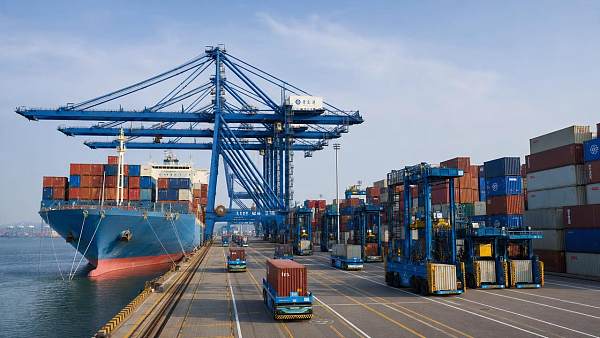
The short answer is that no single technology wins in every terminal. The highest throughput gains usually come from the automation layer that removes the dominant constraint in the cargo flow.
In many container ports, berth productivity is not limited by quay crane speed alone. It is often constrained by yard congestion, equipment dispatch delays, poor truck synchronization, and fragmented data across planning systems.
That is why port automation tech for efficiency should be evaluated as a system architecture, not as a collection of standalone machines. A faster crane does little if yard handoff, gate release, and slot allocation remain manual or inconsistent.
For technical evaluators, the first task is diagnostic. Identify whether the terminal loses time at berth, in yard transfer, at the gate, in maintenance downtime, or in planning quality. The technology with the best throughput impact is the one that addresses that failure point with the least integration friction.
- If berth windows are missed because container moves are sequenced poorly, an advanced terminal operating system and optimization engine often produces the fastest improvement.
- If yard rehandles and travel distances are excessive, automated stacking logic, digital twins, and equipment orchestration typically outperform new hardware purchases.
- If labor variability drives inconsistent output, semi-autonomous or autonomous transport and yard equipment may create the largest sustained gains.
- If gate and landside flow are unstable, appointment systems, OCR, and API-based data exchange can lift throughput without major civil works.
This systems view matters across the broader industrial economy as well. Advanced manufacturing, smart electronics, healthcare technology, and green energy all depend on predictable port flow. Delays at the terminal translate directly into inventory risk, production disruption, and higher working capital.
How the main automation categories compare in real terminal operations
Before investing, technical teams should compare port automation tech for efficiency by bottleneck relevance, implementation complexity, data dependence, and typical operational upside. The table below summarizes how major categories tend to perform in practice.
For most terminals, software-led orchestration delivers the fastest payback because it improves existing asset utilization before requiring heavy infrastructure replacement. Hardware automation can deliver larger long-term gains, but only when process discipline and data quality are already mature.
Why AI-enabled TOS often outperforms isolated equipment upgrades
When technical evaluators ask which port automation tech for efficiency improves throughput the most, advanced terminal operating systems frequently rise to the top. The reason is simple: they influence multiple process layers at once.
What an optimized TOS changes
A modern TOS can improve berth planning, crane assignment, yard slotting, reefer handling priorities, and truck appointment balancing. With machine learning or rule-based optimization, it can also reduce unnecessary rehandles and shorten equipment idle windows.
This makes TOS modernization especially attractive for terminals that already own substantial equipment but still operate with planner-intensive workflows, spreadsheet-based exceptions, or disconnected data streams from carriers, customs, and inland partners.
Where evaluators should be cautious
The gains from AI are only as strong as the data foundation. Inconsistent master data, poor timestamp accuracy, and weak event governance can turn a promising optimization project into a source of operational distrust.
- Check whether equipment telemetry, move history, and yard inventory data are granular enough to support real dispatch logic.
- Review whether external events such as ETA changes, documentation holds, and truck no-shows are captured in usable formats.
- Assess whether planners can override system decisions safely without collapsing the optimization model.
For organizations serving time-sensitive sectors such as healthcare technology and smart electronics, these orchestration gains can have a downstream value far beyond the terminal itself. Predictable cargo release supports cleaner production scheduling and fewer emergency logistics interventions.
When autonomous yard and transport equipment delivers the strongest ROI
Autonomous vehicles and yard cranes become compelling when throughput variation, labor constraints, or safety exposure cause chronic execution instability. Their value is not only speed. It is repeatability at scale.
In high-volume terminals with structured traffic lanes and standardized move profiles, autonomous transport can reduce waiting time between quay and yard. That stability helps quay cranes maintain productive cycles and prevents ripple effects across the stack.
Best-fit scenarios
- Terminal layouts with repetitive point-to-point moves and enough digital mapping maturity to support safe routing.
- Operations where labor availability or shift variability creates uneven capacity during peak vessel calls.
- Sites targeting electrification and lower emissions, where automation can be paired with battery management and energy scheduling.
However, evaluators should avoid assuming that autonomous equipment alone will solve congestion. If yard rules are poor or TOS logic is weak, automated vehicles may simply deliver containers faster into a badly organized stack.
What technical evaluators should score before selecting port automation tech for efficiency
A disciplined scoring model helps prevent overbuying, under-integrating, or prioritizing visible hardware over less visible process leverage. The following table can be adapted into an internal procurement checklist.
This evaluation structure is especially useful for cross-sector supply chains tracked by TradeNexus Pro, where procurement leaders need evidence that port investments will improve service continuity, not just add technical novelty.
Implementation path: how to improve throughput without stalling operations
Technical teams often fail not in selecting the right solution, but in sequencing the rollout poorly. The best port automation tech for efficiency can still underperform if deployed as a big-bang project with weak fallback planning.
A practical phased approach
- Benchmark the current state using berth moves per hour, yard rehandle rate, truck turn time, equipment idle ratio, and unplanned downtime.
- Map the dominant constraint and test whether software optimization can unlock latent capacity before new hardware is approved.
- Pilot in one operational zone, one vessel service pattern, or one gate process to validate assumptions under live conditions.
- Create exception handling rules for weather disruption, customs holds, equipment failure, and manual override authority.
- Scale only after KPI movement is verified against baseline and upstream or downstream systems are stable.
Ports serving green energy components, medical devices, or high-value electronics should pay particular attention to exception logic. Throughput matters, but so do chain of custody, temperature integrity, and synchronized handoff to inland transport.
Common mistakes that reduce the value of port automation tech for efficiency
Several recurring mistakes show up in automation projects across logistics and industrial supply networks. Most are avoidable with sharper technical due diligence.
- Treating automation as a hardware purchase instead of a process and data transformation program.
- Using average throughput metrics while ignoring peak vessel clustering, which is where most value is won or lost.
- Skipping interoperability reviews across TOS, maintenance systems, gate platforms, and partner data feeds.
- Underestimating cyber and operational resilience requirements for connected equipment and remote control layers.
- Approving ROI models based on ideal labor reduction assumptions rather than verified cycle-time improvement.
In practice, the most durable results come from balanced programs. They combine orchestration software, targeted equipment automation, maintenance intelligence, and measurable governance rather than chasing a single dramatic technology narrative.
FAQ: what technical evaluators ask before making a port automation decision
How do I know whether software or equipment should come first?
Start with a bottleneck study. If assets are underutilized because planning, sequencing, and dispatch are weak, software usually comes first. If flows are already well orchestrated but labor variability or safety limits cap performance, equipment automation may justify earlier investment.
Is port automation tech for efficiency only suitable for mega terminals?
No. Large autonomous fleets are not the only path. Mid-sized terminals can improve throughput through OCR, gate automation, predictive maintenance, optimization modules, and integration layers that connect carrier, customs, and truck data.
What KPIs should be validated before purchase approval?
Use a balanced set: vessel turnaround time, berth moves per hour, yard dwell, rehandle rate, truck turn time, equipment availability, exception recovery time, and data latency. A solution that improves only one KPI while degrading another may not increase actual throughput.
What standards or compliance topics matter during evaluation?
Requirements vary by site, but evaluators should review electrical safety, machinery safety, industrial communications, cybersecurity governance, emissions strategy for electrified fleets, and local port authority operating rules. The exact compliance set should be mapped early in the project scope.
Why choose us for market intelligence and solution evaluation support
TradeNexus Pro helps procurement directors, supply chain managers, and technical evaluators move beyond vendor claims. Our research focus across advanced manufacturing, green energy, smart electronics, healthcare technology, and supply chain SaaS allows us to analyze port automation decisions in the context that matters most: end-to-end commercial impact.
If you are assessing port automation tech for efficiency, we can support structured comparison work around integration scope, operational fit, deployment sequencing, and ROI assumptions. That includes guidance on parameter confirmation, solution screening, delivery timeline considerations, interoperability questions, and the upstream supply chain consequences of terminal bottlenecks.
Contact us if your team needs help narrowing a shortlist, validating technical evaluation criteria, mapping implementation risks, or aligning port automation choices with broader sourcing and network resilience goals. The right decision is rarely about buying the most visible technology. It is about removing the constraint that limits throughput across the whole trade system.
Get weekly intelligence in your inbox.
No noise. No sponsored content. Pure intelligence.
 Oct 08, 2026How Digital Health Improves Diagnostic Accuracy and Workflow in Clinical LabsHow Digital Health Improves Diagnostic Accuracy and Workflow in Clinical Labs
 Oct 07, 2026Selecting Voice Picking Systems for German Warehouses: Integration, Languages and ROISelecting Voice Picking Systems for German Warehouses: Integration, Languages and ROI
 Oct 06, 2026How to Choose Last Mile Dispatch Software for On-Time Delivery at ScaleHow to Choose Last Mile Dispatch Software for On-Time Delivery at Scale
 Oct 05, 2026Vietnam’s Consumer Electronics Market: Demand Shifts and Sourcing OpportunitiesVietnam’s Consumer Electronics Market: Demand Shifts and Sourcing Opportunities
 Oct 04, 2026Digital Health Investment Priorities for Providers: Improving Access, Outcomes, and EfficiencyDigital Health Investment Priorities for Providers: Improving Access, Outcomes, and Efficiency
 Oct 03, 2026How to Specify an FR4 Custom PCB Board for High-Voltage and High-Heat DesignsHow to Specify an FR4 Custom PCB Board for High-Voltage and High-Heat Designs
 Oct 02, 2026ERP Software Market Intelligence: Adoption, Pricing, and Vendor Signals to WatchERP Software Market Intelligence: Adoption, Pricing, and Vendor Signals to Watch
 Oct 01, 2026How to Select Calibrated Temperature Data Loggers for GMP Cold Storage MonitoringHow to Select Calibrated Temperature Data Loggers for GMP Cold Storage Monitoring
 Sep 30, 2026Custom Molded Rubber Pricing: What Drives Unit Cost and Tooling Fees?Custom Molded Rubber Pricing: What Drives Unit Cost and Tooling Fees?
 Sep 29, 2026How to Evaluate Energy Management Software Vendors for Multi-Site OperationsHow to Evaluate Energy Management Software Vendors for Multi-Site Operations
 Sep 28, 2026How to Select a DIN Rail Smart Meter for Multi-Circuit Energy MonitoringHow to Select a DIN Rail Smart Meter for Multi-Circuit Energy Monitoring
 Sep 27, 2026TWS Earbuds in Vietnam: Demand Drivers, Price Tiers, and Retail Channel OpportunitiesTWS Earbuds in Vietnam: Demand Drivers, Price Tiers, and Retail Channel Opportunities
 Sep 26, 2026How UAE Clinics Can Qualify a Smart Glucometer Supplier for Accuracy and ComplianceHow UAE Clinics Can Qualify a Smart Glucometer Supplier for Accuracy and Compliance
 Sep 25, 2026Buying Aesthetic Lasers in the USA: FDA Status, Wavelengths, and Service SupportBuying Aesthetic Lasers in the USA: FDA Status, Wavelengths, and Service Support
 Sep 24, 2026Laser Cutting Brass Sheet: How to Prevent Burrs and Heat Marks on Thin PartsLaser Cutting Brass Sheet: How to Prevent Burrs and Heat Marks on Thin Parts
 Sep 23, 2026How to Choose Lightweight ANC Headphones for Comfortable All-Day TravelHow to Choose Lightweight ANC Headphones for Comfortable All-Day Travel
 Sep 22, 2026IPX5 TWS Bluetooth Earbuds: What Protection Do They Offer for Workouts?IPX5 TWS Bluetooth Earbuds: What Protection Do They Offer for Workouts?
 Sep 21, 2026What to Look for in a Grid Integration Company for Utility-Scale Solar ProjectsWhat to Look for in a Grid Integration Company for Utility-Scale Solar Projects
 Sep 20, 2026Microgrid Controller Pricing: What Drives Cost in Commercial Energy Projects?Microgrid Controller Pricing: What Drives Cost in Commercial Energy Projects?
 Sep 19, 2026How to Choose a GaN Charger for Laptops Without Compromising Power or PortabilityHow to Choose a GaN Charger for Laptops Without Compromising Power or Portability
 Sep 18, 2026Floating Solar Farm Costs: CAPEX, OPEX, and the Site Factors That Shape ROIFloating Solar Farm Costs: CAPEX, OPEX, and the Site Factors That Shape ROI
 Sep 17, 2026Drone Delivery Solutions for Last-Mile Routes: Site, Payload, and Range PlanningDrone Delivery Solutions for Last-Mile Routes: Site, Payload, and Range Planning
 Sep 16, 2026When Low-Volume Electronics Manufacturing Makes More Sense Than Mass ProductionWhen Low-Volume Electronics Manufacturing Makes More Sense Than Mass Production
 Sep 15, 2026Wholesale WiFi Smart Switches: What Buyers Should Verify Before OrderingWholesale WiFi Smart Switches: What Buyers Should Verify Before Ordering
 Sep 14, 2026How to Select IoT Sensors for Reliable Monitoring in Harsh Industrial EnvironmentsHow to Select IoT Sensors for Reliable Monitoring in Harsh Industrial Environments
 Sep 13, 2026How Procurement Teams Can Improve Supplier Reliability With Supply Chain VisibilityHow Procurement Teams Can Improve Supplier Reliability With Supply Chain Visibility
 Sep 12, 2026Smart Manufacturing Trends 2026: What Leaders Should Prioritize for ROISmart Manufacturing Trends 2026: What Leaders Should Prioritize for ROI



























