
Japan Enforces TELEC Certification for Wireless Mics from May 2026
Effective 20 May 2026, Japan’s Ministry of Internal Affairs and Communications (MIC) will enforce mandatory TELEC (Technical Conformity Certification) for all wireless microphones exported to Japan—including Bluetooth- and Wi-Fi-based transmitters. The move stems from strengthened enforcement of Japan’s Radiation Control Law (commonly referred to as the Radio Law), triggering immediate operational adjustments across the global audio equipment supply chain serving the Japanese market.
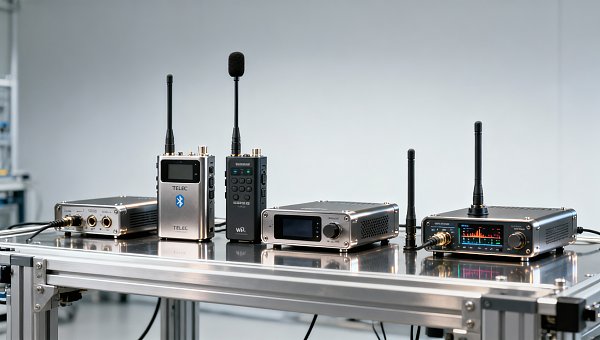
Event Overview
As of 20 May 2026, all wireless microphones entering Japan must hold valid TELEC certification covering their specific operating frequency bands. Devices lacking certification will be denied customs clearance. Recent enforcement actions have already resulted in shipment rejections affecting multiple audio equipment exporters based in East China. The average TELEC certification cycle has extended to 6–8 weeks, up from prior norms of 4–5 weeks.
Industries Affected
Direct Trading Enterprises: Exporters and international distributors face heightened pre-shipment compliance risk. Non-compliant shipments are subject to return, storage fees, or destruction—directly impacting order fulfillment timelines, cash flow, and contractual penalties. Several cases reported involve delayed Q2 2026 deliveries due to last-minute certificate verification failures.
Raw Material Procurement Enterprises: Firms sourcing RF components (e.g., Bluetooth SoCs, antenna modules, or band-specific filters) must now verify supplier documentation against TELEC-specified frequency tolerances and emission limits. Shifts in component-level conformity—especially for dual-band or multi-region chips—may require requalification, adding procurement lead time and cost.
Contract Manufacturing & OEM Enterprises: Factories producing wireless mics for global brands must align production batches with certified firmware versions and hardware configurations. Any revision—such as antenna tuning, PCB layout changes, or power amplifier calibration—triggers recertification. This constrains engineering agility and increases NPI (New Product Introduction) cycle duration.
Supply Chain Service Providers: Third-party certification consultants, logistics firms offering pre-clearance support, and test laboratories report rising demand for TELEC gap analysis and expedited testing slots. However, capacity constraints at accredited Japanese labs (e.g., JATE-recognized facilities) are limiting throughput—creating bottlenecks in validation scheduling.
Key Focus Areas and Recommended Actions
Verify Certificate Validity and Frequency Coverage Prior to Order Placement
Overseas distributors should request full TELEC certificate copies—including Annexes listing tested models, applicable frequency bands (e.g., 2.4 GHz ISM, 5.2–5.3 GHz U-NII-1), and test reports—not just certificate numbers. Cross-check model numbers and firmware versions against shipped units.
Factor in Extended Certification Lead Time in Production Planning
Manufacturers must embed a minimum 7-week buffer between final hardware freeze and planned shipping dates. Parallel testing (e.g., pre-scanning emissions at local labs) can reduce risk but does not replace formal TELEC evaluation.
Evaluate Multi-Region Design Strategies
For vendors targeting both Japan and other markets (e.g., FCC/CE regions), consider modular RF designs that allow band-specific shielding or firmware locking—reducing the need for full platform recertification when adapting for TELEC.
Editorial Perspective / Industry Observation
Analysis shows this is not merely an administrative update but reflects Japan’s broader regulatory pivot toward granular, use-case-specific spectrum governance—particularly for consumer-grade RF devices operating in shared bands. Observably, the 6–8 week certification delay signals underlying capacity strain in domestic testing infrastructure, rather than procedural complexity alone. From an industry perspective, the requirement better aligns with global trends in RF device accountability (e.g., EU RED updates), though its abrupt timing and narrow scope (focusing first on wireless mics, not headsets or speakers) suggest a targeted enforcement pilot. Current more relevant interpretation is that this serves as a de facto stress test for supply chain traceability and technical documentation discipline—not just compliance paperwork.
Conclusion
This regulation marks a material escalation in market access requirements for professional and consumer audio exporters to Japan. It underscores that regulatory readiness—spanning design, documentation, and certification logistics—is now a core element of competitive positioning, not a post-production formality. A rational assessment concludes that early adopters who integrate TELEC planning into R&D workflows will gain measurable advantage in lead time reliability and channel trust.
Source Attribution
Official notice issued by Japan’s Ministry of Internal Affairs and Communications (MIC), Notification No. 127 of 2025, published 15 March 2025. Additional guidance referenced from the Telecommunication Engineering Center (TELEC) public FAQ v3.2 (updated April 2025). Note: Pending clarification on grandfathering provisions for existing stock and transitional arrangements for multi-model family certifications—subject to MIC announcement before 20 May 2026.
Get weekly intelligence in your inbox.
No noise. No sponsored content. Pure intelligence.
 Oct 08, 2026How Digital Health Improves Diagnostic Accuracy and Workflow in Clinical LabsHow Digital Health Improves Diagnostic Accuracy and Workflow in Clinical Labs
 Oct 07, 2026Selecting Voice Picking Systems for German Warehouses: Integration, Languages and ROISelecting Voice Picking Systems for German Warehouses: Integration, Languages and ROI
 Oct 06, 2026How to Choose Last Mile Dispatch Software for On-Time Delivery at ScaleHow to Choose Last Mile Dispatch Software for On-Time Delivery at Scale
 Oct 05, 2026Vietnam’s Consumer Electronics Market: Demand Shifts and Sourcing OpportunitiesVietnam’s Consumer Electronics Market: Demand Shifts and Sourcing Opportunities
 Oct 04, 2026Digital Health Investment Priorities for Providers: Improving Access, Outcomes, and EfficiencyDigital Health Investment Priorities for Providers: Improving Access, Outcomes, and Efficiency
 Oct 03, 2026How to Specify an FR4 Custom PCB Board for High-Voltage and High-Heat DesignsHow to Specify an FR4 Custom PCB Board for High-Voltage and High-Heat Designs
 Oct 02, 2026ERP Software Market Intelligence: Adoption, Pricing, and Vendor Signals to WatchERP Software Market Intelligence: Adoption, Pricing, and Vendor Signals to Watch
 Oct 01, 2026How to Select Calibrated Temperature Data Loggers for GMP Cold Storage MonitoringHow to Select Calibrated Temperature Data Loggers for GMP Cold Storage Monitoring
 Sep 30, 2026Custom Molded Rubber Pricing: What Drives Unit Cost and Tooling Fees?Custom Molded Rubber Pricing: What Drives Unit Cost and Tooling Fees?
 Sep 29, 2026How to Evaluate Energy Management Software Vendors for Multi-Site OperationsHow to Evaluate Energy Management Software Vendors for Multi-Site Operations
 Sep 28, 2026How to Select a DIN Rail Smart Meter for Multi-Circuit Energy MonitoringHow to Select a DIN Rail Smart Meter for Multi-Circuit Energy Monitoring
 Sep 27, 2026TWS Earbuds in Vietnam: Demand Drivers, Price Tiers, and Retail Channel OpportunitiesTWS Earbuds in Vietnam: Demand Drivers, Price Tiers, and Retail Channel Opportunities
 Sep 26, 2026How UAE Clinics Can Qualify a Smart Glucometer Supplier for Accuracy and ComplianceHow UAE Clinics Can Qualify a Smart Glucometer Supplier for Accuracy and Compliance
 Sep 25, 2026Buying Aesthetic Lasers in the USA: FDA Status, Wavelengths, and Service SupportBuying Aesthetic Lasers in the USA: FDA Status, Wavelengths, and Service Support
 Sep 24, 2026Laser Cutting Brass Sheet: How to Prevent Burrs and Heat Marks on Thin PartsLaser Cutting Brass Sheet: How to Prevent Burrs and Heat Marks on Thin Parts
 Sep 23, 2026How to Choose Lightweight ANC Headphones for Comfortable All-Day TravelHow to Choose Lightweight ANC Headphones for Comfortable All-Day Travel
 Sep 22, 2026IPX5 TWS Bluetooth Earbuds: What Protection Do They Offer for Workouts?IPX5 TWS Bluetooth Earbuds: What Protection Do They Offer for Workouts?
 Sep 21, 2026What to Look for in a Grid Integration Company for Utility-Scale Solar ProjectsWhat to Look for in a Grid Integration Company for Utility-Scale Solar Projects
 Sep 20, 2026Microgrid Controller Pricing: What Drives Cost in Commercial Energy Projects?Microgrid Controller Pricing: What Drives Cost in Commercial Energy Projects?
 Sep 19, 2026How to Choose a GaN Charger for Laptops Without Compromising Power or PortabilityHow to Choose a GaN Charger for Laptops Without Compromising Power or Portability
 Sep 18, 2026Floating Solar Farm Costs: CAPEX, OPEX, and the Site Factors That Shape ROIFloating Solar Farm Costs: CAPEX, OPEX, and the Site Factors That Shape ROI
 Sep 17, 2026Drone Delivery Solutions for Last-Mile Routes: Site, Payload, and Range PlanningDrone Delivery Solutions for Last-Mile Routes: Site, Payload, and Range Planning
 Sep 16, 2026When Low-Volume Electronics Manufacturing Makes More Sense Than Mass ProductionWhen Low-Volume Electronics Manufacturing Makes More Sense Than Mass Production
 Sep 15, 2026Wholesale WiFi Smart Switches: What Buyers Should Verify Before OrderingWholesale WiFi Smart Switches: What Buyers Should Verify Before Ordering
 Sep 14, 2026How to Select IoT Sensors for Reliable Monitoring in Harsh Industrial EnvironmentsHow to Select IoT Sensors for Reliable Monitoring in Harsh Industrial Environments
 Sep 13, 2026How Procurement Teams Can Improve Supplier Reliability With Supply Chain VisibilityHow Procurement Teams Can Improve Supplier Reliability With Supply Chain Visibility
 Sep 12, 2026Smart Manufacturing Trends 2026: What Leaders Should Prioritize for ROISmart Manufacturing Trends 2026: What Leaders Should Prioritize for ROI



























