
Do spill-proof IBCs reduce loss and compliance risk?
For enterprise decision-makers, product loss and regulatory exposure can quietly erode margins across storage and transport operations.
This is why intermediate bulk containers with spill-proof design are gaining attention as a practical safeguard.
Beyond reducing leaks, they can support safer handling, stronger compliance performance, and more resilient supply chain control.
In sectors handling liquids, chemicals, food inputs, lubricants, and process materials, one spill can trigger waste, downtime, cleanup, reporting duties, and reputational strain.
That makes the business case for intermediate bulk containers with spill-proof design broader than simple packaging improvement.
Understanding spill-proof IBC design in practical terms
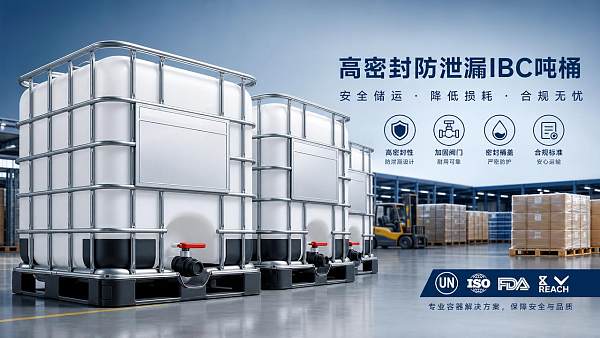
Intermediate bulk containers with spill-proof design are engineered to limit unintended product release during filling, storage, transfer, and transport.
They typically combine stronger closures, better valve protection, tighter seals, and impact-aware structural design.
Some also include tamper evidence, venting control, gasket upgrades, anti-surge features, or reinforced outlet assemblies.
The goal is not only to prevent catastrophic failure.
It is also to reduce slow leaks, drips, splashes, and dispensing losses that accumulate across many handling cycles.
In operational terms, intermediate bulk containers with spill-proof design perform as a risk-control layer between product, people, equipment, and the surrounding environment.
This matters in mixed-use facilities where one packaging standard may serve several material classes and movement conditions.
Core design elements often evaluated
- Sealed caps and closures with consistent torque retention
- Protected discharge valves that resist accidental opening
- Chemical-compatible gaskets and liners
- Reinforced cage, pallet, and bottle interfaces
- Designs supporting safer stacking and forklift handling
Why loss and compliance risk remain major industry concerns
Across the comprehensive industrial landscape, supply chains have become faster, more audited, and less tolerant of avoidable incidents.
At the same time, products move through more nodes, more partners, and more environmental conditions than before.
This increases the probability that conventional packaging weaknesses will surface in transit or on site.
Intermediate bulk containers with spill-proof design respond to several current pressures at once.
In many facilities, loss is underestimated because it appears as many small incidents rather than one dramatic event.
A few liters lost during repeated dispensing cycles can become a measurable annual margin drain.
How intermediate bulk containers with spill-proof design create business value
The value proposition starts with product protection, but it extends much further.
Intermediate bulk containers with spill-proof design can improve cost control, audit readiness, site discipline, and asset reliability.
1. Reduced product loss
Less leakage means more sellable or usable volume reaches the intended process step.
This is especially important for high-value liquids, regulated substances, and sensitive formulations.
2. Lower compliance exposure
Spills may trigger environmental notifications, hazardous waste handling, root-cause reviews, and corrective action documentation.
Using intermediate bulk containers with spill-proof design helps demonstrate preventive control rather than reactive cleanup alone.
3. Improved workplace safety
Cleaner transfer points reduce slip hazards, accidental contact, and exposure during connection and discharge.
That can support better incident rates and less disruption to standard operating procedures.
4. Stronger supply chain resilience
Packaging failure can delay shipments, quarantine loads, and interrupt downstream production windows.
A more secure IBC design helps stabilize material flow across warehouses, carriers, and end-use locations.
5. Better total cost visibility
Unit price alone can mislead evaluation.
True cost should include cleanup labor, replacement product, disposal, downtime, damaged packaging returns, and inspection burden.
Typical use scenarios across sectors
Intermediate bulk containers with spill-proof design are relevant wherever liquid or semi-liquid contents face movement, pressure, or handling variation.
In broad industrial operations, these containers are often most valuable when products are moved repeatedly rather than stored once.
Key evaluation criteria before adoption
Not every spill-resistant claim delivers the same performance in practice.
Selection should align with product properties, logistics profile, and compliance obligations.
Focus areas for assessment
- Confirm material compatibility with the stored contents and cleaning agents.
- Review valve design, closure security, and tamper-evident options.
- Check stacking limits, impact tolerance, and transport stability.
- Verify relevant certification, testing, and traceability records.
- Compare refill, reuse, and inspection requirements over the service life.
It is also useful to map failure history by touchpoint.
Losses during filling require different design priorities than losses during unloading or return logistics.
Implementation considerations that influence results
Even advanced intermediate bulk containers with spill-proof design can underperform if operating discipline is weak.
Packaging performance depends on process alignment, inspection routines, and handling consistency.
- Standardize filling volumes to avoid overpressure and surge issues.
- Train teams on closure checks, valve protection, and forklift contact risks.
- Use pre-shipment inspection points for seals, caps, and outlet assemblies.
- Track minor leak incidents to identify recurring design or handling faults.
- Integrate packaging data into broader quality and EHS reporting.
This is where disciplined intelligence platforms such as TradeNexus Pro add value.
Reliable market insight helps compare technical options, supplier claims, regulatory developments, and sector-specific handling expectations.
A measured next step for risk-conscious operations
Do spill-proof IBCs reduce loss and compliance risk?
In many real operating environments, the answer is yes, when selection and implementation are evidence-based.
Intermediate bulk containers with spill-proof design can reduce recurring leakage, strengthen containment discipline, and support more defensible compliance performance.
They are not a standalone solution, but they are a meaningful control point within modern industrial risk management.
A practical next step is to audit current loss points, estimate total spill-related cost, and compare those findings against upgraded IBC specifications.
That approach turns packaging choice into a strategic decision about resilience, compliance, and operational efficiency.
Get weekly intelligence in your inbox.
No noise. No sponsored content. Pure intelligence.
 Oct 08, 2026How Digital Health Improves Diagnostic Accuracy and Workflow in Clinical LabsHow Digital Health Improves Diagnostic Accuracy and Workflow in Clinical Labs
 Oct 07, 2026Selecting Voice Picking Systems for German Warehouses: Integration, Languages and ROISelecting Voice Picking Systems for German Warehouses: Integration, Languages and ROI
 Oct 06, 2026How to Choose Last Mile Dispatch Software for On-Time Delivery at ScaleHow to Choose Last Mile Dispatch Software for On-Time Delivery at Scale
 Oct 05, 2026Vietnam’s Consumer Electronics Market: Demand Shifts and Sourcing OpportunitiesVietnam’s Consumer Electronics Market: Demand Shifts and Sourcing Opportunities
 Oct 04, 2026Digital Health Investment Priorities for Providers: Improving Access, Outcomes, and EfficiencyDigital Health Investment Priorities for Providers: Improving Access, Outcomes, and Efficiency
 Oct 03, 2026How to Specify an FR4 Custom PCB Board for High-Voltage and High-Heat DesignsHow to Specify an FR4 Custom PCB Board for High-Voltage and High-Heat Designs
 Oct 02, 2026ERP Software Market Intelligence: Adoption, Pricing, and Vendor Signals to WatchERP Software Market Intelligence: Adoption, Pricing, and Vendor Signals to Watch
 Oct 01, 2026How to Select Calibrated Temperature Data Loggers for GMP Cold Storage MonitoringHow to Select Calibrated Temperature Data Loggers for GMP Cold Storage Monitoring
 Sep 30, 2026Custom Molded Rubber Pricing: What Drives Unit Cost and Tooling Fees?Custom Molded Rubber Pricing: What Drives Unit Cost and Tooling Fees?
 Sep 29, 2026How to Evaluate Energy Management Software Vendors for Multi-Site OperationsHow to Evaluate Energy Management Software Vendors for Multi-Site Operations
 Sep 28, 2026How to Select a DIN Rail Smart Meter for Multi-Circuit Energy MonitoringHow to Select a DIN Rail Smart Meter for Multi-Circuit Energy Monitoring
 Sep 27, 2026TWS Earbuds in Vietnam: Demand Drivers, Price Tiers, and Retail Channel OpportunitiesTWS Earbuds in Vietnam: Demand Drivers, Price Tiers, and Retail Channel Opportunities
 Sep 26, 2026How UAE Clinics Can Qualify a Smart Glucometer Supplier for Accuracy and ComplianceHow UAE Clinics Can Qualify a Smart Glucometer Supplier for Accuracy and Compliance
 Sep 25, 2026Buying Aesthetic Lasers in the USA: FDA Status, Wavelengths, and Service SupportBuying Aesthetic Lasers in the USA: FDA Status, Wavelengths, and Service Support
 Sep 24, 2026Laser Cutting Brass Sheet: How to Prevent Burrs and Heat Marks on Thin PartsLaser Cutting Brass Sheet: How to Prevent Burrs and Heat Marks on Thin Parts
 Sep 23, 2026How to Choose Lightweight ANC Headphones for Comfortable All-Day TravelHow to Choose Lightweight ANC Headphones for Comfortable All-Day Travel
 Sep 22, 2026IPX5 TWS Bluetooth Earbuds: What Protection Do They Offer for Workouts?IPX5 TWS Bluetooth Earbuds: What Protection Do They Offer for Workouts?
 Sep 21, 2026What to Look for in a Grid Integration Company for Utility-Scale Solar ProjectsWhat to Look for in a Grid Integration Company for Utility-Scale Solar Projects
 Sep 20, 2026Microgrid Controller Pricing: What Drives Cost in Commercial Energy Projects?Microgrid Controller Pricing: What Drives Cost in Commercial Energy Projects?
 Sep 19, 2026How to Choose a GaN Charger for Laptops Without Compromising Power or PortabilityHow to Choose a GaN Charger for Laptops Without Compromising Power or Portability
 Sep 18, 2026Floating Solar Farm Costs: CAPEX, OPEX, and the Site Factors That Shape ROIFloating Solar Farm Costs: CAPEX, OPEX, and the Site Factors That Shape ROI
 Sep 17, 2026Drone Delivery Solutions for Last-Mile Routes: Site, Payload, and Range PlanningDrone Delivery Solutions for Last-Mile Routes: Site, Payload, and Range Planning
 Sep 16, 2026When Low-Volume Electronics Manufacturing Makes More Sense Than Mass ProductionWhen Low-Volume Electronics Manufacturing Makes More Sense Than Mass Production
 Sep 15, 2026Wholesale WiFi Smart Switches: What Buyers Should Verify Before OrderingWholesale WiFi Smart Switches: What Buyers Should Verify Before Ordering
 Sep 14, 2026How to Select IoT Sensors for Reliable Monitoring in Harsh Industrial EnvironmentsHow to Select IoT Sensors for Reliable Monitoring in Harsh Industrial Environments
 Sep 13, 2026How Procurement Teams Can Improve Supplier Reliability With Supply Chain VisibilityHow Procurement Teams Can Improve Supplier Reliability With Supply Chain Visibility
 Sep 12, 2026Smart Manufacturing Trends 2026: What Leaders Should Prioritize for ROISmart Manufacturing Trends 2026: What Leaders Should Prioritize for ROI



























