
Are corrugated plastic boxes worth it for repeat shipping?
For businesses evaluating packaging ROI, corrugated plastic boxes for shipping offer more than durability. They can lower repeat-use costs, improve protection, and stabilize handling performance across multiple routes. The key question is whether the higher upfront price pays back over enough shipping cycles. The answer depends on shipment frequency, product risk, reverse logistics, cleaning needs, and how consistently the packaging returns for reuse.
In cross-sector operations, packaging is no longer a simple consumable. It affects damage rates, warehouse labor, cube efficiency, sustainability reporting, and customer experience. That is why a checklist-based review helps. It turns a broad packaging debate into measurable criteria that can be tested before replacing single-use cartons with reusable plastic containers.
Why a checklist matters before choosing corrugated plastic boxes for shipping
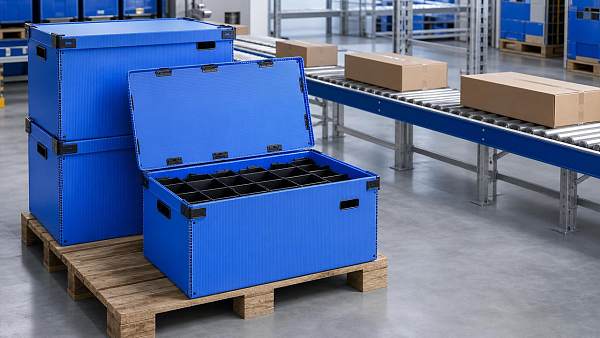
A reusable packaging decision often fails when teams compare unit price only. That misses reuse cycles, return rates, cleaning costs, dunnage compatibility, and transport conditions. A structured checklist reduces bias and helps determine whether corrugated plastic boxes for shipping fit actual operational patterns rather than theoretical savings models.
This approach is especially useful in advanced manufacturing, healthcare technology, smart electronics, green energy components, and software-enabled logistics networks. In these environments, shipping damage, traceability, and repeat handling quality often matter more than lowest initial packaging cost.
Core checklist: how to evaluate repeat-shipping value
Use the following checklist to test whether corrugated plastic boxes for shipping are worth the investment in a repeat-use program.
- Calculate expected reuse cycles before purchase. Estimate real-world turns per box, not ideal ones, and compare total lifecycle cost against corrugated cartons, inserts, tape, and disposal expenses.
- Measure damage exposure by lane and product type. High-value, fragile, or precision parts usually justify stronger reusable packaging faster than low-risk, commodity items.
- Verify return logistics discipline. Reusable boxes only create savings when retrieval rates stay high and return timing does not interrupt outbound packaging availability.
- Assess cleaning and contamination requirements. Some sectors need washdown, dust control, or sterile-adjacent handling, which may support plastic over fiber-based packaging.
- Check dimensional consistency and stackability. Standardized footprints improve pallet patterns, trailer utilization, storage density, and automated handling performance across warehouses.
- Review closure strength and tamper needs. Lid security, straps, seals, and label adhesion affect shipment integrity, traceability, and receiving efficiency.
- Match box design with internal dunnage. Dividers, foam, ESD liners, or custom inserts often determine whether the reusable system truly reduces breakage.
- Model labor impact at packing stations. Faster assembly, less taping, and easier opening can offset packaging cost through lower touch time per shipment.
- Quantify sustainability outcomes with evidence. Reuse claims should include lifespan, repairability, recyclability, and the emissions impact of return transport.
- Run a lane-based pilot first. Test corrugated plastic boxes for shipping on selected customers, products, or regional loops before scaling enterprise-wide.
Where corrugated plastic boxes for shipping make the most sense
Closed-loop distribution
The strongest business case appears in closed-loop systems. These include plant-to-plant transfers, supplier shuttles, regional service depots, and fixed customer routes. In these setups, return visibility is higher and packaging loss is easier to control.
When routes are predictable, corrugated plastic boxes for shipping can achieve enough turns to outperform cardboard. The savings come from reduced replacement frequency, lower product damage, and more consistent handling over time.
High-value or fragile goods
Electronics assemblies, medical devices, sensors, control units, and precision machined parts often need packaging rigidity that survives repeated handling. Even a small reduction in damage rates can justify reusable containers quickly.
In these categories, the packaging decision should include claims, returns, rework, and customer dissatisfaction costs. The value of better protection usually exceeds the simple price difference between disposable and reusable formats.
Clean and controlled environments
Fiber shedding and moisture sensitivity can create issues in cleaner environments. Corrugated plastic offers easier wipe-down and more consistent surface performance, especially where dust control or hygiene expectations are elevated.
That does not remove the need for process discipline. Cleaning protocols, visual inspection, and storage segregation still matter if reusable packaging enters technical or semi-controlled supply chains.
When corrugated plastic boxes for shipping may not be worth it
Reusable packaging is not automatically the better option. Some shipping profiles weaken the return on investment and make single-use cartons more practical.
- Use caution with one-way export shipments. If return transport is unlikely or too costly, the reuse model collapses and packaging loss erodes projected savings.
- Avoid standardizing too early for unstable product mixes. Frequent SKU changes can make fixed box sizes inefficient and increase void fill or handling complexity.
- Reconsider for low-value, low-risk products. If damage impact is minimal, the premium for corrugated plastic boxes for shipping may not pay back in a reasonable timeframe.
- Watch reverse-logistics friction carefully. Lost containers, delayed returns, and poor tracking often destroy the economics of reusable packaging programs.
Commonly overlooked costs and risks
Asset loss and shrinkage
Reusable boxes behave like mobile assets. Without barcoding, scanning discipline, or account-level accountability, loss rates can rise quietly. That weakens the expected lifecycle and increases replacement spending.
Repair and appearance degradation
Not every plastic box remains presentation-ready after heavy use. Scratches, cracked corners, warped panels, and worn labels can affect customer perception and operational reliability. A repair-or-retire policy should be defined early.
Storage and empty return volume
If the boxes do not collapse efficiently, empty repositioning can become expensive. Storage footprint also matters. Space consumed by idle reusable packaging can offset some efficiency gains, especially in constrained facilities.
ESG claims without operational proof
Sustainability messaging should not rely on reuse alone. A credible case needs documented lifespan, recycling pathways, transport miles, and measurable waste reduction. Otherwise, the environmental argument remains incomplete.
Practical execution steps for a smarter decision
- Select one product family with stable dimensions and moderate shipment volume.
- Choose one repeat route where return packaging can be tracked reliably.
- Record baseline data for carton spend, labor time, damage rate, and disposal costs.
- Deploy corrugated plastic boxes for shipping with clear labeling, scan points, and handling instructions.
- Review results after several turns, not after one trip, to capture lifecycle economics.
- Scale only after validating return rates, cleanliness standards, and total cost per successful delivery.
A pilot should also include stakeholder feedback from packing, receiving, transport, and inventory control functions. Friction usually appears in labeling, nesting, return timing, or dunnage fit rather than in the box material itself.
Conclusion: are corrugated plastic boxes worth it for repeat shipping?
Yes, corrugated plastic boxes for shipping are often worth it for repeat shipping when routes are predictable, products are sensitive, and return logistics are controlled. They tend to perform best where consistency, protection, and reuse discipline matter more than lowest purchase price.
They are less compelling for one-way distribution, unstable packaging requirements, or low-risk goods with weak return visibility. The right decision comes from measuring reuse cycles, damage reduction, labor savings, and recovery rates together.
The most effective next step is simple: run a lane-specific trial, collect hard operating data, and compare lifecycle cost per delivered unit. That evidence will show whether corrugated plastic is a durable asset or just a more expensive box.
Get weekly intelligence in your inbox.
No noise. No sponsored content. Pure intelligence.
 Oct 08, 2026How Digital Health Improves Diagnostic Accuracy and Workflow in Clinical LabsHow Digital Health Improves Diagnostic Accuracy and Workflow in Clinical Labs
 Oct 07, 2026Selecting Voice Picking Systems for German Warehouses: Integration, Languages and ROISelecting Voice Picking Systems for German Warehouses: Integration, Languages and ROI
 Oct 06, 2026How to Choose Last Mile Dispatch Software for On-Time Delivery at ScaleHow to Choose Last Mile Dispatch Software for On-Time Delivery at Scale
 Oct 05, 2026Vietnam’s Consumer Electronics Market: Demand Shifts and Sourcing OpportunitiesVietnam’s Consumer Electronics Market: Demand Shifts and Sourcing Opportunities
 Oct 04, 2026Digital Health Investment Priorities for Providers: Improving Access, Outcomes, and EfficiencyDigital Health Investment Priorities for Providers: Improving Access, Outcomes, and Efficiency
 Oct 03, 2026How to Specify an FR4 Custom PCB Board for High-Voltage and High-Heat DesignsHow to Specify an FR4 Custom PCB Board for High-Voltage and High-Heat Designs
 Oct 02, 2026ERP Software Market Intelligence: Adoption, Pricing, and Vendor Signals to WatchERP Software Market Intelligence: Adoption, Pricing, and Vendor Signals to Watch
 Oct 01, 2026How to Select Calibrated Temperature Data Loggers for GMP Cold Storage MonitoringHow to Select Calibrated Temperature Data Loggers for GMP Cold Storage Monitoring
 Sep 30, 2026Custom Molded Rubber Pricing: What Drives Unit Cost and Tooling Fees?Custom Molded Rubber Pricing: What Drives Unit Cost and Tooling Fees?
 Sep 29, 2026How to Evaluate Energy Management Software Vendors for Multi-Site OperationsHow to Evaluate Energy Management Software Vendors for Multi-Site Operations
 Sep 28, 2026How to Select a DIN Rail Smart Meter for Multi-Circuit Energy MonitoringHow to Select a DIN Rail Smart Meter for Multi-Circuit Energy Monitoring
 Sep 27, 2026TWS Earbuds in Vietnam: Demand Drivers, Price Tiers, and Retail Channel OpportunitiesTWS Earbuds in Vietnam: Demand Drivers, Price Tiers, and Retail Channel Opportunities
 Sep 26, 2026How UAE Clinics Can Qualify a Smart Glucometer Supplier for Accuracy and ComplianceHow UAE Clinics Can Qualify a Smart Glucometer Supplier for Accuracy and Compliance
 Sep 25, 2026Buying Aesthetic Lasers in the USA: FDA Status, Wavelengths, and Service SupportBuying Aesthetic Lasers in the USA: FDA Status, Wavelengths, and Service Support
 Sep 24, 2026Laser Cutting Brass Sheet: How to Prevent Burrs and Heat Marks on Thin PartsLaser Cutting Brass Sheet: How to Prevent Burrs and Heat Marks on Thin Parts
 Sep 23, 2026How to Choose Lightweight ANC Headphones for Comfortable All-Day TravelHow to Choose Lightweight ANC Headphones for Comfortable All-Day Travel
 Sep 22, 2026IPX5 TWS Bluetooth Earbuds: What Protection Do They Offer for Workouts?IPX5 TWS Bluetooth Earbuds: What Protection Do They Offer for Workouts?
 Sep 21, 2026What to Look for in a Grid Integration Company for Utility-Scale Solar ProjectsWhat to Look for in a Grid Integration Company for Utility-Scale Solar Projects
 Sep 20, 2026Microgrid Controller Pricing: What Drives Cost in Commercial Energy Projects?Microgrid Controller Pricing: What Drives Cost in Commercial Energy Projects?
 Sep 19, 2026How to Choose a GaN Charger for Laptops Without Compromising Power or PortabilityHow to Choose a GaN Charger for Laptops Without Compromising Power or Portability
 Sep 18, 2026Floating Solar Farm Costs: CAPEX, OPEX, and the Site Factors That Shape ROIFloating Solar Farm Costs: CAPEX, OPEX, and the Site Factors That Shape ROI
 Sep 17, 2026Drone Delivery Solutions for Last-Mile Routes: Site, Payload, and Range PlanningDrone Delivery Solutions for Last-Mile Routes: Site, Payload, and Range Planning
 Sep 16, 2026When Low-Volume Electronics Manufacturing Makes More Sense Than Mass ProductionWhen Low-Volume Electronics Manufacturing Makes More Sense Than Mass Production
 Sep 15, 2026Wholesale WiFi Smart Switches: What Buyers Should Verify Before OrderingWholesale WiFi Smart Switches: What Buyers Should Verify Before Ordering
 Sep 14, 2026How to Select IoT Sensors for Reliable Monitoring in Harsh Industrial EnvironmentsHow to Select IoT Sensors for Reliable Monitoring in Harsh Industrial Environments
 Sep 13, 2026How Procurement Teams Can Improve Supplier Reliability With Supply Chain VisibilityHow Procurement Teams Can Improve Supplier Reliability With Supply Chain Visibility
 Sep 12, 2026Smart Manufacturing Trends 2026: What Leaders Should Prioritize for ROISmart Manufacturing Trends 2026: What Leaders Should Prioritize for ROI



























