
Why choose 5 axis milling for complex aluminum parts?
For project leaders balancing precision, lead time, and budget, 5 axis milling for aluminum parts offers a smarter path to manufacturing complex geometries with fewer setups and tighter tolerances. From aerospace brackets to electronic enclosures, this advanced process improves surface quality, reduces production risk, and supports faster delivery—making it a strategic choice for high-value aluminum components.
In B2B manufacturing programs, the choice of machining method affects far more than part geometry. It influences schedule stability, supplier coordination, inspection workload, and the total cost of change. For engineering managers and project owners working across advanced manufacturing, smart electronics, healthcare technology, and energy systems, selecting the right process early can reduce delays by 1–3 production cycles and limit expensive redesigns.
This is where 5 axis milling for aluminum parts becomes especially valuable. Aluminum is lightweight, conductive, and easy to machine compared with harder alloys, but complex aluminum components still create challenges when multiple faces, deep cavities, thin walls, and tight flatness requirements must all be achieved in one part. A process that can access more surfaces in fewer operations often delivers measurable gains in quality and project control.
Why 5 axis milling changes the economics of complex aluminum machining
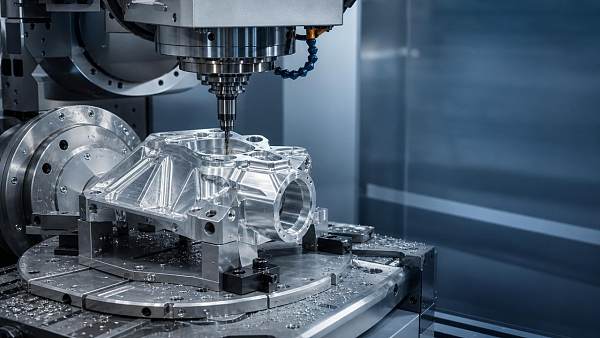
Traditional 3 axis machining remains effective for many prismatic parts, but it can become inefficient when a component requires machining on 4, 5, or even 6 faces. Each repositioning adds setup time, creates another opportunity for alignment error, and increases the need for manual intervention. In production environments where tolerances commonly fall within ±0.05 mm to ±0.01 mm, those extra touchpoints matter.
With 5 axis milling for aluminum parts, the cutter and the workpiece can move simultaneously across five axes. This allows angled features, undercuts, compound curves, and complex pockets to be machined with fewer fixtures. For project leaders, that often translates into 3 practical gains: reduced setup count, improved positional accuracy, and shorter throughput time.
Fewer setups mean lower cumulative risk
Every setup introduces potential variation. A part moved from one fixture to another may still pass inspection, but stacked deviations can affect hole position, perpendicularity, or cosmetic consistency. On complex housings or brackets, reducing setups from 4–6 down to 1–2 can significantly improve repeatability while also cutting non-cutting machine time.
This matters in multi-site supply chains. If your procurement team sources raw material in one region, machining in another, and final assembly elsewhere, any avoidable variation can slow approval at incoming inspection. 5 axis milling for aluminum parts helps stabilize dimensional results before those downstream handoffs begin.
Better access improves surface finish and feature quality
Complex aluminum parts often include thin ribs, heat-dissipation channels, sealing surfaces, or angled pockets. Better tool approach angles can reduce chatter, improve chip evacuation, and lower the chance of tool deflection. In many applications, this supports smoother finishes in the Ra 0.8–3.2 µm range, depending on geometry and final machining strategy.
For visible enclosures and functional interfaces alike, that improvement is not cosmetic only. Better surface control can reduce the need for secondary polishing, improve coating consistency, and support more reliable fit with mating components.
Lead time benefits are often operational, not theoretical
Project leaders usually care less about machine sophistication than about delivery confidence. A complex part that needs 5 separate fixtures, 2 in-process inspections, and manual rework has more schedule risk than a part cut in 1 integrated program. Prototype lead times for complex aluminum parts often fall in the 5–10 working day range when tooling, material, and programming are aligned, while production batches may run 2–4 weeks depending on volume and finishing.
The following comparison shows why 5 axis milling for aluminum parts is frequently chosen when part complexity rises beyond what standard setups can handle efficiently.
The key takeaway is not that 5 axis is always necessary, but that it becomes highly efficient once geometry complexity, tolerance sensitivity, or delivery pressure crosses a certain threshold. For many aluminum programs, the real savings appear in reduced handling, less rework, and smoother release into assembly or customer validation.
Where 5 axis milling for aluminum parts delivers the strongest value
Not every aluminum part needs advanced multi-axis machining. The best candidates usually combine 3 factors: complex geometry, tight tolerance relationships between features, and a strong need to control downstream assembly risk. Project managers should focus on applications where process simplification creates measurable commercial value.
Aerospace and mobility components
Aluminum brackets, structural supports, actuator housings, and lightweight mounting elements often include weight-reduction pockets and multi-angle surfaces. In these cases, 5 axis milling for aluminum parts helps maintain strength-to-weight goals while reducing the number of separate machining steps. Thin-wall sections of 1.5–3.0 mm especially benefit from stable fixturing and optimized cutter approach.
Smart electronics and thermal management
Electronic enclosures, heat sinks, RF housings, and precision connector bodies often demand flat mating surfaces, detailed cavities, and reliable thread positions. These parts may also require cosmetic consistency before anodizing. Better tool access can improve edge condition, reduce burr formation, and support sealing performance in compact, high-density products.
Healthcare devices and laboratory equipment
Medical-adjacent applications do not always need exotic materials; many rely on aluminum for housings, frames, and instrument components where precision and repeatability are essential. A design with multiple datums, curved outer surfaces, and compact internal channels is often easier to manage through one coordinated multi-axis strategy than through several conventional operations.
Energy and industrial systems
Battery fixtures, sensor mounts, inverter components, and lightweight structural interfaces can all benefit from shorter machining routes. In energy-related supply chains, where engineering changes may happen late in the program, the ability to revise one integrated toolpath instead of reworking several fixture strategies can shorten response time by days rather than weeks.
The table below helps identify when 5 axis milling for aluminum parts is a strategic fit rather than a premium option without clear return.
For project teams, these thresholds make supplier conversations more practical. Instead of asking whether 5 axis is “better,” ask whether the part has enough geometric complexity, tolerance interaction, or schedule pressure to justify the process.
How to evaluate suppliers for 5 axis aluminum machining
Choosing a capable supplier involves more than checking machine count. A shop may own advanced equipment yet still struggle with programming maturity, fixture design, or inspection discipline. For B2B buyers and engineering leads, supplier evaluation should cover at least 4 areas: technical capability, process control, communication speed, and delivery reliability.
Technical readiness
Ask whether the supplier regularly machines aluminum grades relevant to your use case, such as 6061, 6082, 7075, or similar commercial alloys. Material behavior varies. Some grades prioritize machinability, while others prioritize strength or corrosion resistance. The shop should also understand wall thickness limits, stress relief concerns, and the relationship between roughing and finishing passes.
Questions worth asking
- How many setups are expected for this part: 1, 2, or more?
- What tolerance range can be held on critical datums and hole positions?
- What inspection method will be used: in-process probing, CMM, gauges, or a mix?
- What is the expected cycle time per part for prototype and batch production?
Process control and inspection planning
Reliable 5 axis milling for aluminum parts depends on process discipline. Look for shops that define datum strategy early, review tool reach against deep features, and separate critical dimensions from cosmetic ones in the control plan. A good supplier should be able to explain which 5–8 dimensions drive the highest risk and how those will be verified before shipment.
This is especially important when parts will be anodized, powder coated, or assembled with seals. Surface treatment can change dimensions slightly, so machining allowances and post-finish inspection criteria must be aligned in advance.
Commercial and communication fit
A technically competent supplier can still be difficult to work with if response times are slow or revision control is weak. For project leaders managing multiple stakeholders, a 24–48 hour quotation response, clear DFM feedback, and disciplined revision tracking can be as valuable as machine capability. These habits reduce confusion when drawings change late or when a prototype becomes a pilot batch.
Red flags that increase program risk
- No clear explanation of setup strategy for multi-face features.
- Quotes that ignore inspection, finishing, or packaging requirements.
- Unrealistic lead times for complex parts, such as 48-hour delivery without review.
- No discussion of burr control, warpage, or thin-wall stability.
- Inability to distinguish prototype process from production process.
In practical sourcing terms, the best supplier is usually the one that identifies manufacturability issues before they become production delays. That upstream visibility is often where the true value of 5 axis milling for aluminum parts shows up for program managers.
Implementation advice for project leaders: cost, timing, and risk control
A common mistake is to evaluate machining cost by unit price alone. For complex aluminum components, the better decision model includes programming time, setup count, fixture complexity, inspection effort, finishing compatibility, and change-order flexibility. A part that appears 8%–15% cheaper in a simple quote may become more expensive after rework, delayed approval, or assembly mismatch.
Use a 5-step launch approach
- Confirm critical-to-function dimensions, not just drawing completeness.
- Review whether 5 axis machining reduces setups enough to justify programming cost.
- Align prototype, pilot, and production expectations before release.
- Define inspection checkpoints for key datums, sealing faces, and hole positions.
- Plan finishing, packaging, and logistics at the same time as machining.
Budgeting beyond piece price
When comparing quotations, ask suppliers to separate one-time programming or fixture costs from recurring machining costs. For low-volume prototypes, a higher unit price may still be the better choice if it removes 1–2 setup stages and shortens approval time. For repeat production, stable process capability often reduces total cost over 3–6 months through less rework and fewer supply interruptions.
Manage design changes carefully
Complex parts tend to evolve during development. If wall thickness, hole orientation, or mounting points change after release, update the machining review immediately. Even a 2 mm shift in feature location can affect tool access, cycle time, and fixture logic. Early communication prevents last-minute surprises that can add several days to a shipment schedule.
FAQ for decision-makers
Is 5 axis always more expensive?
Not always. For simple flat components, yes, conventional machining may be more economical. But for intricate geometry, 5 axis milling for aluminum parts can reduce labor steps, setup time, and rework enough to improve total project economics.
What volume level justifies 5 axis machining?
There is no fixed threshold. It can make sense for quantities as low as 1–10 prototype parts when geometry is complex, and it remains valuable in medium-volume production when repeatability and lead time matter more than the lowest theoretical cycle cost.
What files should buyers prepare?
Provide 2D drawings with tolerances, 3D CAD data, material grade, finish requirements, and any assembly-critical notes. If there are 3–5 dimensions that directly affect function, highlight them. That gives the supplier a clearer basis for process planning and quotation accuracy.
For organizations sourcing across regions and sectors, 5 axis milling for aluminum parts is not simply a machining upgrade. It is a way to reduce uncertainty in complex programs, especially where design sophistication, speed, and consistency must coexist. When matched to the right geometry and managed through a disciplined supplier review, it can improve dimensional confidence, compress timelines, and support cleaner scale-up from prototype to production.
TradeNexus Pro helps decision-makers evaluate manufacturing choices through a strategic supply-chain lens, connecting technical requirements with sourcing reality. If your team is assessing complex aluminum components for upcoming projects, now is the right time to get a tailored manufacturing review, compare process options, and explore supplier-fit criteria in more detail. Contact us to discuss your application, request a customized solution, or learn more about practical machining strategies for high-value B2B programs.
Get weekly intelligence in your inbox.
No noise. No sponsored content. Pure intelligence.
 Oct 08, 2026How Digital Health Improves Diagnostic Accuracy and Workflow in Clinical LabsHow Digital Health Improves Diagnostic Accuracy and Workflow in Clinical Labs
 Oct 07, 2026Selecting Voice Picking Systems for German Warehouses: Integration, Languages and ROISelecting Voice Picking Systems for German Warehouses: Integration, Languages and ROI
 Oct 06, 2026How to Choose Last Mile Dispatch Software for On-Time Delivery at ScaleHow to Choose Last Mile Dispatch Software for On-Time Delivery at Scale
 Oct 05, 2026Vietnam’s Consumer Electronics Market: Demand Shifts and Sourcing OpportunitiesVietnam’s Consumer Electronics Market: Demand Shifts and Sourcing Opportunities
 Oct 04, 2026Digital Health Investment Priorities for Providers: Improving Access, Outcomes, and EfficiencyDigital Health Investment Priorities for Providers: Improving Access, Outcomes, and Efficiency
 Oct 03, 2026How to Specify an FR4 Custom PCB Board for High-Voltage and High-Heat DesignsHow to Specify an FR4 Custom PCB Board for High-Voltage and High-Heat Designs
 Oct 02, 2026ERP Software Market Intelligence: Adoption, Pricing, and Vendor Signals to WatchERP Software Market Intelligence: Adoption, Pricing, and Vendor Signals to Watch
 Oct 01, 2026How to Select Calibrated Temperature Data Loggers for GMP Cold Storage MonitoringHow to Select Calibrated Temperature Data Loggers for GMP Cold Storage Monitoring
 Sep 30, 2026Custom Molded Rubber Pricing: What Drives Unit Cost and Tooling Fees?Custom Molded Rubber Pricing: What Drives Unit Cost and Tooling Fees?
 Sep 29, 2026How to Evaluate Energy Management Software Vendors for Multi-Site OperationsHow to Evaluate Energy Management Software Vendors for Multi-Site Operations
 Sep 28, 2026How to Select a DIN Rail Smart Meter for Multi-Circuit Energy MonitoringHow to Select a DIN Rail Smart Meter for Multi-Circuit Energy Monitoring
 Sep 27, 2026TWS Earbuds in Vietnam: Demand Drivers, Price Tiers, and Retail Channel OpportunitiesTWS Earbuds in Vietnam: Demand Drivers, Price Tiers, and Retail Channel Opportunities
 Sep 26, 2026How UAE Clinics Can Qualify a Smart Glucometer Supplier for Accuracy and ComplianceHow UAE Clinics Can Qualify a Smart Glucometer Supplier for Accuracy and Compliance
 Sep 25, 2026Buying Aesthetic Lasers in the USA: FDA Status, Wavelengths, and Service SupportBuying Aesthetic Lasers in the USA: FDA Status, Wavelengths, and Service Support
 Sep 24, 2026Laser Cutting Brass Sheet: How to Prevent Burrs and Heat Marks on Thin PartsLaser Cutting Brass Sheet: How to Prevent Burrs and Heat Marks on Thin Parts
 Sep 23, 2026How to Choose Lightweight ANC Headphones for Comfortable All-Day TravelHow to Choose Lightweight ANC Headphones for Comfortable All-Day Travel
 Sep 22, 2026IPX5 TWS Bluetooth Earbuds: What Protection Do They Offer for Workouts?IPX5 TWS Bluetooth Earbuds: What Protection Do They Offer for Workouts?
 Sep 21, 2026What to Look for in a Grid Integration Company for Utility-Scale Solar ProjectsWhat to Look for in a Grid Integration Company for Utility-Scale Solar Projects
 Sep 20, 2026Microgrid Controller Pricing: What Drives Cost in Commercial Energy Projects?Microgrid Controller Pricing: What Drives Cost in Commercial Energy Projects?
 Sep 19, 2026How to Choose a GaN Charger for Laptops Without Compromising Power or PortabilityHow to Choose a GaN Charger for Laptops Without Compromising Power or Portability
 Sep 18, 2026Floating Solar Farm Costs: CAPEX, OPEX, and the Site Factors That Shape ROIFloating Solar Farm Costs: CAPEX, OPEX, and the Site Factors That Shape ROI
 Sep 17, 2026Drone Delivery Solutions for Last-Mile Routes: Site, Payload, and Range PlanningDrone Delivery Solutions for Last-Mile Routes: Site, Payload, and Range Planning
 Sep 16, 2026When Low-Volume Electronics Manufacturing Makes More Sense Than Mass ProductionWhen Low-Volume Electronics Manufacturing Makes More Sense Than Mass Production
 Sep 15, 2026Wholesale WiFi Smart Switches: What Buyers Should Verify Before OrderingWholesale WiFi Smart Switches: What Buyers Should Verify Before Ordering
 Sep 14, 2026How to Select IoT Sensors for Reliable Monitoring in Harsh Industrial EnvironmentsHow to Select IoT Sensors for Reliable Monitoring in Harsh Industrial Environments
 Sep 13, 2026How Procurement Teams Can Improve Supplier Reliability With Supply Chain VisibilityHow Procurement Teams Can Improve Supplier Reliability With Supply Chain Visibility
 Sep 12, 2026Smart Manufacturing Trends 2026: What Leaders Should Prioritize for ROISmart Manufacturing Trends 2026: What Leaders Should Prioritize for ROI



























