
How precise must optical component engineering really be?
In optical systems, tiny deviations can trigger large losses in throughput, contrast, focus stability, and service life. That is why precision engineering for optical components matters beyond laboratory theory.
Yet the practical question is sharper. How precise must optical surfaces, coatings, mounts, and alignments really be for each application, and where does added tolerance control stop paying back?
For industrial decision-making, the answer depends on scenario, risk, operating environment, and production scale. Smart precision engineering for optical components balances optical performance, manufacturability, inspection burden, and lifecycle cost.
Across advanced manufacturing, smart electronics, healthcare technology, green energy, and automation, the best tolerance strategy is rarely “make everything tighter.” It is “control what drives system failure.”
Why the required precision changes by application scenario
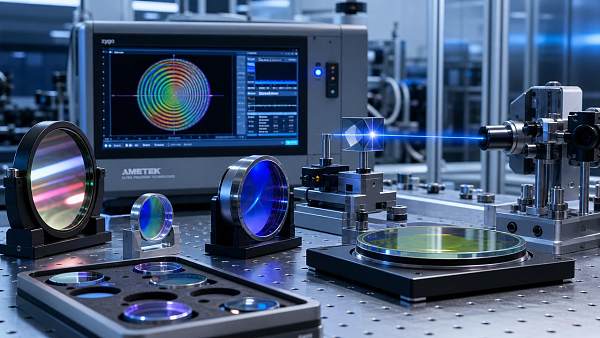
Optical components do not perform in isolation. They work inside systems shaped by wavelength, thermal load, vibration, contamination, duty cycle, and assembly repeatability.
A lens for a consumer sensor, for example, faces different constraints than a laser mirror in a cutting head. Both need precision engineering for optical components, but not at the same level.
The wrong approach is chasing ultra-tight tolerances everywhere. That increases scrap, slows throughput, raises metrology costs, and may still miss the actual source of performance drift.
The right approach starts with functional sensitivity. Which parameter most directly affects signal quality, beam shape, imaging resolution, alignment retention, or energy efficiency?
Only after that should teams define surface figure, roughness, centration, coating uniformity, wedge, edge quality, and assembly tolerances. Precision engineering for optical components works best when tied to measurable failure modes.
Scenario one: imaging and sensing systems demand controlled precision, not maximum precision
In cameras, machine vision, LiDAR receivers, and diagnostic imaging modules, optical errors often accumulate across many parts. No single lens may be extreme, but stack-up effects become critical.
Here, precision engineering for optical components should focus on centration, focal consistency, coating transmission, and assembly alignment. These often matter more than chasing premium polishing on every surface.
Key judgment points for imaging scenarios
- Resolution targets must match detector pixel size and field requirements.
- Stray light control may outweigh absolute surface perfection.
- Thermal drift can degrade focus more than small form errors.
- Assembly repeatability is essential in scaled production.
In these systems, precision engineering for optical components should be allocated where optical transfer function, distortion, and focus retention are most sensitive. That often lowers cost without sacrificing field performance.
Scenario two: laser delivery and high-energy optics require ultra-precision where damage risk concentrates
Laser processing, semiconductor tools, metrology platforms, and scientific instruments operate under concentrated power. Small defects can seed absorption, thermal lensing, scatter, or catastrophic coating failure.
In this scenario, precision engineering for optical components often must reach ultra-precision standards. Surface roughness, coating defect density, transmitted wavefront error, and substrate homogeneity become non-negotiable.
What deserves tighter control in laser systems
- Surface quality that limits scatter and localized heating.
- Coating durability at specific wavelengths and incident angles.
- Flatness or curvature stability under thermal load.
- Edge treatment that avoids chipping and crack initiation.
However, even here, not every dimension needs equal tightening. Mechanical features that do not affect beam path may accept wider limits if alignment datums are robust and validated.
Scenario three: medical and analytical devices need precision that survives regulation and repeated use
Healthcare technology and analytical instruments place a dual burden on optics. Performance must stay stable, and traceability must support validation, calibration, and long-term compliance.
In these cases, precision engineering for optical components includes documentation discipline as much as geometry. Repeatable inspection methods and lot-to-lot consistency can be more valuable than heroic one-off accuracy.
Core decision factors in regulated environments
- Measurement methods must correlate with clinical or analytical outcomes.
- Material choice must support cleaning, sterilization, or chemical exposure.
- Tolerance bands should reflect calibration capability.
- Change control is critical for continuity and risk management.
Precision engineering for optical components in this scenario is successful when the product remains measurable, repeatable, and auditable over time, not merely perfect on day one.
Scenario four: outdoor and energy systems need environmental precision, not just geometric precision
Solar concentrators, outdoor sensors, lidar units, and monitoring optics encounter temperature swings, humidity, dust, vibration, and UV exposure. Geometry alone does not guarantee reliable performance.
For these applications, precision engineering for optical components must account for coating adhesion, substrate expansion, sealing interfaces, and contamination tolerance across long deployment cycles.
A highly polished part can still fail if condensation, abrasion, or mount stress shifts the optical path. Environmental durability often defines the real precision requirement.
How precision needs differ across common industrial scenarios
Practical ways to match precision engineering for optical components to the right need
A workable strategy starts by ranking tolerances according to system sensitivity. This helps prevent over-specification while protecting the parameters that truly drive optical performance.
- Map each optical parameter to a measurable system outcome.
- Use tolerance analysis before releasing drawings.
- Separate functional tolerances from cosmetic preferences.
- Confirm metrology capability at production volume.
- Test the assembled system under real environmental stress.
This is where precision engineering for optical components becomes commercially effective. It connects design intent, fabrication reality, inspection confidence, and lifetime performance in one controlled workflow.
Common misjudgments that waste cost or create hidden risk
One common mistake is specifying ultra-low roughness for parts where contamination or alignment dominates image quality. The premium finish adds cost without changing field results.
Another mistake is relying on nominal optical precision while ignoring mount stress, adhesive shrinkage, or thermal mismatch. Excellent components can still fail inside poor assemblies.
A third mistake is requesting tolerances that inspection systems cannot verify consistently. Precision engineering for optical components loses value when metrology uncertainty rivals the tolerance itself.
- Do not tighten every parameter equally.
- Do not separate optical drawings from assembly realities.
- Do not assume prototype precision will scale economically.
- Do not overlook coating behavior in actual operating conditions.
What the next step should look like
The best next move is a scenario-based review of optical function, environmental load, and tolerance sensitivity. That reveals where precision engineering for optical components is essential and where practical limits are enough.
A strong evaluation should compare system-level impact, manufacturability, inspection capability, and lifecycle risk. This creates a cleaner path to reliable performance and more efficient capital use.
TradeNexus Pro tracks how advanced manufacturing, smart electronics, healthcare technology, green energy, and supply chain strategy reshape these decisions. Better optical precision choices start with better industrial intelligence.
So, how precise must optical component engineering really be? Precise enough to protect the function that matters, robust enough to survive the application, and disciplined enough to scale without waste.
Get weekly intelligence in your inbox.
No noise. No sponsored content. Pure intelligence.
 Oct 08, 2026How Digital Health Improves Diagnostic Accuracy and Workflow in Clinical LabsHow Digital Health Improves Diagnostic Accuracy and Workflow in Clinical Labs
 Oct 07, 2026Selecting Voice Picking Systems for German Warehouses: Integration, Languages and ROISelecting Voice Picking Systems for German Warehouses: Integration, Languages and ROI
 Oct 06, 2026How to Choose Last Mile Dispatch Software for On-Time Delivery at ScaleHow to Choose Last Mile Dispatch Software for On-Time Delivery at Scale
 Oct 05, 2026Vietnam’s Consumer Electronics Market: Demand Shifts and Sourcing OpportunitiesVietnam’s Consumer Electronics Market: Demand Shifts and Sourcing Opportunities
 Oct 04, 2026Digital Health Investment Priorities for Providers: Improving Access, Outcomes, and EfficiencyDigital Health Investment Priorities for Providers: Improving Access, Outcomes, and Efficiency
 Oct 03, 2026How to Specify an FR4 Custom PCB Board for High-Voltage and High-Heat DesignsHow to Specify an FR4 Custom PCB Board for High-Voltage and High-Heat Designs
 Oct 02, 2026ERP Software Market Intelligence: Adoption, Pricing, and Vendor Signals to WatchERP Software Market Intelligence: Adoption, Pricing, and Vendor Signals to Watch
 Oct 01, 2026How to Select Calibrated Temperature Data Loggers for GMP Cold Storage MonitoringHow to Select Calibrated Temperature Data Loggers for GMP Cold Storage Monitoring
 Sep 30, 2026Custom Molded Rubber Pricing: What Drives Unit Cost and Tooling Fees?Custom Molded Rubber Pricing: What Drives Unit Cost and Tooling Fees?
 Sep 29, 2026How to Evaluate Energy Management Software Vendors for Multi-Site OperationsHow to Evaluate Energy Management Software Vendors for Multi-Site Operations
 Sep 28, 2026How to Select a DIN Rail Smart Meter for Multi-Circuit Energy MonitoringHow to Select a DIN Rail Smart Meter for Multi-Circuit Energy Monitoring
 Sep 27, 2026TWS Earbuds in Vietnam: Demand Drivers, Price Tiers, and Retail Channel OpportunitiesTWS Earbuds in Vietnam: Demand Drivers, Price Tiers, and Retail Channel Opportunities
 Sep 26, 2026How UAE Clinics Can Qualify a Smart Glucometer Supplier for Accuracy and ComplianceHow UAE Clinics Can Qualify a Smart Glucometer Supplier for Accuracy and Compliance
 Sep 25, 2026Buying Aesthetic Lasers in the USA: FDA Status, Wavelengths, and Service SupportBuying Aesthetic Lasers in the USA: FDA Status, Wavelengths, and Service Support
 Sep 24, 2026Laser Cutting Brass Sheet: How to Prevent Burrs and Heat Marks on Thin PartsLaser Cutting Brass Sheet: How to Prevent Burrs and Heat Marks on Thin Parts
 Sep 23, 2026How to Choose Lightweight ANC Headphones for Comfortable All-Day TravelHow to Choose Lightweight ANC Headphones for Comfortable All-Day Travel
 Sep 22, 2026IPX5 TWS Bluetooth Earbuds: What Protection Do They Offer for Workouts?IPX5 TWS Bluetooth Earbuds: What Protection Do They Offer for Workouts?
 Sep 21, 2026What to Look for in a Grid Integration Company for Utility-Scale Solar ProjectsWhat to Look for in a Grid Integration Company for Utility-Scale Solar Projects
 Sep 20, 2026Microgrid Controller Pricing: What Drives Cost in Commercial Energy Projects?Microgrid Controller Pricing: What Drives Cost in Commercial Energy Projects?
 Sep 19, 2026How to Choose a GaN Charger for Laptops Without Compromising Power or PortabilityHow to Choose a GaN Charger for Laptops Without Compromising Power or Portability
 Sep 18, 2026Floating Solar Farm Costs: CAPEX, OPEX, and the Site Factors That Shape ROIFloating Solar Farm Costs: CAPEX, OPEX, and the Site Factors That Shape ROI
 Sep 17, 2026Drone Delivery Solutions for Last-Mile Routes: Site, Payload, and Range PlanningDrone Delivery Solutions for Last-Mile Routes: Site, Payload, and Range Planning
 Sep 16, 2026When Low-Volume Electronics Manufacturing Makes More Sense Than Mass ProductionWhen Low-Volume Electronics Manufacturing Makes More Sense Than Mass Production
 Sep 15, 2026Wholesale WiFi Smart Switches: What Buyers Should Verify Before OrderingWholesale WiFi Smart Switches: What Buyers Should Verify Before Ordering
 Sep 14, 2026How to Select IoT Sensors for Reliable Monitoring in Harsh Industrial EnvironmentsHow to Select IoT Sensors for Reliable Monitoring in Harsh Industrial Environments
 Sep 13, 2026How Procurement Teams Can Improve Supplier Reliability With Supply Chain VisibilityHow Procurement Teams Can Improve Supplier Reliability With Supply Chain Visibility
 Sep 12, 2026Smart Manufacturing Trends 2026: What Leaders Should Prioritize for ROISmart Manufacturing Trends 2026: What Leaders Should Prioritize for ROI



























