
What matters most in railway custom metal fabrication?
In railway projects, precision, compliance, and long-term durability define success. Custom metal fabrication for railway industry applications must meet strict safety standards, survive vibration, corrosion, impact, and weather exposure, and still support efficient production. Getting the specification right early helps reduce rework, protect service life, and improve whole-life value.
A checklist-based approach works well because railway assemblies rarely fail for one reason alone. Problems usually come from stacked gaps in material choice, tolerances, welding control, documentation, or finishing. Reviewing each factor in sequence makes custom metal fabrication for railway industry programs more predictable and easier to qualify.
Why a structured review matters in railway metal fabrication
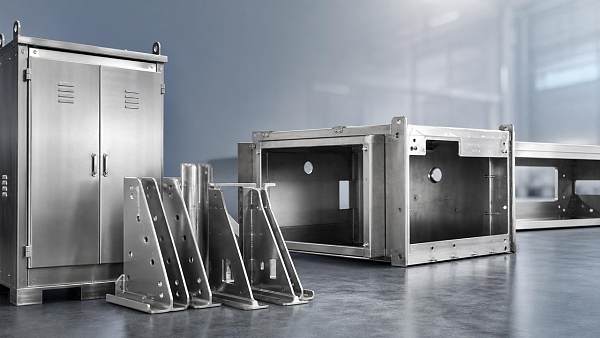
Railway components operate in environments where safety margins are narrow and maintenance windows are limited. A bracket, enclosure, frame, cabinet, walkway, or underbody structure must perform reliably across years of dynamic loading and exposure.
That is why custom metal fabrication for railway industry use is not only about cutting and welding. It is about translating design intent into traceable, repeatable output that aligns with standards, inspection plans, and long-term operating conditions.
Core checklist for custom metal fabrication for railway industry projects
- Define service conditions first, including vibration, shock, thermal cycling, humidity, salt exposure, and cleaning chemicals, before approving any drawing, alloy, thickness, joint design, or finishing route.
- Select materials by lifecycle performance, not only cost, and confirm strength, corrosion resistance, formability, weldability, weight targets, and compatibility with insulation, coatings, and adjacent assemblies.
- Verify compliance requirements early, covering fire behavior, smoke and toxicity, structural criteria, documentation needs, and any customer-specific railway standards that affect fabrication and validation methods.
- Control tolerances around interfaces, especially holes, mounting planes, cable entries, and mating edges, because fit-up variation can disrupt final assembly and increase field modification risk.
- Qualify welding procedures and operators against the actual joint types, positions, and material grades used, then lock in heat input, distortion control, and inspection acceptance criteria.
- Plan manufacturability with forming limits, bend radii, nesting efficiency, fixture design, and batch size assumptions so prototypes can scale smoothly into repeat production.
- Specify surface treatment according to exposure class, using galvanizing, powder coating, passivation, anodizing, or paint systems that match corrosion, abrasion, and appearance requirements.
- Build traceability into every lot through mill certificates, process records, weld maps, dimensional reports, and revision control, especially for safety-relevant railway hardware.
- Test critical parts with realistic methods, such as load testing, salt spray, vibration simulation, ingress protection checks, or trial assembly, before freezing the release package.
- Review logistics and installation needs, including part labeling, protective packaging, sequence kitting, and export compliance, because damage in transit can erase fabrication quality.
Material selection often decides lifecycle cost
In custom metal fabrication for railway industry applications, the cheapest metal can become the most expensive choice. Premature corrosion, fatigue cracking, or coating failure creates service disruptions, replacement labor, and audit pressure later.
Common choices include stainless steel for corrosion resistance, carbon steel for structural economy, and aluminum for weight reduction. The right answer depends on operating geography, duty cycle, cleaning regime, and joining method.
Welding quality is more than visual appearance
Railway assemblies see repeated loads, so weld integrity matters beyond surface finish. Joint preparation, fixturing, sequence planning, filler compatibility, and distortion management all affect strength and downstream fit.
When evaluating custom metal fabrication for railway industry capacity, check whether non-destructive testing, procedure qualification records, and welder qualifications are available for the actual part family, not generic examples.
Application-specific points that change fabrication priorities
Carbody and structural support components
Frames, supports, and structural brackets need careful control of load paths and fatigue-sensitive details. Sharp transitions, poorly placed holes, and uncontrolled weld starts can reduce durability under cyclical vibration.
For these parts, custom metal fabrication for railway industry projects should prioritize finite load understanding, consistent fixtures, and dimensional verification at critical datums rather than only overall length and width.
Electrical enclosures and equipment cabinets
Electrical housings require tight attention to ingress protection, grounding provisions, door alignment, gasket compression, and cable management. Small fabrication errors can compromise sealing or service access.
In this scenario, custom metal fabrication for railway industry use should balance precision sheet metal work with coating continuity, hinge durability, latch performance, and clean internal layouts for maintenance safety.
Platform, walkway, and interior metal parts
Passenger-facing parts add another layer of concern. Slip resistance, edge safety, fire-related requirements, cosmetic finish, and easy cleaning all influence fabrication details and finishing choices.
Here, custom metal fabrication for railway industry programs should integrate usability and compliance. Surface texture, fastener exposure, and finish consistency matter as much as structural adequacy.
Commonly overlooked risks
- Ignoring galvanic corrosion between mixed metals and fasteners, especially where moisture traps form around joints, mounting points, or cable entries.
- Underestimating distortion after welding or coating cure, which can shift holes, warp doors, and alter gasket compression in finished assemblies.
- Approving prototype methods that cannot scale, such as excessive manual fitting, unrepeatable clamping, or hand-finished edges that hide weak process capability.
- Treating documentation as an afterthought, even though traceability gaps can delay approval, shipment, and installation of railway metal systems.
- Focusing only on unit price while missing packaging, export handling, inspection burden, maintenance access, and replacement complexity over the asset lifecycle.
Many failures in custom metal fabrication for railway industry supply chains begin at interfaces. A strong part can still become a weak system if fasteners loosen, seals degrade, or coating damage appears during transport and installation.
Practical execution advice
Start with a fabrication review package. Include drawings, material grades, surface finish requirements, critical tolerances, inspection points, and the intended operating environment. This reduces interpretation gaps before production begins.
Request a first-article process that checks both dimensions and functional fit. For custom metal fabrication for railway industry assemblies, trial mounting, door operation, cable routing, and coating inspection often reveal issues hidden by drawings alone.
Match supplier capability to part complexity. Laser cutting, CNC bending, robotic welding, machining, and finishing should be reviewed as one process chain, not isolated services. Process continuity improves consistency and accountability.
Use revision control aggressively. Railway programs evolve, and outdated drawings can cause expensive scrap or nonconforming stock. A disciplined document flow is essential for reliable custom metal fabrication for railway industry output.
Conclusion and next-step guidance
What matters most in custom metal fabrication for railway industry work is not one feature but a controlled chain of decisions. Material choice, weld quality, tolerance management, compliance, finishing, traceability, and packaging all shape final performance.
A practical next step is to build a project-specific review sheet using the checklist above. Rank each item by safety impact, service exposure, and interface complexity. That simple step improves qualification speed and supports stronger long-term reliability.
For organizations tracking industrial supply shifts through platforms like TradeNexus Pro, deeper evaluation of fabrication partners should focus on technical evidence, process discipline, and repeatable compliance. In railway metalwork, consistency is the real competitive advantage.
Get weekly intelligence in your inbox.
No noise. No sponsored content. Pure intelligence.
 Oct 08, 2026How Digital Health Improves Diagnostic Accuracy and Workflow in Clinical LabsHow Digital Health Improves Diagnostic Accuracy and Workflow in Clinical Labs
 Oct 07, 2026Selecting Voice Picking Systems for German Warehouses: Integration, Languages and ROISelecting Voice Picking Systems for German Warehouses: Integration, Languages and ROI
 Oct 06, 2026How to Choose Last Mile Dispatch Software for On-Time Delivery at ScaleHow to Choose Last Mile Dispatch Software for On-Time Delivery at Scale
 Oct 05, 2026Vietnam’s Consumer Electronics Market: Demand Shifts and Sourcing OpportunitiesVietnam’s Consumer Electronics Market: Demand Shifts and Sourcing Opportunities
 Oct 04, 2026Digital Health Investment Priorities for Providers: Improving Access, Outcomes, and EfficiencyDigital Health Investment Priorities for Providers: Improving Access, Outcomes, and Efficiency
 Oct 03, 2026How to Specify an FR4 Custom PCB Board for High-Voltage and High-Heat DesignsHow to Specify an FR4 Custom PCB Board for High-Voltage and High-Heat Designs
 Oct 02, 2026ERP Software Market Intelligence: Adoption, Pricing, and Vendor Signals to WatchERP Software Market Intelligence: Adoption, Pricing, and Vendor Signals to Watch
 Oct 01, 2026How to Select Calibrated Temperature Data Loggers for GMP Cold Storage MonitoringHow to Select Calibrated Temperature Data Loggers for GMP Cold Storage Monitoring
 Sep 30, 2026Custom Molded Rubber Pricing: What Drives Unit Cost and Tooling Fees?Custom Molded Rubber Pricing: What Drives Unit Cost and Tooling Fees?
 Sep 29, 2026How to Evaluate Energy Management Software Vendors for Multi-Site OperationsHow to Evaluate Energy Management Software Vendors for Multi-Site Operations
 Sep 28, 2026How to Select a DIN Rail Smart Meter for Multi-Circuit Energy MonitoringHow to Select a DIN Rail Smart Meter for Multi-Circuit Energy Monitoring
 Sep 27, 2026TWS Earbuds in Vietnam: Demand Drivers, Price Tiers, and Retail Channel OpportunitiesTWS Earbuds in Vietnam: Demand Drivers, Price Tiers, and Retail Channel Opportunities
 Sep 26, 2026How UAE Clinics Can Qualify a Smart Glucometer Supplier for Accuracy and ComplianceHow UAE Clinics Can Qualify a Smart Glucometer Supplier for Accuracy and Compliance
 Sep 25, 2026Buying Aesthetic Lasers in the USA: FDA Status, Wavelengths, and Service SupportBuying Aesthetic Lasers in the USA: FDA Status, Wavelengths, and Service Support
 Sep 24, 2026Laser Cutting Brass Sheet: How to Prevent Burrs and Heat Marks on Thin PartsLaser Cutting Brass Sheet: How to Prevent Burrs and Heat Marks on Thin Parts
 Sep 23, 2026How to Choose Lightweight ANC Headphones for Comfortable All-Day TravelHow to Choose Lightweight ANC Headphones for Comfortable All-Day Travel
 Sep 22, 2026IPX5 TWS Bluetooth Earbuds: What Protection Do They Offer for Workouts?IPX5 TWS Bluetooth Earbuds: What Protection Do They Offer for Workouts?
 Sep 21, 2026What to Look for in a Grid Integration Company for Utility-Scale Solar ProjectsWhat to Look for in a Grid Integration Company for Utility-Scale Solar Projects
 Sep 20, 2026Microgrid Controller Pricing: What Drives Cost in Commercial Energy Projects?Microgrid Controller Pricing: What Drives Cost in Commercial Energy Projects?
 Sep 19, 2026How to Choose a GaN Charger for Laptops Without Compromising Power or PortabilityHow to Choose a GaN Charger for Laptops Without Compromising Power or Portability
 Sep 18, 2026Floating Solar Farm Costs: CAPEX, OPEX, and the Site Factors That Shape ROIFloating Solar Farm Costs: CAPEX, OPEX, and the Site Factors That Shape ROI
 Sep 17, 2026Drone Delivery Solutions for Last-Mile Routes: Site, Payload, and Range PlanningDrone Delivery Solutions for Last-Mile Routes: Site, Payload, and Range Planning
 Sep 16, 2026When Low-Volume Electronics Manufacturing Makes More Sense Than Mass ProductionWhen Low-Volume Electronics Manufacturing Makes More Sense Than Mass Production
 Sep 15, 2026Wholesale WiFi Smart Switches: What Buyers Should Verify Before OrderingWholesale WiFi Smart Switches: What Buyers Should Verify Before Ordering
 Sep 14, 2026How to Select IoT Sensors for Reliable Monitoring in Harsh Industrial EnvironmentsHow to Select IoT Sensors for Reliable Monitoring in Harsh Industrial Environments
 Sep 13, 2026How Procurement Teams Can Improve Supplier Reliability With Supply Chain VisibilityHow Procurement Teams Can Improve Supplier Reliability With Supply Chain Visibility
 Sep 12, 2026Smart Manufacturing Trends 2026: What Leaders Should Prioritize for ROISmart Manufacturing Trends 2026: What Leaders Should Prioritize for ROI



























