
71% Rural Water Supply Coverage Drives IoT Sensor Export Surge
China’s rural water supply modernization milestone—reaching 71% population coverage by规模化供水 systems as of December 31, 2025—has triggered a notable uptick in global demand for compact, low-cost IoT water quality sensors. This policy-driven infrastructure upgrade is reshaping export dynamics for domestic sensor manufacturers and creating ripple effects across upstream, midstream, and downstream segments of the global water technology value chain.
Event Overview
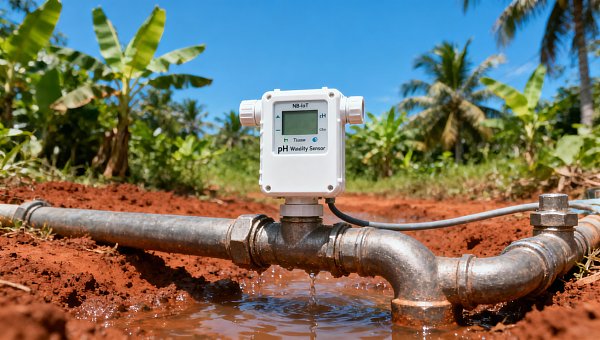
As of December 31, 2025, nationwide rural规模化供水 engineering coverage reached 71% of China’s rural population. Over 2 million distributed water quality monitoring terminals have been deployed. Domestic NB-IoT-enabled sensors measuring pH, turbidity, residual chlorine, and heavy metals are increasingly exported to decentralized water projects in Southeast Asia and Africa. These devices feature WHO Water Quality Dashboard (WQD) interface compatibility. However, compliance with local metrological regulations—such as India’s Legal Metrology Act—remains conditional and requires case-by-case verification.
Industries Affected
Direct Trade Enterprises: Export-oriented sensor vendors face heightened order volume—but also increased pre-shipment compliance scrutiny. Demand growth is concentrated in markets with donor-funded or PPP-based rural water schemes (e.g., Vietnam’s Mekong Delta initiatives, Kenya’s County Water Services), where price sensitivity and local service responsiveness outweigh premium certification requirements. Revenue upside is tempered by margin pressure from competitive bidding and logistics cost volatility.
Raw Material Procurement Enterprises: Suppliers of ultra-low-power microcontrollers (e.g., Nordic nRF52 series), electrochemical sensing electrodes, and encapsulated optical modules report accelerated procurement cycles. However, lead times for certified reference-grade calibration solutions remain elongated, exposing procurement bottlenecks when scaling for export batches requiring third-party metrological validation.
Manufacturing Enterprises: OEM/ODM sensor producers are adjusting production lines to support dual-track certification: CE+RoHS for ASEAN, and emerging local type-approval pathways (e.g., Kenya Bureau of Standards KS 2262 draft). Firmware updates to enable WQD-compliant data formatting and secure OTA updates are now standard—not optional—in new production runs.
Supply Chain Service Providers: Logistics firms specializing in temperature-controlled air freight for calibrated sensor shipments report 35–40% YoY growth in documentation-handling requests related to metrological conformity declarations. Meanwhile, technical translation and local regulatory liaison services—especially for South Asian and East African jurisdictions—are seeing rising demand for bilingual (English + local language) metrology assessment support packages.
Key Considerations and Recommended Actions
Verify metrological acceptance on a country-by-country basis
WQD interface compatibility does not equate to legal metrological validity. Exporters must confirm whether national standards bodies (e.g., India’s Controller General of Legal Metrology, Nigeria’s SON) recognize Chinese factory calibration records—or require in-country re-verification prior to installation.
Prioritize modular firmware architecture
To accommodate divergent regional reporting formats (e.g., Indonesia’s SNI 06-6989 series vs. Ghana’s GSA EN 27027 adaptation), manufacturers should decouple sensor firmware logic from data transmission protocols—enabling faster localization without hardware revision.
Engage early with international engineering contractors
Over 60% of current overseas deployments originate from contracts awarded to Chinese EPC firms (e.g., Sinohydro, CGCOC). Direct engagement with their instrumentation procurement teams—rather than relying solely on distributor channels—improves specification alignment and accelerates qualification timelines.
Editorial Perspective / Industry Observation
Observably, this export surge reflects a structural shift—not just cyclical demand. China’s domestic rollout has functioned as a large-scale, real-world stress test for edge-deployable, battery-operated water sensors under variable ambient conditions (monsoon humidity, dust exposure, intermittent power). That field-proven reliability, combined with responsive after-sales calibration recalibration services, now serves as a de facto differentiator in cost-conscious emerging markets. Analysis shows that buyers in Sub-Saharan Africa increasingly treat Chinese sensors as ‘Tier-1 ready’—not ‘budget alternatives’—provided metrological traceability is demonstrable.
Current more critical question: Will regional accreditation bodies begin accepting cross-border mutual recognition of calibration certificates—similar to the ILAC MRA framework—or will fragmentation persist? That remains unresolved—and is more consequential than raw shipment volume.
Conclusion
This milestone underscores how domestic infrastructure policy can catalyze global technology diffusion—especially in sectors where affordability, durability, and service agility outweigh legacy brand dominance. For the global water tech industry, China’s rural sensor deployment is less about market share displacement and more about expanding the total addressable market for distributed monitoring—particularly where centralized lab infrastructure remains economically unviable. A rational interpretation is that this trend reinforces the growing role of ‘pragmatic interoperability’ over ‘certification completeness’ in frontier water markets.
Source Attribution
Data sourced from China Ministry of Water Resources (2025 Annual Rural Water Supply Development Report), WHO Water Safety Planning Toolkit v4.2 (2024), and ASEAN Centre for Energy Water Technology Market Brief Q4 2025. Note: Indian Legal Metrology Act implementation guidelines for environmental sensors remain pending formal notification; status subject to ongoing monitoring.
Get weekly intelligence in your inbox.
No noise. No sponsored content. Pure intelligence.
 Oct 08, 2026How Digital Health Improves Diagnostic Accuracy and Workflow in Clinical LabsHow Digital Health Improves Diagnostic Accuracy and Workflow in Clinical Labs
 Oct 07, 2026Selecting Voice Picking Systems for German Warehouses: Integration, Languages and ROISelecting Voice Picking Systems for German Warehouses: Integration, Languages and ROI
 Oct 06, 2026How to Choose Last Mile Dispatch Software for On-Time Delivery at ScaleHow to Choose Last Mile Dispatch Software for On-Time Delivery at Scale
 Oct 05, 2026Vietnam’s Consumer Electronics Market: Demand Shifts and Sourcing OpportunitiesVietnam’s Consumer Electronics Market: Demand Shifts and Sourcing Opportunities
 Oct 04, 2026Digital Health Investment Priorities for Providers: Improving Access, Outcomes, and EfficiencyDigital Health Investment Priorities for Providers: Improving Access, Outcomes, and Efficiency
 Oct 03, 2026How to Specify an FR4 Custom PCB Board for High-Voltage and High-Heat DesignsHow to Specify an FR4 Custom PCB Board for High-Voltage and High-Heat Designs
 Oct 02, 2026ERP Software Market Intelligence: Adoption, Pricing, and Vendor Signals to WatchERP Software Market Intelligence: Adoption, Pricing, and Vendor Signals to Watch
 Oct 01, 2026How to Select Calibrated Temperature Data Loggers for GMP Cold Storage MonitoringHow to Select Calibrated Temperature Data Loggers for GMP Cold Storage Monitoring
 Sep 30, 2026Custom Molded Rubber Pricing: What Drives Unit Cost and Tooling Fees?Custom Molded Rubber Pricing: What Drives Unit Cost and Tooling Fees?
 Sep 29, 2026How to Evaluate Energy Management Software Vendors for Multi-Site OperationsHow to Evaluate Energy Management Software Vendors for Multi-Site Operations
 Sep 28, 2026How to Select a DIN Rail Smart Meter for Multi-Circuit Energy MonitoringHow to Select a DIN Rail Smart Meter for Multi-Circuit Energy Monitoring
 Sep 27, 2026TWS Earbuds in Vietnam: Demand Drivers, Price Tiers, and Retail Channel OpportunitiesTWS Earbuds in Vietnam: Demand Drivers, Price Tiers, and Retail Channel Opportunities
 Sep 26, 2026How UAE Clinics Can Qualify a Smart Glucometer Supplier for Accuracy and ComplianceHow UAE Clinics Can Qualify a Smart Glucometer Supplier for Accuracy and Compliance
 Sep 25, 2026Buying Aesthetic Lasers in the USA: FDA Status, Wavelengths, and Service SupportBuying Aesthetic Lasers in the USA: FDA Status, Wavelengths, and Service Support
 Sep 24, 2026Laser Cutting Brass Sheet: How to Prevent Burrs and Heat Marks on Thin PartsLaser Cutting Brass Sheet: How to Prevent Burrs and Heat Marks on Thin Parts
 Sep 23, 2026How to Choose Lightweight ANC Headphones for Comfortable All-Day TravelHow to Choose Lightweight ANC Headphones for Comfortable All-Day Travel
 Sep 22, 2026IPX5 TWS Bluetooth Earbuds: What Protection Do They Offer for Workouts?IPX5 TWS Bluetooth Earbuds: What Protection Do They Offer for Workouts?
 Sep 21, 2026What to Look for in a Grid Integration Company for Utility-Scale Solar ProjectsWhat to Look for in a Grid Integration Company for Utility-Scale Solar Projects
 Sep 20, 2026Microgrid Controller Pricing: What Drives Cost in Commercial Energy Projects?Microgrid Controller Pricing: What Drives Cost in Commercial Energy Projects?
 Sep 19, 2026How to Choose a GaN Charger for Laptops Without Compromising Power or PortabilityHow to Choose a GaN Charger for Laptops Without Compromising Power or Portability
 Sep 18, 2026Floating Solar Farm Costs: CAPEX, OPEX, and the Site Factors That Shape ROIFloating Solar Farm Costs: CAPEX, OPEX, and the Site Factors That Shape ROI
 Sep 17, 2026Drone Delivery Solutions for Last-Mile Routes: Site, Payload, and Range PlanningDrone Delivery Solutions for Last-Mile Routes: Site, Payload, and Range Planning
 Sep 16, 2026When Low-Volume Electronics Manufacturing Makes More Sense Than Mass ProductionWhen Low-Volume Electronics Manufacturing Makes More Sense Than Mass Production
 Sep 15, 2026Wholesale WiFi Smart Switches: What Buyers Should Verify Before OrderingWholesale WiFi Smart Switches: What Buyers Should Verify Before Ordering
 Sep 14, 2026How to Select IoT Sensors for Reliable Monitoring in Harsh Industrial EnvironmentsHow to Select IoT Sensors for Reliable Monitoring in Harsh Industrial Environments
 Sep 13, 2026How Procurement Teams Can Improve Supplier Reliability With Supply Chain VisibilityHow Procurement Teams Can Improve Supplier Reliability With Supply Chain Visibility
 Sep 12, 2026Smart Manufacturing Trends 2026: What Leaders Should Prioritize for ROISmart Manufacturing Trends 2026: What Leaders Should Prioritize for ROI



























