
What marine projects expect from custom metal fabrication
From offshore platforms to shipyard upgrades, marine teams demand precision, durability, and compliance at every stage. That is why custom metal fabrication for marine industry projects must deliver corrosion resistance, tight tolerances, and dependable lead times. The right approach helps reduce rework, limit downtime, and support safer long-term performance in harsh saltwater environments.
What does custom metal fabrication for marine industry really include?
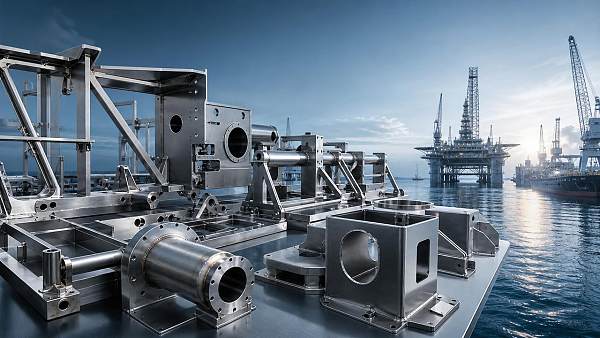
Custom metal fabrication for marine industry covers engineered cutting, forming, welding, machining, coating, and assembly for vessels, ports, and offshore assets.
It is not limited to simple parts production. It often includes design review, material selection, documentation control, and quality verification.
Typical fabricated items include brackets, handrails, ladders, skids, enclosures, ducting, pipe supports, tanks, cable trays, and structural frames.
In marine settings, every component must face vibration, moisture, UV exposure, impact, and aggressive chloride conditions.
Because of these demands, custom metal fabrication for marine industry projects usually requires stronger process discipline than standard industrial fabrication.
That discipline often includes weld procedure qualification, traceable material certificates, dimensional inspection, and finishing systems matched to service life targets.
- Material preparation suited for saltwater exposure
- Precision fabrication for fit-up on tight installation windows
- Surface treatment designed for corrosion control
- Documentation aligned with marine inspection needs
Why do marine projects place such high value on corrosion resistance and precision?
Saltwater is one of the most demanding operating environments for metal assemblies. Even minor design shortcuts can lead to early failure.
A poorly chosen alloy may pit quickly. A rough weld zone may trap moisture. A loose tolerance may force costly site modifications.
That is why custom metal fabrication for marine industry work must combine material science with production accuracy.
Marine projects often prefer stainless steel, aluminum, duplex grades, or coated carbon steel, depending on load, budget, and exposure level.
Precision also matters because offshore and shipboard spaces are constrained. Installation errors are harder to correct after transport.
Tight tolerances help parts align with foundations, deck penetrations, and adjacent systems. Better fit-up means faster installation and less shutdown risk.
Key performance expectations
- Resistance to pitting, crevice corrosion, and galvanic reactions
- Dimensional consistency across repeated assemblies
- Reliable welding quality in load-bearing structures
- Surface finishes that support maintenance plans
- Mechanical strength under wave, wind, and vibration stress
Which applications benefit most from custom metal fabrication for marine industry projects?
The range is broad because marine infrastructure combines transportation, energy, logistics, utilities, and heavy maintenance.
Custom metal fabrication for marine industry applications is especially useful where standard catalog products cannot match geometry or duty requirements.
Common use cases include offshore platform upgrades, terminal expansion, vessel retrofits, desalination facilities, and coastal processing plants.
Fabricated systems are often built around unique footprints, utility routes, lifting constraints, or certification requirements.
How should a fabrication partner be evaluated before awarding marine work?
Price matters, but it should never be the only filter. Marine work carries hidden costs when quality systems are weak.
A capable supplier for custom metal fabrication for marine industry projects should demonstrate technical depth and process reliability.
Start with fabrication scope. Confirm cutting, forming, welding, machining, finishing, and testing can be coordinated without unstable subcontract chains.
Then review marine experience. Past delivery in ports, vessels, offshore, or coastal environments usually shows stronger understanding of exposure risks.
Documentation capability is equally important. Drawings, revisions, inspection records, and material certificates must remain controlled throughout production.
Evaluation checklist
- Can the team recommend metals based on marine exposure zones?
- Are welding procedures qualified for relevant materials?
- Is there in-process and final dimensional inspection?
- Can protective coatings or passivation be verified?
- Are lead times realistic, not simply attractive on paper?
- Is packaging suitable for sea transport and site handling?
TradeNexus Pro often highlights that stronger supplier selection comes from verified expertise, not broad marketplace claims.
What risks and common mistakes can undermine custom metal fabrication for marine industry jobs?
Many failures begin before fabrication starts. Early specification gaps often create downstream cost, schedule, and performance problems.
One frequent mistake is choosing material by upfront cost alone. Low initial price can lead to accelerated corrosion and higher replacement expense.
Another issue is ignoring galvanic compatibility. Dissimilar metals in wet contact may corrode rapidly without isolation planning.
Surface preparation errors are also common. Even a good coating system can fail if blasting, cleaning, or curing steps are inconsistent.
In some projects, designs overlook maintenance access. Components become difficult to inspect, wash down, repair, or replace offshore.
How do cost, lead time, and compliance shape project decisions?
Marine projects rarely optimize only one factor. The best outcomes balance cost, schedule, service life, and inspection readiness.
Custom metal fabrication for marine industry work may cost more upfront than standard fabrication, but lifecycle value is often stronger.
Longer life, fewer shutdowns, and smoother installation can offset initial spending. This is especially true in offshore or remote locations.
Lead time depends on material availability, fabrication complexity, finishing requirements, and required inspection documentation.
Compliance can also affect schedule. Marine-grade documentation, third-party inspection, and testing should be planned early, not added at the end.
Practical planning tips
- Freeze critical dimensions before material release.
- Confirm alloy, coating, and weld requirements in writing.
- Build inspection hold points into the production schedule.
- Allow buffer time for logistics and port handling.
- Compare total installed cost, not unit price alone.
FAQ summary: what should be checked first?
Marine projects expect more than metal cutting and welding. They expect durable engineering, predictable delivery, and evidence-backed quality.
When custom metal fabrication for marine industry work is specified carefully, it supports longer service life and fewer expensive field corrections.
The next step is simple. Review exposure conditions, define performance targets, and compare suppliers using technical proof instead of broad claims.
For deeper market intelligence on marine supply capability, material trends, and fabrication decision factors, TradeNexus Pro offers a focused B2B perspective grounded in industry analysis.
Get weekly intelligence in your inbox.
No noise. No sponsored content. Pure intelligence.
 Oct 08, 2026How Digital Health Improves Diagnostic Accuracy and Workflow in Clinical LabsHow Digital Health Improves Diagnostic Accuracy and Workflow in Clinical Labs
 Oct 07, 2026Selecting Voice Picking Systems for German Warehouses: Integration, Languages and ROISelecting Voice Picking Systems for German Warehouses: Integration, Languages and ROI
 Oct 06, 2026How to Choose Last Mile Dispatch Software for On-Time Delivery at ScaleHow to Choose Last Mile Dispatch Software for On-Time Delivery at Scale
 Oct 05, 2026Vietnam’s Consumer Electronics Market: Demand Shifts and Sourcing OpportunitiesVietnam’s Consumer Electronics Market: Demand Shifts and Sourcing Opportunities
 Oct 04, 2026Digital Health Investment Priorities for Providers: Improving Access, Outcomes, and EfficiencyDigital Health Investment Priorities for Providers: Improving Access, Outcomes, and Efficiency
 Oct 03, 2026How to Specify an FR4 Custom PCB Board for High-Voltage and High-Heat DesignsHow to Specify an FR4 Custom PCB Board for High-Voltage and High-Heat Designs
 Oct 02, 2026ERP Software Market Intelligence: Adoption, Pricing, and Vendor Signals to WatchERP Software Market Intelligence: Adoption, Pricing, and Vendor Signals to Watch
 Oct 01, 2026How to Select Calibrated Temperature Data Loggers for GMP Cold Storage MonitoringHow to Select Calibrated Temperature Data Loggers for GMP Cold Storage Monitoring
 Sep 30, 2026Custom Molded Rubber Pricing: What Drives Unit Cost and Tooling Fees?Custom Molded Rubber Pricing: What Drives Unit Cost and Tooling Fees?
 Sep 29, 2026How to Evaluate Energy Management Software Vendors for Multi-Site OperationsHow to Evaluate Energy Management Software Vendors for Multi-Site Operations
 Sep 28, 2026How to Select a DIN Rail Smart Meter for Multi-Circuit Energy MonitoringHow to Select a DIN Rail Smart Meter for Multi-Circuit Energy Monitoring
 Sep 27, 2026TWS Earbuds in Vietnam: Demand Drivers, Price Tiers, and Retail Channel OpportunitiesTWS Earbuds in Vietnam: Demand Drivers, Price Tiers, and Retail Channel Opportunities
 Sep 26, 2026How UAE Clinics Can Qualify a Smart Glucometer Supplier for Accuracy and ComplianceHow UAE Clinics Can Qualify a Smart Glucometer Supplier for Accuracy and Compliance
 Sep 25, 2026Buying Aesthetic Lasers in the USA: FDA Status, Wavelengths, and Service SupportBuying Aesthetic Lasers in the USA: FDA Status, Wavelengths, and Service Support
 Sep 24, 2026Laser Cutting Brass Sheet: How to Prevent Burrs and Heat Marks on Thin PartsLaser Cutting Brass Sheet: How to Prevent Burrs and Heat Marks on Thin Parts
 Sep 23, 2026How to Choose Lightweight ANC Headphones for Comfortable All-Day TravelHow to Choose Lightweight ANC Headphones for Comfortable All-Day Travel
 Sep 22, 2026IPX5 TWS Bluetooth Earbuds: What Protection Do They Offer for Workouts?IPX5 TWS Bluetooth Earbuds: What Protection Do They Offer for Workouts?
 Sep 21, 2026What to Look for in a Grid Integration Company for Utility-Scale Solar ProjectsWhat to Look for in a Grid Integration Company for Utility-Scale Solar Projects
 Sep 20, 2026Microgrid Controller Pricing: What Drives Cost in Commercial Energy Projects?Microgrid Controller Pricing: What Drives Cost in Commercial Energy Projects?
 Sep 19, 2026How to Choose a GaN Charger for Laptops Without Compromising Power or PortabilityHow to Choose a GaN Charger for Laptops Without Compromising Power or Portability
 Sep 18, 2026Floating Solar Farm Costs: CAPEX, OPEX, and the Site Factors That Shape ROIFloating Solar Farm Costs: CAPEX, OPEX, and the Site Factors That Shape ROI
 Sep 17, 2026Drone Delivery Solutions for Last-Mile Routes: Site, Payload, and Range PlanningDrone Delivery Solutions for Last-Mile Routes: Site, Payload, and Range Planning
 Sep 16, 2026When Low-Volume Electronics Manufacturing Makes More Sense Than Mass ProductionWhen Low-Volume Electronics Manufacturing Makes More Sense Than Mass Production
 Sep 15, 2026Wholesale WiFi Smart Switches: What Buyers Should Verify Before OrderingWholesale WiFi Smart Switches: What Buyers Should Verify Before Ordering
 Sep 14, 2026How to Select IoT Sensors for Reliable Monitoring in Harsh Industrial EnvironmentsHow to Select IoT Sensors for Reliable Monitoring in Harsh Industrial Environments
 Sep 13, 2026How Procurement Teams Can Improve Supplier Reliability With Supply Chain VisibilityHow Procurement Teams Can Improve Supplier Reliability With Supply Chain Visibility
 Sep 12, 2026Smart Manufacturing Trends 2026: What Leaders Should Prioritize for ROISmart Manufacturing Trends 2026: What Leaders Should Prioritize for ROI



























