
Why automotive molding costs vary more than expected
Automotive molding costs often move more sharply than early estimates suggest. In plastic injection molding for automotive components, pricing rarely depends on resin alone.
Tool geometry, validation demands, cycle time, scrap risk, finish standards, and supply stability all reshape quotations. A low initial number can hide expensive downstream corrections.
Recent industry shifts have made this volatility more visible. Electrification, lightweighting, stricter traceability, and platform consolidation now push automotive programs toward tighter tolerances and faster change cycles.
That is why plastic injection molding for automotive components requires a broader cost lens. Better cost judgment comes from understanding what changes, why it changes, and how those changes ripple across the quote.
Cost gaps are widening as automotive programs demand more than simple molded parts
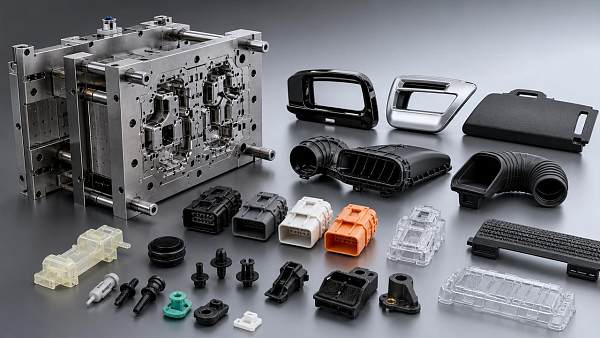
A decade ago, many buyers compared suppliers mainly on cavity count, resin grade, and annual volume. Today, that approach misses major cost drivers in plastic injection molding for automotive components.
Vehicle interiors now combine visual quality with structural function. Under-hood assemblies must handle heat, vibration, and chemicals. EV architectures also introduce insulation, lightweighting, and flame-related concerns.
At the same time, development windows are shorter. Tool revisions happen later in the launch cycle, when change costs are highest. Small design edits can therefore create large quote differences.
This is especially true for plastic injection molding for automotive components used in clips, housings, panels, connectors, ducts, and trim systems. The part may look simple, yet its validation path may be demanding.
The strongest trend signals sit in materials, tooling, and compliance pressure
Several trend signals explain why pricing spreads are becoming harder to predict. They affect both prototype programs and mature vehicle platforms.
- Engineering resins are replacing commodity plastics in more applications.
- Multi-material and thin-wall designs increase mold complexity.
- Surface quality expectations are rising for visible interior parts.
- Traceability, PPAP, and testing requirements add non-material cost.
- Regional supply instability changes lead times and safety stock levels.
- Tool maintenance planning has become more critical at high cavitation.
In plastic injection molding for automotive components, these signals combine rather than act separately. A resin upgrade can change mold steel choice, cooling design, processing window, and inspection intensity.
Why the same part drawing can produce very different quotations
Quotes diverge because suppliers model risk differently. Some price for ideal production conditions. Others include realistic allowances for warpage, insert wear, cosmetic rejects, and engineering changes.
Material choice changes more than raw resin cost
Glass-filled nylon, PBT, PC/ABS, PPS, and flame-retardant blends can behave very differently in molding. Drying time, shrink variation, moisture sensitivity, and tool abrasion all alter processing economics.
In plastic injection molding for automotive components, a resin with better thermal performance may reduce field risk. Yet it can raise mold wear, increase cycle time, and demand more stable process control.
Tooling complexity amplifies hidden capital cost
Slides, lifters, hot runners, valve gates, unscrewing systems, and mirror-polished surfaces all raise mold investment. Tight shutoffs and complex ejection systems also increase toolmaking hours.
A quote that looks attractive may rely on simpler tooling assumptions. That can create later costs through flash control problems, unstable dimensions, or limited mold life.
Volume assumptions reshape the cost curve
Annual demand influences cavitation, automation level, packaging design, and maintenance frequency. The wrong volume assumption can distort the piece price or make the tooling strategy uneconomical.
For plastic injection molding for automotive components, launch volume and lifetime volume should be assessed separately. Programs often ramp unevenly, especially when vehicle options differ by region.
Key pricing drivers can be mapped before supplier comparison begins
A structured view helps reveal which cost variables matter most. The table below highlights typical pricing drivers and why they cause variation.
This framework is useful when reviewing plastic injection molding for automotive components across regions. It separates visible cost from embedded operational risk.
The ripple effects touch launch timing, quality outcomes, and long-term margin
Cost variation does not stay inside the quote sheet. It influences launch timing, validation confidence, and service continuity during production and aftermarket support.
When plastic injection molding for automotive components is underquoted, common results include extra mold rework, unstable dimensions, color inconsistency, higher reject rates, and delayed approval cycles.
Overquoted programs create another problem. They reduce competitiveness and may push unnecessary design compromises before a full manufacturability review is completed.
- Launch teams face more engineering changes near SOP.
- Quality teams absorb greater testing and containment work.
- Finance teams see margin erosion from hidden adjustments.
- Supply planning becomes harder when cycle assumptions fail.
The most important watchpoints sit upstream, before commercial negotiation starts
Better outcomes usually come from sharper technical alignment before price comparison. The following watchpoints deserve early attention in plastic injection molding for automotive components.
- Confirm whether the resin callout includes approved alternates.
- Separate cosmetic requirements from functional surfaces.
- Define validation scope, not just dimensional tolerances.
- Check if forecast volatility requires flexible cavitation planning.
- Review mold life targets and maintenance responsibilities.
- Ask how automation affects labor, traceability, and contamination risk.
- Evaluate whether regional sourcing adds inventory exposure.
These checks turn price review into risk review. That shift is increasingly necessary as automotive design cycles become faster and more materials-intensive.
A practical response is to compare scenarios, not just unit prices
A more reliable decision method is scenario-based analysis. It reveals which supplier assumptions are durable under realistic program conditions.
For plastic injection molding for automotive components, scenario comparison often explains why one quote appears higher but performs better over the program life.
Clearer cost understanding leads to stronger sourcing judgment
The biggest lesson is simple. Automotive molding cost is not a fixed market number. It is the outcome of engineering choices, risk tolerance, quality expectations, and supply strategy.
In plastic injection molding for automotive components, better evaluation starts with detailed assumptions, not headline pricing. A quote becomes meaningful only when its technical logic is visible.
TradeNexus Pro tracks these shifts across advanced manufacturing supply chains, helping readers decode how tooling, materials, compliance, and program strategy shape real-world cost behavior.
The next useful step is to benchmark quotations against material risk, tooling architecture, validation scope, and volume scenarios. That approach gives cost discussions more clarity and fewer surprises.
Get weekly intelligence in your inbox.
No noise. No sponsored content. Pure intelligence.
 Oct 08, 2026How Digital Health Improves Diagnostic Accuracy and Workflow in Clinical LabsHow Digital Health Improves Diagnostic Accuracy and Workflow in Clinical Labs
 Oct 07, 2026Selecting Voice Picking Systems for German Warehouses: Integration, Languages and ROISelecting Voice Picking Systems for German Warehouses: Integration, Languages and ROI
 Oct 06, 2026How to Choose Last Mile Dispatch Software for On-Time Delivery at ScaleHow to Choose Last Mile Dispatch Software for On-Time Delivery at Scale
 Oct 05, 2026Vietnam’s Consumer Electronics Market: Demand Shifts and Sourcing OpportunitiesVietnam’s Consumer Electronics Market: Demand Shifts and Sourcing Opportunities
 Oct 04, 2026Digital Health Investment Priorities for Providers: Improving Access, Outcomes, and EfficiencyDigital Health Investment Priorities for Providers: Improving Access, Outcomes, and Efficiency
 Oct 03, 2026How to Specify an FR4 Custom PCB Board for High-Voltage and High-Heat DesignsHow to Specify an FR4 Custom PCB Board for High-Voltage and High-Heat Designs
 Oct 02, 2026ERP Software Market Intelligence: Adoption, Pricing, and Vendor Signals to WatchERP Software Market Intelligence: Adoption, Pricing, and Vendor Signals to Watch
 Oct 01, 2026How to Select Calibrated Temperature Data Loggers for GMP Cold Storage MonitoringHow to Select Calibrated Temperature Data Loggers for GMP Cold Storage Monitoring
 Sep 30, 2026Custom Molded Rubber Pricing: What Drives Unit Cost and Tooling Fees?Custom Molded Rubber Pricing: What Drives Unit Cost and Tooling Fees?
 Sep 29, 2026How to Evaluate Energy Management Software Vendors for Multi-Site OperationsHow to Evaluate Energy Management Software Vendors for Multi-Site Operations
 Sep 28, 2026How to Select a DIN Rail Smart Meter for Multi-Circuit Energy MonitoringHow to Select a DIN Rail Smart Meter for Multi-Circuit Energy Monitoring
 Sep 27, 2026TWS Earbuds in Vietnam: Demand Drivers, Price Tiers, and Retail Channel OpportunitiesTWS Earbuds in Vietnam: Demand Drivers, Price Tiers, and Retail Channel Opportunities
 Sep 26, 2026How UAE Clinics Can Qualify a Smart Glucometer Supplier for Accuracy and ComplianceHow UAE Clinics Can Qualify a Smart Glucometer Supplier for Accuracy and Compliance
 Sep 25, 2026Buying Aesthetic Lasers in the USA: FDA Status, Wavelengths, and Service SupportBuying Aesthetic Lasers in the USA: FDA Status, Wavelengths, and Service Support
 Sep 24, 2026Laser Cutting Brass Sheet: How to Prevent Burrs and Heat Marks on Thin PartsLaser Cutting Brass Sheet: How to Prevent Burrs and Heat Marks on Thin Parts
 Sep 23, 2026How to Choose Lightweight ANC Headphones for Comfortable All-Day TravelHow to Choose Lightweight ANC Headphones for Comfortable All-Day Travel
 Sep 22, 2026IPX5 TWS Bluetooth Earbuds: What Protection Do They Offer for Workouts?IPX5 TWS Bluetooth Earbuds: What Protection Do They Offer for Workouts?
 Sep 21, 2026What to Look for in a Grid Integration Company for Utility-Scale Solar ProjectsWhat to Look for in a Grid Integration Company for Utility-Scale Solar Projects
 Sep 20, 2026Microgrid Controller Pricing: What Drives Cost in Commercial Energy Projects?Microgrid Controller Pricing: What Drives Cost in Commercial Energy Projects?
 Sep 19, 2026How to Choose a GaN Charger for Laptops Without Compromising Power or PortabilityHow to Choose a GaN Charger for Laptops Without Compromising Power or Portability
 Sep 18, 2026Floating Solar Farm Costs: CAPEX, OPEX, and the Site Factors That Shape ROIFloating Solar Farm Costs: CAPEX, OPEX, and the Site Factors That Shape ROI
 Sep 17, 2026Drone Delivery Solutions for Last-Mile Routes: Site, Payload, and Range PlanningDrone Delivery Solutions for Last-Mile Routes: Site, Payload, and Range Planning
 Sep 16, 2026When Low-Volume Electronics Manufacturing Makes More Sense Than Mass ProductionWhen Low-Volume Electronics Manufacturing Makes More Sense Than Mass Production
 Sep 15, 2026Wholesale WiFi Smart Switches: What Buyers Should Verify Before OrderingWholesale WiFi Smart Switches: What Buyers Should Verify Before Ordering
 Sep 14, 2026How to Select IoT Sensors for Reliable Monitoring in Harsh Industrial EnvironmentsHow to Select IoT Sensors for Reliable Monitoring in Harsh Industrial Environments
 Sep 13, 2026How Procurement Teams Can Improve Supplier Reliability With Supply Chain VisibilityHow Procurement Teams Can Improve Supplier Reliability With Supply Chain Visibility
 Sep 12, 2026Smart Manufacturing Trends 2026: What Leaders Should Prioritize for ROISmart Manufacturing Trends 2026: What Leaders Should Prioritize for ROI



























