
EU Imposes Final Anti-Dumping Duties on Chinese Adipic Acid
On 5 May 2026, the European Commission issued its final anti-dumping determination on adipic acid originating in China, confirming the existence of dumping and material injury to EU producers. The ruling directly affects stakeholders across industrial materials, electronic components, and downstream chemical supply chains — particularly those engaged in nylon 66 production, polyurethane manufacturing, electronic encapsulation, and industrial coating applications.
Event Overview
On 5 May 2026, the European Commission published its definitive anti-dumping regulation concerning adipic acid (CAS No. 124-04-9) imported from China. The decision confirms that imports were made at dumped prices and caused material injury to the EU industry. As a result, definitive anti-dumping duties will be applied. The measure is officially in force as of the publication date, with customs authorities required to collect duties accordingly.
Industries Affected by the Ruling
Direct Exporters and Trading Companies
Chinese exporters and international trading firms handling adipic acid shipments face immediate tariff liability upon EU entry. The final duty rate — though not specified in the publicly available summary — triggers mandatory submission of origin certificates, cost documentation, and third-party test reports for customs clearance. Non-compliance may result in shipment delays or rejection.
Raw Material Procurement Teams (EU-Based)
EU-based purchasers of adipic acid must now reassess supplier qualification frameworks. Beyond price renegotiation, procurement departments are expected to verify updated REACH registration status, SVHC disclosure completeness, and traceability of production batches — all of which may require revalidation under tightened import controls.
Downstream Manufacturers (e.g., Nylon 66, Polyurethane, Encapsulants)
Manufacturers relying on Chinese-sourced adipic acid as a key monomer or crosslinker face dual pressures: rising landed costs and potential supply continuity risks. For companies producing electronic encapsulation resins or high-performance coatings, this may prompt accelerated review of alternative suppliers or reformulation feasibility — especially where technical specifications tightly constrain raw material sourcing.
Distribution and Logistics Service Providers
Cargo agents, customs brokers, and freight forwarders handling chemical imports into the EU must update compliance checklists to include anti-dumping declaration fields, origin verification protocols, and documentation retention timelines. Errors in classification or incomplete paperwork may lead to post-clearance audits or financial liabilities borne jointly by importer and agent.
What Relevant Enterprises or Practitioners Should Focus On Now
Monitor Official Duty Rates and Product Scope Clarifications
The Commission’s final regulation includes product definitions and HS code references (e.g., CN code 2917 11 00). Enterprises should verify whether their specific grades, purities, or formulations fall within the scope — especially if supplied in blends or pre-compounded forms. Any pending clarifications from the Directorate-General for Trade remain binding once published.
Review Documentation Requirements for Immediate Import Shipments
Effective immediately, EU importers must ensure each consignment is accompanied by valid origin declarations, verified cost-of-production statements (where requested), and accredited lab reports confirming chemical identity and purity. Third-party testing labs accredited under ISO/IEC 17025 are increasingly preferred by customs authorities during verification.
Distinguish Between Regulatory Signal and Operational Impact
While the ruling is legally effective, full enforcement maturity — including consistent application across EU member states’ customs offices — may take several weeks. Enterprises should treat early implementation as procedural rather than punitive; however, failure to prepare documentation in advance carries measurable operational risk.
Initiate Cross-Functional Alignment on Sourcing and Compliance
Procurement, regulatory affairs, logistics, and quality assurance teams should jointly map current adipic acid inventory positions, contract terms (including price adjustment clauses), and alternative sourcing options. Where contracts lack anti-dumping clause provisions, legal review of exposure is recommended before new purchase orders are placed.
Editorial Perspective / Industry Observation
Observably, this final determination represents a completed administrative process — not a preliminary warning or investigatory phase. Analysis shows it reflects heightened scrutiny of intermediate chemicals used in strategic sectors, especially those feeding into electronics and advanced materials value chains. From an industry perspective, the timing aligns with broader EU efforts to reinforce supply chain resilience and regulatory coherence across chemical trade. It is more appropriately understood as an enforceable outcome than a signal for future action — though related measures for other diacids or nylon precursors may follow depending on parallel investigations.
Current monitoring priorities include: (1) whether the Commission publishes implementing decisions specifying exact duty rates per exporter; (2) how national customs authorities interpret ‘origin’ for toll-manufactured or multi-stage processed adipic acid; and (3) whether downstream users report cascading effects on REACH dossier updates or SCIP database submissions.
Consequently, the ruling is best interpreted not as an isolated trade event, but as a benchmark case illustrating how EU chemical import policy now integrates trade defence instruments with existing regulatory compliance expectations.
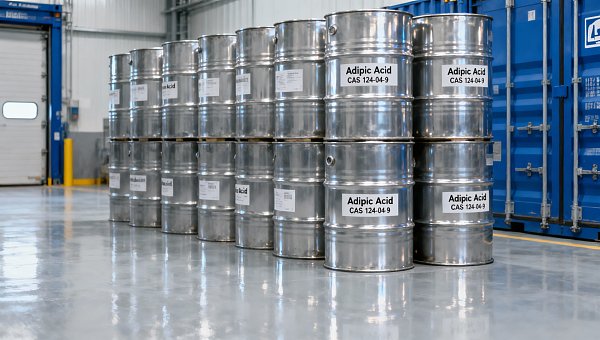
In summary, the EU’s final anti-dumping measures on Chinese adipic acid constitute a binding regulatory development with tangible implications for import cost structures, documentation workflows, and supplier management practices. Its significance lies less in novelty and more in precedent — reinforcing that compliance with trade remedies is now inseparable from standard chemical regulatory adherence in the EU market.
Source: European Commission, Official Journal of the European Union, L Series, Regulation (EU) 2026/XXXX, published 5 May 2026.
Parts requiring ongoing observation: exact duty rates per company, scope interpretations for derivative products, and enforcement consistency across Member State customs administrations.
Get weekly intelligence in your inbox.
No noise. No sponsored content. Pure intelligence.
 Oct 08, 2026How Digital Health Improves Diagnostic Accuracy and Workflow in Clinical LabsHow Digital Health Improves Diagnostic Accuracy and Workflow in Clinical Labs
 Oct 07, 2026Selecting Voice Picking Systems for German Warehouses: Integration, Languages and ROISelecting Voice Picking Systems for German Warehouses: Integration, Languages and ROI
 Oct 06, 2026How to Choose Last Mile Dispatch Software for On-Time Delivery at ScaleHow to Choose Last Mile Dispatch Software for On-Time Delivery at Scale
 Oct 05, 2026Vietnam’s Consumer Electronics Market: Demand Shifts and Sourcing OpportunitiesVietnam’s Consumer Electronics Market: Demand Shifts and Sourcing Opportunities
 Oct 04, 2026Digital Health Investment Priorities for Providers: Improving Access, Outcomes, and EfficiencyDigital Health Investment Priorities for Providers: Improving Access, Outcomes, and Efficiency
 Oct 03, 2026How to Specify an FR4 Custom PCB Board for High-Voltage and High-Heat DesignsHow to Specify an FR4 Custom PCB Board for High-Voltage and High-Heat Designs
 Oct 02, 2026ERP Software Market Intelligence: Adoption, Pricing, and Vendor Signals to WatchERP Software Market Intelligence: Adoption, Pricing, and Vendor Signals to Watch
 Oct 01, 2026How to Select Calibrated Temperature Data Loggers for GMP Cold Storage MonitoringHow to Select Calibrated Temperature Data Loggers for GMP Cold Storage Monitoring
 Sep 30, 2026Custom Molded Rubber Pricing: What Drives Unit Cost and Tooling Fees?Custom Molded Rubber Pricing: What Drives Unit Cost and Tooling Fees?
 Sep 29, 2026How to Evaluate Energy Management Software Vendors for Multi-Site OperationsHow to Evaluate Energy Management Software Vendors for Multi-Site Operations
 Sep 28, 2026How to Select a DIN Rail Smart Meter for Multi-Circuit Energy MonitoringHow to Select a DIN Rail Smart Meter for Multi-Circuit Energy Monitoring
 Sep 27, 2026TWS Earbuds in Vietnam: Demand Drivers, Price Tiers, and Retail Channel OpportunitiesTWS Earbuds in Vietnam: Demand Drivers, Price Tiers, and Retail Channel Opportunities
 Sep 26, 2026How UAE Clinics Can Qualify a Smart Glucometer Supplier for Accuracy and ComplianceHow UAE Clinics Can Qualify a Smart Glucometer Supplier for Accuracy and Compliance
 Sep 25, 2026Buying Aesthetic Lasers in the USA: FDA Status, Wavelengths, and Service SupportBuying Aesthetic Lasers in the USA: FDA Status, Wavelengths, and Service Support
 Sep 24, 2026Laser Cutting Brass Sheet: How to Prevent Burrs and Heat Marks on Thin PartsLaser Cutting Brass Sheet: How to Prevent Burrs and Heat Marks on Thin Parts
 Sep 23, 2026How to Choose Lightweight ANC Headphones for Comfortable All-Day TravelHow to Choose Lightweight ANC Headphones for Comfortable All-Day Travel
 Sep 22, 2026IPX5 TWS Bluetooth Earbuds: What Protection Do They Offer for Workouts?IPX5 TWS Bluetooth Earbuds: What Protection Do They Offer for Workouts?
 Sep 21, 2026What to Look for in a Grid Integration Company for Utility-Scale Solar ProjectsWhat to Look for in a Grid Integration Company for Utility-Scale Solar Projects
 Sep 20, 2026Microgrid Controller Pricing: What Drives Cost in Commercial Energy Projects?Microgrid Controller Pricing: What Drives Cost in Commercial Energy Projects?
 Sep 19, 2026How to Choose a GaN Charger for Laptops Without Compromising Power or PortabilityHow to Choose a GaN Charger for Laptops Without Compromising Power or Portability
 Sep 18, 2026Floating Solar Farm Costs: CAPEX, OPEX, and the Site Factors That Shape ROIFloating Solar Farm Costs: CAPEX, OPEX, and the Site Factors That Shape ROI
 Sep 17, 2026Drone Delivery Solutions for Last-Mile Routes: Site, Payload, and Range PlanningDrone Delivery Solutions for Last-Mile Routes: Site, Payload, and Range Planning
 Sep 16, 2026When Low-Volume Electronics Manufacturing Makes More Sense Than Mass ProductionWhen Low-Volume Electronics Manufacturing Makes More Sense Than Mass Production
 Sep 15, 2026Wholesale WiFi Smart Switches: What Buyers Should Verify Before OrderingWholesale WiFi Smart Switches: What Buyers Should Verify Before Ordering
 Sep 14, 2026How to Select IoT Sensors for Reliable Monitoring in Harsh Industrial EnvironmentsHow to Select IoT Sensors for Reliable Monitoring in Harsh Industrial Environments
 Sep 13, 2026How Procurement Teams Can Improve Supplier Reliability With Supply Chain VisibilityHow Procurement Teams Can Improve Supplier Reliability With Supply Chain Visibility
 Sep 12, 2026Smart Manufacturing Trends 2026: What Leaders Should Prioritize for ROISmart Manufacturing Trends 2026: What Leaders Should Prioritize for ROI



























