
China Leads Global Offshore Wind for 5th Year; Key Components Accelerate Export
China has retained its position as the world’s largest offshore wind power installer for the fifth consecutive year, according to newly released data from China’s National Energy Administration (NEA). While the exact timing of the milestone’s confirmation is not specified, the NEA’s May 2026 statistics mark a pivotal moment for global supply chain dynamics — underscoring how domestic technological maturation in critical subsystems is reshaping international project execution, particularly across emerging and mature offshore markets.
Event Overview
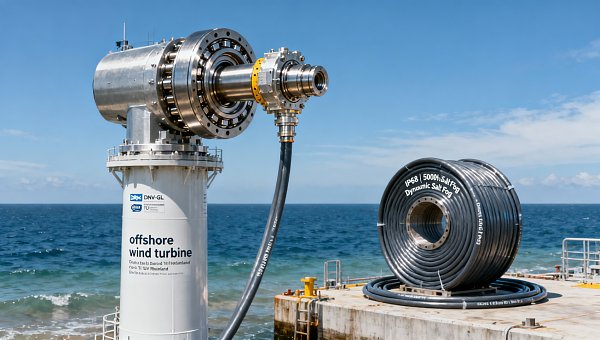
As per the National Energy Administration’s May 2026 update, China’s cumulative offshore wind installed capacity reached 42.3 GW. Domestic manufacturers of key components — specifically main shaft bearings rated for ≥8 MW turbines and dynamic offshore cable joints meeting IP68 ingress protection plus 5,000-hour salt fog resistance — have secured DNV-GL and TÜV Rheinland certifications. These certified components are now being exported in volume to offshore wind projects in Vietnam, India, and the UK. For overseas EPC contractors and developers, Chinese suppliers now offer integrated delivery of full turbine systems plus mission-critical subsystems — with an average lead time 35% shorter than comparable European-sourced solutions.
Impact on Industry Subsegments
Direct Trade Enterprises: Export-oriented component suppliers and equipment integrators face expanded market access but also heightened compliance demands. Certification alignment (e.g., DNV-GL, TÜV Rheinland) is no longer optional — it directly determines eligibility for tender participation in ASEAN and EU-linked projects. Revenue diversification improves, yet margin pressure increases due to competitive pricing in export corridors.
Raw Material Procurement Enterprises: Firms sourcing high-purity steel alloys, corrosion-resistant copper alloys, and specialty elastomers for certified bearings and cable joints are seeing revised specification requirements. Demand is shifting toward traceable, audit-ready material batches compliant with marine-grade EN 10204 3.2 documentation — increasing procurement lead times and quality assurance overhead.
Manufacturing Enterprises: Turbine OEMs and Tier-1 subsystem producers must scale production while maintaining certification integrity across multiple export jurisdictions. The shift toward integrated system delivery (not just components) necessitates cross-functional coordination between mechanical, electrical, and marine engineering teams — exposing gaps in legacy quality management systems designed for domestic-only compliance.
Supply Chain Service Providers: Freight forwarders, marine logistics coordinators, and certification support agencies report rising demand for ‘certification-integrated logistics’ — i.e., documentation packages that bundle type test reports, factory acceptance test (FAT) records, and maritime transport compliance (e.g., IMDG Class 9 labeling for composite cable assemblies). Standardized packaging protocols for salt-fog-rated components are now a differentiator in service quoting.
Key Considerations and Recommended Actions
Verify certification scope before bid submission
DNV-GL and TÜV Rheinland approvals vary by application environment (e.g., static vs. dynamic cable joint use cases). Suppliers must confirm whether their certificate covers the specific installation method (e.g., J-tube entry, trenchless burial) required by the target project — not just generic product compliance.
Align internal QA with marine-grade FAT protocols
Overseas developers increasingly require witnessed FATs conducted under IEC/EN 61400-22 or equivalent offshore-specific standards — not standard ISO 9001 audits. Manufacturers should pre-audit FAT procedures against client-specified clauses (e.g., thermal cycling validation for bearing preload stability).
Map logistics handoffs for dual-compliance shipments
Export consignments containing both CE-marked and non-CE items (e.g., tower sections + certified cable joints) require split customs declarations and segregated warehouse staging. Logistics partners must demonstrate experience handling mixed-regime offshore cargo — especially for UK and Indian ports where classification audits are intensifying.
Editorial Perspective / Industry Observation
Observably, this development signals less a ‘cost advantage’ narrative and more a structural inflection: Chinese suppliers are transitioning from component vendors to system-enabling partners. Analysis shows that the 35% lead time reduction stems not only from manufacturing speed but from vertically coordinated design-to-delivery workflows — including shared digital twin models between bearing designers and cable joint engineers. From an industry perspective, what’s notable is the pace at which certification reciprocity is emerging: DNV-GL’s China-based testing labs now issue reports accepted without revalidation by UK’s Offshore Renewable Energy (ORE) Catapult. This trend may accelerate regulatory harmonization — though jurisdictional divergence (e.g., India’s new BIS offshore annex) remains a friction point.
Conclusion
This milestone reflects deeper industrial capability — not just deployment scale. It confirms that China’s offshore wind ecosystem has evolved beyond assembly into high-precision subsystem innovation and globally interoperable delivery. More realistically, it highlights a widening gap between suppliers who treat certification as paperwork versus those who embed compliance into R&D and process design. For global stakeholders, engagement is no longer optional — but selective, technically grounded, and contractually precise.
Source Attribution
Primary source: National Energy Administration (NEA) of China, Statistical Bulletin on Renewable Energy Development, May 2026.
Supplementary verification: DNV-GL Type Approval Database (Q2 2026 update), TÜV Rheinland Wind Energy Certification Portal.
Note: Certification validity periods, country-specific import tariff adjustments (e.g., UK’s new offshore wind component duty review), and evolving BIS/ISI requirements in India remain under active monitoring.
Get weekly intelligence in your inbox.
No noise. No sponsored content. Pure intelligence.
 Oct 08, 2026How Digital Health Improves Diagnostic Accuracy and Workflow in Clinical LabsHow Digital Health Improves Diagnostic Accuracy and Workflow in Clinical Labs
 Oct 07, 2026Selecting Voice Picking Systems for German Warehouses: Integration, Languages and ROISelecting Voice Picking Systems for German Warehouses: Integration, Languages and ROI
 Oct 06, 2026How to Choose Last Mile Dispatch Software for On-Time Delivery at ScaleHow to Choose Last Mile Dispatch Software for On-Time Delivery at Scale
 Oct 05, 2026Vietnam’s Consumer Electronics Market: Demand Shifts and Sourcing OpportunitiesVietnam’s Consumer Electronics Market: Demand Shifts and Sourcing Opportunities
 Oct 04, 2026Digital Health Investment Priorities for Providers: Improving Access, Outcomes, and EfficiencyDigital Health Investment Priorities for Providers: Improving Access, Outcomes, and Efficiency
 Oct 03, 2026How to Specify an FR4 Custom PCB Board for High-Voltage and High-Heat DesignsHow to Specify an FR4 Custom PCB Board for High-Voltage and High-Heat Designs
 Oct 02, 2026ERP Software Market Intelligence: Adoption, Pricing, and Vendor Signals to WatchERP Software Market Intelligence: Adoption, Pricing, and Vendor Signals to Watch
 Oct 01, 2026How to Select Calibrated Temperature Data Loggers for GMP Cold Storage MonitoringHow to Select Calibrated Temperature Data Loggers for GMP Cold Storage Monitoring
 Sep 30, 2026Custom Molded Rubber Pricing: What Drives Unit Cost and Tooling Fees?Custom Molded Rubber Pricing: What Drives Unit Cost and Tooling Fees?
 Sep 29, 2026How to Evaluate Energy Management Software Vendors for Multi-Site OperationsHow to Evaluate Energy Management Software Vendors for Multi-Site Operations
 Sep 28, 2026How to Select a DIN Rail Smart Meter for Multi-Circuit Energy MonitoringHow to Select a DIN Rail Smart Meter for Multi-Circuit Energy Monitoring
 Sep 27, 2026TWS Earbuds in Vietnam: Demand Drivers, Price Tiers, and Retail Channel OpportunitiesTWS Earbuds in Vietnam: Demand Drivers, Price Tiers, and Retail Channel Opportunities
 Sep 26, 2026How UAE Clinics Can Qualify a Smart Glucometer Supplier for Accuracy and ComplianceHow UAE Clinics Can Qualify a Smart Glucometer Supplier for Accuracy and Compliance
 Sep 25, 2026Buying Aesthetic Lasers in the USA: FDA Status, Wavelengths, and Service SupportBuying Aesthetic Lasers in the USA: FDA Status, Wavelengths, and Service Support
 Sep 24, 2026Laser Cutting Brass Sheet: How to Prevent Burrs and Heat Marks on Thin PartsLaser Cutting Brass Sheet: How to Prevent Burrs and Heat Marks on Thin Parts
 Sep 23, 2026How to Choose Lightweight ANC Headphones for Comfortable All-Day TravelHow to Choose Lightweight ANC Headphones for Comfortable All-Day Travel
 Sep 22, 2026IPX5 TWS Bluetooth Earbuds: What Protection Do They Offer for Workouts?IPX5 TWS Bluetooth Earbuds: What Protection Do They Offer for Workouts?
 Sep 21, 2026What to Look for in a Grid Integration Company for Utility-Scale Solar ProjectsWhat to Look for in a Grid Integration Company for Utility-Scale Solar Projects
 Sep 20, 2026Microgrid Controller Pricing: What Drives Cost in Commercial Energy Projects?Microgrid Controller Pricing: What Drives Cost in Commercial Energy Projects?
 Sep 19, 2026How to Choose a GaN Charger for Laptops Without Compromising Power or PortabilityHow to Choose a GaN Charger for Laptops Without Compromising Power or Portability
 Sep 18, 2026Floating Solar Farm Costs: CAPEX, OPEX, and the Site Factors That Shape ROIFloating Solar Farm Costs: CAPEX, OPEX, and the Site Factors That Shape ROI
 Sep 17, 2026Drone Delivery Solutions for Last-Mile Routes: Site, Payload, and Range PlanningDrone Delivery Solutions for Last-Mile Routes: Site, Payload, and Range Planning
 Sep 16, 2026When Low-Volume Electronics Manufacturing Makes More Sense Than Mass ProductionWhen Low-Volume Electronics Manufacturing Makes More Sense Than Mass Production
 Sep 15, 2026Wholesale WiFi Smart Switches: What Buyers Should Verify Before OrderingWholesale WiFi Smart Switches: What Buyers Should Verify Before Ordering
 Sep 14, 2026How to Select IoT Sensors for Reliable Monitoring in Harsh Industrial EnvironmentsHow to Select IoT Sensors for Reliable Monitoring in Harsh Industrial Environments
 Sep 13, 2026How Procurement Teams Can Improve Supplier Reliability With Supply Chain VisibilityHow Procurement Teams Can Improve Supplier Reliability With Supply Chain Visibility
 Sep 12, 2026Smart Manufacturing Trends 2026: What Leaders Should Prioritize for ROISmart Manufacturing Trends 2026: What Leaders Should Prioritize for ROI



























