
How to judge die casting parts for heavy machinery
For procurement teams, evaluating die casting parts for heavy machinery means looking beyond price to long-term reliability, dimensional accuracy, material performance, and supplier consistency. The right assessment standards can reduce downtime, control lifecycle costs, and strengthen supply chain confidence. This guide outlines the key factors buyers should review before selecting qualified components and dependable manufacturing partners.
Why a checklist matters when judging die casting parts for heavy machinery
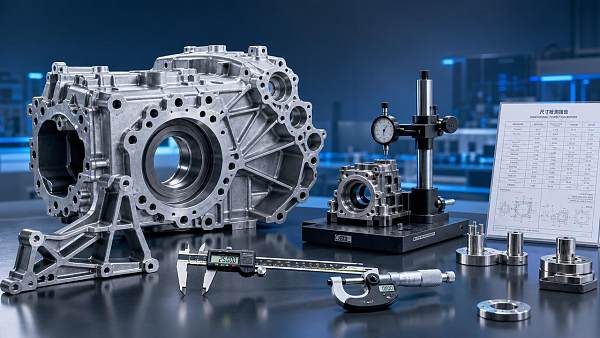
Heavy machinery operates under vibration, thermal cycling, shock loading, dust exposure, and long service intervals. That makes part failure far more expensive than a small difference in unit price.
A checklist helps compare die casting parts for heavy machinery using measurable criteria. It also reduces subjective decisions, improves supplier qualification, and supports repeatable sourcing across global programs.
In a broad industrial context, the same review method supports applications in construction equipment, agricultural machines, mining systems, lifting devices, and transport support equipment.
Core checklist for evaluating die casting parts for heavy machinery
Use the following checklist before approving drawings, samples, or production lots. Each point should be verified with documents, inspection records, or physical testing.
- Confirm alloy selection against load, corrosion, and temperature demands. Aluminum, zinc, and magnesium behave differently under fatigue, impact, and outdoor service conditions.
- Check dimensional tolerances against mating parts and assembly needs. Flatness, hole position, wall thickness, and datum control often determine whether the part performs reliably.
- Review porosity limits and internal soundness using X-ray, sectioning, or pressure tests. Hidden voids can weaken structural areas and compromise sealing surfaces.
- Inspect surface quality for cracks, cold shuts, blistering, flash, and sink marks. Visual defects may indicate unstable process control or tooling wear.
- Verify mechanical properties with material certificates and test reports. Tensile strength, elongation, hardness, and impact behavior should match the application requirement.
- Assess machining allowance and post-processing capability. Some die casting parts for heavy machinery require secondary drilling, tapping, milling, or sealing preparation.
- Examine tooling design and maintenance records. Die life, gate layout, cooling balance, and repair frequency directly affect consistency between lots.
- Request process traceability from melt control to final packing. Batch codes, inspection plans, and deviation handling support stronger quality accountability.
- Evaluate coating or surface treatment compatibility. Powder coating, anodizing, chromate conversion, or painting must adhere well and protect the substrate.
- Test fit and functional performance in actual assemblies. A part that passes drawing inspection can still fail under vibration, torque, or environmental exposure.
- Compare production capacity with forecast volatility and delivery windows. Reliable supply of die casting parts for heavy machinery depends on stable scheduling and backup planning.
- Audit packaging standards and logistics protection. Poor packaging can damage edges, threads, coatings, or sealing faces before the parts even reach assembly.
Documents worth requesting
A strong supplier file should include alloy certifications, PPAP-style submission data where relevant, first article inspection results, gauge plans, process flow charts, and nonconformance procedures.
For safety-critical or load-bearing die casting parts for heavy machinery, ask for sample validation reports, leak test records, and evidence of corrective action closure from past defects.
Application-specific considerations
Structural housings and support brackets
These parts often face combined static and dynamic loads. Focus on rib geometry, wall transition design, porosity near fasteners, and fatigue resistance around corners.
If the part supports hydraulic systems, powertrain assemblies, or suspension-related loads, insist on tighter control over critical sections and machining reference surfaces.
Covers, enclosures, and sealing components
These die casting parts for heavy machinery are judged heavily on flatness, leak integrity, and surface finish. Even small warpage can create oil, dust, or coolant ingress problems.
Ask for leak testing methods, gasket compression validation, and coating performance data if the enclosure operates outdoors or in chemically aggressive sites.
High-volume replacement parts
Aftermarket and service parts require consistent interchangeability. Tolerance drift, cosmetic variation, and label inconsistency can create avoidable field complaints and inventory confusion.
For these programs, supplier discipline in tooling upkeep and lot traceability matters as much as the base casting quality itself.
Commonly overlooked risks
Ignoring service environment details
A part may pass bench inspection yet fail in muddy, salty, high-heat, or high-vibration conditions. Judge material and finish against actual field exposure, not only drawing notes.
Approving samples from non-production conditions
Hand-polished samples or low-volume trial runs can hide weaknesses. Validate die casting parts for heavy machinery from normal production settings, using the intended tooling and cycle parameters.
Overlooking secondary operations
Casting quality alone is not enough. Thread tapping, deburring, CNC finishing, impregnation, and coating steps often determine whether the final component is truly usable.
Failing to define acceptance criteria clearly
Vague standards create disputes later. Set measurable limits for porosity, appearance, leak rate, critical dimensions, and packaging before mass production begins.
Practical execution steps for supplier evaluation
The most effective review process combines technical checks with commercial discipline. A structured sequence improves both part quality and sourcing resilience.
- Start with drawing review and clarify critical-to-function dimensions, load zones, sealing faces, and cosmetic limits before requesting quotation.
- Compare material recommendations with operating conditions and ask whether an alternative alloy improves weight, corrosion resistance, or machinability.
- Request sample parts from production tooling, then run dimensional inspection, assembly fit trials, and destructive checks where risk justifies it.
- Audit the supplier’s casting, machining, finishing, and inspection flow to confirm process capability for die casting parts for heavy machinery.
- Establish a control plan covering incoming material, in-process verification, final inspection, packaging protection, and response time for quality incidents.
- Monitor early production lots closely and compare results against approved samples, especially on dimensions, porosity rates, and coating consistency.
Quick comparison table
Final takeaways and next actions
To judge die casting parts for heavy machinery correctly, focus on function first, process second, and price third. A low-cost casting becomes expensive when it creates rework, leakage, downtime, or warranty exposure.
Build a repeatable checklist covering alloy suitability, dimensional control, porosity limits, secondary operations, finishing, traceability, and production consistency. Then validate those points with evidence, not assumptions.
For the next sourcing cycle, prepare a part-specific review sheet, define acceptance criteria early, and test sample die casting parts for heavy machinery under real operating conditions before release.
Get weekly intelligence in your inbox.
No noise. No sponsored content. Pure intelligence.
 Oct 08, 2026How Digital Health Improves Diagnostic Accuracy and Workflow in Clinical LabsHow Digital Health Improves Diagnostic Accuracy and Workflow in Clinical Labs
 Oct 07, 2026Selecting Voice Picking Systems for German Warehouses: Integration, Languages and ROISelecting Voice Picking Systems for German Warehouses: Integration, Languages and ROI
 Oct 06, 2026How to Choose Last Mile Dispatch Software for On-Time Delivery at ScaleHow to Choose Last Mile Dispatch Software for On-Time Delivery at Scale
 Oct 05, 2026Vietnam’s Consumer Electronics Market: Demand Shifts and Sourcing OpportunitiesVietnam’s Consumer Electronics Market: Demand Shifts and Sourcing Opportunities
 Oct 04, 2026Digital Health Investment Priorities for Providers: Improving Access, Outcomes, and EfficiencyDigital Health Investment Priorities for Providers: Improving Access, Outcomes, and Efficiency
 Oct 03, 2026How to Specify an FR4 Custom PCB Board for High-Voltage and High-Heat DesignsHow to Specify an FR4 Custom PCB Board for High-Voltage and High-Heat Designs
 Oct 02, 2026ERP Software Market Intelligence: Adoption, Pricing, and Vendor Signals to WatchERP Software Market Intelligence: Adoption, Pricing, and Vendor Signals to Watch
 Oct 01, 2026How to Select Calibrated Temperature Data Loggers for GMP Cold Storage MonitoringHow to Select Calibrated Temperature Data Loggers for GMP Cold Storage Monitoring
 Sep 30, 2026Custom Molded Rubber Pricing: What Drives Unit Cost and Tooling Fees?Custom Molded Rubber Pricing: What Drives Unit Cost and Tooling Fees?
 Sep 29, 2026How to Evaluate Energy Management Software Vendors for Multi-Site OperationsHow to Evaluate Energy Management Software Vendors for Multi-Site Operations
 Sep 28, 2026How to Select a DIN Rail Smart Meter for Multi-Circuit Energy MonitoringHow to Select a DIN Rail Smart Meter for Multi-Circuit Energy Monitoring
 Sep 27, 2026TWS Earbuds in Vietnam: Demand Drivers, Price Tiers, and Retail Channel OpportunitiesTWS Earbuds in Vietnam: Demand Drivers, Price Tiers, and Retail Channel Opportunities
 Sep 26, 2026How UAE Clinics Can Qualify a Smart Glucometer Supplier for Accuracy and ComplianceHow UAE Clinics Can Qualify a Smart Glucometer Supplier for Accuracy and Compliance
 Sep 25, 2026Buying Aesthetic Lasers in the USA: FDA Status, Wavelengths, and Service SupportBuying Aesthetic Lasers in the USA: FDA Status, Wavelengths, and Service Support
 Sep 24, 2026Laser Cutting Brass Sheet: How to Prevent Burrs and Heat Marks on Thin PartsLaser Cutting Brass Sheet: How to Prevent Burrs and Heat Marks on Thin Parts
 Sep 23, 2026How to Choose Lightweight ANC Headphones for Comfortable All-Day TravelHow to Choose Lightweight ANC Headphones for Comfortable All-Day Travel
 Sep 22, 2026IPX5 TWS Bluetooth Earbuds: What Protection Do They Offer for Workouts?IPX5 TWS Bluetooth Earbuds: What Protection Do They Offer for Workouts?
 Sep 21, 2026What to Look for in a Grid Integration Company for Utility-Scale Solar ProjectsWhat to Look for in a Grid Integration Company for Utility-Scale Solar Projects
 Sep 20, 2026Microgrid Controller Pricing: What Drives Cost in Commercial Energy Projects?Microgrid Controller Pricing: What Drives Cost in Commercial Energy Projects?
 Sep 19, 2026How to Choose a GaN Charger for Laptops Without Compromising Power or PortabilityHow to Choose a GaN Charger for Laptops Without Compromising Power or Portability
 Sep 18, 2026Floating Solar Farm Costs: CAPEX, OPEX, and the Site Factors That Shape ROIFloating Solar Farm Costs: CAPEX, OPEX, and the Site Factors That Shape ROI
 Sep 17, 2026Drone Delivery Solutions for Last-Mile Routes: Site, Payload, and Range PlanningDrone Delivery Solutions for Last-Mile Routes: Site, Payload, and Range Planning
 Sep 16, 2026When Low-Volume Electronics Manufacturing Makes More Sense Than Mass ProductionWhen Low-Volume Electronics Manufacturing Makes More Sense Than Mass Production
 Sep 15, 2026Wholesale WiFi Smart Switches: What Buyers Should Verify Before OrderingWholesale WiFi Smart Switches: What Buyers Should Verify Before Ordering
 Sep 14, 2026How to Select IoT Sensors for Reliable Monitoring in Harsh Industrial EnvironmentsHow to Select IoT Sensors for Reliable Monitoring in Harsh Industrial Environments
 Sep 13, 2026How Procurement Teams Can Improve Supplier Reliability With Supply Chain VisibilityHow Procurement Teams Can Improve Supplier Reliability With Supply Chain Visibility
 Sep 12, 2026Smart Manufacturing Trends 2026: What Leaders Should Prioritize for ROISmart Manufacturing Trends 2026: What Leaders Should Prioritize for ROI



























