
When does 5 axis milling pay off for titanium parts?
For business evaluators, the issue is timing, not novelty. 5 axis milling for titanium parts creates value when geometry, tolerance, and process risk push conventional machining beyond efficient limits.
Titanium already raises machining stakes. It is strong, heat resistant, and difficult to cut. Tool wear, long cycle times, scrap risk, and fixture complexity can quickly erode margin.
In that context, 5 axis milling for titanium parts becomes a strategic production choice. The best cases combine technical necessity with measurable financial return across quality, lead time, and throughput.
Technical baseline for 5 axis milling for titanium parts
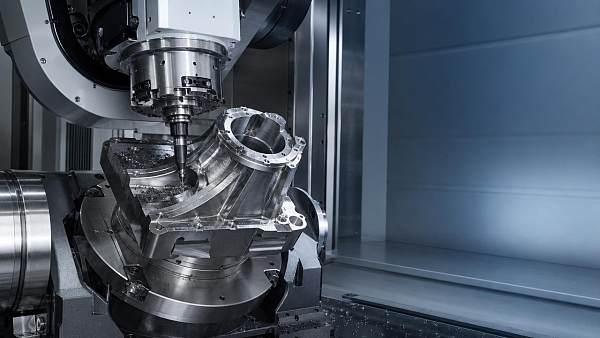
5 axis milling allows the cutting tool or workpiece to move across five coordinated axes. This enables access to multiple surfaces in one setup and improves tool orientation during complex cuts.
For titanium components, this matters because stable engagement reduces heat concentration. Better tool angles also help maintain chip evacuation, surface finish, and dimensional consistency on difficult features.
The process is not automatically cheaper. Machines cost more, programming is harder, and skilled process control is essential. The payoff appears when avoided losses exceed those added costs.
That is why 5 axis milling for titanium parts should be judged against total manufacturing economics, not against simple hourly machine rate comparisons.
Market signals shaping adoption decisions
Across advanced manufacturing, demand is shifting toward lighter, stronger, and more intricate metal components. Titanium remains central in aerospace, medical, energy, motorsport, and premium industrial systems.
At the same time, lead time pressure has intensified. Buyers increasingly expect shorter launches, traceable quality, and lower process variability. That makes setup reduction more valuable than before.
Several signals often indicate that 5 axis milling for titanium parts deserves evaluation:
- Parts require machining from many faces with repeated re-clamping.
- Tight tolerances are lost between setups on 3 axis or 4 axis routes.
- Scrap cost is high because titanium stock is expensive.
- Complex contours force custom fixtures that add engineering time.
- Surface quality or blend accuracy creates downstream rework.
These factors appear in many sectors, making the topic relevant beyond a single niche. The commercial logic applies wherever titanium complexity intersects with precision manufacturing.
Where the business case becomes measurable
The strongest business case for 5 axis milling for titanium parts usually comes from cumulative savings rather than one dramatic improvement. Small gains across the process chain often produce the real return.
Setup compression
One setup can replace several. That reduces queue time, operator handling, fixture changes, datum transfer error, and inspection interruptions. For complex titanium work, those reductions are significant.
Scrap avoidance
If a near-finished titanium part fails on the fourth setup, the full material and machining investment may be lost. Fewer setups lower cumulative failure points and often protect high-value stock.
Improved tool behavior
Better tool orientation can maintain more consistent chip load. In titanium, that can limit heat buildup, improve tool life, and stabilize difficult wall, pocket, and undercut operations.
Quality and finishing reduction
A smoother toolpath can reduce witness lines and manual blending. When post-processing is expensive or regulated, the value of better first-pass quality becomes much higher.
Shorter overall lead time
Cycle time alone may not always drop sharply. However, total order lead time often falls when setup planning, fixture preparation, and secondary finishing are reduced.
Decision factors by part profile and production context
Not every component justifies advanced kinematics. The decision should follow part characteristics, expected volume, quality risk, and downstream operational impact.
Volume deserves careful interpretation. Very high volume alone does not guarantee a fit. Repetitive, simple titanium parts may still favor dedicated fixtures on simpler platforms.
By contrast, low-to-medium volume complex work often rewards 5 axis milling for titanium parts faster, because engineering flexibility and reduced setup burden become central.
Typical use cases across industrial sectors
The strongest applications share one trait: machining difficulty creates cost risk that conventional routing cannot absorb efficiently.
- Aerospace brackets, structural nodes, and engine-adjacent titanium components.
- Medical implants and surgical instruments with complex surfaces and strict finish demands.
- Energy hardware exposed to heat, corrosion, or demanding strength-to-weight targets.
- Performance automotive and motorsport parts requiring low mass and precision geometry.
- High-end industrial equipment where custom titanium features limit assembly space.
In these settings, 5 axis milling for titanium parts often supports broader operational goals. Those include shorter development cycles, more reliable qualification, and reduced variation between batches.
Cost model elements that should be compared
A sound comparison should move beyond machine hourly rate. Titanium economics are sensitive to hidden costs that standard quoting models often understate.
- Number of setups and fixture engineering hours.
- Expected scrap probability by operation stage.
- Tool consumption and tool change interruption.
- Inspection frequency and positional verification effort.
- Manual finishing, blending, and correction work.
- Lead time value for urgent or regulated programs.
If 5 axis milling for titanium parts cuts several of these cost lines at once, the premium often becomes rational even before direct cycle time savings are fully realized.
Implementation cautions and process discipline
Adoption should not be treated as a simple equipment upgrade. The result depends on CAM strategy, machine dynamics, spindle performance, coolant delivery, probing, and operator competence.
Titanium is unforgiving when process stability is weak. Poor toolpath strategy can increase chatter, heat, or unexpected tool failure, offsetting the theoretical advantages of multi-axis motion.
A practical rollout path usually includes these actions:
- Select a family of parts with clear setup reduction potential.
- Benchmark current scrap, lead time, and finishing effort.
- Validate toolpath strategies on representative titanium grades.
- Track first-pass yield, not only spindle utilization.
- Review post-processing and inspection savings after trial runs.
This disciplined approach turns 5 axis milling for titanium parts from a technical ambition into a measurable business improvement program.
Strategic conclusion and next-step evaluation
5 axis milling for titanium parts pays off when complexity, precision, and titanium-related risk create costs that simpler machining cannot manage efficiently. The answer is situational, but not vague.
The clearest return appears in parts with multiple faces, demanding contours, strict tolerance stacks, expensive stock, and costly finishing or scrap exposure. In such cases, fewer setups create both technical and financial leverage.
A useful next step is to compare one representative titanium part across two routing models: current process versus 5 axis machining. Include setup count, yield, tooling, lead time, and rework.
That side-by-side review usually reveals whether 5 axis milling for titanium parts is an impressive option or a justified strategic investment.
Get weekly intelligence in your inbox.
No noise. No sponsored content. Pure intelligence.
 Oct 08, 2026How Digital Health Improves Diagnostic Accuracy and Workflow in Clinical LabsHow Digital Health Improves Diagnostic Accuracy and Workflow in Clinical Labs
 Oct 07, 2026Selecting Voice Picking Systems for German Warehouses: Integration, Languages and ROISelecting Voice Picking Systems for German Warehouses: Integration, Languages and ROI
 Oct 06, 2026How to Choose Last Mile Dispatch Software for On-Time Delivery at ScaleHow to Choose Last Mile Dispatch Software for On-Time Delivery at Scale
 Oct 05, 2026Vietnam’s Consumer Electronics Market: Demand Shifts and Sourcing OpportunitiesVietnam’s Consumer Electronics Market: Demand Shifts and Sourcing Opportunities
 Oct 04, 2026Digital Health Investment Priorities for Providers: Improving Access, Outcomes, and EfficiencyDigital Health Investment Priorities for Providers: Improving Access, Outcomes, and Efficiency
 Oct 03, 2026How to Specify an FR4 Custom PCB Board for High-Voltage and High-Heat DesignsHow to Specify an FR4 Custom PCB Board for High-Voltage and High-Heat Designs
 Oct 02, 2026ERP Software Market Intelligence: Adoption, Pricing, and Vendor Signals to WatchERP Software Market Intelligence: Adoption, Pricing, and Vendor Signals to Watch
 Oct 01, 2026How to Select Calibrated Temperature Data Loggers for GMP Cold Storage MonitoringHow to Select Calibrated Temperature Data Loggers for GMP Cold Storage Monitoring
 Sep 30, 2026Custom Molded Rubber Pricing: What Drives Unit Cost and Tooling Fees?Custom Molded Rubber Pricing: What Drives Unit Cost and Tooling Fees?
 Sep 29, 2026How to Evaluate Energy Management Software Vendors for Multi-Site OperationsHow to Evaluate Energy Management Software Vendors for Multi-Site Operations
 Sep 28, 2026How to Select a DIN Rail Smart Meter for Multi-Circuit Energy MonitoringHow to Select a DIN Rail Smart Meter for Multi-Circuit Energy Monitoring
 Sep 27, 2026TWS Earbuds in Vietnam: Demand Drivers, Price Tiers, and Retail Channel OpportunitiesTWS Earbuds in Vietnam: Demand Drivers, Price Tiers, and Retail Channel Opportunities
 Sep 26, 2026How UAE Clinics Can Qualify a Smart Glucometer Supplier for Accuracy and ComplianceHow UAE Clinics Can Qualify a Smart Glucometer Supplier for Accuracy and Compliance
 Sep 25, 2026Buying Aesthetic Lasers in the USA: FDA Status, Wavelengths, and Service SupportBuying Aesthetic Lasers in the USA: FDA Status, Wavelengths, and Service Support
 Sep 24, 2026Laser Cutting Brass Sheet: How to Prevent Burrs and Heat Marks on Thin PartsLaser Cutting Brass Sheet: How to Prevent Burrs and Heat Marks on Thin Parts
 Sep 23, 2026How to Choose Lightweight ANC Headphones for Comfortable All-Day TravelHow to Choose Lightweight ANC Headphones for Comfortable All-Day Travel
 Sep 22, 2026IPX5 TWS Bluetooth Earbuds: What Protection Do They Offer for Workouts?IPX5 TWS Bluetooth Earbuds: What Protection Do They Offer for Workouts?
 Sep 21, 2026What to Look for in a Grid Integration Company for Utility-Scale Solar ProjectsWhat to Look for in a Grid Integration Company for Utility-Scale Solar Projects
 Sep 20, 2026Microgrid Controller Pricing: What Drives Cost in Commercial Energy Projects?Microgrid Controller Pricing: What Drives Cost in Commercial Energy Projects?
 Sep 19, 2026How to Choose a GaN Charger for Laptops Without Compromising Power or PortabilityHow to Choose a GaN Charger for Laptops Without Compromising Power or Portability
 Sep 18, 2026Floating Solar Farm Costs: CAPEX, OPEX, and the Site Factors That Shape ROIFloating Solar Farm Costs: CAPEX, OPEX, and the Site Factors That Shape ROI
 Sep 17, 2026Drone Delivery Solutions for Last-Mile Routes: Site, Payload, and Range PlanningDrone Delivery Solutions for Last-Mile Routes: Site, Payload, and Range Planning
 Sep 16, 2026When Low-Volume Electronics Manufacturing Makes More Sense Than Mass ProductionWhen Low-Volume Electronics Manufacturing Makes More Sense Than Mass Production
 Sep 15, 2026Wholesale WiFi Smart Switches: What Buyers Should Verify Before OrderingWholesale WiFi Smart Switches: What Buyers Should Verify Before Ordering
 Sep 14, 2026How to Select IoT Sensors for Reliable Monitoring in Harsh Industrial EnvironmentsHow to Select IoT Sensors for Reliable Monitoring in Harsh Industrial Environments
 Sep 13, 2026How Procurement Teams Can Improve Supplier Reliability With Supply Chain VisibilityHow Procurement Teams Can Improve Supplier Reliability With Supply Chain Visibility
 Sep 12, 2026Smart Manufacturing Trends 2026: What Leaders Should Prioritize for ROISmart Manufacturing Trends 2026: What Leaders Should Prioritize for ROI



























