
How safe are IBC totes for long-term chemical storage?
When evaluating ibc totes for chemical storage, long-term safety depends on more than container size or cost. Material compatibility, UV exposure, venting, and regulatory compliance all affect whether an IBC can protect product quality and workplace safety over time. For quality control and safety managers, understanding these factors is essential before committing to storage, transport, or bulk chemical handling decisions.
What determines whether IBC totes for chemical storage are safe over the long term?
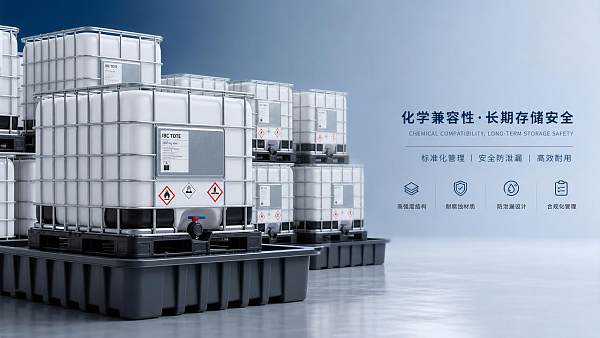
IBC totes are widely used because they balance capacity, stackability, and handling efficiency. However, long-term chemical storage introduces a different risk profile from short-cycle transport. A tote that performs well for temporary holding may fail when exposed to months of chemical contact, fluctuating temperatures, sunlight, or repeated filling and discharge.
For quality and safety teams, the real question is not whether IBC totes can store chemicals, but which chemical, for how long, under what environmental conditions, and under which compliance framework. Safe storage is always a compatibility decision plus an operational control decision.
The four core safety variables
- Chemical compatibility: The tote material, closure system, valve, gasket, and cage coating must resist the stored substance without swelling, cracking, permeation, or embrittlement.
- Storage duration: A chemical that is acceptable for 30 days may become problematic after six or twelve months because permeation and stress effects accumulate.
- Environmental exposure: UV radiation, heat, freezing conditions, and humidity can degrade polymer performance and affect pressure inside the container.
- Regulatory and handling controls: UN markings, labeling, secondary containment, venting, and inspection routines all influence whether the storage setup is actually safe in practice.
In most industrial settings, high-density polyethylene inner bottles inside a metal cage are the standard format. They are durable and economical, but they are not universally suitable. Oxidizers, solvents, corrosives, and high-purity chemicals can each challenge IBC totes for chemical storage in different ways.
Which chemicals are usually suitable, and which demand extra caution?
A practical review starts with compatibility screening. Many water-based chemicals, diluted acids, certain alkalis, and non-flammable formulations are commonly stored in IBC systems. The risk rises when the chemical can permeate plastic, attack seals, generate vapor pressure, or react with trace contamination left from prior use.
The table below helps quality control and safety managers classify common storage situations before approving IBC totes for chemical storage in a long-term program.
This classification is not a substitute for a formal compatibility chart or supplier approval. It does show why a simple “chemical resistant” claim is not enough. Safety managers need to verify the whole package: bottle resin, cap, vent, valve body, gasket material, pallet, and prior usage history.
Red flags that should trigger escalation
- The supplier cannot provide a clear compatibility statement for the exact concentration and storage duration.
- The chemical has high purity requirements and is sensitive to leachables or cross-contamination.
- The site stores outdoors in direct sun or in regions with large day-night temperature swings.
- The product generates gas, requires vented closures, or has pressure-related storage restrictions.
How do storage conditions change the safety profile of IBC totes for chemical storage?
Even a chemically compatible tote can become unsafe if the storage environment is poorly controlled. Long-term performance is strongly affected by where and how the tote is stored. Outdoor yards, mixed-chemical warehouses, and production-side staging areas each create different failure modes.
Environmental factors that matter most
- UV exposure can weaken plastic over time and raise internal temperatures, especially in dark or unshaded areas.
- Heat accelerates chemical interaction with polymers and may increase vapor pressure or product degradation.
- Freezing can distort containers, affect valves, or alter concentration if the chemical phase separates.
- Stacking loads and forklift impacts can stress cages and bases, especially when totes are stored for long dwell times.
- Poor housekeeping can expose the tote exterior to corrosive residues, making visual inspection less reliable.
This is why safety reviews should include not only the container specification but also the storage map, containment design, ventilation plan, and inspection frequency. In cross-sector operations such as advanced manufacturing, healthcare technology, or green energy supply chains, one warehouse may hold cleaners, process chemicals, adhesives, and specialty additives side by side. That complexity increases the importance of segregation and labeling discipline.
What should quality and safety managers check before approving a tote?
A structured approval process reduces procurement errors and incident risk. It also helps teams compare vendors on more than purchase price. The checklist below is especially useful when evaluating IBC totes for chemical storage across multiple plants or supplier regions.
This evaluation framework supports more disciplined procurement. Instead of approving totes as a generic packaging item, teams can tie each approval to concentration range, storage duration, handling method, and environmental controls.
A practical approval workflow
- Obtain the chemical SDS and confirm concentration, temperature range, and hazard class.
- Request container compatibility data for the exact formulation and intended dwell time.
- Review closure, vent, and valve materials, not only the bottle material.
- Assess whether virgin, new, or reconditioned IBCs are acceptable for the quality risk level.
- Define inspection frequency, spill response measures, and rejection criteria before first use.
New vs reconditioned vs alternative bulk packaging: which is safer?
Many buyers focus on unit cost, but total risk cost often matters more. For some chemicals, a reconditioned IBC may be acceptable. For others, especially high-purity or high-reactivity products, new containers or different bulk packaging may be the safer decision.
The table below compares common options used when organizations assess IBC totes for chemical storage against quality and safety objectives.
In short, the safest option is not always the most expensive, but it is rarely the least reviewed. The correct decision depends on contamination tolerance, storage duration, operating climate, and incident consequence. Procurement teams that use a risk-ranked packaging matrix typically make better long-term choices than teams that buy only on nominal specification.
Which standards and compliance issues should not be overlooked?
Long-term storage decisions often sit between packaging compliance and facility safety compliance. A tote can be legal for transport yet still be a weak fit for prolonged onsite storage if venting, containment, or segregation are poorly managed. Quality managers should align packaging review with plant EHS procedures rather than treating them as separate tasks.
Key compliance topics to review
- UN packaging marking and any restrictions related to filling density, drop performance, or hazardous goods classification.
- SDS handling guidance covering temperature limits, incompatibilities, and ventilation requirements.
- Secondary containment requirements based on local environmental and workplace rules.
- Label durability and traceability controls for long dwell inventory, especially in export or multisite supply chains.
- Inspection and retirement criteria for reused, aged, sun-exposed, or damaged containers.
For global operations, this is where market intelligence becomes valuable. Requirements differ by region, product class, and customer expectation. Teams using TradeNexus Pro often compare supplier documentation quality, sourcing stability, and sector-specific handling practices across advanced manufacturing, healthcare technology, and green energy projects before standardizing a packaging decision.
Common mistakes when using IBC totes for chemical storage
Incidents rarely come from one obvious mistake. More often, they result from several small assumptions: a reused tote with incomplete history, an outdoor storage area without shading, a vented cap chosen without chemical review, or an inspection schedule that focuses on leaks but ignores wall deformation.
Frequent operational errors
- Approving a tote based on generic material type without confirming compatibility for the exact formulation and concentration.
- Using reconditioned containers for sensitive products without documented prior-content segregation.
- Ignoring UV and weather exposure in outdoor storage plans.
- Treating the bottle as the only critical component and overlooking valve, cap, and gasket compatibility.
- Assuming transport approval automatically validates indefinite or extended onsite storage.
These mistakes are preventable. A cross-functional review involving QA, EHS, procurement, and operations usually catches them early. That is especially important in diversified industrial groups where the same tote format may be used across different chemical categories for convenience.
FAQ: practical questions from quality and safety managers
How long can chemicals remain in IBC totes safely?
There is no universal time limit. Safe duration depends on the chemical, concentration, temperature, UV exposure, closure system, and whether the container is new or reused. Some water-based products may remain stable for extended periods under controlled indoor storage, while certain solvents or reactive chemicals may be poor candidates even at shorter intervals.
Are reconditioned IBC totes for chemical storage acceptable?
They can be acceptable for lower-risk applications if reconditioning controls are documented and prior contents are compatible with your contamination tolerance. They are less suitable where purity, traceability, or aggressive chemistry create a higher consequence of residual contamination or material fatigue.
What is the first sign that a tote may be becoming unsafe?
Early signs include wall bulging, discoloration, unusual odor release, valve stiffness, seepage around seals, cage corrosion, fading labels, and recurring pressure issues. These indicators should trigger isolation and review before the tote is moved or dispensed.
Do outdoor storage conditions automatically rule out IBC use?
Not automatically, but outdoor use raises the need for UV management, temperature monitoring, spill containment, and more frequent inspections. If the chemical is temperature-sensitive or prone to permeation, indoor or shaded storage is usually the safer choice.
Why choose us for packaging intelligence and sourcing decisions?
TradeNexus Pro supports quality control leaders, safety managers, and procurement teams that need more than a catalog answer. Our platform helps industrial buyers assess supplier reliability, compare packaging approaches, and interpret market signals across advanced manufacturing, green energy, smart electronics, healthcare technology, and supply chain SaaS ecosystems.
If your team is reviewing IBC totes for chemical storage, we can help structure the decision around practical factors that matter in real operations: compatibility screening, packaging option comparison, supplier documentation review, expected delivery windows, regional sourcing risk, and qualification pathways for new versus reconditioned containers.
- Confirm critical parameters such as chemical type, concentration, storage duration, and operating environment.
- Compare container routes for standard chemicals, sensitive formulations, or multi-site deployment.
- Discuss documentation expectations, compliance checkpoints, and supplier communication gaps.
- Review sample support, quotation scope, and risk items before committing to larger-volume sourcing.
For teams managing chemical safety, packaging is never just a container purchase. It is a risk-control choice with implications for product quality, worker protection, and supply continuity. Contact TradeNexus Pro to discuss parameter confirmation, product selection logic, certification questions, lead-time planning, sample evaluation, or supplier shortlist development for your next bulk chemical storage project.
Get weekly intelligence in your inbox.
No noise. No sponsored content. Pure intelligence.
 Oct 08, 2026How Digital Health Improves Diagnostic Accuracy and Workflow in Clinical LabsHow Digital Health Improves Diagnostic Accuracy and Workflow in Clinical Labs
 Oct 07, 2026Selecting Voice Picking Systems for German Warehouses: Integration, Languages and ROISelecting Voice Picking Systems for German Warehouses: Integration, Languages and ROI
 Oct 06, 2026How to Choose Last Mile Dispatch Software for On-Time Delivery at ScaleHow to Choose Last Mile Dispatch Software for On-Time Delivery at Scale
 Oct 05, 2026Vietnam’s Consumer Electronics Market: Demand Shifts and Sourcing OpportunitiesVietnam’s Consumer Electronics Market: Demand Shifts and Sourcing Opportunities
 Oct 04, 2026Digital Health Investment Priorities for Providers: Improving Access, Outcomes, and EfficiencyDigital Health Investment Priorities for Providers: Improving Access, Outcomes, and Efficiency
 Oct 03, 2026How to Specify an FR4 Custom PCB Board for High-Voltage and High-Heat DesignsHow to Specify an FR4 Custom PCB Board for High-Voltage and High-Heat Designs
 Oct 02, 2026ERP Software Market Intelligence: Adoption, Pricing, and Vendor Signals to WatchERP Software Market Intelligence: Adoption, Pricing, and Vendor Signals to Watch
 Oct 01, 2026How to Select Calibrated Temperature Data Loggers for GMP Cold Storage MonitoringHow to Select Calibrated Temperature Data Loggers for GMP Cold Storage Monitoring
 Sep 30, 2026Custom Molded Rubber Pricing: What Drives Unit Cost and Tooling Fees?Custom Molded Rubber Pricing: What Drives Unit Cost and Tooling Fees?
 Sep 29, 2026How to Evaluate Energy Management Software Vendors for Multi-Site OperationsHow to Evaluate Energy Management Software Vendors for Multi-Site Operations
 Sep 28, 2026How to Select a DIN Rail Smart Meter for Multi-Circuit Energy MonitoringHow to Select a DIN Rail Smart Meter for Multi-Circuit Energy Monitoring
 Sep 27, 2026TWS Earbuds in Vietnam: Demand Drivers, Price Tiers, and Retail Channel OpportunitiesTWS Earbuds in Vietnam: Demand Drivers, Price Tiers, and Retail Channel Opportunities
 Sep 26, 2026How UAE Clinics Can Qualify a Smart Glucometer Supplier for Accuracy and ComplianceHow UAE Clinics Can Qualify a Smart Glucometer Supplier for Accuracy and Compliance
 Sep 25, 2026Buying Aesthetic Lasers in the USA: FDA Status, Wavelengths, and Service SupportBuying Aesthetic Lasers in the USA: FDA Status, Wavelengths, and Service Support
 Sep 24, 2026Laser Cutting Brass Sheet: How to Prevent Burrs and Heat Marks on Thin PartsLaser Cutting Brass Sheet: How to Prevent Burrs and Heat Marks on Thin Parts
 Sep 23, 2026How to Choose Lightweight ANC Headphones for Comfortable All-Day TravelHow to Choose Lightweight ANC Headphones for Comfortable All-Day Travel
 Sep 22, 2026IPX5 TWS Bluetooth Earbuds: What Protection Do They Offer for Workouts?IPX5 TWS Bluetooth Earbuds: What Protection Do They Offer for Workouts?
 Sep 21, 2026What to Look for in a Grid Integration Company for Utility-Scale Solar ProjectsWhat to Look for in a Grid Integration Company for Utility-Scale Solar Projects
 Sep 20, 2026Microgrid Controller Pricing: What Drives Cost in Commercial Energy Projects?Microgrid Controller Pricing: What Drives Cost in Commercial Energy Projects?
 Sep 19, 2026How to Choose a GaN Charger for Laptops Without Compromising Power or PortabilityHow to Choose a GaN Charger for Laptops Without Compromising Power or Portability
 Sep 18, 2026Floating Solar Farm Costs: CAPEX, OPEX, and the Site Factors That Shape ROIFloating Solar Farm Costs: CAPEX, OPEX, and the Site Factors That Shape ROI
 Sep 17, 2026Drone Delivery Solutions for Last-Mile Routes: Site, Payload, and Range PlanningDrone Delivery Solutions for Last-Mile Routes: Site, Payload, and Range Planning
 Sep 16, 2026When Low-Volume Electronics Manufacturing Makes More Sense Than Mass ProductionWhen Low-Volume Electronics Manufacturing Makes More Sense Than Mass Production
 Sep 15, 2026Wholesale WiFi Smart Switches: What Buyers Should Verify Before OrderingWholesale WiFi Smart Switches: What Buyers Should Verify Before Ordering
 Sep 14, 2026How to Select IoT Sensors for Reliable Monitoring in Harsh Industrial EnvironmentsHow to Select IoT Sensors for Reliable Monitoring in Harsh Industrial Environments
 Sep 13, 2026How Procurement Teams Can Improve Supplier Reliability With Supply Chain VisibilityHow Procurement Teams Can Improve Supplier Reliability With Supply Chain Visibility
 Sep 12, 2026Smart Manufacturing Trends 2026: What Leaders Should Prioritize for ROISmart Manufacturing Trends 2026: What Leaders Should Prioritize for ROI



























