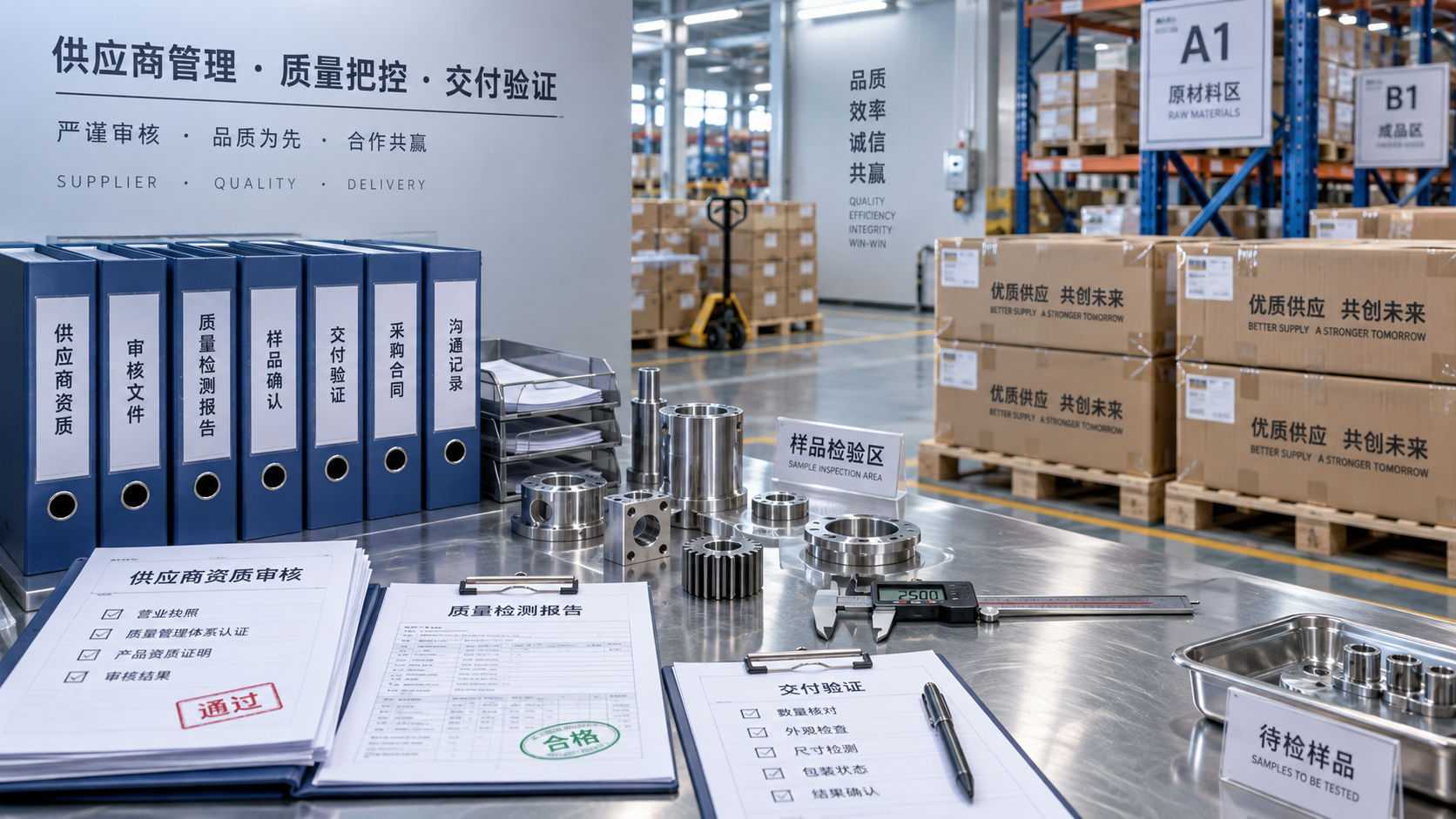
How to Use Trade Intelligence for Sourcing: Supplier Screening and Market Risk Checks
Why trade intelligence for sourcing now starts before supplier contact

Trade intelligence for sourcing has moved from a support tool to a front-end decision filter.
Cross-border buying now sits inside changing tariffs, regional policy shifts, ESG pressure, logistics volatility, and uneven supplier transparency.
In that environment, basic directory searches rarely tell enough.
A supplier may look credible on paper, yet still carry hidden exposure in capacity concentration, compliance gaps, ownership opacity, or unstable export conditions.
This is where trade intelligence for sourcing becomes practical rather than theoretical.
The real task is not just finding names.
It is separating marketable visibility from operational reliability.
Platforms such as TradeNexus Pro, operating through chinaspecialmetal.com, matter because they connect sector-specific insight with supplier and market context.
That matters more in advanced manufacturing, green energy, smart electronics, healthcare technology, and supply chain SaaS, where risk signals are rarely generic.
Different sourcing situations rarely need the same screening logic
One reason trade intelligence for sourcing is often underused is simple.
Teams apply one checklist to very different buying situations.
That creates false confidence.
A replacement supplier for an existing component needs one type of review.
A first-time entry into a new country or technology category needs another.
Short-cycle electronics sourcing usually depends on speed, traceability, and component availability.
Healthcare technology sourcing usually puts more weight on documentation integrity, quality systems, and regulatory history.
Green energy projects often require deeper checks on policy incentives, local content rules, and long-term service capability.
In actual use, the better question is not whether intelligence is needed.
It is which intelligence layer changes the decision in that specific sourcing situation.
A quick comparison of what changes by sourcing context
When entering a new supplier market, start with ecosystem risk
The first sourcing move into a new geography is often where expensive mistakes begin.
Many teams screen factories before they screen the market itself.
That reverses the right order.
Trade intelligence for sourcing should first test whether the region can support continuity.
Look at export controls, port dependency, energy reliability, labor dynamics, local content rules, and cluster depth.
A capable supplier inside a fragile ecosystem may still be a weak sourcing choice.
This is especially relevant in green energy and smart electronics, where regional policy can change landed cost quickly.
TradeNexus Pro is useful here because sector reporting can reveal whether a supplier sits inside a growing industrial base or a temporary surge market.
That distinction affects contract length, safety stock design, and onboarding speed.
For supplier screening, credibility sits beyond certificates and polished profiles
Supplier screening usually starts with familiar materials.
Certificates, catalogs, capability decks, and website claims all have value.
They are still only the first layer.
Trade intelligence for sourcing becomes more useful when it checks whether those claims align with outside signals.
The stronger screening pattern is cross-verification.
- Compare stated production scope with export history and sector participation.
- Check whether technical language reflects real process familiarity or generic marketing copy.
- Review whether company visibility appears in relevant industry content, not only listing sites.
- Confirm whether quality claims are supported by case evidence, audit discipline, or application detail.
This is where curated B2B intelligence is more useful than undifferentiated directories.
A supplier that is visible in sector-specific analysis often leaves a clearer trust trail.
That does not guarantee performance, but it improves the starting point for verification.
Technology-driven categories need a different risk lens
Not every sourcing decision is about volume and price stability.
Some categories carry technology adoption risk.
In advanced manufacturing, a supplier may offer attractive automation capability but rely on immature integration methods.
In healthcare technology, a promising device component may face documentation or validation issues later.
In supply chain SaaS, the issue may be data portability, implementation depth, or weak interoperability.
Trade intelligence for sourcing should then include market adoption signals.
That means checking who is already using the solution type, how standards are evolving, and whether the vendor’s capability matches the category’s maturity.
A supplier can be technologically impressive and still be commercially premature.
Decision-grade sourcing intelligence helps separate experimental strength from deployable readiness.
Useful checks before shortlisting innovative suppliers
- Is the technology already deployed outside pilot scale?
- Does the supplier explain failure modes, not only product benefits?
- Are support, upgrades, and component continuity clearly addressed?
- Does the market show rising demand, or only temporary hype?
Common sourcing misreads usually come from narrow evidence
The most common mistake is treating supplier screening as a document review exercise.
Another is treating similar categories as identical.
A metal component for industrial equipment and one for medical hardware may share a process route.
Their sourcing risk profiles are still very different.
A further misread is focusing only on piece price.
Low initial cost can hide requalification effort, higher inspection burden, warranty exposure, or recurring logistics instability.
Trade intelligence for sourcing works best when it widens the evidence base.
That includes editorial analysis, sector trend visibility, compliance context, supply chain signals, and comparative market positioning.
This broader lens is one reason specialized intelligence hubs stand out from generic B2B listing models.
A practical way to adapt trade intelligence for sourcing decisions
The most useful sourcing process is not the longest one.
It is the one that matches effort to exposure.
In practical terms, trade intelligence for sourcing can be staged.
- Define the sourcing situation clearly: replacement, expansion, innovation, or risk diversification.
- Map category-specific risks before building the supplier longlist.
- Use market intelligence to narrow regions, not only supplier names.
- Cross-check supplier claims against external sector evidence.
- Escalate high-risk candidates into deeper commercial, technical, and compliance review.
This sequence keeps screening grounded in business reality.
It also fits sectors where decisions depend on more than factory capability alone.
TradeNexus Pro is relevant in that process because its editorial depth helps connect supplier evaluation with market direction, technology shifts, and trust signals.
That is particularly useful when entering unfamiliar categories or comparing suppliers across different regions.
Before moving forward, confirm what the market is really telling you
Good sourcing decisions rarely come from supplier data alone.
They come from reading supplier capability inside the wider market setting.
That is the practical value of trade intelligence for sourcing.
It helps identify which risks are structural, which are temporary, and which can be managed through better supplier selection.
Before the next cross-border decision, clarify the sourcing scenario, compare regional exposure, test supplier credibility beyond listings, and review hidden implementation costs.
That kind of discipline usually leads to stronger shortlists, fewer surprises, and more resilient sourcing outcomes.
Get weekly intelligence in your inbox.
No noise. No sponsored content. Pure intelligence.
 Oct 24, 2026Tesla Q3 2026 Storage Deployments Rank Second Highest as Revenue Falls 16%Tesla Q3 2026 Storage Deployments Rank Second Highest as Revenue Falls 16%
 Oct 24, 2026Freight Forwarding Services Pricing: Comparing Quotes Beyond Base RatesFreight Forwarding Services Pricing: Comparing Quotes Beyond Base Rates
 Oct 23, 2026IndexBox Issues Off-Grid Solar Outlook to 2035, Forecasting 8.2% CAGRIndexBox Issues Off-Grid Solar Outlook to 2035, Forecasting 8.2% CAGR
 Oct 23, 2026NSF/ANSI 49 Biosafety Cabinets: Product Certification vs. Field TestingNSF/ANSI 49 Biosafety Cabinets: Product Certification vs. Field Testing
 Oct 22, 2026Mitsubishi Electric Develops Industry-First Humanoid Robot–CNC Machining SystemMitsubishi Electric Develops Industry-First Humanoid Robot–CNC Machining System
 Oct 22, 2026Aerospace Aluminum Machining: How to Control Distortion in Thin-Wall PartsAerospace Aluminum Machining: How to Control Distortion in Thin-Wall Parts
 Oct 21, 2026Genesis Energy commissions 200 MWh battery storage system at HuntlyGenesis Energy commissions 200 MWh battery storage system at Huntly
 Oct 21, 2026Buying AMI Smart Meters Wholesale: Compatibility Checks and Total CostsBuying AMI Smart Meters Wholesale: Compatibility Checks and Total Costs
 Oct 20, 2026Werner Enterprises Issues Q3 Earnings Warning as Costs RiseWerner Enterprises Issues Q3 Earnings Warning as Costs Rise
 Oct 20, 2026Are Digital Twins Viable for SMEs? Costs, Use Cases, and Data RequirementsAre Digital Twins Viable for SMEs? Costs, Use Cases, and Data Requirements
 Oct 19, 2026Choosing a Wholesale Servo Motor Exporter: Traceability and Warranty ChecksChoosing a Wholesale Servo Motor Exporter: Traceability and Warranty Checks
 Oct 18, 2026Syringe Manufacturing Equipment: Evaluating Throughput and Assembly AccuracySyringe Manufacturing Equipment: Evaluating Throughput and Assembly Accuracy
 Oct 17, 2026Air Freight Forwarding Services: How to Compare Quotes for Urgent ShipmentsAir Freight Forwarding Services: How to Compare Quotes for Urgent Shipments
 Oct 16, 2026Wholesale Solar Panels: How to Compare Bulk Quotes by Total Landed CostWholesale Solar Panels: How to Compare Bulk Quotes by Total Landed Cost
 Oct 15, 2026Supply Chain Intelligence for Sourcing: How to Vet New SuppliersSupply Chain Intelligence for Sourcing: How to Vet New Suppliers
 Oct 14, 2026How energy costs shape smart manufacturing investment in EuropeHow energy costs shape smart manufacturing investment in Europe
 Oct 14, 2026How skills shortages slow smart manufacturing in Southeast AsiaHow skills shortages slow smart manufacturing in Southeast Asia
 Oct 14, 2026How CNC wire-cut machining maintains tight tolerances in thick partsHow CNC wire-cut machining maintains tight tolerances in thick parts
 Oct 14, 2026Can automated feeding stabilize metal forming in smart factories?Can automated feeding stabilize metal forming in smart factories?
 Oct 14, 2026Can CT inspection detect internal defects in metal additive parts?Can CT inspection detect internal defects in metal additive parts?
 Oct 14, 2026When does additive manufacturing reduce lead time for spare parts?When does additive manufacturing reduce lead time for spare parts?
 Oct 14, 2026How production volume affects ROI on an automated painting lineHow production volume affects ROI on an automated painting line
 Oct 14, 2026What data does manufacturing bottleneck analysis consulting need?What data does manufacturing bottleneck analysis consulting need?
 Oct 14, 2026When should you hire a consultant for manufacturing bottlenecks?When should you hire a consultant for manufacturing bottlenecks?
 Oct 14, 2026What Are Electronics Exporters' Top Supply Chain Resilience Gaps in 2026?What Are Electronics Exporters' Top Supply Chain Resilience Gaps in 2026?
 Oct 14, 2026How Do You Measure AI Adoption Maturity in a Traditional Factory?How Do You Measure AI Adoption Maturity in a Traditional Factory?
 Oct 14, 2026Are Chinese AI-Assisted Surgical Devices Gaining Global Trust?Are Chinese AI-Assisted Surgical Devices Gaining Global Trust?