China–Chile Green Standards Mutual Recognition意向达成
On May 27, 2026, China and Chile held the 22nd meeting of their Joint Economic Commission, reaching a preliminary mutual recognition intention on green and low-carbon certification frameworks for photovoltaic modules, energy storage batteries, and EV charging infrastructure. This development is particularly relevant to manufacturers, exporters, and supply chain service providers in the global clean energy equipment sector — especially those engaged in trade with Latin American markets.
Event Overview
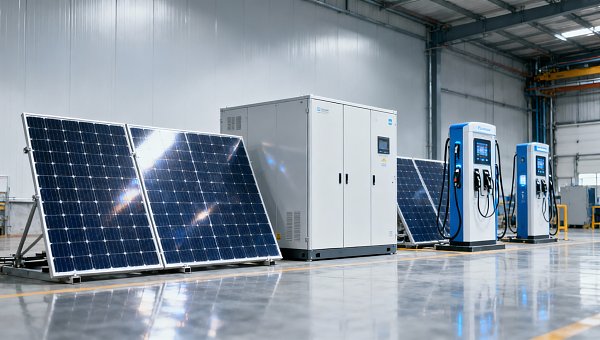
The 22nd meeting of the China–Chile Joint Economic Commission took place on May 27, 2026. During the session, both sides initiated consultations on mutual recognition of green certification systems for three product categories: photovoltaic (PV) modules, energy storage batteries, and electric vehicle (EV) charging stations. No formal agreement or implementation timeline has been publicly announced; the outcome is described as an ‘intention to recognize’ green standards reciprocally.
Industries Affected by Product Category and Value Chain Role
Direct Exporters of Green Energy Equipment
Exporters shipping PV modules, battery systems, or EV chargers to Chile — or using Chile as a regional gateway to other Latin American markets — may face reduced conformity assessment requirements. Impact includes potentially shorter testing cycles and lower third-party certification costs, provided the mutual recognition framework enters implementation.
Manufacturers of Certified Components and Subsystems
Suppliers whose components are integrated into final certified products (e.g., lithium-ion cells for storage batteries, inverters for PV systems) may see downstream demand shift toward designs aligned with jointly recognized environmental performance criteria. Impact centers on technical documentation readiness and traceability of carbon-related claims (e.g., embodied carbon, recyclability metrics).
Supply Chain & Certification Service Providers
Testing laboratories, certification bodies, and logistics firms supporting export compliance may need to adapt service offerings if bilateral recognition leads to accepted test reports from either country’s accredited institutions. Impact involves potential recalibration of scope accreditation and cross-border report validation workflows.
What Relevant Enterprises or Practitioners Should Monitor and Act On
Track official updates from national standardization and customs authorities
Neither China’s State Administration for Market Regulation (SAMR) nor Chile’s National Institute of Standardization (INN) has published technical annexes or scope definitions for the mutual recognition intention. Enterprises should monitor announcements from both agencies — especially draft documents specifying covered product models, test methods, and validity periods.
Identify priority product lines and target market entry pathways
Not all PV modules or EV chargers will necessarily fall under the initial scope. Companies should cross-reference existing Chinese green certification schemes (e.g., CQC’s Low-Carbon Product Certification) and Chilean environmental labeling requirements (e.g., SEC’s voluntary efficiency labeling) to assess alignment gaps ahead of formal implementation.
Distinguish between policy signal and operational readiness
This outcome remains a diplomatic intention, not an enforceable regulatory change. Businesses should avoid assuming immediate reductions in testing load or certification lead time. Instead, treat it as a signal to audit current compliance documentation — particularly environmental declarations, material sourcing records, and lifecycle assessment summaries — for potential reuse under future mutual arrangements.
Prepare internal coordination across R&D, QA, and export departments
Early alignment among engineering, quality assurance, and international trade teams helps streamline response if technical annexes are released. Focus areas include harmonizing terminology (e.g., ‘carbon footprint’ vs. ‘embodied GHG emissions’), verifying test lab accreditations, and mapping existing certifications against likely bilateral equivalence criteria.
Editorial Perspective / Industry Observation
Observably, this mutual recognition intention functions primarily as a diplomatic signal — not an implemented regulatory mechanism. Analysis shows it reflects growing coordination between two key renewable energy trading partners, but actual impact depends on subsequent technical negotiations, institutional capacity alignment, and domestic legal adoption. From an industry perspective, it is better understood as a medium-term enabler than a near-term operational change. Continued attention is warranted because successful implementation could set a precedent for similar arrangements with other Pacific Alliance members.
In summary, the China–Chile green standards mutual recognition intention signals emerging convergence in sustainability-related market access requirements for clean energy hardware. It does not yet alter compliance obligations, but it highlights a directional shift toward interoperable green certification — one that rewards proactive documentation discipline and cross-border technical alignment. Currently, it is more appropriately understood as a procedural milestone in bilateral regulatory dialogue than a functional trade facilitation tool.
Source: Official communiqué from the 22nd Meeting of the China–Chile Joint Economic Commission (May 27, 2026). Note: Technical scope, implementation schedule, and formal agreement status remain pending official publication and are subject to ongoing intergovernmental negotiation.
Get weekly intelligence in your inbox.
No noise. No sponsored content. Pure intelligence.
 Oct 24, 2026Tesla Q3 2026 Storage Deployments Rank Second Highest as Revenue Falls 16%Tesla Q3 2026 Storage Deployments Rank Second Highest as Revenue Falls 16%
 Oct 24, 2026Freight Forwarding Services Pricing: Comparing Quotes Beyond Base RatesFreight Forwarding Services Pricing: Comparing Quotes Beyond Base Rates
 Oct 23, 2026IndexBox Issues Off-Grid Solar Outlook to 2035, Forecasting 8.2% CAGRIndexBox Issues Off-Grid Solar Outlook to 2035, Forecasting 8.2% CAGR
 Oct 23, 2026NSF/ANSI 49 Biosafety Cabinets: Product Certification vs. Field TestingNSF/ANSI 49 Biosafety Cabinets: Product Certification vs. Field Testing
 Oct 22, 2026Mitsubishi Electric Develops Industry-First Humanoid Robot–CNC Machining SystemMitsubishi Electric Develops Industry-First Humanoid Robot–CNC Machining System
 Oct 22, 2026Aerospace Aluminum Machining: How to Control Distortion in Thin-Wall PartsAerospace Aluminum Machining: How to Control Distortion in Thin-Wall Parts
 Oct 21, 2026Genesis Energy commissions 200 MWh battery storage system at HuntlyGenesis Energy commissions 200 MWh battery storage system at Huntly
 Oct 21, 2026Buying AMI Smart Meters Wholesale: Compatibility Checks and Total CostsBuying AMI Smart Meters Wholesale: Compatibility Checks and Total Costs
 Oct 20, 2026Werner Enterprises Issues Q3 Earnings Warning as Costs RiseWerner Enterprises Issues Q3 Earnings Warning as Costs Rise
 Oct 20, 2026Are Digital Twins Viable for SMEs? Costs, Use Cases, and Data RequirementsAre Digital Twins Viable for SMEs? Costs, Use Cases, and Data Requirements
 Oct 19, 2026Choosing a Wholesale Servo Motor Exporter: Traceability and Warranty ChecksChoosing a Wholesale Servo Motor Exporter: Traceability and Warranty Checks
 Oct 18, 2026Syringe Manufacturing Equipment: Evaluating Throughput and Assembly AccuracySyringe Manufacturing Equipment: Evaluating Throughput and Assembly Accuracy
 Oct 17, 2026Air Freight Forwarding Services: How to Compare Quotes for Urgent ShipmentsAir Freight Forwarding Services: How to Compare Quotes for Urgent Shipments
 Oct 16, 2026Wholesale Solar Panels: How to Compare Bulk Quotes by Total Landed CostWholesale Solar Panels: How to Compare Bulk Quotes by Total Landed Cost
 Oct 15, 2026Supply Chain Intelligence for Sourcing: How to Vet New SuppliersSupply Chain Intelligence for Sourcing: How to Vet New Suppliers
 Oct 14, 2026How energy costs shape smart manufacturing investment in EuropeHow energy costs shape smart manufacturing investment in Europe
 Oct 14, 2026How skills shortages slow smart manufacturing in Southeast AsiaHow skills shortages slow smart manufacturing in Southeast Asia
 Oct 14, 2026How CNC wire-cut machining maintains tight tolerances in thick partsHow CNC wire-cut machining maintains tight tolerances in thick parts
 Oct 14, 2026Can automated feeding stabilize metal forming in smart factories?Can automated feeding stabilize metal forming in smart factories?
 Oct 14, 2026Can CT inspection detect internal defects in metal additive parts?Can CT inspection detect internal defects in metal additive parts?
 Oct 14, 2026When does additive manufacturing reduce lead time for spare parts?When does additive manufacturing reduce lead time for spare parts?
 Oct 14, 2026How production volume affects ROI on an automated painting lineHow production volume affects ROI on an automated painting line
 Oct 14, 2026What data does manufacturing bottleneck analysis consulting need?What data does manufacturing bottleneck analysis consulting need?
 Oct 14, 2026When should you hire a consultant for manufacturing bottlenecks?When should you hire a consultant for manufacturing bottlenecks?
 Oct 14, 2026What Are Electronics Exporters' Top Supply Chain Resilience Gaps in 2026?What Are Electronics Exporters' Top Supply Chain Resilience Gaps in 2026?
 Oct 14, 2026How Do You Measure AI Adoption Maturity in a Traditional Factory?How Do You Measure AI Adoption Maturity in a Traditional Factory?
 Oct 14, 2026Are Chinese AI-Assisted Surgical Devices Gaining Global Trust?Are Chinese AI-Assisted Surgical Devices Gaining Global Trust?