China Opens Coffee Bean Imports from African Diplomatic Partners, Boosting Demand for Food Processing Equipment
On May 28, 2026, Chinese authorities announced that coffee beans from African countries with which China maintains diplomatic relations will be permitted for import starting July 20, 2026 — subject to compliance with phytosanitary and quality requirements. This regulatory shift is expected to stimulate demand for domestic roasting, grinding, packaging, and automated sorting equipment, particularly CNC-based and factory automation systems used in food processing facilities.
Regulatory Update: New Import Access Effective July 20, 2026
Effective July 20, 2026, China will allow the import of coffee beans from African nations with formal diplomatic ties to China, provided they meet stipulated sanitary, traceability, and quality criteria. The measure was formally communicated on May 28, 2026. It signals a deliberate expansion of agricultural import channels and establishes a new eligibility framework for origin-country certification and product conformity assessment.
Supply Chain Impacts Across Key Stakeholder Groups
Importers and Trading Firms
Direct trade enterprises must now assess new sourcing options, verify documentation standards for African exporters (e.g., phytosanitary certificates, origin declarations), and align internal compliance workflows with updated customs clearance protocols. Delays may occur if African suppliers lack experience with China’s import registration or labeling requirements.
Roasting and Blending Facilities
Raw material procurement enterprises — especially specialty roasters and blended coffee producers — face revised inventory planning cycles. They must evaluate logistics lead times, moisture and defect tolerance thresholds, and batch-level traceability mechanisms required for incoming African green beans.
Food Equipment Manufacturers
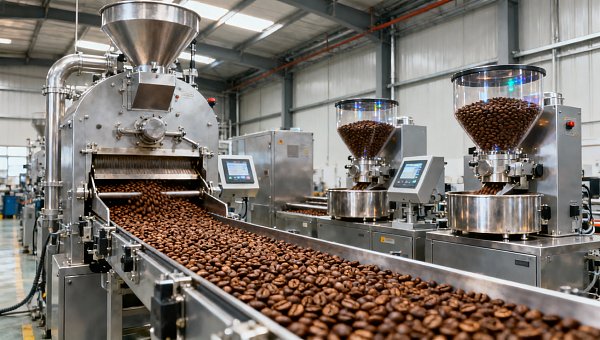
Processing equipment makers — particularly those supplying roasting ovens, precision grinders, nitrogen-flushed packaging lines, and AI-powered optical sorters — are seeing renewed inquiry volume. Demand is driven both by domestic capacity upgrades to handle diversified bean profiles and by export-oriented orders from African processors seeking turnkey production lines.
Logistics and Certification Service Providers
Supply chain service enterprises, including third-party inspection agencies and conformity assessment bodies, need to prepare for increased demand for pre-shipment verification, residue testing, and ISO 22000-aligned facility audits — especially for cross-border projects involving Chinese-built automation deployed in African processing hubs.
Strategic Priorities for Equipment Suppliers and Buyers
Align Technical Specifications with Emerging Import Requirements
Equipment vendors targeting African clients should ensure their smart production line documentation explicitly references compatibility with variable green bean characteristics — e.g., moisture content range (8–12.5%), density variance, and post-harvest processing methods (washed, natural, honey). Tender submissions must reflect this adaptability.
Verify Export Compliance Pathways for Dual-Market Deployment
Chinese manufacturers supplying integrated food processing systems to Africa must confirm whether CE, ISO/IEC 80079, or regional certifications (e.g., SONCAP, PVoC) apply — in addition to meeting China’s own export control and dual-use technology review thresholds for automation components.
Prepare for Accelerated Procurement Timelines
Overseas buyers are already initiating early technical dialogues with Chinese equipment suppliers, anticipating delivery windows ahead of the July 20, 2026 import commencement date. Suppliers should review production capacity, component sourcing lead times (especially for PLCs, servo motors, and food-grade sensors), and commissioning support availability.
Industry Observation: A Catalyst for Integrated Capacity Building
Analysis shows this policy is more than a tariff or quota adjustment — it functions as an upstream enabler for end-to-end food processing ecosystem development. Observably, it incentivizes synchronized upgrades: African producers invest in post-harvest infrastructure to meet Chinese import thresholds, while Chinese equipment firms respond with modular, digitally configurable lines. What deserves closer attention is the emerging co-dependency between origin-country compliance readiness and the technical responsiveness of exporting machinery vendors — suggesting longer-term shifts in how global food equipment tenders define ‘fitness for purpose’.
Conclusion: Regulatory Shift as Infrastructure Signal
This import authorization does not guarantee immediate volume growth, but it serves as a clear regulatory signal that reshapes procurement expectations across two continents. For equipment stakeholders, its primary value lies in de-risking long-lead investments and enabling structured dialogue between African raw material handlers and Chinese industrial automation providers — turning policy into actionable engineering timelines.
Source Attribution and Verification Notes
This article is generated exclusively from the user-provided title, event date (May 28, 2026), and summary text. No external data, official links, or proprietary reports were referenced. Specific official source links were not provided in the input and should be verified continuously. Stakeholders are advised to monitor forthcoming implementation guidelines from China’s General Administration of Customs (GACC), the Ministry of Agriculture and Rural Affairs (MARA), and bilateral agricultural cooperation frameworks for details on certification pathways, laboratory accreditation requirements, and phased rollout schedules.
Get weekly intelligence in your inbox.
No noise. No sponsored content. Pure intelligence.
 Oct 24, 2026Tesla Q3 2026 Storage Deployments Rank Second Highest as Revenue Falls 16%Tesla Q3 2026 Storage Deployments Rank Second Highest as Revenue Falls 16%
 Oct 24, 2026Freight Forwarding Services Pricing: Comparing Quotes Beyond Base RatesFreight Forwarding Services Pricing: Comparing Quotes Beyond Base Rates
 Oct 23, 2026IndexBox Issues Off-Grid Solar Outlook to 2035, Forecasting 8.2% CAGRIndexBox Issues Off-Grid Solar Outlook to 2035, Forecasting 8.2% CAGR
 Oct 23, 2026NSF/ANSI 49 Biosafety Cabinets: Product Certification vs. Field TestingNSF/ANSI 49 Biosafety Cabinets: Product Certification vs. Field Testing
 Oct 22, 2026Mitsubishi Electric Develops Industry-First Humanoid Robot–CNC Machining SystemMitsubishi Electric Develops Industry-First Humanoid Robot–CNC Machining System
 Oct 22, 2026Aerospace Aluminum Machining: How to Control Distortion in Thin-Wall PartsAerospace Aluminum Machining: How to Control Distortion in Thin-Wall Parts
 Oct 21, 2026Genesis Energy commissions 200 MWh battery storage system at HuntlyGenesis Energy commissions 200 MWh battery storage system at Huntly
 Oct 21, 2026Buying AMI Smart Meters Wholesale: Compatibility Checks and Total CostsBuying AMI Smart Meters Wholesale: Compatibility Checks and Total Costs
 Oct 20, 2026Werner Enterprises Issues Q3 Earnings Warning as Costs RiseWerner Enterprises Issues Q3 Earnings Warning as Costs Rise
 Oct 20, 2026Are Digital Twins Viable for SMEs? Costs, Use Cases, and Data RequirementsAre Digital Twins Viable for SMEs? Costs, Use Cases, and Data Requirements
 Oct 19, 2026Choosing a Wholesale Servo Motor Exporter: Traceability and Warranty ChecksChoosing a Wholesale Servo Motor Exporter: Traceability and Warranty Checks
 Oct 18, 2026Syringe Manufacturing Equipment: Evaluating Throughput and Assembly AccuracySyringe Manufacturing Equipment: Evaluating Throughput and Assembly Accuracy
 Oct 17, 2026Air Freight Forwarding Services: How to Compare Quotes for Urgent ShipmentsAir Freight Forwarding Services: How to Compare Quotes for Urgent Shipments
 Oct 16, 2026Wholesale Solar Panels: How to Compare Bulk Quotes by Total Landed CostWholesale Solar Panels: How to Compare Bulk Quotes by Total Landed Cost
 Oct 15, 2026Supply Chain Intelligence for Sourcing: How to Vet New SuppliersSupply Chain Intelligence for Sourcing: How to Vet New Suppliers
 Oct 14, 2026How energy costs shape smart manufacturing investment in EuropeHow energy costs shape smart manufacturing investment in Europe
 Oct 14, 2026How skills shortages slow smart manufacturing in Southeast AsiaHow skills shortages slow smart manufacturing in Southeast Asia
 Oct 14, 2026How CNC wire-cut machining maintains tight tolerances in thick partsHow CNC wire-cut machining maintains tight tolerances in thick parts
 Oct 14, 2026Can automated feeding stabilize metal forming in smart factories?Can automated feeding stabilize metal forming in smart factories?
 Oct 14, 2026Can CT inspection detect internal defects in metal additive parts?Can CT inspection detect internal defects in metal additive parts?
 Oct 14, 2026When does additive manufacturing reduce lead time for spare parts?When does additive manufacturing reduce lead time for spare parts?
 Oct 14, 2026How production volume affects ROI on an automated painting lineHow production volume affects ROI on an automated painting line
 Oct 14, 2026What data does manufacturing bottleneck analysis consulting need?What data does manufacturing bottleneck analysis consulting need?
 Oct 14, 2026When should you hire a consultant for manufacturing bottlenecks?When should you hire a consultant for manufacturing bottlenecks?
 Oct 14, 2026What Are Electronics Exporters' Top Supply Chain Resilience Gaps in 2026?What Are Electronics Exporters' Top Supply Chain Resilience Gaps in 2026?
 Oct 14, 2026How Do You Measure AI Adoption Maturity in a Traditional Factory?How Do You Measure AI Adoption Maturity in a Traditional Factory?
 Oct 14, 2026Are Chinese AI-Assisted Surgical Devices Gaining Global Trust?Are Chinese AI-Assisted Surgical Devices Gaining Global Trust?