China to Allow Coffee Bean Imports from African Diplomatic Partners Starting July 20, 2026
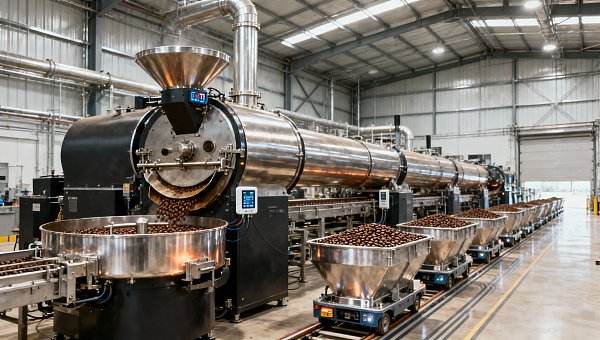
Starting July 20, 2026, China will permit the import of coffee beans from African countries with which it maintains diplomatic relations—provided they meet specified phytosanitary and quality requirements. This policy shift is expected to stimulate demand in Africa for food processing equipment, particularly in roasting, extraction, filling, and smart warehousing systems—creating ripple effects for exporters of CNC-machined components, commercial IoT temperature-control modules, and AGV-based warehouse robotics.
Event Overview
Effective July 20, 2026, China will authorize imports of coffee beans from African nations with formal diplomatic ties to China, subject to compliance with Chinese regulatory standards. No further implementation details—including list of eligible countries, certification procedures, or tariff treatment—have been publicly released as of the announcement date.
Industries Affected by This Policy
Food Processing Equipment Manufacturers
These companies may see increased procurement interest from African roasters and packers seeking to scale local value addition. Impact centers on demand for customized production-line components (e.g., CNC-machined hoppers, drum assemblies), commercial-grade IoT temperature controllers for roast profiling, and AGV-integrated sorting systems for post-processing logistics.
Export-Oriented Industrial Automation Suppliers
Firms supplying smart warehouse solutions—including AGV navigation modules, fleet management software, and modular conveyor interfaces—may face rising inbound inquiries from African agri-processing hubs. The policy does not directly mandate infrastructure upgrades, but creates a structural incentive for downstream investment in automation-capable facilities.
Component-Level CNC Service Providers
Contract manufacturers offering precision machining for food-grade stainless-steel parts (e.g., grinder burrs, pressure valves, sealing flanges) could experience expanded tender opportunities—especially where African processors seek localized spare-part supply chains to reduce lead times.
Commercial IoT Hardware Developers
Vendors of embedded temperature/humidity sensing modules, cloud-connected roast-monitoring dashboards, and energy-efficient thermal control units may encounter new market entry pathways—particularly if African partners prioritize remote calibration and predictive maintenance capabilities aligned with limited on-site technical capacity.
What Relevant Enterprises or Practitioners Should Focus On
Monitor official implementation guidance from GACC and AQSIQ
The General Administration of Customs of China (GACC) and the Administration of Quality Supervision, Inspection and Quarantine (AQSIQ) are expected to issue detailed eligibility criteria, inspection protocols, and documentation requirements ahead of the July 20, 2026 effective date. These documents will define which African countries qualify and what conformity assessments apply.
Track early adopter activity in priority markets
Initial demand is likely concentrated in African countries with existing coffee export infrastructure and bilateral trade facilitation mechanisms—such as Ethiopia, Kenya, and Rwanda. Exporters should observe pilot shipments, customs clearance patterns, and local tender announcements in these jurisdictions during Q3–Q4 2026.
Distinguish policy signal from near-term procurement volume
While the regulation enables market access, actual equipment procurement depends on financing availability, local regulatory approvals for new facilities, and buyer readiness. Analysis shows this measure functions primarily as an enabling framework—not an immediate demand trigger—meaning sales cycles may extend beyond 12–18 months.
Prepare technical documentation for African regulatory alignment
Equipment suppliers should begin compiling CE-equivalent certifications, food-contact material declarations, and multilingual operation manuals. Some African national standards bodies require pre-shipment verification; early engagement with local conformity assessment partners is advisable.
Editorial Observation / Industry Perspective
Observably, this policy represents a targeted trade facilitation measure—not a broad commodity liberalization initiative. Its significance lies less in immediate import volumes and more in its role as a catalyst for upstream industrial upgrading in partner countries. From an industry perspective, it signals growing Chinese institutional support for value-chain localization in African agri-processing, potentially encouraging parallel investments in packaging, cold chain, and digital traceability infrastructure. However, current impact remains contingent on follow-up regulatory clarity and domestic implementation capacity across recipient countries.
In summary, the July 20, 2026 coffee bean import authorization is a procedural milestone with indirect but structurally meaningful implications for industrial equipment exporters. It is best understood not as a near-term sales driver, but as a long-term indicator of shifting infrastructure development priorities in Africa’s coffee sector—and a prompt for proactive market-readiness planning among relevant technology suppliers.
Source: Official announcement issued by the General Administration of Customs of China (GACC), dated 2026. Further details—including country eligibility lists and technical specifications—are pending official publication and remain under observation.
Get weekly intelligence in your inbox.
No noise. No sponsored content. Pure intelligence.
 Oct 24, 2026Tesla Q3 2026 Storage Deployments Rank Second Highest as Revenue Falls 16%Tesla Q3 2026 Storage Deployments Rank Second Highest as Revenue Falls 16%
 Oct 24, 2026Freight Forwarding Services Pricing: Comparing Quotes Beyond Base RatesFreight Forwarding Services Pricing: Comparing Quotes Beyond Base Rates
 Oct 23, 2026IndexBox Issues Off-Grid Solar Outlook to 2035, Forecasting 8.2% CAGRIndexBox Issues Off-Grid Solar Outlook to 2035, Forecasting 8.2% CAGR
 Oct 23, 2026NSF/ANSI 49 Biosafety Cabinets: Product Certification vs. Field TestingNSF/ANSI 49 Biosafety Cabinets: Product Certification vs. Field Testing
 Oct 22, 2026Mitsubishi Electric Develops Industry-First Humanoid Robot–CNC Machining SystemMitsubishi Electric Develops Industry-First Humanoid Robot–CNC Machining System
 Oct 22, 2026Aerospace Aluminum Machining: How to Control Distortion in Thin-Wall PartsAerospace Aluminum Machining: How to Control Distortion in Thin-Wall Parts
 Oct 21, 2026Genesis Energy commissions 200 MWh battery storage system at HuntlyGenesis Energy commissions 200 MWh battery storage system at Huntly
 Oct 21, 2026Buying AMI Smart Meters Wholesale: Compatibility Checks and Total CostsBuying AMI Smart Meters Wholesale: Compatibility Checks and Total Costs
 Oct 20, 2026Werner Enterprises Issues Q3 Earnings Warning as Costs RiseWerner Enterprises Issues Q3 Earnings Warning as Costs Rise
 Oct 20, 2026Are Digital Twins Viable for SMEs? Costs, Use Cases, and Data RequirementsAre Digital Twins Viable for SMEs? Costs, Use Cases, and Data Requirements
 Oct 19, 2026Choosing a Wholesale Servo Motor Exporter: Traceability and Warranty ChecksChoosing a Wholesale Servo Motor Exporter: Traceability and Warranty Checks
 Oct 18, 2026Syringe Manufacturing Equipment: Evaluating Throughput and Assembly AccuracySyringe Manufacturing Equipment: Evaluating Throughput and Assembly Accuracy
 Oct 17, 2026Air Freight Forwarding Services: How to Compare Quotes for Urgent ShipmentsAir Freight Forwarding Services: How to Compare Quotes for Urgent Shipments
 Oct 16, 2026Wholesale Solar Panels: How to Compare Bulk Quotes by Total Landed CostWholesale Solar Panels: How to Compare Bulk Quotes by Total Landed Cost
 Oct 15, 2026Supply Chain Intelligence for Sourcing: How to Vet New SuppliersSupply Chain Intelligence for Sourcing: How to Vet New Suppliers
 Oct 14, 2026How energy costs shape smart manufacturing investment in EuropeHow energy costs shape smart manufacturing investment in Europe
 Oct 14, 2026How skills shortages slow smart manufacturing in Southeast AsiaHow skills shortages slow smart manufacturing in Southeast Asia
 Oct 14, 2026How CNC wire-cut machining maintains tight tolerances in thick partsHow CNC wire-cut machining maintains tight tolerances in thick parts
 Oct 14, 2026Can automated feeding stabilize metal forming in smart factories?Can automated feeding stabilize metal forming in smart factories?
 Oct 14, 2026Can CT inspection detect internal defects in metal additive parts?Can CT inspection detect internal defects in metal additive parts?
 Oct 14, 2026When does additive manufacturing reduce lead time for spare parts?When does additive manufacturing reduce lead time for spare parts?
 Oct 14, 2026How production volume affects ROI on an automated painting lineHow production volume affects ROI on an automated painting line
 Oct 14, 2026What data does manufacturing bottleneck analysis consulting need?What data does manufacturing bottleneck analysis consulting need?
 Oct 14, 2026When should you hire a consultant for manufacturing bottlenecks?When should you hire a consultant for manufacturing bottlenecks?
 Oct 14, 2026What Are Electronics Exporters' Top Supply Chain Resilience Gaps in 2026?What Are Electronics Exporters' Top Supply Chain Resilience Gaps in 2026?
 Oct 14, 2026How Do You Measure AI Adoption Maturity in a Traditional Factory?How Do You Measure AI Adoption Maturity in a Traditional Factory?
 Oct 14, 2026Are Chinese AI-Assisted Surgical Devices Gaining Global Trust?Are Chinese AI-Assisted Surgical Devices Gaining Global Trust?