EU Raises Anti-Dumping Duties on Chinese Steel to 50%
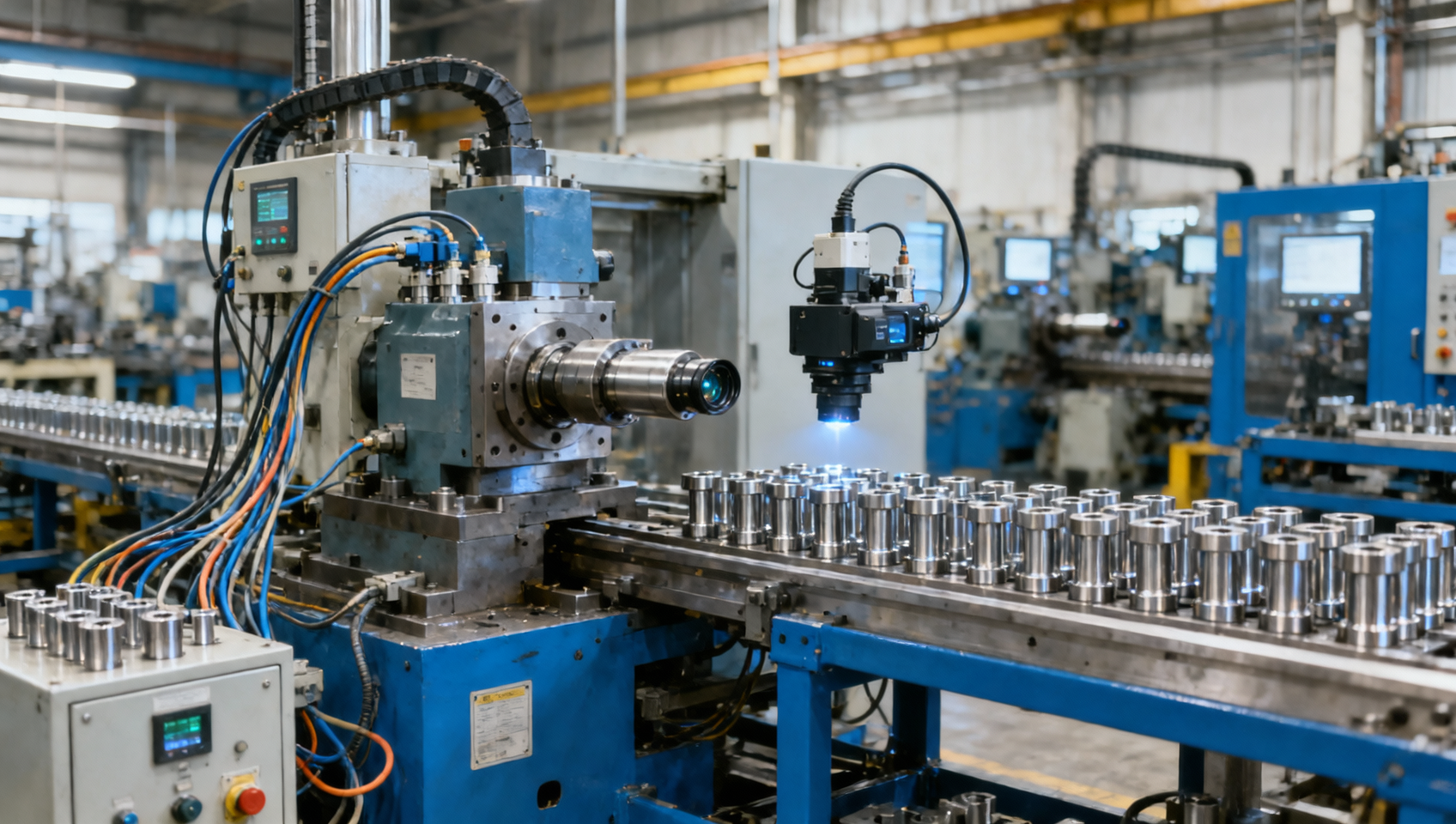
On 21 May 2026, the European Union announced an increase in anti-dumping duties on selected Chinese steel products to 50%. This measure directly affects exporters in CNC machining, factory automation, and industrial materials—particularly suppliers of structural components, precision cast/forged parts, and specialty steels used in automated production lines. The move signals heightened compliance and pricing risks for firms engaged in EU-bound industrial material trade.
Event Overview
The European Commission officially imposed increased anti-dumping duties—up to 50%—on certain categories of steel imports from China, effective 21 May 2026. The decision was publicly announced on that date and applies to products covered under the relevant EU investigation scope. No further details regarding product codes, implementation timelines beyond the announcement date, or exemptions were disclosed in the initial release.
Industries Affected by Segment
Direct Exporters (CNC Machining & Industrial Component Suppliers)
These firms face immediate margin pressure due to higher landed costs in the EU. Since many quote ex-works or FOB terms, the duty is typically borne by the EU importer—but commercial negotiations often shift cost-sharing to the exporter to retain competitiveness. Impact manifests in revised quotations, delayed order confirmations, and tighter contract review cycles for EU-bound shipments.
Automation Equipment Integrators & OEMs Sourcing from China
Firms assembling factory automation systems using Chinese-sourced structural frames, guide rails, or load-bearing chassis may encounter supply chain friction. Customs classification challenges arise when finished assemblies contain tariff-sensitive base materials—potentially triggering reclassification or origin verification requests at EU borders.
Specialty Steel Distributors & Material Service Centers
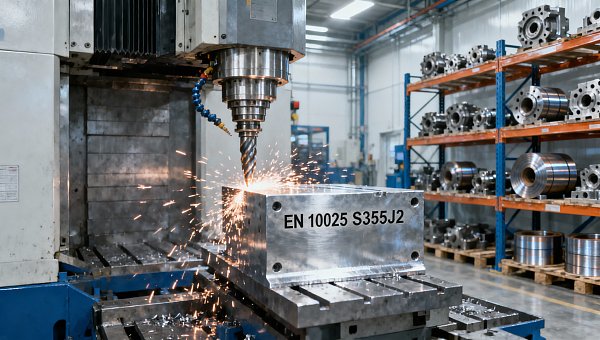
Entities supplying certified grades (e.g., EN 10025 S355J2, EN 10270-2 spring wire) sourced from Chinese mills must now verify traceability documentation more rigorously. EU importers increasingly require mill test reports, heat number logs, and third-party origin attestations—not just CE marking—to pre-clear shipments amid heightened scrutiny.
What Enterprises Should Monitor and Do Now
Track official EU notices for product-specific HS code coverage
The 50% rate applies only to designated steel products identified in the Commission’s regulation. Exporters should cross-check their actual export HS codes against the published annexes—not assume all steel-related items are included. Pending updates may narrow or expand coverage.
Review Incoterms and contractual liability clauses with EU partners
Many existing contracts use DAP or DDU terms that allocate customs duty responsibility ambiguously. Current practice suggests revising new agreements to clarify whether duties fall to buyer or seller—and updating internal pricing models accordingly, especially for recurring B2B deliveries.
Prepare documentation packages for origin verification
EU customs authorities are likely to request additional proof of origin, including supplier declarations, manufacturing process records, and logistics chain evidence. Proactive compilation of these files—rather than reactive submission—reduces clearance delays and avoids potential post-import audits.
Assess feasibility of partial sourcing diversification—not as a long-term pivot, but as short-term risk mitigation
For high-value, low-volume components (e.g., custom-machined brackets or robotic arm housings), evaluating alternative regional suppliers—even with modest cost premiums—may preserve delivery reliability during the initial 6–12 months of policy enforcement.
Editorial Observation / Industry Perspective
Observably, this measure functions less as a finalized trade barrier and more as a calibrated signal: it targets specific value-added steel applications rather than bulk commodity grades, suggesting selective pressure on mid-to-high-tier manufacturing exports. Analysis shows the timing aligns with upcoming EU Carbon Border Adjustment Mechanism (CBAM) phase-ins, implying convergence of trade and sustainability policy tools. From an industry standpoint, the 50% threshold appears designed to trigger renegotiation—not exclusion—making commercial dialogue with EU partners more critical than ever. It is not yet a systemic disruption, but a structural recalibration point requiring sustained attention.
Conclusion
This duty adjustment marks a material shift in the regulatory environment for industrial material exporters serving the EU market. It does not represent an across-the-board restriction, but rather a targeted escalation affecting precision-engineered steel components and integrated automation hardware. Enterprises are advised to treat it as an operational compliance inflection—not a strategic exit signal—and prioritize documentation readiness, contractual clarity, and granular product-code mapping over broad assumptions about market access.
Information Sources
Primary source: Official notice published by the European Commission on 21 May 2026.
Note: Product scope, duration of measures, and possible review timelines remain subject to official updates and are under active monitoring.
Get weekly intelligence in your inbox.
No noise. No sponsored content. Pure intelligence.
 Oct 24, 2026Tesla Q3 2026 Storage Deployments Rank Second Highest as Revenue Falls 16%Tesla Q3 2026 Storage Deployments Rank Second Highest as Revenue Falls 16%
 Oct 24, 2026Freight Forwarding Services Pricing: Comparing Quotes Beyond Base RatesFreight Forwarding Services Pricing: Comparing Quotes Beyond Base Rates
 Oct 23, 2026IndexBox Issues Off-Grid Solar Outlook to 2035, Forecasting 8.2% CAGRIndexBox Issues Off-Grid Solar Outlook to 2035, Forecasting 8.2% CAGR
 Oct 23, 2026NSF/ANSI 49 Biosafety Cabinets: Product Certification vs. Field TestingNSF/ANSI 49 Biosafety Cabinets: Product Certification vs. Field Testing
 Oct 22, 2026Mitsubishi Electric Develops Industry-First Humanoid Robot–CNC Machining SystemMitsubishi Electric Develops Industry-First Humanoid Robot–CNC Machining System
 Oct 22, 2026Aerospace Aluminum Machining: How to Control Distortion in Thin-Wall PartsAerospace Aluminum Machining: How to Control Distortion in Thin-Wall Parts
 Oct 21, 2026Genesis Energy commissions 200 MWh battery storage system at HuntlyGenesis Energy commissions 200 MWh battery storage system at Huntly
 Oct 21, 2026Buying AMI Smart Meters Wholesale: Compatibility Checks and Total CostsBuying AMI Smart Meters Wholesale: Compatibility Checks and Total Costs
 Oct 20, 2026Werner Enterprises Issues Q3 Earnings Warning as Costs RiseWerner Enterprises Issues Q3 Earnings Warning as Costs Rise
 Oct 20, 2026Are Digital Twins Viable for SMEs? Costs, Use Cases, and Data RequirementsAre Digital Twins Viable for SMEs? Costs, Use Cases, and Data Requirements
 Oct 19, 2026Choosing a Wholesale Servo Motor Exporter: Traceability and Warranty ChecksChoosing a Wholesale Servo Motor Exporter: Traceability and Warranty Checks
 Oct 18, 2026Syringe Manufacturing Equipment: Evaluating Throughput and Assembly AccuracySyringe Manufacturing Equipment: Evaluating Throughput and Assembly Accuracy
 Oct 17, 2026Air Freight Forwarding Services: How to Compare Quotes for Urgent ShipmentsAir Freight Forwarding Services: How to Compare Quotes for Urgent Shipments
 Oct 16, 2026Wholesale Solar Panels: How to Compare Bulk Quotes by Total Landed CostWholesale Solar Panels: How to Compare Bulk Quotes by Total Landed Cost
 Oct 15, 2026Supply Chain Intelligence for Sourcing: How to Vet New SuppliersSupply Chain Intelligence for Sourcing: How to Vet New Suppliers
 Oct 14, 2026How energy costs shape smart manufacturing investment in EuropeHow energy costs shape smart manufacturing investment in Europe
 Oct 14, 2026How skills shortages slow smart manufacturing in Southeast AsiaHow skills shortages slow smart manufacturing in Southeast Asia
 Oct 14, 2026How CNC wire-cut machining maintains tight tolerances in thick partsHow CNC wire-cut machining maintains tight tolerances in thick parts
 Oct 14, 2026Can automated feeding stabilize metal forming in smart factories?Can automated feeding stabilize metal forming in smart factories?
 Oct 14, 2026Can CT inspection detect internal defects in metal additive parts?Can CT inspection detect internal defects in metal additive parts?
 Oct 14, 2026When does additive manufacturing reduce lead time for spare parts?When does additive manufacturing reduce lead time for spare parts?
 Oct 14, 2026How production volume affects ROI on an automated painting lineHow production volume affects ROI on an automated painting line
 Oct 14, 2026What data does manufacturing bottleneck analysis consulting need?What data does manufacturing bottleneck analysis consulting need?
 Oct 14, 2026When should you hire a consultant for manufacturing bottlenecks?When should you hire a consultant for manufacturing bottlenecks?
 Oct 14, 2026What Are Electronics Exporters' Top Supply Chain Resilience Gaps in 2026?What Are Electronics Exporters' Top Supply Chain Resilience Gaps in 2026?
 Oct 14, 2026How Do You Measure AI Adoption Maturity in a Traditional Factory?How Do You Measure AI Adoption Maturity in a Traditional Factory?
 Oct 14, 2026Are Chinese AI-Assisted Surgical Devices Gaining Global Trust?Are Chinese AI-Assisted Surgical Devices Gaining Global Trust?