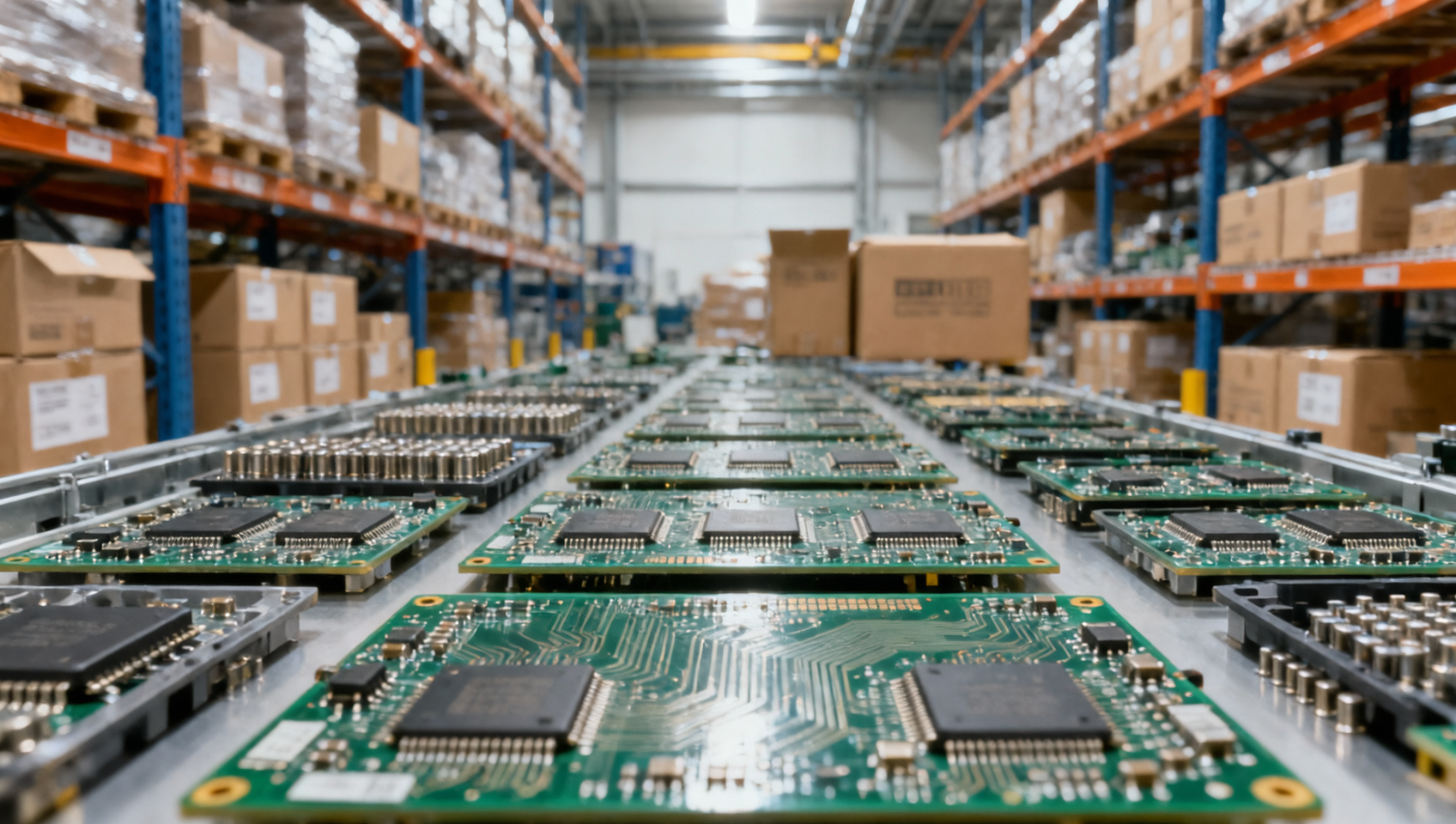
US Proposes USMCA Tariff Updates Targeting EV & Energy Storage Exports
On May 28, 2026, U.S. authorities disclosed plans to amend the United States–Mexico–Canada Agreement (USMCA) to impose additional tariffs on battery components failing to meet newly proposed critical mineral localization requirements. This development directly affects exports of Chinese-made battery energy storage systems, EV charging infrastructure, and associated power electronics destined for assembly facilities in Mexico.
Confirmed Policy Development
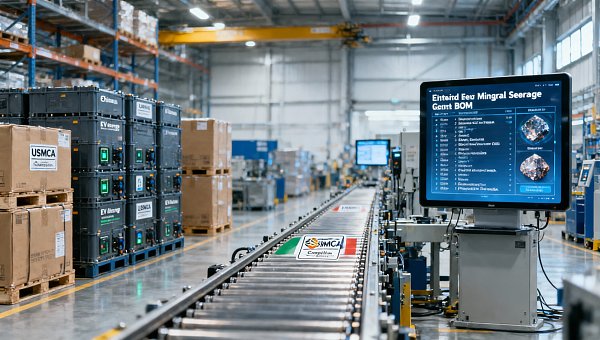
On May 28, 2026, U.S. officials announced an initiative to revise USMCA provisions concerning tariff treatment of battery components. The proposed amendment would apply supplementary duties to components that do not satisfy specified thresholds for regional content—specifically, the proportion of critical minerals sourced or processed within the USMCA territory. This measure targets battery assemblies integrated into energy storage systems, electric vehicle charging equipment, and related power electronics shipped from China to Mexican manufacturing sites for final assembly.
Impact Across Supply Chain Roles
Export-oriented trading companies
These firms face immediate exposure as their current export model—shipping fully assembled or semi-finished battery storage units and EV chargers to Mexico for light assembly—may trigger the new tariff liability. Customs classification, origin documentation, and traceability of mineral inputs will become essential for tariff eligibility assessment.
Raw material procurement enterprises
Suppliers sourcing lithium, cobalt, nickel, graphite, or manganese must now evaluate whether upstream extraction, refining, or processing occurs within USMCA jurisdictions—or whether alternative regional partnerships can fulfill localization thresholds. Documentation of mineral provenance will shift from voluntary to mandatory compliance evidence.
Electrochemical and power electronics manufacturers
Manufacturers producing battery modules, bidirectional converters, or grid-tied inverters must reassess bill-of-materials (BOM) composition and supplier certifications. Components such as cathode active materials, electrolyte additives, or IGBT modules may require requalification under revised USMCA origin rules—even if final assembly occurs in Mexico.
Supply chain logistics and compliance service providers
Third-party certification bodies, customs brokers, and regulatory consultants will see rising demand for mineral traceability audits, USMCA origin verification, and tariff classification advisory services—particularly for hybrid supply chains spanning Asia, North America, and offshore processing hubs.
Key Actions for Exporters & Manufacturers
Review USMCA origin qualification criteria for battery subsystems
Assess whether existing BOMs—including cathodes, anodes, electrolytes, and power semiconductors—meet projected regional value content and critical mineral processing thresholds. Pay particular attention to ‘transformation’ definitions that determine where value addition is recognized.
Initiate early engagement with Mexican assembly partners on localization readiness
Coordinate with Mexican contract manufacturers to map current mineral input sources, identify gaps in regional content, and explore joint certification pathways—especially where shared sourcing or co-investment in regional refining could support compliance.
Evaluate feasibility of localized certification and testing
Determine whether key components (e.g., battery management systems, liquid-cooled enclosures, or grid-synchronization firmware) require revalidation under Mexican or U.S.-recognized standards (e.g., UL 1973, IEEE 1547-2018, NOM-001-SEDE-2018) to maintain tariff eligibility post-amendment.
Update export documentation and traceability systems
Implement mineral-specific supply chain mapping tools capable of generating auditable records—from mine-to-module—for critical minerals, including country of extraction, refining location, and percentage of regional processing. ERP and PLM systems may require integration with blockchain-enabled traceability platforms.
Industry Perspective: A Strategic Shift Beyond Tariff Avoidance
Analysis shows this proposal signals a broader recalibration of North American industrial policy—not merely a tariff adjustment, but a deliberate acceleration of regional battery ecosystem development. From an industry perspective, the emphasis on critical mineral localization reflects growing convergence between trade enforcement and strategic resource security frameworks. What deserves closer attention is the compressed timeline for compliance: unlike legacy origin rules, these thresholds are likely to be enforced at the component level upon entry into Mexico, requiring real-time documentation rather than retrospective certification. Observably, manufacturers relying on single-source Asian mineral suppliers face higher operational risk unless they diversify upstream partnerships across Canada, U.S., or approved third countries under USMCA’s cumulation provisions.
Strategic Implications for Global Clean Energy Supply Chains
This development underscores a structural evolution in how trade agreements govern advanced energy technologies: compliance is no longer defined solely by final assembly location, but by granular control over strategic inputs. For exporters, it marks a transition from cost-driven offshoring to resilience-oriented nearshoring—with localization no longer optional, but a prerequisite for market access. While the final rule text and implementation timeline remain pending, the direction is unambiguous: supply chain transparency, mineral sovereignty, and certified regional value addition are now central pillars of North American clean tech trade policy.
Source Information & Ongoing Monitoring
This article is based exclusively on the user-provided title, event date (May 28, 2026), and summary description. Specific official source links were not provided in the input and should be verified continuously. Stakeholders are advised to monitor updates from the Office of the United States Trade Representative (USTR), Mexico’s Secretaría de Economía (SE), and Canada’s Global Affairs Canada—particularly regarding draft regulatory text, public comment periods, transitional provisions, and guidance on mineral traceability methodologies. Continued observation is warranted for sector-specific interpretations, certification body accreditation announcements, and emerging industry consortium responses.
Get weekly intelligence in your inbox.
No noise. No sponsored content. Pure intelligence.
 Oct 24, 2026Tesla Q3 2026 Storage Deployments Rank Second Highest as Revenue Falls 16%Tesla Q3 2026 Storage Deployments Rank Second Highest as Revenue Falls 16%
 Oct 24, 2026Freight Forwarding Services Pricing: Comparing Quotes Beyond Base RatesFreight Forwarding Services Pricing: Comparing Quotes Beyond Base Rates
 Oct 23, 2026IndexBox Issues Off-Grid Solar Outlook to 2035, Forecasting 8.2% CAGRIndexBox Issues Off-Grid Solar Outlook to 2035, Forecasting 8.2% CAGR
 Oct 23, 2026NSF/ANSI 49 Biosafety Cabinets: Product Certification vs. Field TestingNSF/ANSI 49 Biosafety Cabinets: Product Certification vs. Field Testing
 Oct 22, 2026Mitsubishi Electric Develops Industry-First Humanoid Robot–CNC Machining SystemMitsubishi Electric Develops Industry-First Humanoid Robot–CNC Machining System
 Oct 22, 2026Aerospace Aluminum Machining: How to Control Distortion in Thin-Wall PartsAerospace Aluminum Machining: How to Control Distortion in Thin-Wall Parts
 Oct 21, 2026Genesis Energy commissions 200 MWh battery storage system at HuntlyGenesis Energy commissions 200 MWh battery storage system at Huntly
 Oct 21, 2026Buying AMI Smart Meters Wholesale: Compatibility Checks and Total CostsBuying AMI Smart Meters Wholesale: Compatibility Checks and Total Costs
 Oct 20, 2026Werner Enterprises Issues Q3 Earnings Warning as Costs RiseWerner Enterprises Issues Q3 Earnings Warning as Costs Rise
 Oct 20, 2026Are Digital Twins Viable for SMEs? Costs, Use Cases, and Data RequirementsAre Digital Twins Viable for SMEs? Costs, Use Cases, and Data Requirements
 Oct 19, 2026Choosing a Wholesale Servo Motor Exporter: Traceability and Warranty ChecksChoosing a Wholesale Servo Motor Exporter: Traceability and Warranty Checks
 Oct 18, 2026Syringe Manufacturing Equipment: Evaluating Throughput and Assembly AccuracySyringe Manufacturing Equipment: Evaluating Throughput and Assembly Accuracy
 Oct 17, 2026Air Freight Forwarding Services: How to Compare Quotes for Urgent ShipmentsAir Freight Forwarding Services: How to Compare Quotes for Urgent Shipments
 Oct 16, 2026Wholesale Solar Panels: How to Compare Bulk Quotes by Total Landed CostWholesale Solar Panels: How to Compare Bulk Quotes by Total Landed Cost
 Oct 15, 2026Supply Chain Intelligence for Sourcing: How to Vet New SuppliersSupply Chain Intelligence for Sourcing: How to Vet New Suppliers
 Oct 14, 2026How energy costs shape smart manufacturing investment in EuropeHow energy costs shape smart manufacturing investment in Europe
 Oct 14, 2026How skills shortages slow smart manufacturing in Southeast AsiaHow skills shortages slow smart manufacturing in Southeast Asia
 Oct 14, 2026How CNC wire-cut machining maintains tight tolerances in thick partsHow CNC wire-cut machining maintains tight tolerances in thick parts
 Oct 14, 2026Can automated feeding stabilize metal forming in smart factories?Can automated feeding stabilize metal forming in smart factories?
 Oct 14, 2026Can CT inspection detect internal defects in metal additive parts?Can CT inspection detect internal defects in metal additive parts?
 Oct 14, 2026When does additive manufacturing reduce lead time for spare parts?When does additive manufacturing reduce lead time for spare parts?
 Oct 14, 2026How production volume affects ROI on an automated painting lineHow production volume affects ROI on an automated painting line
 Oct 14, 2026What data does manufacturing bottleneck analysis consulting need?What data does manufacturing bottleneck analysis consulting need?
 Oct 14, 2026When should you hire a consultant for manufacturing bottlenecks?When should you hire a consultant for manufacturing bottlenecks?
 Oct 14, 2026What Are Electronics Exporters' Top Supply Chain Resilience Gaps in 2026?What Are Electronics Exporters' Top Supply Chain Resilience Gaps in 2026?
 Oct 14, 2026How Do You Measure AI Adoption Maturity in a Traditional Factory?How Do You Measure AI Adoption Maturity in a Traditional Factory?
 Oct 14, 2026Are Chinese AI-Assisted Surgical Devices Gaining Global Trust?Are Chinese AI-Assisted Surgical Devices Gaining Global Trust?