ACE HTS Checks to Affect U.S. Electronics Imports
Beginning June 2, 2026, U.S. Customs and Border Protection will activate the F865 error code in the Automated Commercial Environment system to enforce matching checks among HTS codes, importer qualifications, industry filings, and business licenses. The change deserves attention from electronic components exporters, IoT device suppliers, consumer electronics companies, medical device businesses, chemical product traders, and related supply chain service providers because non-matching information may directly affect import declaration acceptance and delivery timing into the U.S. market.
Event Overview
According to the provided information, from June 2, 2026, U.S. Customs and Border Protection will enable the F865 error code in the ACE system. The system will conduct mandatory validation of whether the declared HTS code matches the importer’s qualifications, industry filing status, and business license information.
If the submitted information does not match, the import declaration will be automatically rejected. The available information also states that there will be no correction channel for the rejected declaration under this validation mechanism.
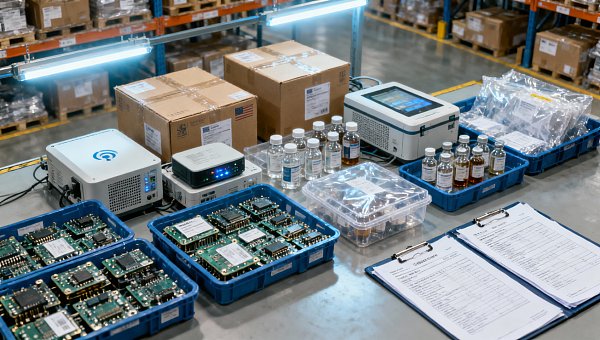
The scope highlighted in the information includes IoT devices, consumer electronics, medical devices, and chemical products. The policy directly affects the compliance and timeliness of shipments from Chinese electronic components exporters to customers in the United States.
Which Segments May Be Affected
Direct Export and Import Trading Companies
Direct trading companies are likely to be affected because import declarations depend on the consistency of HTS codes and importer-related credentials. If the HTS classification, importer qualification, industry filing, or license information does not align, the ACE system may reject the declaration automatically.
From an industry perspective, the main impact for direct trade companies is not limited to document preparation. It may also affect customs clearance timing, shipment handover, and customer delivery commitments for electronic components and related products entering the U.S. market.
Electronic Components Suppliers Serving U.S. Customers
Chinese electronic components exporters are specifically mentioned in the provided information as being directly affected in terms of compliance and delivery timeliness. These suppliers may need to pay closer attention to whether the products they ship to the United States are declared under HTS codes that match the importer’s business qualifications and licensing status.
Analysis shows that the practical risk lies in the front end of shipment planning: if documentation and importer information are not aligned before declaration, the issue may emerge only when the ACE system rejects the filing, leaving limited room for adjustment under the stated mechanism.
IoT Device and Consumer Electronics Businesses
IoT devices and consumer electronics are among the product categories highlighted in the information. These categories often involve electronic components, finished devices, and cross-border distribution arrangements, making declaration consistency especially important for shipments into the United States.
Observably, companies in these segments should pay attention to whether their U.S. import arrangements rely on multiple importers, distributors, or channel partners. The more parties involved in the declaration chain, the more important it becomes to confirm that HTS classification and importer credentials are aligned before shipment.
Medical Device and Chemical Product Companies
Medical devices and chemical products are also included in the stated focus areas. These product segments may involve additional industry filing or license considerations. Under the ACE validation change, mismatches between product classification and importer credentials may lead to declaration rejection.
It is more appropriate to understand this as a compliance-matching issue rather than a simple tariff code issue. For companies in these categories, the key concern is whether the declared product identity, HTS code, importer qualification, and license information are consistent in the import filing process.
Supply Chain Service Providers and Customs Documentation Teams
Freight forwarders, customs brokers, documentation teams, and supply chain service providers may face more front-loaded verification work. Because the information states that rejected declarations will not have a correction channel, service providers may need to help clients identify mismatches before formal submission.
Current more worthy attention is the shift from post-submission correction to pre-submission validation. Service providers supporting electronics, IoT, medical device, and chemical shipments into the United States may need to review workflows around HTS confirmation, importer data collection, and license document checks.
What Companies and Practitioners Should Monitor and How to Respond
Track Official Follow-up and System Implementation Details
Companies should continue to monitor further communications related to CBP, ACE system implementation, and the F865 error code. The available information confirms the effective date, the matching requirements, the automatic rejection result, and the stated absence of a correction channel, but operational details may still need close monitoring.
From an industry perspective, companies should avoid treating this as a one-time notice. The practical impact will depend on how the validation is applied during actual import declaration and how affected categories are identified in daily operations.
Review HTS Codes Against Importer Credentials Before Shipment
For shipments involving electronic components, IoT devices, consumer electronics, medical devices, or chemical products, companies should review whether the HTS code used in the declaration matches the importer’s qualifications, industry filings, and business licenses.
Analysis shows that the most practical response is to move the review earlier in the transaction process. Instead of checking only at the customs declaration stage, exporters and U.S. import partners should confirm classification and credential alignment before cargo dispatch, commercial documentation finalization, and delivery scheduling.
Identify High-Risk Product Categories and Business Links
Companies should distinguish between product lines that are more directly mentioned in the information and those with lower immediate exposure. IoT devices, consumer electronics, medical devices, chemical products, and electronic components supplied to the U.S. market should be treated as priority review areas.
What deserves closer attention now is the connection between product category and importer status. If a shipment is handled through a distributor, trading company, or alternate importer of record, companies should confirm whether that entity’s qualifications and licenses support the declared product category.
Prepare Communication and Delivery Contingency Plans
Because mismatched information may lead to automatic rejection of the declaration, companies should prepare communication plans with U.S. importers, customs brokers, logistics providers, and end customers. This is especially relevant for shipments with strict delivery windows or project-based supply schedules.
Observably, the immediate operational focus should be on reducing avoidable filing mismatches. Companies may need to clarify document ownership, define who confirms HTS classification, and determine how importer credential information is checked before the declaration is submitted.
Editorial View / Industry Observation
Analysis shows that this development is not simply a customs system update. It signals stricter alignment between product classification and importer compliance information within the ACE declaration process. For electronic components and related downstream product categories, the compliance burden may move further upstream into order execution, documentation review, and importer coordination.
It is more appropriate to understand this as an operational compliance signal that already has a defined effective date. The stated mechanism may produce concrete results once declarations with mismatched information are submitted and rejected by the ACE system.
From an industry perspective, the reason this issue requires continued attention is that the affected areas include both component-level exports and finished product categories. Companies involved in U.S.-bound electronics supply chains should not only focus on product shipment but also on whether the importer and declaration information are structurally consistent.
Conclusion
The activation of ACE F865 validation from June 2, 2026 highlights the growing importance of declaration consistency for U.S. imports involving electronic components, IoT devices, consumer electronics, medical devices, and chemical products. For Chinese electronic components exporters and related supply chain participants, the core issue is whether HTS codes, importer qualifications, industry filings, and licenses can match before submission.
Current more worthy attention is practical preparation rather than broad speculation. Companies should understand this development as a compliance validation change with direct operational implications for U.S.-bound import declarations, shipment timing, and coordination with import partners.
Information Source Statement
- Main source: U.S. Customs and Border Protection policy information related to the ACE system and F865 error code as provided in the briefing.
- Main source: Automated Commercial Environment import declaration validation information as provided in the briefing.
- Items requiring continued observation: further official implementation details, practical handling of rejected declarations, and the specific application scope across product categories and importer qualification scenarios.
Get weekly intelligence in your inbox.
No noise. No sponsored content. Pure intelligence.
 Oct 24, 2026Tesla Q3 2026 Storage Deployments Rank Second Highest as Revenue Falls 16%Tesla Q3 2026 Storage Deployments Rank Second Highest as Revenue Falls 16%
 Oct 24, 2026Freight Forwarding Services Pricing: Comparing Quotes Beyond Base RatesFreight Forwarding Services Pricing: Comparing Quotes Beyond Base Rates
 Oct 23, 2026IndexBox Issues Off-Grid Solar Outlook to 2035, Forecasting 8.2% CAGRIndexBox Issues Off-Grid Solar Outlook to 2035, Forecasting 8.2% CAGR
 Oct 23, 2026NSF/ANSI 49 Biosafety Cabinets: Product Certification vs. Field TestingNSF/ANSI 49 Biosafety Cabinets: Product Certification vs. Field Testing
 Oct 22, 2026Mitsubishi Electric Develops Industry-First Humanoid Robot–CNC Machining SystemMitsubishi Electric Develops Industry-First Humanoid Robot–CNC Machining System
 Oct 22, 2026Aerospace Aluminum Machining: How to Control Distortion in Thin-Wall PartsAerospace Aluminum Machining: How to Control Distortion in Thin-Wall Parts
 Oct 21, 2026Genesis Energy commissions 200 MWh battery storage system at HuntlyGenesis Energy commissions 200 MWh battery storage system at Huntly
 Oct 21, 2026Buying AMI Smart Meters Wholesale: Compatibility Checks and Total CostsBuying AMI Smart Meters Wholesale: Compatibility Checks and Total Costs
 Oct 20, 2026Werner Enterprises Issues Q3 Earnings Warning as Costs RiseWerner Enterprises Issues Q3 Earnings Warning as Costs Rise
 Oct 20, 2026Are Digital Twins Viable for SMEs? Costs, Use Cases, and Data RequirementsAre Digital Twins Viable for SMEs? Costs, Use Cases, and Data Requirements
 Oct 19, 2026Choosing a Wholesale Servo Motor Exporter: Traceability and Warranty ChecksChoosing a Wholesale Servo Motor Exporter: Traceability and Warranty Checks
 Oct 18, 2026Syringe Manufacturing Equipment: Evaluating Throughput and Assembly AccuracySyringe Manufacturing Equipment: Evaluating Throughput and Assembly Accuracy
 Oct 17, 2026Air Freight Forwarding Services: How to Compare Quotes for Urgent ShipmentsAir Freight Forwarding Services: How to Compare Quotes for Urgent Shipments
 Oct 16, 2026Wholesale Solar Panels: How to Compare Bulk Quotes by Total Landed CostWholesale Solar Panels: How to Compare Bulk Quotes by Total Landed Cost
 Oct 15, 2026Supply Chain Intelligence for Sourcing: How to Vet New SuppliersSupply Chain Intelligence for Sourcing: How to Vet New Suppliers
 Oct 14, 2026How energy costs shape smart manufacturing investment in EuropeHow energy costs shape smart manufacturing investment in Europe
 Oct 14, 2026How skills shortages slow smart manufacturing in Southeast AsiaHow skills shortages slow smart manufacturing in Southeast Asia
 Oct 14, 2026How CNC wire-cut machining maintains tight tolerances in thick partsHow CNC wire-cut machining maintains tight tolerances in thick parts
 Oct 14, 2026Can automated feeding stabilize metal forming in smart factories?Can automated feeding stabilize metal forming in smart factories?
 Oct 14, 2026Can CT inspection detect internal defects in metal additive parts?Can CT inspection detect internal defects in metal additive parts?
 Oct 14, 2026When does additive manufacturing reduce lead time for spare parts?When does additive manufacturing reduce lead time for spare parts?
 Oct 14, 2026How production volume affects ROI on an automated painting lineHow production volume affects ROI on an automated painting line
 Oct 14, 2026What data does manufacturing bottleneck analysis consulting need?What data does manufacturing bottleneck analysis consulting need?
 Oct 14, 2026When should you hire a consultant for manufacturing bottlenecks?When should you hire a consultant for manufacturing bottlenecks?
 Oct 14, 2026What Are Electronics Exporters' Top Supply Chain Resilience Gaps in 2026?What Are Electronics Exporters' Top Supply Chain Resilience Gaps in 2026?
 Oct 14, 2026How Do You Measure AI Adoption Maturity in a Traditional Factory?How Do You Measure AI Adoption Maturity in a Traditional Factory?
 Oct 14, 2026Are Chinese AI-Assisted Surgical Devices Gaining Global Trust?Are Chinese AI-Assisted Surgical Devices Gaining Global Trust?