How to Choose Smart Thermostats by HVAC Type, Sensors, and Controls
Choosing smart thermostats isn’t just about picking the sleekest screen or the lowest price—it starts with understanding your HVAC system, the sensors you need, and the controls that fit your daily routine.
The right model can improve comfort, reduce energy waste, and make heating and cooling easier to manage from anywhere.
This guide breaks down what homeowners should compare before buying, from compatibility with heat pumps and multi-stage systems to room sensors, app features, voice control, and automation options.
Why Smart Thermostats Need a Checklist Approach
Smart thermostats connect comfort, energy use, HVAC equipment, and digital controls.
That makes a checklist useful before comparing brands, prices, or installation offers.
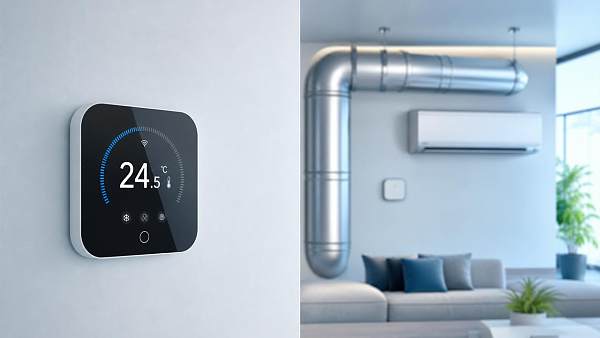
A poor match may cause short cycling, weak humidity control, or missing heat pump functions.
A good match supports stable temperatures, cleaner scheduling, and better insight into energy patterns.
Before buying smart thermostats, confirm your HVAC type, wiring, sensor needs, and preferred control style.
Core Checklist for Choosing Smart Thermostats
1. Confirm HVAC System Compatibility First
- Identify whether your system is conventional forced air, heat pump, boiler, radiant floor, dual fuel, or zoned HVAC.
- Check if your equipment uses single-stage, two-stage, or variable-speed heating and cooling before selecting smart thermostats.
- Verify support for auxiliary heat, emergency heat, reversing valve settings, and fan control when using heat pumps.
- Review manufacturer compatibility tools, but compare them against actual thermostat wiring and HVAC control board labels.
Compatibility is the first filter because smart thermostats must communicate correctly with the equipment already installed.
A stylish device cannot compensate for unsupported staging, missing terminals, or incorrect heat pump configuration.
2. Inspect Wiring and the C-Wire Requirement
- Remove the existing thermostat cover and photograph the wiring before disconnecting anything or ordering a replacement.
- Look for a C-wire, because many smart thermostats need constant power for Wi-Fi, displays, and sensor communication.
- Consider a power extender kit only when the brand confirms it works with your HVAC control board.
- Avoid guessing wire functions by color alone, since installers sometimes reuse colors differently across older systems.
Power problems often appear as random shutdowns, Wi-Fi drops, or heating delays.
Stable wiring helps smart thermostats run automation features without interrupting HVAC operation.
3. Decide Which Sensors Actually Matter
- Choose room sensors when bedrooms, offices, or upper floors feel warmer or colder than the hallway thermostat location.
- Use occupancy sensors to reduce conditioning in empty spaces without relying only on fixed schedules.
- Prioritize humidity sensing in humid climates, basements, bathrooms, or homes with variable-speed air conditioning.
- Check sensor battery life, wireless range, pairing limits, and whether readings can average across selected rooms.
Sensors are one of the biggest differences between basic programmable controls and advanced smart thermostats.
They help the thermostat manage comfort based on lived spaces, not only the wall where it is mounted.
4. Compare Scheduling, Learning, and Automation
- Select fixed scheduling if you prefer predictable temperature blocks for mornings, evenings, weekends, and sleep periods.
- Choose learning features if your routine changes often and you want the thermostat to adapt automatically.
- Use geofencing when household members leave and return at inconsistent times throughout the week.
- Review vacation mode, hold settings, and manual override behavior before relying on automation completely.
Not everyone needs aggressive automation.
The best smart thermostats match behavior patterns without creating comfort surprises during peak heating or cooling hours.
5. Check App Controls and Remote Access
- Test the app layout, because remote control is only useful when settings are easy to find and adjust.
- Confirm support for alerts covering filter changes, extreme indoor temperatures, HVAC faults, and connectivity loss.
- Review user permissions if multiple people need access without changing advanced HVAC configuration.
- Check whether energy reports show runtime, setpoint history, weather impact, and actionable savings suggestions.
Remote access is a major reason people buy smart thermostats.
However, a confusing app can make advanced features feel harder than a traditional thermostat.
6. Review Voice Control and Smart Home Integration
- Confirm compatibility with Amazon Alexa, Google Assistant, Apple Home, SmartThings, or Matter where available.
- Check whether voice commands allow simple setpoint changes, mode switching, fan control, and status checks.
- Use automation rules carefully when linking smart thermostats with windows, air purifiers, blinds, or occupancy devices.
- Prioritize local control options if internet outages are common or cloud dependency is a concern.
Voice and ecosystem support should simplify daily use.
Avoid choosing smart thermostats only because they support many platforms you may never use.
Choosing Smart Thermostats by HVAC Type
Conventional Furnace and Air Conditioner Systems
Most smart thermostats support common gas furnace and central air conditioner systems.
Still, staging matters when your furnace or compressor has more than one operating level.
For single-stage equipment, focus on app quality, scheduling, sensors, and easy installation.
For two-stage systems, confirm terminals and setup menus support both heating and cooling stages.
Heat Pumps and Dual-Fuel Systems
Heat pumps need more careful selection than basic furnace systems.
Smart thermostats should correctly manage auxiliary heat, defrost behavior, and reversing valve orientation.
Dual-fuel systems add another layer because the thermostat decides when to use heat pump or furnace heating.
Choose models with balance point settings if outdoor temperature strongly affects efficiency.
Boilers, Radiant Heat, and Line-Voltage Equipment
Boiler and radiant systems may have slower response times than forced-air systems.
Smart thermostats with adaptive recovery can start heating early to reach comfort at the scheduled time.
Line-voltage baseboard systems usually require dedicated high-voltage compatible models.
Never connect a low-voltage thermostat to line-voltage wiring without an approved relay or professional design.
Zoned HVAC Systems
Zoned systems use dampers or multiple thermostats to condition separate areas.
In these homes, smart thermostats must work with the zoning panel, not only the main HVAC unit.
Avoid replacing only one thermostat without checking how the zone controller handles calls for heating or cooling.
Sensor and Control Scenarios Worth Comparing
Homes with Uneven Room Temperatures
Uneven temperatures often come from duct layout, sunlight, insulation gaps, or closed interior doors.
Room sensors help smart thermostats prioritize occupied spaces instead of averaging comfort around a hallway.
Place sensors away from windows, vents, appliances, and direct sunlight.
This improves readings and reduces unnecessary HVAC cycling.
Homes Focused on Energy Savings
Energy savings depend on climate, equipment condition, insulation, and schedule behavior.
Smart thermostats help most when they reduce conditioning during sleep, work hours, or travel.
Use reports to identify long runtimes, frequent setbacks, or inefficient temperature targets.
Small changes often deliver better results than extreme settings that create recovery spikes.
Homes with Remote or Seasonal Use
Remote access is valuable for vacation homes, rental properties, and seasonal buildings.
Smart thermostats can send alerts when indoor temperatures fall near freezing or rise unexpectedly.
Choose models with reliable notifications, simple lockouts, and easy schedule duplication.
These controls reduce emergency visits and protect equipment during weather swings.
Common Mistakes and Risk Checks
Ignoring HVAC Service Condition
Smart thermostats cannot fix dirty filters, weak capacitors, leaking ducts, or low refrigerant.
If comfort problems already exist, service the HVAC system before expecting automation to solve them.
Overusing Aggressive Setbacks
Large temperature setbacks can save energy in some conditions, but they may also create long recovery cycles.
Heat pumps may trigger auxiliary heat if recovery is too demanding during cold weather.
Forgetting Privacy and Data Settings
Many smart thermostats collect occupancy, schedule, device, and energy data.
Review privacy settings, account security, two-factor authentication, and data-sharing options before daily use.
Skipping Professional Installation When Needed
Simple low-voltage systems are often suitable for DIY installation.
Complex heat pumps, dual-fuel setups, zoning panels, or line-voltage controls deserve professional verification.
Practical Buying and Setup Steps
- Document your HVAC model numbers, existing thermostat terminals, and current system behavior before comparing smart thermostats.
- Shortlist only models that explicitly support your heating, cooling, staging, and power requirements.
- Rank sensor needs by room comfort, occupancy patterns, humidity concerns, and wireless range.
- Compare app experience, alert quality, local controls, reporting depth, and voice integration.
- Install during mild weather, then test heat, cooling, fan, auxiliary heat, and schedule changes.
- Monitor runtime reports for two weeks and adjust schedules gradually instead of making extreme changes.
This process keeps selection practical and reduces the risk of buying features that never improve comfort.
It also helps smart thermostats deliver measurable value after installation, not just attractive controls.
Conclusion: Match the Thermostat to the System, Not the Other Way Around
The best smart thermostats start with HVAC compatibility, stable power, and correct control logic.
After that, sensors, apps, voice control, and automation determine how well the device fits daily life.
Use the checklist to verify wiring, system type, staging, heat pump settings, sensor placement, and data preferences.
Then compare smart thermostats by proven comfort impact, not only display design or promotional claims.
A careful choice can make heating and cooling easier, smarter, and more efficient for years.
Get weekly intelligence in your inbox.
No noise. No sponsored content. Pure intelligence.
 Oct 24, 2026Tesla Q3 2026 Storage Deployments Rank Second Highest as Revenue Falls 16%Tesla Q3 2026 Storage Deployments Rank Second Highest as Revenue Falls 16%
 Oct 24, 2026Freight Forwarding Services Pricing: Comparing Quotes Beyond Base RatesFreight Forwarding Services Pricing: Comparing Quotes Beyond Base Rates
 Oct 23, 2026IndexBox Issues Off-Grid Solar Outlook to 2035, Forecasting 8.2% CAGRIndexBox Issues Off-Grid Solar Outlook to 2035, Forecasting 8.2% CAGR
 Oct 23, 2026NSF/ANSI 49 Biosafety Cabinets: Product Certification vs. Field TestingNSF/ANSI 49 Biosafety Cabinets: Product Certification vs. Field Testing
 Oct 22, 2026Mitsubishi Electric Develops Industry-First Humanoid Robot–CNC Machining SystemMitsubishi Electric Develops Industry-First Humanoid Robot–CNC Machining System
 Oct 22, 2026Aerospace Aluminum Machining: How to Control Distortion in Thin-Wall PartsAerospace Aluminum Machining: How to Control Distortion in Thin-Wall Parts
 Oct 21, 2026Genesis Energy commissions 200 MWh battery storage system at HuntlyGenesis Energy commissions 200 MWh battery storage system at Huntly
 Oct 21, 2026Buying AMI Smart Meters Wholesale: Compatibility Checks and Total CostsBuying AMI Smart Meters Wholesale: Compatibility Checks and Total Costs
 Oct 20, 2026Werner Enterprises Issues Q3 Earnings Warning as Costs RiseWerner Enterprises Issues Q3 Earnings Warning as Costs Rise
 Oct 20, 2026Are Digital Twins Viable for SMEs? Costs, Use Cases, and Data RequirementsAre Digital Twins Viable for SMEs? Costs, Use Cases, and Data Requirements
 Oct 19, 2026Choosing a Wholesale Servo Motor Exporter: Traceability and Warranty ChecksChoosing a Wholesale Servo Motor Exporter: Traceability and Warranty Checks
 Oct 18, 2026Syringe Manufacturing Equipment: Evaluating Throughput and Assembly AccuracySyringe Manufacturing Equipment: Evaluating Throughput and Assembly Accuracy
 Oct 17, 2026Air Freight Forwarding Services: How to Compare Quotes for Urgent ShipmentsAir Freight Forwarding Services: How to Compare Quotes for Urgent Shipments
 Oct 16, 2026Wholesale Solar Panels: How to Compare Bulk Quotes by Total Landed CostWholesale Solar Panels: How to Compare Bulk Quotes by Total Landed Cost
 Oct 15, 2026Supply Chain Intelligence for Sourcing: How to Vet New SuppliersSupply Chain Intelligence for Sourcing: How to Vet New Suppliers
 Oct 14, 2026How energy costs shape smart manufacturing investment in EuropeHow energy costs shape smart manufacturing investment in Europe
 Oct 14, 2026How skills shortages slow smart manufacturing in Southeast AsiaHow skills shortages slow smart manufacturing in Southeast Asia
 Oct 14, 2026How CNC wire-cut machining maintains tight tolerances in thick partsHow CNC wire-cut machining maintains tight tolerances in thick parts
 Oct 14, 2026Can automated feeding stabilize metal forming in smart factories?Can automated feeding stabilize metal forming in smart factories?
 Oct 14, 2026Can CT inspection detect internal defects in metal additive parts?Can CT inspection detect internal defects in metal additive parts?
 Oct 14, 2026When does additive manufacturing reduce lead time for spare parts?When does additive manufacturing reduce lead time for spare parts?
 Oct 14, 2026How production volume affects ROI on an automated painting lineHow production volume affects ROI on an automated painting line
 Oct 14, 2026What data does manufacturing bottleneck analysis consulting need?What data does manufacturing bottleneck analysis consulting need?
 Oct 14, 2026When should you hire a consultant for manufacturing bottlenecks?When should you hire a consultant for manufacturing bottlenecks?
 Oct 14, 2026What Are Electronics Exporters' Top Supply Chain Resilience Gaps in 2026?What Are Electronics Exporters' Top Supply Chain Resilience Gaps in 2026?
 Oct 14, 2026How Do You Measure AI Adoption Maturity in a Traditional Factory?How Do You Measure AI Adoption Maturity in a Traditional Factory?
 Oct 14, 2026Are Chinese AI-Assisted Surgical Devices Gaining Global Trust?Are Chinese AI-Assisted Surgical Devices Gaining Global Trust?