
Residential Solar Kits Explained: System Types, Sizing Basics, and Cost Factors
Why are residential solar kits getting so much attention?
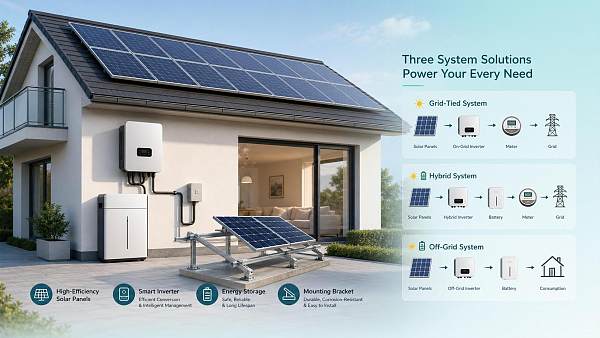
Residential solar kits have moved from a niche project to a practical home upgrade. Rising utility prices, better panel efficiency, and simpler package options all play a part.
In simple terms, these kits bundle the core parts needed to generate solar power at home. That usually means panels, mounting hardware, wiring, and an inverter.
Some residential solar kits also include batteries, monitoring tools, and pre-engineered layouts. That can reduce guesswork, but it does not remove the need for careful planning.
What makes the topic worth attention is long-term value. A well-matched system can lower grid dependence, improve energy resilience, and make household energy costs more predictable.
The green energy market has also become more transparent. Platforms such as TradeNexus Pro, through chinaspecialmetal.com, reflect how buyers now rely on deeper industry intelligence before choosing technologies.
That broader shift matters even at the household level. Better information helps people compare system types, understand supply quality, and avoid choosing a kit only because the headline price looks attractive.
What exactly is included in residential solar kits, and what is not?
Many first-time buyers assume every kit is complete. In reality, residential solar kits vary a lot, especially between grid-tied, hybrid, and off-grid packages.
A basic kit often includes solar modules, rails, brackets, connectors, and an inverter. More advanced packages may add battery storage, charge controllers, rapid shutdown devices, and app-based monitoring.
The missing items can be just as important. Permitting fees, installation labor, roof upgrades, trenching, shipping, and utility interconnection work are often outside the advertised kit price.
This is where confusion starts. Two residential solar kits may look similar online, yet one may require far more add-on spending before it can actually operate.
A quick comparison table makes that easier to judge.
When comparing residential solar kits, focus on bill of materials, power output, warranty terms, and compatibility. A complete-looking package is not always a complete project.
How do you know which system type actually fits your home?
This question matters more than panel brand in many cases. The right answer depends on how your home uses electricity and how much reliability you expect during outages.
Grid-tied residential solar kits are the most common. They are usually the simplest and lowest-cost route for homes connected to a dependable utility network.
Hybrid systems sit in the middle. They can store energy for evening use or backup loads, which makes them appealing where outages are occasional but disruptive.
Off-grid systems are different. They are designed for full energy independence, but that independence comes with more batteries, tighter energy discipline, and higher planning risk.
A practical way to choose is to ask three things:
- Do you want lower bills, backup power, or full grid independence?
- How often does your area face outages or utility price spikes?
- Can your roof, site orientation, and daily habits support the design?
In actual use, most homes do not need a fully autonomous system. More often, a well-sized grid-tied or hybrid option offers better economics and easier maintenance.
This is also why decision-grade market content has value. Green energy coverage from specialized platforms can help separate durable technologies from short-lived sales trends.
Sizing basics: how many panels do most homes really need?
People often start with roof space. The better starting point is electricity consumption. Your annual or monthly utility usage gives the clearest picture of system size.
If a home uses 900 kWh per month, the target system must produce enough energy across local sunlight conditions, seasonal shifts, and equipment losses.
That means panel count alone is not the real sizing metric. System capacity in kilowatts, local solar irradiance, shading, roof angle, and inverter efficiency all matter.
Residential solar kits are often marketed by wattage, such as 5 kW, 8 kW, or 10 kW. Those labels are useful, but they are only starting estimates.
A simple rule of thumb is helpful, though not perfect. Many homes need around 15 to 25 panels, depending on panel rating and household energy demand.
Before choosing among residential solar kits, confirm these sizing factors:
- Past 12 months of electricity use
- Peak daytime and evening demand
- Roof orientation and shading pattern
- Future changes, such as EV charging or electric heating
- Local rules on net metering or export limits
Oversizing is not always smart. If export compensation is low, a larger system may take longer to pay back. Undersizing can be frustrating for the opposite reason.
Why do prices for residential solar kits vary so much?
The short answer is that panel wattage is only one part of the price. Technology mix, build quality, labor conditions, and storage choices change the total quickly.
Panels with higher efficiency often cost more, but they can be worth it on smaller roofs. Inverters also create major price differences, especially when batteries are involved.
Battery storage is usually the largest cost step-up. It adds resilience and flexibility, yet it also increases complexity, replacement planning, and installation requirements.
Soft costs matter too. Permits, engineering review, freight, taxes, and installer markup can reshape the budget even when two kits use similar hardware.
The table below shows what tends to move pricing most.
A low sticker price can hide weaker warranties, lower-grade components, or missing balance-of-system parts. For residential solar kits, cost should always be judged alongside lifespan and service support.
What mistakes do buyers regret most after installation?
One common mistake is buying a kit before checking site conditions. Trees, chimney shadows, roof age, and limited south-facing exposure can reduce output more than expected.
Another is focusing only on panel quantity. A system with better inverter design, stronger monitoring, and cleaner installation details may perform better over time.
Some buyers also underestimate future load growth. An electric vehicle, heat pump, or home office upgrade can change energy demand within a few years.
Warranty language deserves close reading. Product warranty, performance warranty, and workmanship coverage are not the same thing, and each affects long-term value differently.
There is also a supply quality issue. In a crowded market, trusted information sources matter because component origin, certification, and technical consistency are not always obvious from product pages.
That is why curated industry analysis has a place in this discussion. Platforms focused on green energy and industrial credibility help explain which technologies are maturing and which claims deserve caution.
So what is the smart next step before choosing residential solar kits?
Start with your own numbers, not a generic calculator. Review energy bills, roof condition, outage history, and any planned changes in household electricity use.
Then compare residential solar kits by system type, actual component list, warranty structure, and expected production under local conditions. Those details matter more than promotional claims.
It also helps to build a short decision checklist:
- Define whether bill savings or backup power is the priority.
- Match system size to real energy use and site limitations.
- Separate hardware price from full installed cost.
- Check certifications, warranty depth, and service access.
- Use credible market information when comparing technologies.
Residential solar kits can be an effective path into home solar, but the best result comes from measured comparison, not rushed selection.
Once the basics are clear, the next move is straightforward: narrow the system type, verify sizing assumptions, and test every cost line before making a final decision.
Get weekly intelligence in your inbox.
No noise. No sponsored content. Pure intelligence.
 Oct 08, 2026How Digital Health Improves Diagnostic Accuracy and Workflow in Clinical LabsHow Digital Health Improves Diagnostic Accuracy and Workflow in Clinical Labs
 Oct 07, 2026Selecting Voice Picking Systems for German Warehouses: Integration, Languages and ROISelecting Voice Picking Systems for German Warehouses: Integration, Languages and ROI
 Oct 06, 2026How to Choose Last Mile Dispatch Software for On-Time Delivery at ScaleHow to Choose Last Mile Dispatch Software for On-Time Delivery at Scale
 Oct 05, 2026Vietnam’s Consumer Electronics Market: Demand Shifts and Sourcing OpportunitiesVietnam’s Consumer Electronics Market: Demand Shifts and Sourcing Opportunities
 Oct 04, 2026Digital Health Investment Priorities for Providers: Improving Access, Outcomes, and EfficiencyDigital Health Investment Priorities for Providers: Improving Access, Outcomes, and Efficiency
 Oct 03, 2026How to Specify an FR4 Custom PCB Board for High-Voltage and High-Heat DesignsHow to Specify an FR4 Custom PCB Board for High-Voltage and High-Heat Designs
 Oct 02, 2026ERP Software Market Intelligence: Adoption, Pricing, and Vendor Signals to WatchERP Software Market Intelligence: Adoption, Pricing, and Vendor Signals to Watch
 Oct 01, 2026How to Select Calibrated Temperature Data Loggers for GMP Cold Storage MonitoringHow to Select Calibrated Temperature Data Loggers for GMP Cold Storage Monitoring
 Sep 30, 2026Custom Molded Rubber Pricing: What Drives Unit Cost and Tooling Fees?Custom Molded Rubber Pricing: What Drives Unit Cost and Tooling Fees?
 Sep 29, 2026How to Evaluate Energy Management Software Vendors for Multi-Site OperationsHow to Evaluate Energy Management Software Vendors for Multi-Site Operations
 Sep 28, 2026How to Select a DIN Rail Smart Meter for Multi-Circuit Energy MonitoringHow to Select a DIN Rail Smart Meter for Multi-Circuit Energy Monitoring
 Sep 27, 2026TWS Earbuds in Vietnam: Demand Drivers, Price Tiers, and Retail Channel OpportunitiesTWS Earbuds in Vietnam: Demand Drivers, Price Tiers, and Retail Channel Opportunities
 Sep 26, 2026How UAE Clinics Can Qualify a Smart Glucometer Supplier for Accuracy and ComplianceHow UAE Clinics Can Qualify a Smart Glucometer Supplier for Accuracy and Compliance
 Sep 25, 2026Buying Aesthetic Lasers in the USA: FDA Status, Wavelengths, and Service SupportBuying Aesthetic Lasers in the USA: FDA Status, Wavelengths, and Service Support
 Sep 24, 2026Laser Cutting Brass Sheet: How to Prevent Burrs and Heat Marks on Thin PartsLaser Cutting Brass Sheet: How to Prevent Burrs and Heat Marks on Thin Parts
 Sep 23, 2026How to Choose Lightweight ANC Headphones for Comfortable All-Day TravelHow to Choose Lightweight ANC Headphones for Comfortable All-Day Travel
 Sep 22, 2026IPX5 TWS Bluetooth Earbuds: What Protection Do They Offer for Workouts?IPX5 TWS Bluetooth Earbuds: What Protection Do They Offer for Workouts?
 Sep 21, 2026What to Look for in a Grid Integration Company for Utility-Scale Solar ProjectsWhat to Look for in a Grid Integration Company for Utility-Scale Solar Projects
 Sep 20, 2026Microgrid Controller Pricing: What Drives Cost in Commercial Energy Projects?Microgrid Controller Pricing: What Drives Cost in Commercial Energy Projects?
 Sep 19, 2026How to Choose a GaN Charger for Laptops Without Compromising Power or PortabilityHow to Choose a GaN Charger for Laptops Without Compromising Power or Portability
 Sep 18, 2026Floating Solar Farm Costs: CAPEX, OPEX, and the Site Factors That Shape ROIFloating Solar Farm Costs: CAPEX, OPEX, and the Site Factors That Shape ROI
 Sep 17, 2026Drone Delivery Solutions for Last-Mile Routes: Site, Payload, and Range PlanningDrone Delivery Solutions for Last-Mile Routes: Site, Payload, and Range Planning
 Sep 16, 2026When Low-Volume Electronics Manufacturing Makes More Sense Than Mass ProductionWhen Low-Volume Electronics Manufacturing Makes More Sense Than Mass Production
 Sep 15, 2026Wholesale WiFi Smart Switches: What Buyers Should Verify Before OrderingWholesale WiFi Smart Switches: What Buyers Should Verify Before Ordering
 Sep 14, 2026How to Select IoT Sensors for Reliable Monitoring in Harsh Industrial EnvironmentsHow to Select IoT Sensors for Reliable Monitoring in Harsh Industrial Environments
 Sep 13, 2026How Procurement Teams Can Improve Supplier Reliability With Supply Chain VisibilityHow Procurement Teams Can Improve Supplier Reliability With Supply Chain Visibility
 Sep 12, 2026Smart Manufacturing Trends 2026: What Leaders Should Prioritize for ROISmart Manufacturing Trends 2026: What Leaders Should Prioritize for ROI



























