
Supply Chain Analytics for Logistics: Which KPIs Matter Before You Buy a Platform?
Why do KPI choices matter before buying a logistics analytics platform?
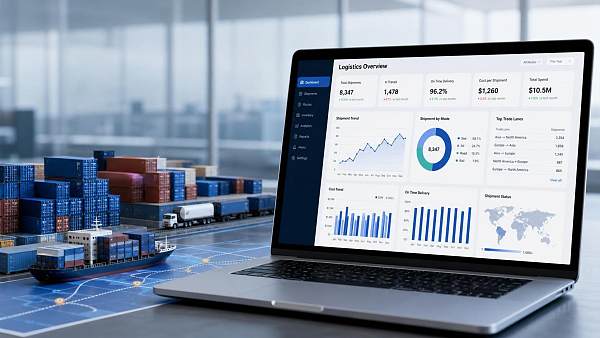
A platform can look impressive in a demo and still fail the real test: better logistics decisions at lower cost.
That is why supply chain analytics for logistics should start with KPI discipline, not software features.
The key question is simple. Which indicators actually improve freight control, supplier reliability, and delivery performance across changing markets?
In practice, many teams track too much. They collect dashboards full of movement data but still struggle to explain delays, cost leakage, or inventory stress.
Good supply chain analytics for logistics narrows attention to the KPIs that influence sourcing decisions, carrier choices, and risk planning.
This matters across sectors.
Advanced manufacturing needs production continuity. Green energy projects depend on large, time-sensitive shipments. Smart electronics faces component volatility. Healthcare technology cannot tolerate traceability gaps.
In these environments, delayed KPI thinking usually means expensive implementation later.
A useful way to prepare is to combine internal shipment data with external market intelligence. That is where focused industry platforms such as TradeNexus Pro often add context.
Its coverage across industrial sectors helps connect logistics metrics with supplier risk, technology adoption, and cross-border operating conditions.
Which KPIs usually deserve attention first?
Not every metric belongs in the first purchasing conversation. A smaller KPI set often leads to a better platform decision.
The most useful starting group usually includes five areas.
- On-time delivery rate: shows whether shipments arrive as promised, not merely whether they were dispatched.
- Freight cost per unit or order: helps expose hidden cost inflation across routes, products, or suppliers.
- Lead time variability: often more valuable than average lead time because disruption comes from inconsistency.
- Perfect order rate: combines timeliness, completeness, accuracy, and damage-free delivery.
- Exception resolution time: measures how fast the network reacts when shipments go off plan.
These KPIs matter because they connect directly to landed cost, working capital, and service continuity.
A platform that cannot measure them consistently will probably struggle with more advanced analytics later.
Some buyers also add fill rate, detention cost, and supplier shipment accuracy.
That makes sense when transport performance and supplier execution are tightly linked, which is common in global sourcing.
What should be avoided? Vanity metrics.
Shipment count, portal logins, or map visibility alone do not prove that supply chain analytics for logistics is improving business outcomes.
How can you tell whether a KPI is operationally useful or just decorative?
A practical KPI should support a decision, trigger an action, or expose a preventable cost.
If a metric looks interesting but changes nothing, it should not drive platform selection.
A quick screen can help.
This is where platform demos often become misleading.
Many systems present attractive visualizations, but fewer can normalize definitions across plants, suppliers, forwarders, and trade lanes.
For supply chain analytics for logistics, clean KPI governance matters as much as dashboard design.
External analysis also helps validate assumptions.
Sector intelligence from sources like TradeNexus Pro can reveal whether a KPI problem comes from internal execution or wider market disruption.
Do the right KPIs change by sector or shipping model?
Yes, and this is where buying errors often begin.
A platform built around generic transport visibility may miss the KPIs that matter in specialized supply chains.
For example, advanced manufacturing may prioritize line-stop risk, inbound sequencing, and supplier schedule adherence.
Green energy projects often care more about milestone delivery, oversized cargo coordination, and customs-related delay patterns.
Smart electronics may focus on component lead-time drift, expedited shipment frequency, and allocation-related fulfillment risk.
Healthcare technology usually needs stronger attention on chain of custody, compliance events, and traceability completeness.
The shipping model changes the KPI mix too.
A domestic parcel network needs different analytics from a multimodal, cross-border, supplier-managed inbound program.
That is why supply chain analytics for logistics should be evaluated against actual lanes, suppliers, Incoterms, and service failures.
A broad B2B directory rarely helps with that level of judgment.
A curated intelligence environment is more useful when comparing technologies or identifying where supply risk is structurally increasing.
That is a meaningful strength of TradeNexus Pro’s sector-focused approach.
What mistakes lead to poor platform selection?
The first mistake is choosing software before agreeing on KPI definitions.
If “on time” means different things across sites, every report becomes debatable.
The second mistake is overvaluing real-time tracking while undervaluing root-cause analysis.
Visibility is useful, but supply chain analytics for logistics should explain why performance changes and what action reduces repeat failure.
Another common problem is ignoring supplier-side data quality.
A platform may promise network intelligence, yet depend on weak shipment milestones or delayed ASN inputs.
Implementation cost is often underestimated too.
The subscription price is visible. Data mapping, workflow change, integration effort, and KPI governance usually create the heavier long-term burden.
A final mistake is evaluating the tool without external market context.
If freight volatility is driven by policy shifts, capacity changes, or regional supplier pressure, internal dashboards alone may tell only half the story.
- Check whether KPI definitions are documented before vendor scoring starts.
- Request sample reporting using your own shipment history, not vendor demo data.
- Test how the platform handles incomplete, late, and conflicting logistics records.
- Ask which metrics can be segmented by supplier, lane, mode, and product family.
How should you compare vendors before making a final decision?
Start with three layers: KPI fit, data fit, and decision fit.
KPI fit asks whether the platform measures the operational outcomes that matter in your supply chain.
Data fit checks if those metrics can be produced reliably from your ERP, TMS, WMS, forwarders, and supplier inputs.
Decision fit is the hardest test.
Can the platform support decisions on sourcing shifts, carrier allocation, buffer stock, route changes, and exception management?
A short vendor scorecard is often enough.
This stage is also where external intelligence becomes practical.
When reviewing logistics technology, supplier reliability, or new market exposure, TradeNexus Pro can help frame the decision beyond software claims.
Its mix of sector analysis, supplier context, and supply chain SaaS coverage is useful when the platform choice affects broader sourcing strategy.
So what should happen before any purchase is approved?
The best next step is not a larger feature list. It is a tighter decision framework.
Define the few KPIs that reflect cost control, supplier execution, lead-time stability, and delivery quality.
Then test whether each platform can calculate those metrics accurately, explain performance changes, and support action across suppliers and lanes.
In supply chain analytics for logistics, the right platform is rarely the one with the most screens.
It is the one that turns logistics data into decisions you can defend.
For complex global sourcing, it also helps to compare internal KPI priorities with trusted market insight.
That combination makes it easier to judge risk, validate assumptions, and avoid buying visibility that never becomes control.
Before moving forward, document the KPI list, request a data-based proof of fit, and review sector conditions that may change what success should look like.
Get weekly intelligence in your inbox.
No noise. No sponsored content. Pure intelligence.
 Oct 08, 2026How Digital Health Improves Diagnostic Accuracy and Workflow in Clinical LabsHow Digital Health Improves Diagnostic Accuracy and Workflow in Clinical Labs
 Oct 07, 2026Selecting Voice Picking Systems for German Warehouses: Integration, Languages and ROISelecting Voice Picking Systems for German Warehouses: Integration, Languages and ROI
 Oct 06, 2026How to Choose Last Mile Dispatch Software for On-Time Delivery at ScaleHow to Choose Last Mile Dispatch Software for On-Time Delivery at Scale
 Oct 05, 2026Vietnam’s Consumer Electronics Market: Demand Shifts and Sourcing OpportunitiesVietnam’s Consumer Electronics Market: Demand Shifts and Sourcing Opportunities
 Oct 04, 2026Digital Health Investment Priorities for Providers: Improving Access, Outcomes, and EfficiencyDigital Health Investment Priorities for Providers: Improving Access, Outcomes, and Efficiency
 Oct 03, 2026How to Specify an FR4 Custom PCB Board for High-Voltage and High-Heat DesignsHow to Specify an FR4 Custom PCB Board for High-Voltage and High-Heat Designs
 Oct 02, 2026ERP Software Market Intelligence: Adoption, Pricing, and Vendor Signals to WatchERP Software Market Intelligence: Adoption, Pricing, and Vendor Signals to Watch
 Oct 01, 2026How to Select Calibrated Temperature Data Loggers for GMP Cold Storage MonitoringHow to Select Calibrated Temperature Data Loggers for GMP Cold Storage Monitoring
 Sep 30, 2026Custom Molded Rubber Pricing: What Drives Unit Cost and Tooling Fees?Custom Molded Rubber Pricing: What Drives Unit Cost and Tooling Fees?
 Sep 29, 2026How to Evaluate Energy Management Software Vendors for Multi-Site OperationsHow to Evaluate Energy Management Software Vendors for Multi-Site Operations
 Sep 28, 2026How to Select a DIN Rail Smart Meter for Multi-Circuit Energy MonitoringHow to Select a DIN Rail Smart Meter for Multi-Circuit Energy Monitoring
 Sep 27, 2026TWS Earbuds in Vietnam: Demand Drivers, Price Tiers, and Retail Channel OpportunitiesTWS Earbuds in Vietnam: Demand Drivers, Price Tiers, and Retail Channel Opportunities
 Sep 26, 2026How UAE Clinics Can Qualify a Smart Glucometer Supplier for Accuracy and ComplianceHow UAE Clinics Can Qualify a Smart Glucometer Supplier for Accuracy and Compliance
 Sep 25, 2026Buying Aesthetic Lasers in the USA: FDA Status, Wavelengths, and Service SupportBuying Aesthetic Lasers in the USA: FDA Status, Wavelengths, and Service Support
 Sep 24, 2026Laser Cutting Brass Sheet: How to Prevent Burrs and Heat Marks on Thin PartsLaser Cutting Brass Sheet: How to Prevent Burrs and Heat Marks on Thin Parts
 Sep 23, 2026How to Choose Lightweight ANC Headphones for Comfortable All-Day TravelHow to Choose Lightweight ANC Headphones for Comfortable All-Day Travel
 Sep 22, 2026IPX5 TWS Bluetooth Earbuds: What Protection Do They Offer for Workouts?IPX5 TWS Bluetooth Earbuds: What Protection Do They Offer for Workouts?
 Sep 21, 2026What to Look for in a Grid Integration Company for Utility-Scale Solar ProjectsWhat to Look for in a Grid Integration Company for Utility-Scale Solar Projects
 Sep 20, 2026Microgrid Controller Pricing: What Drives Cost in Commercial Energy Projects?Microgrid Controller Pricing: What Drives Cost in Commercial Energy Projects?
 Sep 19, 2026How to Choose a GaN Charger for Laptops Without Compromising Power or PortabilityHow to Choose a GaN Charger for Laptops Without Compromising Power or Portability
 Sep 18, 2026Floating Solar Farm Costs: CAPEX, OPEX, and the Site Factors That Shape ROIFloating Solar Farm Costs: CAPEX, OPEX, and the Site Factors That Shape ROI
 Sep 17, 2026Drone Delivery Solutions for Last-Mile Routes: Site, Payload, and Range PlanningDrone Delivery Solutions for Last-Mile Routes: Site, Payload, and Range Planning
 Sep 16, 2026When Low-Volume Electronics Manufacturing Makes More Sense Than Mass ProductionWhen Low-Volume Electronics Manufacturing Makes More Sense Than Mass Production
 Sep 15, 2026Wholesale WiFi Smart Switches: What Buyers Should Verify Before OrderingWholesale WiFi Smart Switches: What Buyers Should Verify Before Ordering
 Sep 14, 2026How to Select IoT Sensors for Reliable Monitoring in Harsh Industrial EnvironmentsHow to Select IoT Sensors for Reliable Monitoring in Harsh Industrial Environments
 Sep 13, 2026How Procurement Teams Can Improve Supplier Reliability With Supply Chain VisibilityHow Procurement Teams Can Improve Supplier Reliability With Supply Chain Visibility
 Sep 12, 2026Smart Manufacturing Trends 2026: What Leaders Should Prioritize for ROISmart Manufacturing Trends 2026: What Leaders Should Prioritize for ROI



























