
Port Automation Tech for Smart Logistics: Key Systems Used in Modern Container Terminals
Why Port Automation Matters Now
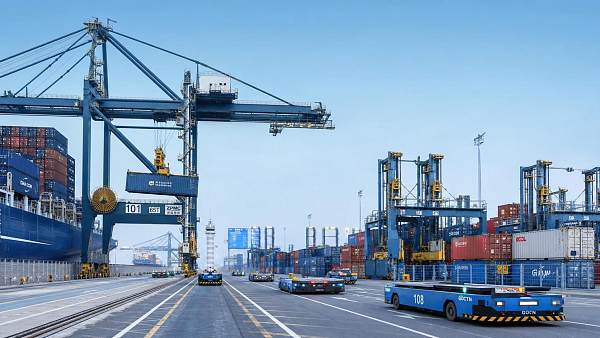
Port automation tech for smart logistics is moving from pilot projects to core infrastructure.
Modern container terminals no longer compete only on berth size or crane numbers.
They compete on data speed, equipment coordination, energy use, and operational resilience.
That shift matters because ports sit at the intersection of manufacturing, trade finance, customs, shipping, and inland distribution.
When congestion builds at terminals, the effects spread across inventories, freight rates, and delivery commitments.
In that context, port automation tech for smart logistics is not just about replacing labor with machines.
It is about making cargo flows more predictable, visible, and easier to manage under pressure.
This is why the topic fits broader industrial intelligence discussions on platforms such as TradeNexus Pro.
The real question is how equipment systems, software layers, and decision tools work together in practice.
What Port Automation Tech for Smart Logistics Actually Includes
At terminal level, automation is a stack rather than a single product category.
The physical layer includes cranes, guided vehicles, gates, sensors, and power systems.
The digital layer includes terminal operating systems, yard optimization software, safety logic, and visibility dashboards.
The management layer connects planning, exception handling, maintenance, and trade data exchange.
A terminal becomes truly automated only when these layers exchange reliable data in real time.
Otherwise, expensive machines can still operate inside fragmented workflows.
That distinction is important when evaluating suppliers or benchmark claims.
Core building blocks
- Automated quay cranes for vessel loading and unloading.
- Automated stacking cranes for yard storage and retrieval.
- AGVs or autonomous terminal tractors for horizontal transport.
- Smart gates with OCR, RFID, and appointment integration.
- Terminal operating systems that coordinate moves and resources.
- Control towers and analytics platforms for end-to-end visibility.
The Key Systems Used in Modern Container Terminals
Not every terminal uses the same architecture, but several systems appear repeatedly in advanced operations.
Automated quay crane systems
These systems manage container transfers between ship and shore with higher precision and lower cycle variability.
Remote crane operation is increasingly common, especially where safety and labor efficiency are top priorities.
Automated yard handling
Automated stacking cranes organize containers in dense storage blocks.
They reduce unproductive reshuffling and support more consistent yard planning.
This is one of the most visible examples of port automation tech for smart logistics.
Horizontal transport automation
AGVs, battery-powered carriers, and autonomous tractors move containers between quay and yard.
Their value depends on routing software, charging strategy, and traffic coordination.
Gate and landside digitization
Smart gates use OCR cameras, license plate recognition, RFID, and digital appointments.
This shortens truck turn times and improves data quality before cargo enters the yard.
Terminal operating systems and AI planning
The terminal operating system is the coordination center.
It assigns jobs, sequences moves, tracks inventory, and links equipment behavior with vessel plans.
AI modules can improve yard allocation, berth scheduling, and exception forecasting.
Where the Business Value Really Appears
The case for port automation tech for smart logistics becomes stronger when performance is measured across the whole terminal.
A faster crane means little if yard congestion still delays truck release.
A smart gate adds limited value if the terminal operating system cannot absorb clean arrival data.
Well-designed automation improves consistency more than headline speed.
That consistency affects vessel turnaround, labor allocation, safety exposure, and service reliability.
It also supports better emissions tracking through electric fleets and optimized idle reduction.
For cross-border trade, reliable terminal data can improve coordination with carriers, customs, warehouses, and inland transport partners.
This is one reason supply chain intelligence platforms increasingly monitor port technology adoption as a market signal.
Common Implementation Friction
Port automation tech for smart logistics often looks straightforward in presentations and much harder in live operations.
Legacy equipment interfaces are one frequent obstacle.
Cybersecurity is another, especially when operational technology and enterprise systems converge.
Data standards also matter more than expected.
If asset status, container location, and gate events are defined differently across systems, visibility becomes unreliable.
Energy infrastructure can also become a hidden constraint.
Battery charging for AGVs and electrified yard fleets requires careful planning around uptime and peak loads.
In real projects, the integration layer is often more decisive than the hardware brand.
Signals worth checking early
- Interoperability with existing TOS, ERP, and customs interfaces.
- Remote maintenance capability and software update governance.
- Safety case documentation for mixed human and autonomous traffic.
- Scalability from one terminal block to multi-terminal deployment.
- Supplier depth in controls, analytics, support, and lifecycle services.
How to Read the Market More Clearly
Evaluating port automation tech for smart logistics requires more than comparing feature lists.
A stronger approach is to map systems against actual bottlenecks.
Start with berth delays, yard imbalances, truck congestion, equipment downtime, or poor event visibility.
Then examine which systems address root causes instead of symptoms.
This is where curated B2B intelligence becomes useful.
TradeNexus Pro reflects the wider market shift toward decision-grade content, not undifferentiated listings.
For technology evaluation, that means looking at adoption context, supplier credibility, deployment logic, and operational fit.
It also means tracking adjacent sectors.
Advanced manufacturing affects equipment quality.
Smart electronics shape sensing and control systems.
Supply chain SaaS influences orchestration and visibility.
Those links help explain why modern terminal automation should be assessed as an ecosystem.
A Practical Next Step
The most useful next step is to build a simple evaluation framework before reviewing vendors or case studies.
List the terminal processes that create the highest delay, cost, or risk exposure.
Match each problem to the relevant automation layer, required data inputs, and expected performance outcome.
After that, compare whether a proposed solution improves visibility, integration quality, and operational stability at the same time.
Port automation tech for smart logistics delivers the strongest return when it is treated as a coordinated operating model.
That is the angle worth carrying into future market research, supplier screening, and infrastructure planning.
Get weekly intelligence in your inbox.
No noise. No sponsored content. Pure intelligence.
 Oct 08, 2026How Digital Health Improves Diagnostic Accuracy and Workflow in Clinical LabsHow Digital Health Improves Diagnostic Accuracy and Workflow in Clinical Labs
 Oct 07, 2026Selecting Voice Picking Systems for German Warehouses: Integration, Languages and ROISelecting Voice Picking Systems for German Warehouses: Integration, Languages and ROI
 Oct 06, 2026How to Choose Last Mile Dispatch Software for On-Time Delivery at ScaleHow to Choose Last Mile Dispatch Software for On-Time Delivery at Scale
 Oct 05, 2026Vietnam’s Consumer Electronics Market: Demand Shifts and Sourcing OpportunitiesVietnam’s Consumer Electronics Market: Demand Shifts and Sourcing Opportunities
 Oct 04, 2026Digital Health Investment Priorities for Providers: Improving Access, Outcomes, and EfficiencyDigital Health Investment Priorities for Providers: Improving Access, Outcomes, and Efficiency
 Oct 03, 2026How to Specify an FR4 Custom PCB Board for High-Voltage and High-Heat DesignsHow to Specify an FR4 Custom PCB Board for High-Voltage and High-Heat Designs
 Oct 02, 2026ERP Software Market Intelligence: Adoption, Pricing, and Vendor Signals to WatchERP Software Market Intelligence: Adoption, Pricing, and Vendor Signals to Watch
 Oct 01, 2026How to Select Calibrated Temperature Data Loggers for GMP Cold Storage MonitoringHow to Select Calibrated Temperature Data Loggers for GMP Cold Storage Monitoring
 Sep 30, 2026Custom Molded Rubber Pricing: What Drives Unit Cost and Tooling Fees?Custom Molded Rubber Pricing: What Drives Unit Cost and Tooling Fees?
 Sep 29, 2026How to Evaluate Energy Management Software Vendors for Multi-Site OperationsHow to Evaluate Energy Management Software Vendors for Multi-Site Operations
 Sep 28, 2026How to Select a DIN Rail Smart Meter for Multi-Circuit Energy MonitoringHow to Select a DIN Rail Smart Meter for Multi-Circuit Energy Monitoring
 Sep 27, 2026TWS Earbuds in Vietnam: Demand Drivers, Price Tiers, and Retail Channel OpportunitiesTWS Earbuds in Vietnam: Demand Drivers, Price Tiers, and Retail Channel Opportunities
 Sep 26, 2026How UAE Clinics Can Qualify a Smart Glucometer Supplier for Accuracy and ComplianceHow UAE Clinics Can Qualify a Smart Glucometer Supplier for Accuracy and Compliance
 Sep 25, 2026Buying Aesthetic Lasers in the USA: FDA Status, Wavelengths, and Service SupportBuying Aesthetic Lasers in the USA: FDA Status, Wavelengths, and Service Support
 Sep 24, 2026Laser Cutting Brass Sheet: How to Prevent Burrs and Heat Marks on Thin PartsLaser Cutting Brass Sheet: How to Prevent Burrs and Heat Marks on Thin Parts
 Sep 23, 2026How to Choose Lightweight ANC Headphones for Comfortable All-Day TravelHow to Choose Lightweight ANC Headphones for Comfortable All-Day Travel
 Sep 22, 2026IPX5 TWS Bluetooth Earbuds: What Protection Do They Offer for Workouts?IPX5 TWS Bluetooth Earbuds: What Protection Do They Offer for Workouts?
 Sep 21, 2026What to Look for in a Grid Integration Company for Utility-Scale Solar ProjectsWhat to Look for in a Grid Integration Company for Utility-Scale Solar Projects
 Sep 20, 2026Microgrid Controller Pricing: What Drives Cost in Commercial Energy Projects?Microgrid Controller Pricing: What Drives Cost in Commercial Energy Projects?
 Sep 19, 2026How to Choose a GaN Charger for Laptops Without Compromising Power or PortabilityHow to Choose a GaN Charger for Laptops Without Compromising Power or Portability
 Sep 18, 2026Floating Solar Farm Costs: CAPEX, OPEX, and the Site Factors That Shape ROIFloating Solar Farm Costs: CAPEX, OPEX, and the Site Factors That Shape ROI
 Sep 17, 2026Drone Delivery Solutions for Last-Mile Routes: Site, Payload, and Range PlanningDrone Delivery Solutions for Last-Mile Routes: Site, Payload, and Range Planning
 Sep 16, 2026When Low-Volume Electronics Manufacturing Makes More Sense Than Mass ProductionWhen Low-Volume Electronics Manufacturing Makes More Sense Than Mass Production
 Sep 15, 2026Wholesale WiFi Smart Switches: What Buyers Should Verify Before OrderingWholesale WiFi Smart Switches: What Buyers Should Verify Before Ordering
 Sep 14, 2026How to Select IoT Sensors for Reliable Monitoring in Harsh Industrial EnvironmentsHow to Select IoT Sensors for Reliable Monitoring in Harsh Industrial Environments
 Sep 13, 2026How Procurement Teams Can Improve Supplier Reliability With Supply Chain VisibilityHow Procurement Teams Can Improve Supplier Reliability With Supply Chain Visibility
 Sep 12, 2026Smart Manufacturing Trends 2026: What Leaders Should Prioritize for ROISmart Manufacturing Trends 2026: What Leaders Should Prioritize for ROI



























