
Hydrogen Fuel Cells vs Lithium Batteries: Which Fits Fleet and Backup Power Projects?
Hydrogen Fuel Cells vs Lithium Batteries: Which Fits Fleet and Backup Power Projects?
For project managers evaluating energy systems for mobile fleets or backup power, the choice between hydrogen fuel cells and lithium batteries affects uptime, infrastructure planning, safety, and total lifecycle cost.
This article compares both technologies through a practical project lens, helping decision-makers assess which option aligns better with operating conditions, deployment scale, and long-term energy strategy.
Start With the Project, Not the Technology
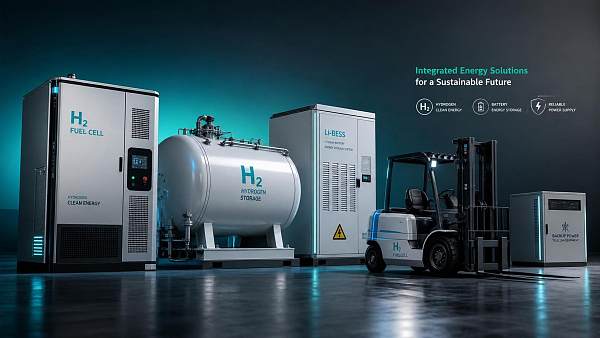
The biggest mistake is choosing a power system by headline trend.
In practice, hydrogen fuel cells and lithium batteries solve different operating problems.
If a project depends on long runtime, fast refueling, and reduced idle charging, hydrogen fuel cells deserve serious attention.
If the site already has stable grid access, predictable duty cycles, and modest runtime demands, lithium batteries often win on simplicity.
That means the right question is not which technology is better overall.
The better question is which one fits the mission profile with fewer operational penalties.
How Hydrogen Fuel Cells and Lithium Batteries Work in Real Projects
Hydrogen fuel cells generate electricity from hydrogen and oxygen through an electrochemical process.
They keep producing power as long as fuel is supplied.
Lithium batteries store electricity and release it during use.
They must be recharged after discharge, which creates planned downtime or requires battery swapping.
This distinction becomes critical in fleets and backup systems.
A warehouse vehicle, service truck, telecom shelter, or hospital support unit has little tolerance for power interruption.
So the project model must account for energy delivery, recovery time, and site constraints together.
Core operating difference
- Hydrogen fuel cells support fast refueling and longer continuous operation.
- Lithium batteries support simpler installation and lower daily handling complexity.
- Hydrogen fuel cells need fuel logistics and storage planning.
- Lithium batteries need charging windows, electrical capacity, and thermal management.
Fleet Applications: Where Each Option Performs Best
For mobile fleets, usage intensity usually decides the outcome faster than equipment price.
Hydrogen fuel cells are especially attractive in multi-shift operations.
Forklifts, airport ground vehicles, port equipment, and service fleets often need near-continuous availability.
In those cases, charging delays can reduce fleet productivity and increase spare unit requirements.
Hydrogen fuel cells reduce that friction because refueling is quick and operationally familiar.
They also maintain steadier performance over long shifts, especially where weight and range matter.
Lithium batteries fit fleets with scheduled downtime, shorter routes, and strong charging infrastructure.
Municipal vehicles, campus fleets, and indoor industrial transport often fall into this category.
When overnight charging is easy and route planning is stable, battery systems are easier to manage.
Choose hydrogen fuel cells in fleet projects when
- Vehicles run across multiple shifts.
- Refueling speed matters more than charging convenience.
- Payload or range suffers under larger battery packs.
- Cold weather reduces battery efficiency and uptime.
Choose lithium batteries in fleet projects when
- Daily routes are short and highly predictable.
- Charging access is already available on site.
- Energy demand peaks are moderate.
- Initial deployment speed is a top priority.
Backup Power: Reliability Matters More Than Nameplate Capacity
Backup power projects need a different evaluation model.
The central issue is not only stored energy.
It is recovery time, runtime duration, resilience during outages, and dependence on local infrastructure.
Lithium batteries perform well for short-duration backup.
They are common in data rooms, building systems, distributed telecom nodes, and UPS applications.
Response is fast, integration is mature, and footprint can be relatively compact.
Hydrogen fuel cells become more compelling as outage duration increases.
For remote communications, microgrids, emergency facilities, and critical infrastructure, long-duration backup changes the economics.
A larger battery bank adds cost, weight, thermal controls, and recharge dependence.
Hydrogen fuel cells can extend runtime by increasing fuel availability rather than massively increasing battery size.
Cost, Infrastructure, and Safety Trade-Offs
Capital cost alone rarely tells the full story.
Project teams should compare total system cost across at least five dimensions.
- Energy infrastructure build-out.
- Downtime or lost asset utilization.
- Maintenance and replacement cycles.
- Safety compliance and operator training.
- Future expansion cost.
Lithium batteries usually look more accessible at small scale.
However, large fleets can face hidden charging bottlenecks, electrical upgrades, and replacement planning.
Hydrogen fuel cells often require higher upfront coordination.
Storage, refueling, permitting, and fuel supply contracts must be defined early.
Still, at higher utilization levels, hydrogen fuel cells can create better productivity economics.
Safety also needs a balanced view.
Hydrogen requires ventilation, leak detection, storage discipline, and trained procedures.
Lithium batteries require thermal runaway prevention, battery management systems, fire response planning, and end-of-life handling.
Neither option is risk-free.
The real issue is whether site operations can manage the specific risk profile well.
Quick comparison table
A Practical Decision Framework for Project Teams
A useful evaluation should stay grounded in operating facts.
That means running the same decision screen for every site or fleet segment.
Ask these questions first
- How many operating hours are required per day?
- Can the asset tolerate charging downtime?
- Is long-duration backup a real requirement or just a design assumption?
- What utility upgrades are needed for battery charging?
- Is hydrogen delivery, storage, or on-site generation realistic?
- What safety capabilities already exist on site?
- How will the system scale in three to five years?
From a planning standpoint, hydrogen fuel cells usually make more sense when uptime has a measurable commercial value.
Lithium batteries usually make more sense when simplicity and existing electrical access dominate the business case.
In some projects, the best answer is hybrid.
A battery handles fast response and short peaks, while hydrogen fuel cells extend runtime during longer demand periods.
Final Takeaway
Hydrogen fuel cells are not a universal replacement for lithium batteries.
Lithium batteries are not the default answer for every fleet or backup power project either.
For fleets, hydrogen fuel cells often fit high-utilization, fast-turn, multi-shift operations.
For backup power, hydrogen fuel cells become more attractive as duration, resilience, and remote deployment needs increase.
Lithium batteries remain strong where charging is easy, duty cycles are predictable, and short-duration coverage is enough.
The most reliable path is to model utilization, downtime cost, infrastructure readiness, and safety capability before committing to a technology.
That approach leads to a clearer answer than trend-based procurement ever will.
Get weekly intelligence in your inbox.
No noise. No sponsored content. Pure intelligence.
 Oct 08, 2026How Digital Health Improves Diagnostic Accuracy and Workflow in Clinical LabsHow Digital Health Improves Diagnostic Accuracy and Workflow in Clinical Labs
 Oct 07, 2026Selecting Voice Picking Systems for German Warehouses: Integration, Languages and ROISelecting Voice Picking Systems for German Warehouses: Integration, Languages and ROI
 Oct 06, 2026How to Choose Last Mile Dispatch Software for On-Time Delivery at ScaleHow to Choose Last Mile Dispatch Software for On-Time Delivery at Scale
 Oct 05, 2026Vietnam’s Consumer Electronics Market: Demand Shifts and Sourcing OpportunitiesVietnam’s Consumer Electronics Market: Demand Shifts and Sourcing Opportunities
 Oct 04, 2026Digital Health Investment Priorities for Providers: Improving Access, Outcomes, and EfficiencyDigital Health Investment Priorities for Providers: Improving Access, Outcomes, and Efficiency
 Oct 03, 2026How to Specify an FR4 Custom PCB Board for High-Voltage and High-Heat DesignsHow to Specify an FR4 Custom PCB Board for High-Voltage and High-Heat Designs
 Oct 02, 2026ERP Software Market Intelligence: Adoption, Pricing, and Vendor Signals to WatchERP Software Market Intelligence: Adoption, Pricing, and Vendor Signals to Watch
 Oct 01, 2026How to Select Calibrated Temperature Data Loggers for GMP Cold Storage MonitoringHow to Select Calibrated Temperature Data Loggers for GMP Cold Storage Monitoring
 Sep 30, 2026Custom Molded Rubber Pricing: What Drives Unit Cost and Tooling Fees?Custom Molded Rubber Pricing: What Drives Unit Cost and Tooling Fees?
 Sep 29, 2026How to Evaluate Energy Management Software Vendors for Multi-Site OperationsHow to Evaluate Energy Management Software Vendors for Multi-Site Operations
 Sep 28, 2026How to Select a DIN Rail Smart Meter for Multi-Circuit Energy MonitoringHow to Select a DIN Rail Smart Meter for Multi-Circuit Energy Monitoring
 Sep 27, 2026TWS Earbuds in Vietnam: Demand Drivers, Price Tiers, and Retail Channel OpportunitiesTWS Earbuds in Vietnam: Demand Drivers, Price Tiers, and Retail Channel Opportunities
 Sep 26, 2026How UAE Clinics Can Qualify a Smart Glucometer Supplier for Accuracy and ComplianceHow UAE Clinics Can Qualify a Smart Glucometer Supplier for Accuracy and Compliance
 Sep 25, 2026Buying Aesthetic Lasers in the USA: FDA Status, Wavelengths, and Service SupportBuying Aesthetic Lasers in the USA: FDA Status, Wavelengths, and Service Support
 Sep 24, 2026Laser Cutting Brass Sheet: How to Prevent Burrs and Heat Marks on Thin PartsLaser Cutting Brass Sheet: How to Prevent Burrs and Heat Marks on Thin Parts
 Sep 23, 2026How to Choose Lightweight ANC Headphones for Comfortable All-Day TravelHow to Choose Lightweight ANC Headphones for Comfortable All-Day Travel
 Sep 22, 2026IPX5 TWS Bluetooth Earbuds: What Protection Do They Offer for Workouts?IPX5 TWS Bluetooth Earbuds: What Protection Do They Offer for Workouts?
 Sep 21, 2026What to Look for in a Grid Integration Company for Utility-Scale Solar ProjectsWhat to Look for in a Grid Integration Company for Utility-Scale Solar Projects
 Sep 20, 2026Microgrid Controller Pricing: What Drives Cost in Commercial Energy Projects?Microgrid Controller Pricing: What Drives Cost in Commercial Energy Projects?
 Sep 19, 2026How to Choose a GaN Charger for Laptops Without Compromising Power or PortabilityHow to Choose a GaN Charger for Laptops Without Compromising Power or Portability
 Sep 18, 2026Floating Solar Farm Costs: CAPEX, OPEX, and the Site Factors That Shape ROIFloating Solar Farm Costs: CAPEX, OPEX, and the Site Factors That Shape ROI
 Sep 17, 2026Drone Delivery Solutions for Last-Mile Routes: Site, Payload, and Range PlanningDrone Delivery Solutions for Last-Mile Routes: Site, Payload, and Range Planning
 Sep 16, 2026When Low-Volume Electronics Manufacturing Makes More Sense Than Mass ProductionWhen Low-Volume Electronics Manufacturing Makes More Sense Than Mass Production
 Sep 15, 2026Wholesale WiFi Smart Switches: What Buyers Should Verify Before OrderingWholesale WiFi Smart Switches: What Buyers Should Verify Before Ordering
 Sep 14, 2026How to Select IoT Sensors for Reliable Monitoring in Harsh Industrial EnvironmentsHow to Select IoT Sensors for Reliable Monitoring in Harsh Industrial Environments
 Sep 13, 2026How Procurement Teams Can Improve Supplier Reliability With Supply Chain VisibilityHow Procurement Teams Can Improve Supplier Reliability With Supply Chain Visibility
 Sep 12, 2026Smart Manufacturing Trends 2026: What Leaders Should Prioritize for ROISmart Manufacturing Trends 2026: What Leaders Should Prioritize for ROI



























