What Does Grid Integration Consulting Cover for Utility-Scale Solar Projects?
For utility-scale solar developers, grid integration consulting is far more than a technical checkbox. It helps project managers assess interconnection requirements, identify grid risks early, coordinate with utilities, and align design, compliance, and commissioning with real-world network conditions. Understanding what grid integration consulting covers can reduce delays, control costs, and improve the bankability of large solar projects.
For project managers and engineering leads, the practical question is not whether grid integration matters. It is whether the consulting scope is broad enough to prevent expensive surprises later.
In utility-scale solar, the answer is usually yes. Strong grid integration consulting supports site selection, interconnection strategy, technical studies, compliance planning, plant controls, testing, and utility coordination.
That makes it a commercial decision as much as an engineering one. When handled early, it can shorten approval cycles, reduce redesign work, and improve confidence for investors, EPC teams, and offtakers.
What does grid integration consulting actually include?
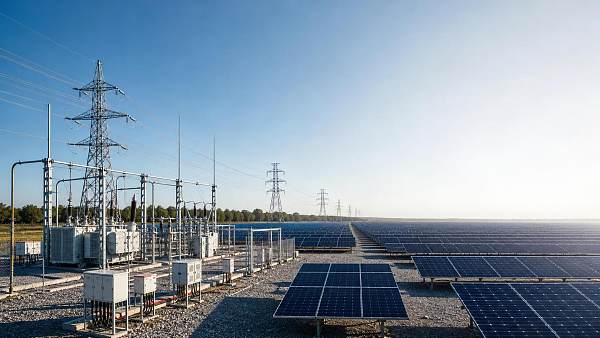
At a high level, grid integration consulting connects the solar plant design to the realities of the transmission or distribution network it will join. That sounds simple, but the work is usually cross-functional.
Consultants typically review grid codes, utility interconnection rules, project configuration, point of interconnection requirements, and expected system impacts before final design choices are locked in.
They also help developers understand what studies are required. These may include load flow, short-circuit, protection coordination, reactive power analysis, dynamic modeling, and transient stability assessments.
For project leaders, this matters because each study can influence equipment selection, plant layout, control strategy, and the final cost of compliance with utility requirements.
In practice, grid integration consulting often spans four linked responsibilities: risk identification, technical validation, utility interface management, and support through commissioning and energization.
Why do project managers bring consultants in early?
The biggest value usually comes before procurement and construction begin. Early-stage grid advice helps teams avoid committing to a site or concept that looks attractive on land economics alone.
Two solar sites with similar irradiation can have very different interconnection outcomes. Available capacity, network congestion, fault levels, upgrade needs, and utility timelines can change the project case significantly.
Without this visibility, developers may underestimate grid upgrade costs, overestimate achievable export capacity, or assume a commissioning schedule that the local utility cannot support.
Grid integration consultants help teams test assumptions early. They can flag where a project may face curtailment risk, lengthy queue delays, expensive substations, or stricter control requirements.
That early warning improves internal decision-making. It helps project managers choose whether to proceed, resize the plant, add storage, change the interconnection point, or adjust the delivery schedule.
How does consulting support the interconnection process?
One of the most important parts of grid integration consulting is navigating the formal interconnection pathway with the utility, transmission operator, or relevant grid authority.
That process usually includes application preparation, technical data submission, responses to utility comments, support during feasibility and impact studies, and review of study outcomes.
For utility-scale solar projects, the timeline risk here is substantial. Incomplete data packages, weak model quality, or slow responses to technical questions can extend project schedules by months.
Consultants reduce that friction by preparing structured submissions and translating utility requests into actionable engineering tasks for the owner, EPC, inverter supplier, and protection specialists.
They also help interpret the consequences of study results. A project team may receive utility conditions, but it still needs expert judgment to understand cost, design, and schedule implications.
Which technical topics are usually covered?
The technical scope depends on project size, grid strength, market rules, and whether storage is included. Still, several core work areas appear in most utility-scale solar engagements.
First is network impact analysis. Consultants assess how the project affects voltage, thermal loading, power quality, fault current contribution, and system stability under different operating conditions.
Second is plant control strategy. This includes active power control, reactive power capability, voltage regulation, ramp-rate performance, frequency response, and remote dispatch compatibility.
Third is electrical design alignment. The consultant checks whether transformer sizing, collector system configuration, inverter settings, substation design, and protection philosophy match grid requirements.
Fourth is model development and validation. Utilities increasingly require accurate simulation models for inverters, plant controllers, and storage systems before approving interconnection.
Fifth is compliance testing strategy. Before energization, the project must often demonstrate that actual plant performance matches modeled and contracted behavior under utility supervision.
How does grid integration consulting affect equipment and design decisions?
Many project teams treat interconnection as a separate workstream, but it often drives core engineering choices. This is where grid integration consulting becomes especially valuable for project control.
If the grid requires a wider reactive power range, faster voltage response, or specific fault ride-through behavior, inverter selection may need to change. That can alter both cost and procurement timing.
The same applies to plant controllers, STATCOMs, capacitor banks, transformers, relays, metering, and communication systems. Grid requirements often determine whether these items are optional or mandatory.
Consultants help teams understand those dependencies before detailed design is finalized. That reduces late-stage redesign, change orders, and disputes between developers, EPC contractors, and OEMs.
For project managers, this is a schedule protection tool. A clear consulting scope creates a cleaner handoff between grid studies, system design, factory settings, site testing, and utility acceptance.
Where do delays and hidden costs usually appear?
Most utility-scale solar delays related to integration come from a handful of recurring issues. The first is assuming interconnection approval is mainly administrative rather than deeply technical.
The second is underestimating network upgrade requirements. A project may trigger new protection schemes, substation extensions, reconductoring, or voltage support equipment outside the plant fence.
The third is poor model readiness. If inverter or plant controller models are incomplete, inconsistent, or rejected by the utility, study cycles can repeat and delay approval milestones.
The fourth is misalignment among stakeholders. Developers, EPC firms, OEMs, consultants, and utilities may each own part of the data, but no one fully owns integration risk unless defined clearly.
The fifth is leaving compliance testing too late. When test procedures, telemetry interfaces, or control settings are not validated early, commissioning becomes slower and more contentious.
Good grid integration consulting does not eliminate every delay. It does, however, make risks visible early enough for teams to budget, negotiate, sequence, and mitigate them realistically.
What should project leaders expect in the consulting deliverables?
From a management perspective, useful consulting is not just expert commentary. It should produce decision-ready outputs that help the project move through development, procurement, and commissioning.
Typical deliverables include interconnection strategy reviews, technical requirement matrices, gap assessments, study support documents, utility comment responses, model packages, and testing roadmaps.
Some engagements also include owner’s engineer support during design review, FAT and SAT input for control systems, commissioning witness support, and post-energization performance verification.
The best deliverables are not generic reports. They clearly identify required actions, responsible parties, critical dates, assumptions, and unresolved technical risks that could affect project execution.
For enterprise teams managing multiple sites, this structure is especially useful. It creates a repeatable process and supports stronger internal governance across different utilities and jurisdictions.
How do you know whether the consulting scope is sufficient?
Many owners ask for grid integration support, but the scope can still be too narrow. The real test is whether the consultant covers both study requirements and implementation consequences.
A weak scope might stop at high-level study coordination. A stronger scope connects grid findings to equipment decisions, utility negotiations, compliance evidence, and commissioning readiness.
Project managers should ask several practical questions. Who owns the utility interface? Who validates OEM models? Who tracks requirement changes? Who translates study outcomes into design actions?
They should also ask whether storage, hybrid controls, curtailment logic, communication protocols, and grid code testing are included when relevant. These points often become major late-stage issues.
If those responsibilities are vague, the project is likely carrying unmanaged integration risk. In large solar projects, that risk often appears as delay, cost growth, or underperformance after energization.
When is grid integration consulting most critical?
Grid integration consulting adds value across the project lifecycle, but it becomes especially critical in projects facing weak grids, congested networks, complex utility rules, or hybrid plant architectures.
It is also highly important when developers enter new countries or new utility territories. Local interconnection practices can vary more than many teams expect, even within the same broader market.
Projects using advanced inverter functions, DC-coupled or AC-coupled storage, merchant dispatch strategies, or strict grid support obligations usually need a more sophisticated consulting scope.
In these cases, integration is not just about obtaining permission to connect. It is about ensuring the plant can perform commercially under real dispatch, curtailment, and compliance conditions.
How does this influence project bankability and stakeholder confidence?
From an investment and governance standpoint, grid integration consulting strengthens project credibility because it turns uncertain technical exposure into a managed and documentable workstream.
Lenders, investors, and senior sponsors want confidence that interconnection assumptions are realistic, compliance obligations are understood, and utility-driven costs are not being overlooked.
Well-structured consulting supports that confidence by showing that the project has identified technical constraints, tested connection assumptions, and built an execution plan around actual grid conditions.
That can improve internal approvals as well. Executive stakeholders are more likely to support procurement and construction decisions when integration risks have been clearly mapped and assigned.
For large portfolios, the benefit scales further. Teams can compare projects more consistently, prioritize stronger opportunities, and avoid tying capital to sites with hidden grid obstacles.
Conclusion
So, what does grid integration consulting cover for utility-scale solar projects? In serious development work, it covers much more than interconnection paperwork or isolated engineering studies.
It supports site screening, utility coordination, technical analysis, equipment alignment, compliance planning, commissioning preparation, and risk control across the project lifecycle.
For project managers and engineering leaders, the main takeaway is straightforward. A strong grid integration consulting scope helps protect schedule, budget, performance, and bankability at the same time.
When evaluating support providers or defining internal workstreams, focus on whether the consulting effort connects technical study outputs to real project decisions. That is where the business value is created.
In utility-scale solar, grid integration is rarely a side issue. It is one of the practical foundations that determines whether a project moves smoothly from concept to energized asset.
Get weekly intelligence in your inbox.
No noise. No sponsored content. Pure intelligence.
 Sep 20, 2026Microgrid Controller Pricing: What Drives Cost in Commercial Energy Projects?Microgrid Controller Pricing: What Drives Cost in Commercial Energy Projects?
 Sep 19, 2026How to Choose a GaN Charger for Laptops Without Compromising Power or PortabilityHow to Choose a GaN Charger for Laptops Without Compromising Power or Portability
 Sep 18, 2026Floating Solar Farm Costs: CAPEX, OPEX, and the Site Factors That Shape ROIFloating Solar Farm Costs: CAPEX, OPEX, and the Site Factors That Shape ROI
 Sep 17, 2026Drone Delivery Solutions for Last-Mile Routes: Site, Payload, and Range PlanningDrone Delivery Solutions for Last-Mile Routes: Site, Payload, and Range Planning
 Sep 16, 2026When Low-Volume Electronics Manufacturing Makes More Sense Than Mass ProductionWhen Low-Volume Electronics Manufacturing Makes More Sense Than Mass Production
 Sep 15, 2026Wholesale WiFi Smart Switches: What Buyers Should Verify Before OrderingWholesale WiFi Smart Switches: What Buyers Should Verify Before Ordering
 Sep 14, 2026How to Select IoT Sensors for Reliable Monitoring in Harsh Industrial EnvironmentsHow to Select IoT Sensors for Reliable Monitoring in Harsh Industrial Environments
 Sep 13, 2026How Procurement Teams Can Improve Supplier Reliability With Supply Chain VisibilityHow Procurement Teams Can Improve Supplier Reliability With Supply Chain Visibility
 Sep 12, 2026Smart Manufacturing Trends 2026: What Leaders Should Prioritize for ROISmart Manufacturing Trends 2026: What Leaders Should Prioritize for ROI
 Sep 11, 2026B2B Market Analysis: How Buyers Evaluate Suppliers, Pricing, and Delivery RiskB2B Market Analysis: How Buyers Evaluate Suppliers, Pricing, and Delivery Risk
 Sep 10, 2026Residential Solar Kits in Canada: How to Size a System for Your Home and ClimateResidential Solar Kits in Canada: How to Size a System for Your Home and Climate
 Sep 09, 2026How to Specify a Syringe Assembly Line for High-Volume Sterile ProductionHow to Specify a Syringe Assembly Line for High-Volume Sterile Production
 Sep 08, 2026How to Evaluate Warehouse Robotics System Suppliers for Reliable Multi-Site DeploymentHow to Evaluate Warehouse Robotics System Suppliers for Reliable Multi-Site Deployment
 Sep 07, 2026Renewable Geothermal Energy Explained: How It Works for Heating and PowerRenewable Geothermal Energy Explained: How It Works for Heating and Power
 Sep 07, 2026How to Choose an Industrial Packaging Robot Manufacturer for Your Production LineHow to Choose an Industrial Packaging Robot Manufacturer for Your Production Line
 Sep 05, 2026How to Evaluate a Turnkey Hydro Turbine Generator Supplier for Remote Power ProjectsHow to Evaluate a Turnkey Hydro Turbine Generator Supplier for Remote Power Projects
 Sep 04, 2026Automated Ultrasonic Welding for Thermoplastic Assemblies: Process Controls That MatterAutomated Ultrasonic Welding for Thermoplastic Assemblies: Process Controls That Matter
 Sep 03, 2026Energy Forecasting for Grid Planning: Sizing Solar and Storage CapacityEnergy Forecasting for Grid Planning: Sizing Solar and Storage Capacity
 Sep 02, 2026Which Metrics Should an Energy Analytics Dashboard Track for Factory Energy Management?Which Metrics Should an Energy Analytics Dashboard Track for Factory Energy Management?
 Sep 01, 2026How Warehouse Voice Picking Improves Accuracy and Throughput in Order FulfillmentHow Warehouse Voice Picking Improves Accuracy and Throughput in Order Fulfillment
 Aug 31, 2026How to Automate Dropshipping Order Processing Without Overselling StockHow to Automate Dropshipping Order Processing Without Overselling Stock
 Aug 30, 2026How to Evaluate a Smart Lighting Supplier for Multi-Site Commercial ProjectsHow to Evaluate a Smart Lighting Supplier for Multi-Site Commercial Projects
 Aug 29, 2026Recent Advances in Smart Manufacturing and Materials Reshaping Factory InvestmentRecent Advances in Smart Manufacturing and Materials Reshaping Factory Investment
 Aug 29, 2026Selecting Lightweight Aluminum Extrusions for Strength-Critical Industrial DesignsSelecting Lightweight Aluminum Extrusions for Strength-Critical Industrial Designs
 Aug 29, 2026Vertical Powder Anodizing Explained: Process Controls for Uniform Coating QualityVertical Powder Anodizing Explained: Process Controls for Uniform Coating Quality
 Aug 29, 2026PV Module Product Due Diligence: What Buyers Should Verify Before ContractingPV Module Product Due Diligence: What Buyers Should Verify Before Contracting
 Aug 29, 2026Solar Design for Challenging Terrain: Managing Slope, Soil, and Shading RisksSolar Design for Challenging Terrain: Managing Slope, Soil, and Shading Risks