Laboratory Equipment Prices: Budgeting for Purchase and Operating Costs
A laboratory equipment price becomes meaningful only when it covers the configuration needed to produce usable results. A low quotation for an instrument without essential accessories, installation, or software can lead to a higher final bill than a complete offer. Operating expenses also matter: reagents, service visits, calibration, utilities, and downtime can continue long after the purchase order is closed.
Build the budget around the intended workload and an explicit ownership period. Separate one-time expenses from recurring costs, then compare quotations on the same technical and commercial basis. The result is a practical view of what the equipment will cost to put into service, keep running, and eventually replace.
Start with the configuration, not the catalog price
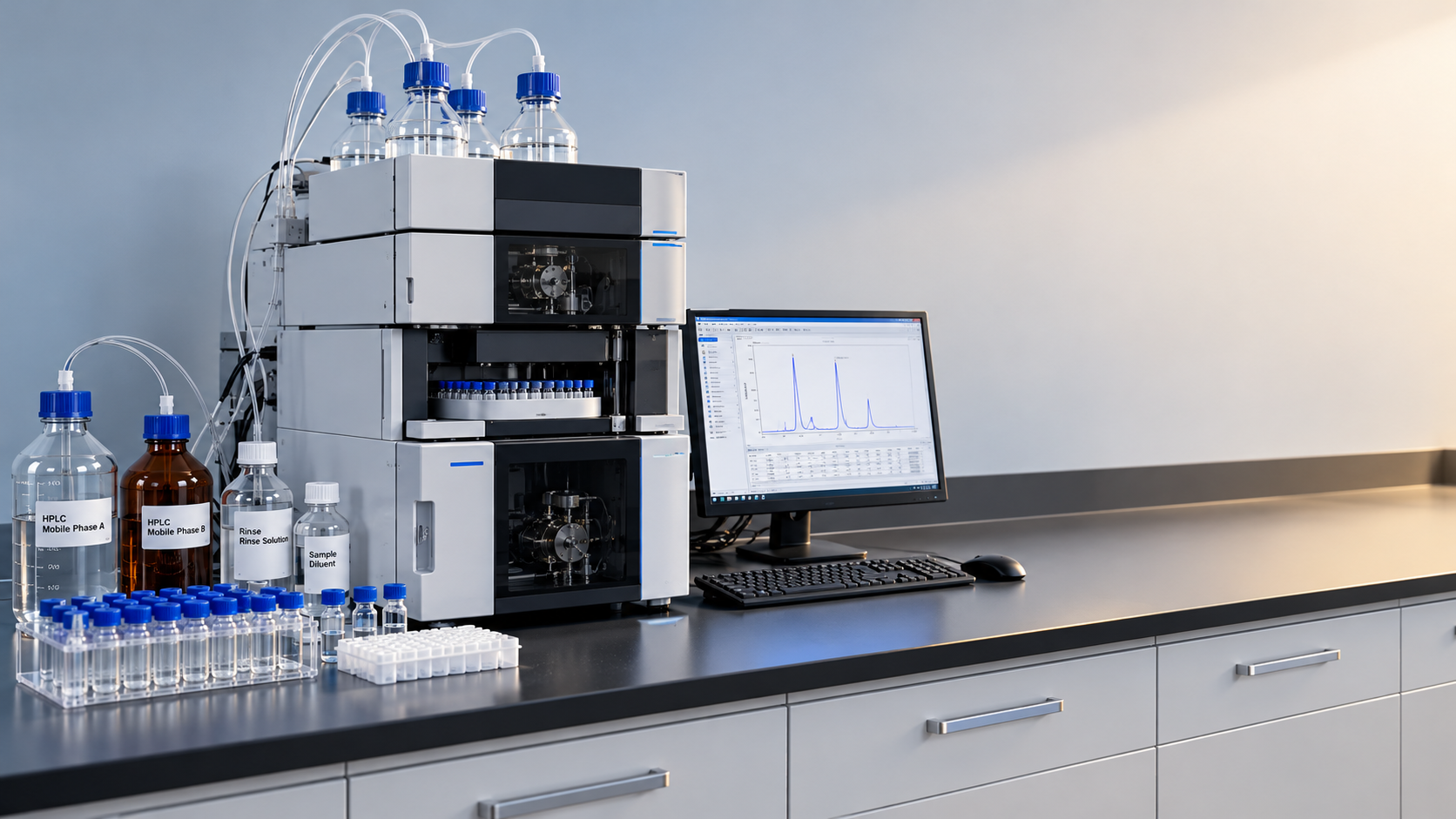
A quoted base unit rarely describes the entire working system. An analytical instrument, for example, could require a sample introduction system, detector, computer, software license, gas supply, and application-specific consumables. A centrifuge may need a separately priced rotor, buckets, adapters, and sealed containers. A laboratory freezer may require monitoring and an alarm connection before it is suitable for its intended role.
Ask for an itemized quotation that identifies everything included, everything excluded, and any accessory needed to meet the stated performance. Pay particular attention to options presented as future upgrades. If the initial configuration cannot process the required samples, that option belongs in the initial comparison.
Specifications should reflect the work rather than the highest available number. A wider measurement range has little value if the required sensitivity is only achieved over a narrower range. Likewise, nominal throughput may exclude sample preparation, calibration, cleaning, or data review. Compare the expected daily sample mix with the complete workflow, including changeovers and repeat measurements.
Capacity also needs context. A larger chamber or higher sample count per run can reduce batch handling, but it may consume more space and utilities or require more samples to be accumulated before a run. Where turnaround time matters more than peak volume, a smaller instrument with shorter cycles may fit the workload better.
Convert the quotation into an installed cost
Delivery to a loading dock is different from delivery into a working laboratory. Clarify who handles unloading, internal transport, unpacking, removal of packaging, and positioning. Heavy or sensitive equipment may require a lift, rigging, vibration control, or an access route that accommodates the packaged dimensions. These costs are easy to miss when the quotation lists freight as a single line.
Site preparation deserves the same scrutiny. Confirm electrical supply, plug type, ventilation, drainage, water quality, compressed air, gas connections, network access, and bench loading against the selected configuration. A stated instrument power rating alone does not establish the cost of the electrical work; dedicated circuits or building modifications may be needed.

Installation should also have a defined endpoint. Agree on who performs assembly, initial setup, safety checks, and a demonstration against the agreed acceptance criteria. Where installation qualification, operational qualification, or other documented verification is required, identify the protocols, records, and fees before ordering. A generic installation certificate may not contain the evidence needed for the intended application.
Import charges can change the comparison between domestic and overseas offers. Establish the currency, delivery terms, insurance, customs responsibilities, applicable duties and taxes, and the point at which ownership or risk transfers under the contract. Confirm these items for the destination and transaction rather than assuming that a delivered price includes every border charge.
Estimate operating cost from the actual workload
Recurring expenses should be linked to a realistic operating pattern: expected samples or batches, operating days, run length, and the proportion of time the equipment remains powered. Forecast both routine use and periods of lower utilization. A per-sample estimate based on continuous operation can make an instrument look inexpensive while concealing fixed service and licensing charges.
For reagent-intensive testing, calculate cost per reportable result rather than cost per kit. Allow for controls, calibration material, invalid runs, repeat tests, and unused material that expires. A larger pack with a lower unit price is not economical if it cannot be consumed within its usable life. Conversely, frequent small orders can add freight and create interruptions when lead times are long.
Energy estimates require more than a nameplate rating. Record whether the equipment cycles, runs continuously, or enters standby, and include connected devices such as chillers, pumps, or extraction systems where they are dedicated to the instrument. The nameplate figure describes a rated electrical characteristic; it does not, by itself, establish actual consumption over a year.
Waste disposal can also alter the economics. A method that uses less reagent per test may still generate a waste stream requiring separate collection or treatment. Include containers, handling, and contracted disposal where applicable, and compare alternatives using the same assumed sample volume.
Model total cost of ownership without hiding uncertainty
Use a consistent ownership period for each offer. A simple model is:
Total ownership cost = acquisition and installation + recurring operating costs + planned major replacements + financing costs, if applicable + end-of-life costs − expected residual value.
Keep taxes recoverable under the relevant arrangement separate from costs that remain payable. State whether future expenses are shown in current currency values or discounted to present value; mixing the two creates a misleading comparison. If a lease is being considered, include the full payment schedule, end-of-term conditions, service exclusions, and any purchase or return charge.
Use a baseline workload and then test a lower and higher volume. At low volume, service contracts, software fees, and calibration can dominate the cost per result. At higher volume, consumables, labor, and capacity constraints become more influential. Document the assumptions beside the calculation so a change in projected demand can be reflected without rebuilding the entire comparison.
A useful distinction is between committed costs and estimates. The signed service price for a specified term is different from an allowance for an unplanned repair. Obtain a price list for common replacement parts and a description of expected service intervals, but do not present an uncertain repair allowance as a quoted charge. Similarly, treat resale value as an assumption unless a binding buyback arrangement exists.
Service coverage and downtime deserve separate prices
Two service contracts with the same annual fee can provide very different protection. Read the coverage for labor, travel, spare parts, remote support, software updates, preventive maintenance, and emergency callouts. Identify exclusions for wear parts, consumables, accidental damage, and faults caused by utilities. Confirm when warranty coverage starts and whether installation, relocation, or maintenance by a third party affects its terms.
Response time is not the same as restoration time. A contract may promise an initial reply within a defined period while leaving parts availability and repair completion unspecified. Ask where service personnel and critical spares are located, what happens if a part is unavailable, and whether a loan unit is offered. Where an instrument supports time-sensitive work, the cost of an interruption can exceed the repair invoice.
Estimate downtime using the consequences that apply to the workflow: outsourced testing, overtime, delayed release of results, or discarded samples. Avoid adding the same loss twice; for example, outsourced testing may already replace some of the lost internal capacity. A backup instrument or external laboratory arrangement has its own standing cost and capacity limits, which belong in the comparison.
Calibration, training, and data access
Calibration costs depend on the measurements that need to be supported. Specify the relevant range, points, tolerances or uncertainty, and the evidence required for traceability. A certificate covering a limited range may be less useful if routine work falls outside it. Also establish whether calibration is performed on site, whether equipment must be shipped away, and how long it will be unavailable.
Distinguish calibration from routine verification and preventive maintenance. They address different questions and may require separate visits or records. If the application is subject to a quality system or regulatory oversight, agree on the necessary documentation and acceptance criteria with the relevant quality function; do not assume that a supplier's standard package satisfies every use.
Training costs include more than the initial demonstration. Consider method setup, routine cleaning, troubleshooting, software administration, and the time needed to qualify personnel under local procedures. Clarify the number of sessions, whether training occurs on the installed configuration, and whether materials and follow-up support are included. Staff time during implementation is an internal cost even when the supplier's session is included in the price.
Data access can become an unexpected continuing expense. Confirm the format and completeness of exported results, audit records where applicable, backup arrangements, and access after a license expires. A low initial software fee is less attractive if basic reporting, additional workstations, or historical data access require separate recurring licenses.
Compare offers on a common scope
Before selecting a quotation, align each offer to the same performance requirements, accessories, delivery point, acceptance tests, training, and service period. Mark missing items as unpriced rather than assigning them a zero cost. Request written clarification where a specification is ambiguous, especially when the quoted performance is conditional on a particular method, sample type, or environmental condition.
For refurbished equipment, include refurbishment scope, instrument history where available, software compatibility, remaining parts support, warranty, and the cost of restoring it to the required operating condition. A lower purchase price is meaningful only after those items are priced and the required performance has been demonstrated.
Finally, set payment milestones around identifiable deliverables. Delivery, successful installation, and documented acceptance are different events; the contract should say which event triggers each payment and how unresolved deficiencies will be handled. Retain the final configuration and cost assumptions with the purchase record so that future service and renewal decisions start from the same baseline.
Get weekly intelligence in your inbox.
No noise. No sponsored content. Pure intelligence.
 Nov 06, 2026China's New Energy Storage Capacity Reaches 167 GWChina's New Energy Storage Capacity Reaches 167 GW
 Nov 06, 2026Geothermal Heat Pumps for Schools: Site and Retrofit ConsiderationsGeothermal Heat Pumps for Schools: Site and Retrofit Considerations
 Nov 05, 2026Australian Grid-Forming Battery Trial Completed as Akaysha Seeks ContractsAustralian Grid-Forming Battery Trial Completed as Akaysha Seeks Contracts
 Nov 05, 2026Smart Kitchen Appliances for Meal Prep: Which Ones Save the Most Time?Smart Kitchen Appliances for Meal Prep: Which Ones Save the Most Time?
 Nov 04, 2026Solar Inverter Makers Raise Prices, Fueling Margin Recovery ExpectationsSolar Inverter Makers Raise Prices, Fueling Margin Recovery Expectations
 Nov 04, 2026Choosing Ophthalmic Equipment for Hospitals: Key Clinical and Purchasing CriteriaChoosing Ophthalmic Equipment for Hospitals: Key Clinical and Purchasing Criteria
 Nov 03, 2026Amazon Raises European FBA Fuel and Logistics Surcharge to 2% From November 2Amazon Raises European FBA Fuel and Logistics Surcharge to 2% From November 2
 Nov 03, 2026How Exporters Can Build an Editorial Framework for Overseas MarketsHow Exporters Can Build an Editorial Framework for Overseas Markets
 Nov 02, 2026China-Peru Free Trade Agreement Upgrade Takes Effect November 1China-Peru Free Trade Agreement Upgrade Takes Effect November 1
 Nov 02, 2026Choosing Digital Blood Pressure Monitors for Accurate Home ReadingsChoosing Digital Blood Pressure Monitors for Accurate Home Readings
 Nov 01, 2026Laboratory Equipment Prices: Budgeting for Purchase and Operating CostsLaboratory Equipment Prices: Budgeting for Purchase and Operating Costs
 Oct 31, 2026Chinese Portable Energy Storage Firms Report Overseas Order Growth in Q3Chinese Portable Energy Storage Firms Report Overseas Order Growth in Q3
 Oct 31, 2026SCARA Robot Cycle Times: How Payload and Travel Distance Affect SpeedSCARA Robot Cycle Times: How Payload and Travel Distance Affect Speed
 Oct 30, 2026Walmart and Symbotic Sign $6 Billion Global Automation AgreementWalmart and Symbotic Sign $6 Billion Global Automation Agreement
 Oct 30, 2026Choosing a Waterproof Folding Solar Charger: IP Ratings and Power OutputChoosing a Waterproof Folding Solar Charger: IP Ratings and Power Output
 Oct 29, 2026Poland to End SENT Registration for Certain Scrap Metal Road Shipments on October 28Poland to End SENT Registration for Certain Scrap Metal Road Shipments on October 28
 Oct 29, 2026Energy Storage System Quotation: How to Compare Scope and Hidden CostsEnergy Storage System Quotation: How to Compare Scope and Hidden Costs
 Oct 28, 2026BNEF Raises US Battery Storage Forecast 30%, Sees 213.9 GW by 2030BNEF Raises US Battery Storage Forecast 30%, Sees 213.9 GW by 2030
 Oct 28, 2026Global Trade Intelligence Pricing: Data Coverage, User Seats, and API CostsGlobal Trade Intelligence Pricing: Data Coverage, User Seats, and API Costs
 Oct 27, 2026Western Australia 1GW Data Centre With 5GWh Battery Enters Federal Review ProcessWestern Australia 1GW Data Centre With 5GWh Battery Enters Federal Review Process
 Oct 27, 2026USB-C Docking Stations in the UK: A Buyer's Guide to Compatibility and ChargingUSB-C Docking Stations in the UK: A Buyer's Guide to Compatibility and Charging
 Oct 26, 2026AgiBot Scales Up Production as 100 Expedition A3 Robots Stage Guinness Record AttemptAgiBot Scales Up Production as 100 Expedition A3 Robots Stage Guinness Record Attempt
 Oct 26, 2026Rehabilitation Equipment for Outpatient Clinics: What to Check Before BuyingRehabilitation Equipment for Outpatient Clinics: What to Check Before Buying
 Oct 25, 2026Teradyne Robotics and Sereact Partner on AI-Powered Returns AutomationTeradyne Robotics and Sereact Partner on AI-Powered Returns Automation
 Oct 25, 2026Smart Warehousing Integration: How to Connect Robots to an Existing WMSSmart Warehousing Integration: How to Connect Robots to an Existing WMS
 Oct 24, 2026Tesla Q3 2026 Storage Deployments Rank Second Highest as Revenue Falls 16%Tesla Q3 2026 Storage Deployments Rank Second Highest as Revenue Falls 16%
 Oct 24, 2026Freight Forwarding Services Pricing: Comparing Quotes Beyond Base RatesFreight Forwarding Services Pricing: Comparing Quotes Beyond Base Rates