
How to Evaluate B2B Ecommerce Platforms in Japan for Supplier Management and Local Compliance
Choosing the right b2b ecommerce platforms Japan offers is not just a technology decision—it directly affects supplier visibility, procurement efficiency, and regulatory confidence. For business evaluators entering or expanding in Japan, the key is to assess each platform through the lens of supplier management, data transparency, local compliance, and long-term operational fit in a highly structured market.
That point matters more in Japan than many first-time entrants expect. In some markets, a B2B platform is mainly a lead-generation tool or a digital catalog. In Japan, platform choice often sits much closer to operational trust. It influences how supplier credentials are verified, how transaction records are managed, how commercial communication is documented, and how smoothly overseas firms can work within local expectations around reliability, traceability, and business process discipline.
For evaluators comparing options, the real question is not which platform has the longest feature list. It is which one best supports supplier governance in a market where compliance, documentation quality, and relationship continuity carry unusual weight.
Why Japan requires a different evaluation approach
Many global teams begin with a familiar checklist: product search, RFQ workflows, messaging, payment tools, analytics, and ERP integration. Those functions still matter, but they are not enough for Japan-focused decisions.
Japan’s B2B environment is shaped by several practical realities:
- supplier relationships tend to be built more slowly and verified more carefully;
- documentation quality and consistency are often treated as trust indicators;
- industry-specific standards, product labeling, and quality assurance expectations can affect onboarding speed;
- local-language support is not a convenience feature but often a core adoption requirement;
- enterprise buyers may expect stronger alignment between digital workflows and internal approval processes.
This means that an effective platform for Japan is not simply one that helps users find suppliers. It should help evaluators judge supplier legitimacy, maintain auditable records, and reduce the friction between digital sourcing and real-world contracting.
That is especially relevant in sectors such as advanced manufacturing, electronics, healthcare technology, and regulated supply chains, where platform data may become part of vendor qualification, internal review, or dispute prevention.
Start with the supplier management model, not the interface
When reviewing b2b ecommerce platforms Japan buyers and cross-border sourcing teams may use, supplier management should come before user experience scoring. A clean dashboard can hide weak supplier controls.
Evaluators should look closely at how the platform handles four supplier-management functions.
Supplier identity and business verification
The first layer is basic but often underestimated: how the platform verifies that a supplier is a real operating business with a traceable corporate identity. Useful signals include legal entity information, registration details, address validation, operating history, export capability, production role, and whether the company is a manufacturer, trader, distributor, or service intermediary.
In Japan, where buyers may place a premium on stability and accountability, vague profiles are a red flag. A platform that allows suppliers to present themselves with minimal verification can create downstream procurement risk, especially for overseas buyers who cannot easily conduct in-person checks.
Qualification depth
Beyond identity, the stronger platforms allow structured supplier qualification. That may include quality certifications, production capacity data, factory audit information, product testing records, sector-specific compliance documents, and past transaction references where permitted.
Not every platform will hold all of this natively, but evaluators should ask whether the system supports document collection, expiration tracking, and review workflows. If supplier credentials must be checked outside the platform in spreadsheets and email chains, procurement control weakens quickly.
Performance monitoring
Supplier management is not only about onboarding. The platform should support ongoing evaluation: delivery reliability, response time, defect trends, claim history, communication quality, and contract adherence. These indicators become particularly important when a platform is used to move from market discovery into repeat sourcing.
Without supplier performance visibility, a platform remains a sourcing directory rather than a supplier management tool.
Multi-tier visibility
For higher-risk sectors, evaluators should check whether the platform can support some level of sub-supplier or origin visibility. This matters for traceability, ESG reviews, sanctions screening, conflict mineral exposure, and business continuity planning. Many platforms still perform poorly here.
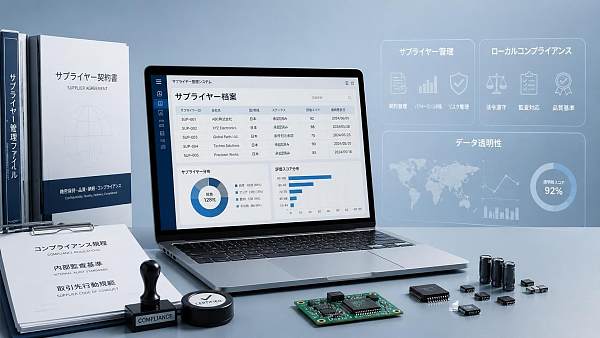
Local compliance is not a side issue
One of the most common mistakes in platform selection is treating compliance as something to solve after supplier discovery. In Japan, that sequencing can be expensive.
The relevant compliance scope depends on product category, transaction structure, and data flows, so no single checklist fits every case. Still, business evaluators should review at least five areas before shortlisting a platform.
Data handling and privacy
If the platform processes personal data, user accounts, contact records, or transaction-related information involving Japanese entities, teams should assess alignment with Japan’s Act on the Protection of Personal Information (APPI). The practical issue is not just legal wording. It is where data is stored, who can access it, how consent and disclosure are handled, and whether cross-border transfer practices are clearly explained.
If a vendor cannot explain its data governance model in clear operational terms, that is a meaningful risk signal.
Electronic contracts and record integrity
Many B2B workflows now rely on digital approvals, order confirmations, and electronic records. Evaluators should determine whether platform-generated records are structured in a way that supports internal audit needs and local commercial practice. In regulated or dispute-sensitive categories, retention controls and document traceability matter as much as speed.
The exact legal sufficiency of e-signature or digital contracting methods may depend on transaction type and document use case, so this point should be reviewed with counsel where necessary.
Industry-specific regulatory support
General platform compliance is not enough if the purchased goods fall into controlled or regulated categories. Medical devices, certain electronic components, industrial materials, and environmentally sensitive products may require additional documentation or product-specific declarations. A platform does not need to certify the product itself, but it should make it easier to collect, review, and update the required evidence.
Where that capability is missing, the platform adds sourcing volume but not sourcing control.
Tax and invoicing workflow compatibility
Japan’s invoicing and tax administration environment has become more digitized and procedural. Evaluators should verify whether the platform supports invoice data fields, documentation formats, and integration logic needed for accounting and procurement operations. This does not mean the platform must replace finance systems, but it should not create manual reconciliation burdens.
Trade compliance and restricted-party exposure
Cross-border buyers should also check whether the platform offers screening support for export controls, sanctions, end-use concerns, or controlled goods classifications, where relevant. In many cases these checks still happen outside the marketplace, but a platform that ignores them entirely may be poorly suited for enterprise use.
What strong data transparency looks like in practice
Business evaluators often say they want “better supplier data,” but that phrase is too broad to be useful. In the Japan market, data transparency should be judged by business usability rather than data quantity.
A transparent platform should help answer practical questions such as:
- Who is the actual contracting entity?
- Who manufactures the product, and where?
- What documentation supports quality or regulatory claims?
- How current is the supplier profile?
- Can changes in certifications or business status be tracked?
- Is communication history preserved in an auditable way?
- Can internal teams compare suppliers on consistent criteria?
This is where many broad B2B marketplaces fall short. They may offer large supplier volumes but limited data normalization. For evaluators, that creates a hidden workload: teams spend more time interpreting inconsistent profiles, validating claims manually, and rebuilding governance outside the platform.
In Japan, where buyers frequently value consistency and procedural clarity, normalized data is not just convenient. It directly affects speed of trust formation.
How to compare platform types realistically
Not all platforms serving Japan play the same role. Evaluators should avoid comparing unlike models as if they were interchangeable.
Open marketplaces
These are useful for broad supplier discovery and price visibility. They can work well during market scanning or early sourcing exploration. Their weakness is often uneven supplier validation and limited fit for deeper compliance workflows.
They are best treated as top-of-funnel sourcing tools unless they offer unusually strong enterprise controls.
Industry-focused platforms
Sector-specific platforms usually have smaller supplier bases but better contextual data, stronger technical filtering, and more relevant documentation structures. In Japan, this can be especially valuable in manufacturing, electronics, healthcare technology, or specialized industrial procurement.
The trade-off is narrower supplier coverage and sometimes weaker global integration maturity.
Procurement suites with supplier network functions
These platforms are stronger when the goal is governed supplier onboarding, approval workflows, and long-term procurement process control. They may be less effective for broad discovery but better for managing approved suppliers at scale.
For enterprise teams entering Japan with serious sourcing volume, this model often deserves more attention than generic marketplaces.
Hybrid sourcing and intelligence models
Some platforms sit between marketplace, supplier intelligence database, and workflow layer. These can be useful where buyers need both market visibility and decision support. Their value depends on editorial discipline, data freshness, and how well they distinguish verified intelligence from supplier self-description.
Questions evaluators should ask vendors before shortlisting
The most revealing platform discussions are usually not about features listed on the website. They are about edge cases and operating realities.
- How are Japanese suppliers verified, and how often is that verification refreshed?
- Can the platform distinguish manufacturer, distributor, and trading company roles clearly?
- What compliance documents can be collected, stored, and expiration-tracked?
- Is Japanese-language support available across onboarding, support, and documentation workflows?
- How are changes in supplier status communicated to buyers?
- What audit trail exists for messages, approvals, document uploads, and sourcing decisions?
- How does the platform handle data localization, cross-border access, and privacy controls?
- Which ERP, procurement, or supplier master systems can it integrate with?
- What percentage of supplier profiles are actively maintained versus passively listed? 【待核实】
- Can the vendor provide Japan-based customer examples in similar procurement contexts?
These questions help separate platforms built for enterprise decision support from those built mainly for traffic aggregation.
Common selection mistakes in the Japan market
One recurring mistake is overvaluing supplier count. A platform with thousands of loosely structured profiles may look stronger than a narrower platform with better qualification depth. For sourcing teams under pressure, volume can create a false sense of market access.
Another mistake is assuming that translation solves localization. It does not. Japanese market usability often depends on support quality, workflow design, documentation precision, and local business process alignment. A translated interface with weak local operating logic may struggle to gain adoption.
Some firms also underestimate internal change costs. If the platform cannot fit existing approval paths, vendor onboarding rules, or compliance review steps, teams may continue using email and spreadsheets around it. In that case, the platform becomes a surface layer rather than an operational system.
A final mistake is separating supplier management from market intelligence. In volatile sectors, supplier capability, policy shifts, quality trends, and regional production risk are connected. A platform that helps teams transact but not interpret supplier context may be too narrow for strategic sourcing in Japan.
What a good decision looks like
For most business evaluators, the best choice among b2b ecommerce platforms Japan offers will not be the most feature-rich or the most globally recognized. It will be the one that reduces verification effort, improves visibility into supplier quality, supports local compliance requirements, and fits the company’s actual procurement maturity.
If the immediate goal is supplier discovery, a marketplace-led approach may be enough. If the goal is approved supplier management in a regulated or quality-sensitive category, evaluators should lean toward platforms with stronger governance, documentation control, and integration capability. If the company is still learning the market, platforms that combine supplier visibility with reliable industry intelligence can be more valuable than transaction tools alone.
The key judgment is simple: does the platform help your team make defensible sourcing decisions in Japan, or does it merely make supplier search easier? Those are not the same outcome, and in Japan’s business environment, the difference is where most long-term value is either created or lost.
Get weekly intelligence in your inbox.
No noise. No sponsored content. Pure intelligence.
 Oct 08, 2026How Digital Health Improves Diagnostic Accuracy and Workflow in Clinical LabsHow Digital Health Improves Diagnostic Accuracy and Workflow in Clinical Labs
 Oct 07, 2026Selecting Voice Picking Systems for German Warehouses: Integration, Languages and ROISelecting Voice Picking Systems for German Warehouses: Integration, Languages and ROI
 Oct 06, 2026How to Choose Last Mile Dispatch Software for On-Time Delivery at ScaleHow to Choose Last Mile Dispatch Software for On-Time Delivery at Scale
 Oct 05, 2026Vietnam’s Consumer Electronics Market: Demand Shifts and Sourcing OpportunitiesVietnam’s Consumer Electronics Market: Demand Shifts and Sourcing Opportunities
 Oct 04, 2026Digital Health Investment Priorities for Providers: Improving Access, Outcomes, and EfficiencyDigital Health Investment Priorities for Providers: Improving Access, Outcomes, and Efficiency
 Oct 03, 2026How to Specify an FR4 Custom PCB Board for High-Voltage and High-Heat DesignsHow to Specify an FR4 Custom PCB Board for High-Voltage and High-Heat Designs
 Oct 02, 2026ERP Software Market Intelligence: Adoption, Pricing, and Vendor Signals to WatchERP Software Market Intelligence: Adoption, Pricing, and Vendor Signals to Watch
 Oct 01, 2026How to Select Calibrated Temperature Data Loggers for GMP Cold Storage MonitoringHow to Select Calibrated Temperature Data Loggers for GMP Cold Storage Monitoring
 Sep 30, 2026Custom Molded Rubber Pricing: What Drives Unit Cost and Tooling Fees?Custom Molded Rubber Pricing: What Drives Unit Cost and Tooling Fees?
 Sep 29, 2026How to Evaluate Energy Management Software Vendors for Multi-Site OperationsHow to Evaluate Energy Management Software Vendors for Multi-Site Operations
 Sep 28, 2026How to Select a DIN Rail Smart Meter for Multi-Circuit Energy MonitoringHow to Select a DIN Rail Smart Meter for Multi-Circuit Energy Monitoring
 Sep 27, 2026TWS Earbuds in Vietnam: Demand Drivers, Price Tiers, and Retail Channel OpportunitiesTWS Earbuds in Vietnam: Demand Drivers, Price Tiers, and Retail Channel Opportunities
 Sep 26, 2026How UAE Clinics Can Qualify a Smart Glucometer Supplier for Accuracy and ComplianceHow UAE Clinics Can Qualify a Smart Glucometer Supplier for Accuracy and Compliance
 Sep 25, 2026Buying Aesthetic Lasers in the USA: FDA Status, Wavelengths, and Service SupportBuying Aesthetic Lasers in the USA: FDA Status, Wavelengths, and Service Support
 Sep 24, 2026Laser Cutting Brass Sheet: How to Prevent Burrs and Heat Marks on Thin PartsLaser Cutting Brass Sheet: How to Prevent Burrs and Heat Marks on Thin Parts
 Sep 23, 2026How to Choose Lightweight ANC Headphones for Comfortable All-Day TravelHow to Choose Lightweight ANC Headphones for Comfortable All-Day Travel
 Sep 22, 2026IPX5 TWS Bluetooth Earbuds: What Protection Do They Offer for Workouts?IPX5 TWS Bluetooth Earbuds: What Protection Do They Offer for Workouts?
 Sep 21, 2026What to Look for in a Grid Integration Company for Utility-Scale Solar ProjectsWhat to Look for in a Grid Integration Company for Utility-Scale Solar Projects
 Sep 20, 2026Microgrid Controller Pricing: What Drives Cost in Commercial Energy Projects?Microgrid Controller Pricing: What Drives Cost in Commercial Energy Projects?
 Sep 19, 2026How to Choose a GaN Charger for Laptops Without Compromising Power or PortabilityHow to Choose a GaN Charger for Laptops Without Compromising Power or Portability
 Sep 18, 2026Floating Solar Farm Costs: CAPEX, OPEX, and the Site Factors That Shape ROIFloating Solar Farm Costs: CAPEX, OPEX, and the Site Factors That Shape ROI
 Sep 17, 2026Drone Delivery Solutions for Last-Mile Routes: Site, Payload, and Range PlanningDrone Delivery Solutions for Last-Mile Routes: Site, Payload, and Range Planning
 Sep 16, 2026When Low-Volume Electronics Manufacturing Makes More Sense Than Mass ProductionWhen Low-Volume Electronics Manufacturing Makes More Sense Than Mass Production
 Sep 15, 2026Wholesale WiFi Smart Switches: What Buyers Should Verify Before OrderingWholesale WiFi Smart Switches: What Buyers Should Verify Before Ordering
 Sep 14, 2026How to Select IoT Sensors for Reliable Monitoring in Harsh Industrial EnvironmentsHow to Select IoT Sensors for Reliable Monitoring in Harsh Industrial Environments
 Sep 13, 2026How Procurement Teams Can Improve Supplier Reliability With Supply Chain VisibilityHow Procurement Teams Can Improve Supplier Reliability With Supply Chain Visibility
 Sep 12, 2026Smart Manufacturing Trends 2026: What Leaders Should Prioritize for ROISmart Manufacturing Trends 2026: What Leaders Should Prioritize for ROI



























