
Selecting Voice Picking Systems for German Warehouses: Integration, Languages and ROI
Selecting a voice picking system for a German warehouse starts with the operating model, not the headset. A technically capable voice platform can still fail to produce reliable gains if it receives poor task data, cannot express local warehouse vocabulary clearly, or adds friction to existing exception processes. The strongest choice is the one that fits the current WMS logic, remains workable during network disruption, and can be expanded without rebuilding every dialogue when sites, shifts, or product categories change.
Voice is most effective where hands and eyes are already occupied: case picking from pallet locations, cold-store work, high-frequency replenishment, piece picking with repeated travel, or workflows where printed lists force frequent scanning and handling. It is less compelling when every pick requires visual product inspection, complex attribute comparison, or a screen-based decision that cannot be reduced to a short spoken confirmation. Before comparing suppliers, map which parts of the process are genuinely voice-suitable and which should remain scan- or screen-led.
Begin with the transaction flow
A voice application sits between the warehouse execution logic and the physical activity on the floor. Its instructions are only as accurate as the tasks released by the WMS or ERP environment. A selection should therefore begin by tracing a complete order path: wave creation, task allocation, route sequencing, location verification, quantity confirmation, short-pick handling, replenishment requests, packing hand-off, and inventory adjustment.
The integration question is not simply whether an interface exists. It is whether the interface supports the required transaction timing and exception states. A system that sends batches of tasks to a voice server may work well for stable pallet picking, yet create problems for dynamic e-commerce work where stock, priorities, and cut-off times change during a shift. Conversely, a tightly coupled real-time design can create avoidable dependence on wireless coverage and central system availability if a local fallback mode has not been planned.
Test the difficult transactions, not the demo path
Most demonstrations show a straightforward instruction: travel to a location, speak a check digit, confirm a quantity, and proceed. That path reveals little about deployment quality. The evaluation script should include the events that generate manual workarounds:
- A location has the correct product but a damaged carton, requiring a partial confirmation and a reason code.
- The requested stock is absent although the system shows quantity on hand, so the picker must trigger a controlled short-pick rather than skip the task informally.
- A substitute item is permitted only for selected orders or customers and needs a valid verification step.
- A replenishment task arrives while a picking task is already active, with clear rules on whether it interrupts the current assignment.
- Barcode validation is required for a regulated or high-value SKU, even though the primary interaction remains voice-led.
These cases expose whether the solution preserves the WMS as the source of truth. They also reveal whether the voice dialogue forces a workaround that changes inventory accuracy, service-level reporting, or audit trails. A polished speech engine does not compensate for an integration that records a completion before the warehouse process is actually complete.
Clarify where each business rule resides. Route logic, allocation, stock status, and order priority usually belong in the WMS. Dialogue phrasing, spoken prompts, recognition grammar, and device session handling belong in the voice layer. When responsibilities are blurred, later changes become expensive because an adjustment to warehouse policy requires modifications in several systems.
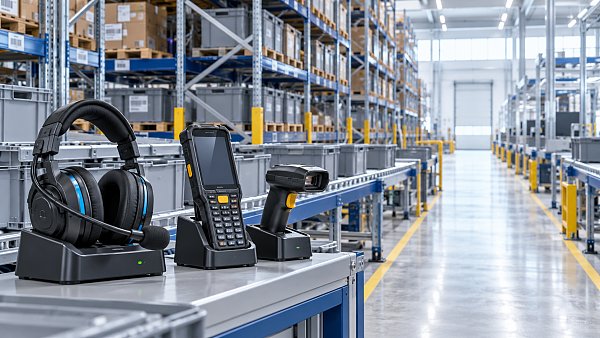
Architecture choices that affect deployment risk
Voice picking systems are commonly delivered as a component inside a broader warehouse platform, as a specialist application connected through standard interfaces, or as part of a mobile execution environment that also supports scanning and screen workflows. None is automatically superior. The relevant issue is the degree of coupling that the warehouse can sustain.
A native WMS module can simplify master-data alignment and support ownership, especially where task structures are already standardized across sites. A separate voice platform can offer more flexible dialogue design or device management, but it requires disciplined interface ownership, version control, and monitoring across system boundaries. In either case, obtain a documented message map covering task release, confirmation, cancellation, pause, reassignment, error response, and recovery after a connection loss.
Offline behavior deserves special attention in warehouses with metal racking, freezer rooms, mezzanines, outdoor staging, or incomplete wireless coverage. “Offline capable” can mean several different things. It may permit a device to retain the current task only; queue completed transactions for later posting; or continue receiving a locally cached sequence of tasks. These models have different inventory and safety implications. Confirm what occurs if the connection returns after stock has been reassigned elsewhere, and how duplicate confirmations are prevented.
Device selection should be tested under the actual working conditions. Headset comfort, microphone position, battery exchange method, glove compatibility, hearing protection, freezer-rated components, cleaning requirements, and charging discipline affect adoption more than a specification sheet suggests. A lightweight device with marginal noise rejection may perform poorly around conveyors, stretch-wrap stations, electric pallet trucks, or dock doors. A robust device can become a burden if it is difficult to sanitize, pair, or replace during a busy shift.
Language design is a process-control issue
German warehouses often rely on teams with varied first languages, temporary labor during peaks, and employees moving between sites. Multilingual capability should be assessed as a controlled operational design, rather than treated as a translation feature. The system must understand spoken confirmations accurately, but the wording of prompts also needs to match site terminology, safety language, and the way locations, quantities, and units are actually spoken.
A dialogue may be configured in German while allowing confirmations in another language, or each person may use a full language profile. The better approach depends on how much local terminology varies and whether supervisory communication, training material, and printed exception labels follow the same convention. A mixed-language setup can reduce training time, but it can create ambiguity if the spoken instruction and the physical label use different terms for the same container, zone, or unit of measure.
Numbers require explicit testing. German-language pronunciation of decimals, alphabetic characters, check digits, aisle labels, and compound location codes should be evaluated in the warehouse acoustic environment. A location such as “A-17-B-04” is not merely a speech-recognition problem; it is also a dialogue-design problem. Splitting a long code into short confirmation segments can raise reliability, yet adds time. Requiring only the final digits is quicker, but weakens location verification when slotting errors are common.
Recognition quality should be measured across accents, speech pace, background noise, and protective equipment. Avoid evaluating only with trained demonstrators or a small group of early adopters. Speech engines can be highly accurate while still producing unacceptable friction if the grammar is too narrow, prompts are poorly sequenced, or confirmation vocabulary resembles other commands. “Repeat,” “skip,” “short,” and “stop” must be sufficiently distinct in every enabled language and should not conflict with local shorthand.
Translation needs operational ownership
Technical translation alone is inadequate for warehouse voice dialogues. A literal phrase may be understandable while sounding unnatural or failing to distinguish a pick confirmation from an exception. Create an approved vocabulary for units, packaging types, locations, damage states, and workflow commands. Keep it versioned alongside WMS configuration, especially when a site introduces new product families or changes labeling conventions.
Training should focus on the first productive hours rather than a classroom script. New staff need to experience pauses, correction commands, missed recognition, battery replacement, lost connectivity, and short-pick escalation before those events occur under pressure. Supervisors need visibility of active sessions and exception queues, but the interface should not encourage informal task reassignment outside the WMS rules.
Calculate ROI from the work that changes
A credible business case separates measurable operational effects from assumptions. Removing paper lists, reducing device handling, and enabling a more continuous picking rhythm can reduce non-value-added motion. Voice may also strengthen confirmation discipline where pick errors arise from missed scans or rushed visual checks. Those benefits are not uniform across all zones. A low-volume warehouse with long travel distances may see a different result from a dense, high-velocity operation where each instruction is short and frequent.
Start with a baseline that distinguishes travel, search, verification, picking, exception handling, and post-pick administration. A single “lines per hour” number can conceal an unfavorable change. For example, output may improve while replenishment interruptions rise, or pick speed may increase while packing receives more quantity discrepancies. Measure rework, inventory adjustments, short-pick frequency, training time to independent work, device downtime, and the time needed to recover from failed sessions.
ROI becomes more reliable when the deployment is scoped by process family rather than by a broad promise to convert an entire site. Pick-to-carton workflows, pallet replenishment, and freezer operations should each have their own baseline and acceptance criteria. A process with many exceptions can still be suitable, but the dialogue must remove ambiguity rather than conceal it behind generic commands.
Use the pilot to validate configuration, not merely acceptance
A pilot should run long enough to encounter ordinary operational variation: different order mixes, shift changes, replenishment pressure, new staff, and periods of imperfect wireless performance. Selecting a quiet zone with clean master data can prove that speech recognition works, but it will not validate a production deployment.
Define acceptance around observable outcomes. The voice task sequence should reconcile with the WMS without manual correction. Each exception should have a recorded route and an accountable resolution step. Battery swaps must not lose task state. Lost devices, headset failures, and user-profile changes need controlled recovery procedures. If a picker cannot continue, the system should show where the task stopped and prevent duplicate physical work.
Configuration governance matters after go-live. Dialogue edits, language additions, device firmware changes, WMS releases, and warehouse layout changes should move through the same release discipline used for other operational systems. Seemingly small edits, such as changing a location prompt or recognition word, can affect throughput and error handling across a full shift.
The final selection should therefore be based on demonstrated transaction integrity, language usability under real conditions, manageable support demands, and an ROI model tied to the actual process being changed. A system that performs consistently through exceptions and operational change will remain useful long after the initial productivity comparison has lost relevance.
Get weekly intelligence in your inbox.
No noise. No sponsored content. Pure intelligence.
 Oct 08, 2026How Digital Health Improves Diagnostic Accuracy and Workflow in Clinical LabsHow Digital Health Improves Diagnostic Accuracy and Workflow in Clinical Labs
 Oct 07, 2026Selecting Voice Picking Systems for German Warehouses: Integration, Languages and ROISelecting Voice Picking Systems for German Warehouses: Integration, Languages and ROI
 Oct 06, 2026How to Choose Last Mile Dispatch Software for On-Time Delivery at ScaleHow to Choose Last Mile Dispatch Software for On-Time Delivery at Scale
 Oct 05, 2026Vietnam’s Consumer Electronics Market: Demand Shifts and Sourcing OpportunitiesVietnam’s Consumer Electronics Market: Demand Shifts and Sourcing Opportunities
 Oct 04, 2026Digital Health Investment Priorities for Providers: Improving Access, Outcomes, and EfficiencyDigital Health Investment Priorities for Providers: Improving Access, Outcomes, and Efficiency
 Oct 03, 2026How to Specify an FR4 Custom PCB Board for High-Voltage and High-Heat DesignsHow to Specify an FR4 Custom PCB Board for High-Voltage and High-Heat Designs
 Oct 02, 2026ERP Software Market Intelligence: Adoption, Pricing, and Vendor Signals to WatchERP Software Market Intelligence: Adoption, Pricing, and Vendor Signals to Watch
 Oct 01, 2026How to Select Calibrated Temperature Data Loggers for GMP Cold Storage MonitoringHow to Select Calibrated Temperature Data Loggers for GMP Cold Storage Monitoring
 Sep 30, 2026Custom Molded Rubber Pricing: What Drives Unit Cost and Tooling Fees?Custom Molded Rubber Pricing: What Drives Unit Cost and Tooling Fees?
 Sep 29, 2026How to Evaluate Energy Management Software Vendors for Multi-Site OperationsHow to Evaluate Energy Management Software Vendors for Multi-Site Operations
 Sep 28, 2026How to Select a DIN Rail Smart Meter for Multi-Circuit Energy MonitoringHow to Select a DIN Rail Smart Meter for Multi-Circuit Energy Monitoring
 Sep 27, 2026TWS Earbuds in Vietnam: Demand Drivers, Price Tiers, and Retail Channel OpportunitiesTWS Earbuds in Vietnam: Demand Drivers, Price Tiers, and Retail Channel Opportunities
 Sep 26, 2026How UAE Clinics Can Qualify a Smart Glucometer Supplier for Accuracy and ComplianceHow UAE Clinics Can Qualify a Smart Glucometer Supplier for Accuracy and Compliance
 Sep 25, 2026Buying Aesthetic Lasers in the USA: FDA Status, Wavelengths, and Service SupportBuying Aesthetic Lasers in the USA: FDA Status, Wavelengths, and Service Support
 Sep 24, 2026Laser Cutting Brass Sheet: How to Prevent Burrs and Heat Marks on Thin PartsLaser Cutting Brass Sheet: How to Prevent Burrs and Heat Marks on Thin Parts
 Sep 23, 2026How to Choose Lightweight ANC Headphones for Comfortable All-Day TravelHow to Choose Lightweight ANC Headphones for Comfortable All-Day Travel
 Sep 22, 2026IPX5 TWS Bluetooth Earbuds: What Protection Do They Offer for Workouts?IPX5 TWS Bluetooth Earbuds: What Protection Do They Offer for Workouts?
 Sep 21, 2026What to Look for in a Grid Integration Company for Utility-Scale Solar ProjectsWhat to Look for in a Grid Integration Company for Utility-Scale Solar Projects
 Sep 20, 2026Microgrid Controller Pricing: What Drives Cost in Commercial Energy Projects?Microgrid Controller Pricing: What Drives Cost in Commercial Energy Projects?
 Sep 19, 2026How to Choose a GaN Charger for Laptops Without Compromising Power or PortabilityHow to Choose a GaN Charger for Laptops Without Compromising Power or Portability
 Sep 18, 2026Floating Solar Farm Costs: CAPEX, OPEX, and the Site Factors That Shape ROIFloating Solar Farm Costs: CAPEX, OPEX, and the Site Factors That Shape ROI
 Sep 17, 2026Drone Delivery Solutions for Last-Mile Routes: Site, Payload, and Range PlanningDrone Delivery Solutions for Last-Mile Routes: Site, Payload, and Range Planning
 Sep 16, 2026When Low-Volume Electronics Manufacturing Makes More Sense Than Mass ProductionWhen Low-Volume Electronics Manufacturing Makes More Sense Than Mass Production
 Sep 15, 2026Wholesale WiFi Smart Switches: What Buyers Should Verify Before OrderingWholesale WiFi Smart Switches: What Buyers Should Verify Before Ordering
 Sep 14, 2026How to Select IoT Sensors for Reliable Monitoring in Harsh Industrial EnvironmentsHow to Select IoT Sensors for Reliable Monitoring in Harsh Industrial Environments
 Sep 13, 2026How Procurement Teams Can Improve Supplier Reliability With Supply Chain VisibilityHow Procurement Teams Can Improve Supplier Reliability With Supply Chain Visibility
 Sep 12, 2026Smart Manufacturing Trends 2026: What Leaders Should Prioritize for ROISmart Manufacturing Trends 2026: What Leaders Should Prioritize for ROI



























