Supply Chain Visibility for Supplier Management: How to Spot Delivery Risks
Late deliveries rarely come without warning, but procurement teams often lack a clear view of the signals that matter. Supply chain visibility for supplier management helps buyers connect supplier capacity, production milestones, inventory levels, and shipment updates to identify potential disruptions earlier.
This article explores practical ways to spot delivery risks, assess their impact, and work with suppliers on corrective action—before delays affect customers, production schedules, or procurement costs.
The most useful visibility links each critical purchase order to an achievable delivery date, supporting evidence, and a named owner. Start with suppliers whose failure would interrupt production or customer commitments.
Which Supplier Signals Give Procurement Teams Early Warning?
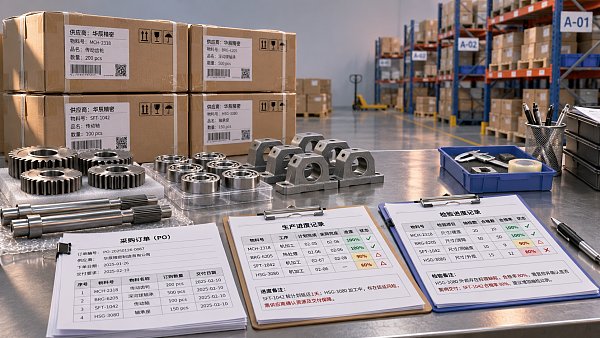
A late shipment notification may arrive too late to protect a production schedule. Earlier signals often appear in material availability, capacity commitments, production progress, and changes to promised dates.
Track these indicators against the date each order must arrive, not just against the supplier’s general performance. A reliable supplier can still face a problem on one critical order.
- Unconfirmed purchase orders: The supplier has not accepted the quantity, specification, or requested date within the agreed response window.
- Repeated date changes: The supplier revises a commitment, even if the latest date still appears to meet the buyer’s requirement.
- Missing production milestones: Material allocation, production start, inspection, or packaging has not occurred when the supplier’s schedule indicated it would.
- Constrained materials or components: A supplier lacks confirmed inbound dates, has low usable stock, or depends on a sub-supplier with a long lead time.
- Capacity pressure: Planned orders exceed available capacity, key equipment is unavailable, or the supplier reports competing demand.
- Quality holds: Inspection failures, unresolved deviations, or pending release documentation could prevent finished goods from shipping.
- Logistics exceptions: The freight booking is missing, cargo misses a cutoff, customs documents are incomplete, or the estimated arrival date moves.
These signals vary in reliability. A supplier’s forecast is useful, but a completed inspection record or carrier departure event provides stronger evidence of actual progress.
Agree on definitions before comparing reports. “Ready to ship” should specify whether goods have passed inspection, been packed, and received the documents needed for collection.
How Can You Tell Whether an Order Is Really at Risk?
Begin with the required arrival date and work backward through the remaining steps: production, inspection, dispatch, transit, customs clearance, and delivery to the receiving location.
Compare the time available with a realistic estimate for each unfinished step. Include normal variability and any known constraints, rather than relying solely on contractual lead times.
For example, an order due in 20 days may need eight days for production, two for inspection, and seven for transit and clearance. That leaves three days of buffer.
If a component shortage adds four days and no recovery action is available, the order is already at risk, even though its promised delivery date has not changed.
Record the assumptions behind this calculation. A transit estimate based on booked freight carries more weight than one based on an unconfirmed sailing or an unusually fast previous shipment.
Use a simple status for consistent triage, adapting thresholds to the product, route, and cost of disruption:
- Green: Required milestones are supported by current evidence, and the remaining schedule has an agreed buffer.
- Amber: A milestone is uncertain or late, or the remaining buffer is below the threshold agreed for that order.
- Red: The current plan is unlikely to meet the required date, or a critical dependency has no credible recovery plan.
A status should trigger a decision. For amber orders, request evidence and a recovery forecast; for red orders, escalate and evaluate alternatives immediately.
Which Suppliers and Orders Should You Monitor First?
Monitoring every supplier at the same frequency can overwhelm a procurement team. Prioritize the combinations of supplier, product, and order that could cause the greatest business disruption.
Consider both the likelihood of a delay and its consequences. A modest delay in a sole-source electronic component may matter more than a longer delay in readily available packaging.
Assess each critical item using the following questions:
- How many days of usable inventory are available at the actual consumption rate?
- Can an approved alternative supplier deliver the same specification within the required time?
- Would a delay stop production, affect a customer commitment, or create a regulatory issue?
- How long would qualification, tooling, or a production transfer take?
- Does the supplier rely on a constrained sub-supplier, location, transport route, or piece of equipment?
Use the answers to set review frequency. A sole-source component with little inventory may need daily attention; a replaceable, low-impact item may only need routine exception monitoring.
Reassess priorities when demand, inventory, lead times, or supplier conditions change. A previously low-risk item can become critical after an unexpected demand increase or a quality rejection.
What Information Should You Request From Suppliers?
Ask for information that changes a decision, and agree on who supplies it, how often it is updated, and what evidence supports it.
At minimum, a critical order should have a confirmed quantity, committed delivery date, current production stage, expected dispatch date, and a contact responsible for exceptions.
For high-impact orders, request additional detail where relevant: material availability, capacity allocation, inspection status, freight booking, and the latest estimate for arrival at your receiving site.
Supplier capacity deserves careful interpretation. Total factory capacity is less useful than the capacity allocated to your product, at the required specification, during the relevant production window.
Inventory figures also need context. Distinguish usable finished goods from work in progress, raw materials, rejected stock, and inventory already committed to another customer.
For sub-tier dependencies, start with materials or components that could stop delivery. Ask the direct supplier to identify constraints and recovery options, while respecting confidentiality and commercial agreements.
If a supplier cannot share live data, a weekly milestone update or a shared exception log can still improve decisions. Increase the frequency when a critical order approaches its deadline.
How Should Buyers Respond When a Delivery Risk Appears?
Once an alert is credible, move from monitoring to a documented recovery plan. The buyer and supplier should agree on the problem, next milestone, owner, and decision deadline.
- Confirm the facts. Identify affected order lines, quantities, locations, and the latest evidence. Separate a potential delay from a confirmed missed milestone.
- Calculate the exposure. Compare the revised arrival estimate with inventory coverage, production needs, customer commitments, and available buffer.
- Identify the constraint. Determine whether the issue is material supply, capacity, quality, documentation, transport, or a combination of factors.
- Compare recovery options. Consider resequencing production, partial shipments, approved substitutes, alternate routes, or an already qualified supplier.
- Assign actions and dates. Record who will do what, when progress will be reported, and when the next escalation decision is due.
- Verify completion. Check that the corrective action produced the expected milestone and update the delivery forecast as new evidence arrives.
Evaluate trade-offs before committing. Expedited freight may protect a customer order, but its cost, capacity, customs requirements, and actual arrival date should be confirmed first.
Partial delivery can protect production when the receiving team can use the available quantity. Confirm minimum usable quantities, packaging, documentation, and any impact on the remaining balance.
After the immediate issue is resolved, review its cause. Repeated shortages may require a revised ordering policy, a capacity agreement, additional qualification, or a change in supplier allocation.
How Do You Measure Whether Visibility Is Improving Delivery Performance?
Use a small set of measures that connects early warnings to outcomes. Review trends by supplier and critical product, while investigating exceptions at the order level.
- On-time delivery: The share of orders or order lines received by the agreed date. Define whether measurement uses the original or revised commitment.
- Confirmation timeliness: The share of orders accepted with a committed date within the agreed response window.
- Milestone adherence: The share of critical production, inspection, or dispatch milestones completed by their planned dates.
- Alert lead time: The time between the first credible warning and the required delivery date, showing whether teams have room to act.
- Forecast accuracy: The difference between predicted and actual arrival dates, measured at consistent points before delivery.
- Recovery performance: The share of at-risk orders recovered, alongside the cost of actions such as premium freight or overtime.
Set a baseline before introducing new reporting, then compare results over a meaningful period. A rise in alerts may initially reflect better detection rather than worsening supplier performance.
Avoid rewarding suppliers for simply moving promised dates. Preserve the original commitment alongside approved revisions so performance reviews show both the initial promise and subsequent changes.
Do You Need Supply Chain Visibility Software?
Software becomes more valuable when order volumes, supplier networks, or shipment complexity make manual updates unreliable. The buying decision should follow the workflow and data requirements.
A smaller team can begin with purchase order records and a shared exception tracker. The essential controls are current dates, clear ownership, supporting evidence, and a regular review cadence.
When evaluating a platform, ask whether it can connect order lines to supplier milestones and logistics events, identify missing updates, and route exceptions to the right people.
Check how the system handles data quality, permissions, supplier onboarding, integration costs, and conflicting dates. A dashboard cannot compensate for information that is inaccurate or never submitted.
Estimate value using the costs the team can influence, such as avoidable premium freight, manual follow-up time, and disruption exposure. Include implementation and supplier participation costs in the assessment.
Test the workflow with a limited group of critical suppliers and orders. Expand when users can demonstrate timely updates, useful alerts, and decisions that improve delivery outcomes.
How to Build a Practical Delivery Risk Review
Start by selecting a manageable group of critical orders. Document required arrival dates, remaining milestones, inventory coverage, supplier contacts, and the evidence needed to support each forecast.
Review exceptions with the relevant suppliers and internal stakeholders on an agreed schedule. Escalate immediately when an order crosses its decision deadline or its recovery options narrow.
Supply chain visibility for supplier management is most effective when it gives procurement enough time to act. Focus on credible signals, measurable exposure, and corrective actions with clear owners.
Get weekly intelligence in your inbox.
No noise. No sponsored content. Pure intelligence.
 Nov 22, 2026Golmud's 60 MW Liquid Air Storage Project Uses Fully Domestic EquipmentGolmud's 60 MW Liquid Air Storage Project Uses Fully Domestic Equipment
 Nov 22, 2026Precision Engineering for Medical Devices: Tolerances and MaterialsPrecision Engineering for Medical Devices: Tolerances and Materials
 Nov 21, 2026EDF Acquires 1GWh Holloway Battery Storage Project in AustraliaEDF Acquires 1GWh Holloway Battery Storage Project in Australia
 Nov 21, 2026Choosing Carbon Steel Grades for OEM Machined Parts: Key FactorsChoosing Carbon Steel Grades for OEM Machined Parts: Key Factors
 Nov 20, 2026China’s First Virtual Power Plant Report Says Capacity Target Met EarlyChina’s First Virtual Power Plant Report Says Capacity Target Met Early
 Nov 20, 2026Choosing an OEM Heavy Equipment Manufacturer: Capabilities and Quality ChecksChoosing an OEM Heavy Equipment Manufacturer: Capabilities and Quality Checks
 Nov 19, 2026India Adds Record 8.4 GW of Open-Access Solar in First Nine Months of 2026India Adds Record 8.4 GW of Open-Access Solar in First Nine Months of 2026
 Nov 19, 2026B2B Intelligence for Green Energy: Finding New Market OpportunitiesB2B Intelligence for Green Energy: Finding New Market Opportunities
 Nov 18, 2026Global Solar Additions Hit Record in 2025, Forecast to Fall in 2026Global Solar Additions Hit Record in 2025, Forecast to Fall in 2026
 Nov 18, 2026Supply Chain Visibility for Supplier Management: How to Spot Delivery RisksSupply Chain Visibility for Supplier Management: How to Spot Delivery Risks
 Nov 17, 2026US Battery Storage Deployment Tops 200 GWh; 74 GWh Forecast for 2026US Battery Storage Deployment Tops 200 GWh; 74 GWh Forecast for 2026
 Nov 17, 2026Choosing a Solar Tracker for Ground-Mount PV: Site and Design FactorsChoosing a Solar Tracker for Ground-Mount PV: Site and Design Factors
 Nov 16, 2026US Polysilicon and Solar Product Tariffs and Import Price Floor Take Effect December 4US Polysilicon and Solar Product Tariffs and Import Price Floor Take Effect December 4
 Nov 16, 2026How Industrial Buyers Can Evaluate B2B Intelligence Reports on SuppliersHow Industrial Buyers Can Evaluate B2B Intelligence Reports on Suppliers
 Nov 15, 2026CATL Sets Tener Sodium Delivery Timeline, Targeting LFP on CostCATL Sets Tener Sodium Delivery Timeline, Targeting LFP on Cost
 Nov 15, 2026Electric Wheelchairs for Disabled Adults: Choosing the Right Fit and RangeElectric Wheelchairs for Disabled Adults: Choosing the Right Fit and Range
 Nov 14, 2026China Expects Clean Energy to Meet All New Electricity Demand by 2030China Expects Clean Energy to Meet All New Electricity Demand by 2030
 Nov 14, 2026Choosing a Digital X-Ray Detector Supplier: Compatibility and SupportChoosing a Digital X-Ray Detector Supplier: Compatibility and Support
 Nov 13, 2026Ecuador Sets Zero VAT and Currency Outflow Tax Rates for Solar and Storage EquipmentEcuador Sets Zero VAT and Currency Outflow Tax Rates for Solar and Storage Equipment
 Nov 13, 2026Choosing an OEM Machined Parts Manufacturer: Quality, Capacity and Lead TimesChoosing an OEM Machined Parts Manufacturer: Quality, Capacity and Lead Times
 Nov 12, 2026South Africa Registers 2 GW of New Solar PV Capacity in Q3 2026South Africa Registers 2 GW of New Solar PV Capacity in Q3 2026
 Nov 12, 2026Mexico Supply Chain Market Research: Nearshoring Opportunities and RisksMexico Supply Chain Market Research: Nearshoring Opportunities and Risks
 Nov 11, 2026US Senate Advances Bipartisan BAAJA Energy Permitting BillUS Senate Advances Bipartisan BAAJA Energy Permitting Bill
 Nov 11, 2026Inventory Management Decision Support: When and How Much to ReorderInventory Management Decision Support: When and How Much to Reorder
 Nov 10, 2026China's Trade Surplus Tops $1 Trillion Through October as Exports Rise 35.2%China's Trade Surplus Tops $1 Trillion Through October as Exports Rise 35.2%
 Nov 10, 2026Choosing Surgical PPE: Gowns, Gloves, Masks and Eye ProtectionChoosing Surgical PPE: Gowns, Gloves, Masks and Eye Protection
 Nov 09, 2026US Solar Imports Shift as Domestic Manufacturing Investment Reshapes Global TradeUS Solar Imports Shift as Domestic Manufacturing Investment Reshapes Global Trade