IPX5 TWS Bluetooth Earbuds: What Protection Do They Offer for Workouts?
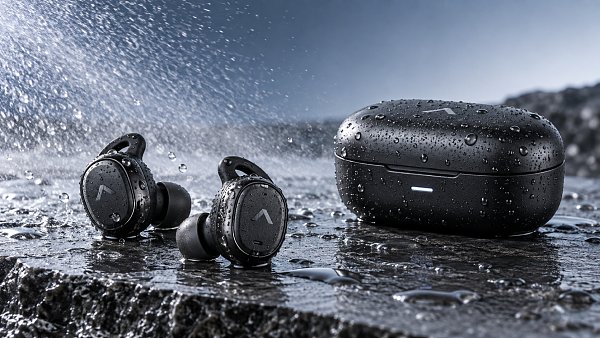
An IPX5 rating makes TWS Bluetooth earbuds a practical choice for sweat-heavy gym sessions, running in light rain, and other workouts where water arrives as splashes or spray rather than immersion. It does not mean the earbuds are waterproof, safe for swimming, or protected against a direct shower stream at close range. The distinction matters because “water resistant” is often interpreted more broadly than the rating allows.
For exercise use, IPX5 protection is generally enough when the real concern is perspiration, damp clothing, a sudden drizzle, or water splashed from a bottle. The more important question is not whether IPX5 earbuds can handle a workout in theory, but whether the way they are used, cleaned, charged, and stored stays within the conditions that the rating is designed to cover.
What IPX5 means in practical terms
“IP” refers to Ingress Protection, a classification system commonly associated with IEC 60529. The two characters after IP describe resistance to two different kinds of intrusion:
- The first digit relates to protection against solid objects and dust.
- The second digit relates to protection against water.
In IPX5, the “X” does not mean the earbuds have no dust protection. It means no dust-protection level is stated in that particular rating. The “5” means the device has been tested for resistance to water jets from any direction under defined laboratory conditions.
The IPX5 water test uses a controlled spray rather than immersion. Under IEC 60529 test conditions, water is directed at the enclosure through a specified nozzle for a minimum duration. This is more demanding than a few drops of rain, which explains why a properly designed IPX5 earbud can normally tolerate a demanding workout. Still, laboratory water-jet resistance is not a guarantee against every real-world water exposure.
The rating applies to the product configuration tested. For TWS Bluetooth earbuds, that usually means the individual left and right earbuds, not necessarily the charging case, charging contacts, cable, or open charging port. A buyer should never assume that an IPX5 earbud case has the same protection unless the manufacturer explicitly states it.
How IPX5 performs during different workouts
Exercise produces several types of moisture exposure, and they do not create the same risk. Sweat is usually the main issue indoors, while rain, spray, and wet handling matter more outdoors.
Gym training: IPX5 TWS Bluetooth earbuds are well suited to resistance training, treadmill running, cycling, HIIT sessions, and similar activities. Sweat can reach the outer housing, button area, microphone openings, and ear tips. An IPX5 enclosure is intended to resist water entering through these exposed areas when the product remains intact and properly assembled.
Outdoor running: Light rain and road spray are generally within the kind of exposure IPX5 is meant to address. Running in an occasional shower is different from deliberately holding the earbuds under a faucet. The latter concentrates water pressure into a small area at a much closer distance than normal rain.
High-sweat training: The rating is useful, but fit and maintenance become equally important. Heavy perspiration can flow behind the ear, accumulate around the ear tip, and reach speaker mesh or microphone ports repeatedly. IPX5 reduces the risk of water intrusion; it does not eliminate the effects of residue left behind after moisture dries.
Outdoor cycling and trail activity: These uses can expose earbuds to rain mixed with dust, mud, sunscreen, skin oil, and wind-driven moisture. IPX5 addresses water spray, not every contaminant in that mixture. A device can remain water resistant while still suffering clogged acoustic mesh, reduced microphone quality, or charging problems caused by residue.
Poolside, showering, and swimming: These uses are outside the sensible expectation for IPX5. Swimming involves immersion, movement through water, changing pressure, and prolonged exposure. Showering may seem mild, but close-range spray can be forceful, while soap and shampoo can affect seals and acoustic membranes. Water resistance should not be treated as permission to use the earbuds in either setting.
Sweat is not identical to clean water
A common misunderstanding is that a water-resistance rating fully describes sweat resistance. Sweat is mostly water, but it also contains salts, oils, and other compounds. Once it dries, those residues can remain around charging contacts, microphone openings, speaker grilles, and seams.
This does not mean IPX5 earbuds are unsuitable for sweating. It means that the rating solves only one part of the durability problem: preventing a defined amount of water from entering the enclosure during a controlled test. It does not guarantee that salt deposits will never affect audio openings or electrical contact points over time.
The charging pins deserve particular attention. The earbuds may tolerate sweat while worn, but putting them straight into a closed charging case while wet traps moisture in a confined space. If moisture reaches the metal contacts, charging can become intermittent. In more serious cases, repeated wet storage can contribute to corrosion or residue buildup.
A simple routine is more valuable than many users expect: wipe the earbuds with a soft dry cloth after exercise, allow them to air-dry before placing them in the case, and periodically clean the charging contacts with a dry, appropriate tool. Avoid forcing objects into the speaker mesh or using excessive liquid during cleaning.
The limits hidden behind the “X”
IPX5 describes water protection only. Because the first digit is “X,” it does not establish a stated level of dust ingress protection. That does not automatically make the earbuds fragile around dust, but it means consumers should not infer a dust rating from the water rating.
This difference can matter for trail runners, beach users, construction-adjacent environments, or people who keep earbuds loose in a bag with lint and debris. Fine particles can interfere with speaker mesh, microphones, and charging cases even where water exposure is not an issue.
Products marked, for example, IP55 provide declared protection in both areas: the first 5 refers to dust protection and the second 5 to water jets. An IPX5 label cannot be read as IP55. The missing digit is missing information, not an equivalent result.
Why an IPX5 rating does not make all earbuds equally durable
Two earbuds can carry the same IPX5 marking and still differ substantially in long-term workout reliability. The rating confirms performance under a defined ingress test, but it does not reveal every aspect of product construction.
Earbuds designed for active use benefit from secure physical fit because a loose earbud experiences more impacts, more handling, and more chances of being dropped onto wet ground. Ear hooks, stabilizing fins, or properly sized ear tips do not improve the IP rating itself, but they can reduce the situations in which water resistance is tested by accident rather than by design.
Build details also matter. Small gaps around buttons, charging contacts, microphones, and speaker openings require careful sealing or membrane design. The charging case is another frequent weak point: its lid, hinge area, USB port, and internal contact compartment may have a different water-resistance level from the earbuds. When comparing products, the rated component should be identified clearly rather than assumed.
Age and damage can also change real performance. IP testing is conducted on a product in test condition, not after repeated drops, exposure to sunscreen, heat in a parked car, or years of daily charging. A cracked housing, distorted ear tip mount, loose seam, or damaged mesh may compromise protection even though the original product rating remains printed on the package.
IPX4, IPX5, IPX7: the differences that matter for exercise
Water ratings are often presented as a simple ladder, but they describe different test exposures rather than a single universal measure of “more waterproof.” The following distinctions are useful when choosing workout earbuds:
For ordinary gym and running use, the practical difference between IPX4 and IPX5 may not always be decisive. Both can be suitable when the earbuds fit well and are dried before charging. IPX5 offers a larger margin against rain and spray, which can be worthwhile for frequent outdoor training or users who perspire heavily.
IPX7 may sound categorically better, but it answers a different risk: temporary immersion. It should not be assumed to outperform IPX5 against all forms of pressurized spray unless the manufacturer provides the relevant combined rating. An earbud with multiple tested protection levels may be marked with a combined designation, such as IPX5/IPX7, but consumers should rely on the exact stated specification rather than general assumptions.
Water resistance is not a cleaning instruction
Because IPX5 refers to jet resistance, some users conclude that rinsing earbuds under a tap is harmless. That is not a sound maintenance practice unless the manufacturer specifically permits it. The test standard uses controlled conditions; a household faucet varies in pressure, distance, water direction, temperature, and duration.
Cleaning products add further uncertainty. Alcohol wipes, soaps, detergents, disinfectants, hand sanitizer, and cosmetic products can affect coatings, adhesives, seals, or mesh materials depending on the formulation and the product design. A damp cloth is often sufficient for the outside of the earbuds, while a dry soft brush can help remove debris around non-sensitive areas. The maker’s care instructions should take precedence where they are more specific.
Never charge earbuds when visibly wet. Even if the earbuds themselves are rated IPX5, the charging process introduces exposed metal contacts, a battery-powered case, and a USB charging port that may not share the same protection level. Drying before charging is a basic safeguard, not an optional precaution.
What to check before relying on IPX5 for workouts
The IPX5 label is useful, but it should be read alongside a few practical details. Confirm whether the rating applies to both earbuds and the charging case. Check whether the manufacturer identifies a standard or merely uses broad terms such as “waterproof” without an IP code. Look for care guidance covering sweat, rain, cleaning, and charging after exercise.
Fit should be evaluated with the same seriousness as the rating. An earbud that shifts during running may require constant adjustment with wet hands, creating more opportunities for water and dirt to reach sensitive areas. It can also lose acoustic seal, which causes users to turn up volume unnecessarily. Proper ear tip sizing and stable retention usually matter more during exercise than a marginal difference between two nearby protection ratings.
Microphone performance deserves consideration for people who take calls outdoors. Water-resistant mesh can protect an opening, but wind, sweat, and blocked microphone ports may still reduce call clarity. The water rating should not be interpreted as a guarantee of voice quality in rain or wind.
For most workout routines, IPX5 TWS Bluetooth earbuds offer a sensible balance: they are designed to tolerate the sweat and incidental rain associated with active use, without implying the much broader protection suggested by the word “waterproof.” Treat them as exercise-ready electronics rather than aquatic equipment, dry them before returning them to the case, and avoid exposing the charging system to moisture. Used within those limits, IPX5 protection addresses the water risks that matter most during normal training.
Get weekly intelligence in your inbox.
No noise. No sponsored content. Pure intelligence.
 Sep 22, 2026IPX5 TWS Bluetooth Earbuds: What Protection Do They Offer for Workouts?IPX5 TWS Bluetooth Earbuds: What Protection Do They Offer for Workouts?
 Sep 21, 2026What to Look for in a Grid Integration Company for Utility-Scale Solar ProjectsWhat to Look for in a Grid Integration Company for Utility-Scale Solar Projects
 Sep 20, 2026Microgrid Controller Pricing: What Drives Cost in Commercial Energy Projects?Microgrid Controller Pricing: What Drives Cost in Commercial Energy Projects?
 Sep 19, 2026How to Choose a GaN Charger for Laptops Without Compromising Power or PortabilityHow to Choose a GaN Charger for Laptops Without Compromising Power or Portability
 Sep 18, 2026Floating Solar Farm Costs: CAPEX, OPEX, and the Site Factors That Shape ROIFloating Solar Farm Costs: CAPEX, OPEX, and the Site Factors That Shape ROI
 Sep 17, 2026Drone Delivery Solutions for Last-Mile Routes: Site, Payload, and Range PlanningDrone Delivery Solutions for Last-Mile Routes: Site, Payload, and Range Planning
 Sep 16, 2026When Low-Volume Electronics Manufacturing Makes More Sense Than Mass ProductionWhen Low-Volume Electronics Manufacturing Makes More Sense Than Mass Production
 Sep 15, 2026Wholesale WiFi Smart Switches: What Buyers Should Verify Before OrderingWholesale WiFi Smart Switches: What Buyers Should Verify Before Ordering
 Sep 14, 2026How to Select IoT Sensors for Reliable Monitoring in Harsh Industrial EnvironmentsHow to Select IoT Sensors for Reliable Monitoring in Harsh Industrial Environments
 Sep 13, 2026How Procurement Teams Can Improve Supplier Reliability With Supply Chain VisibilityHow Procurement Teams Can Improve Supplier Reliability With Supply Chain Visibility
 Sep 12, 2026Smart Manufacturing Trends 2026: What Leaders Should Prioritize for ROISmart Manufacturing Trends 2026: What Leaders Should Prioritize for ROI
 Sep 11, 2026B2B Market Analysis: How Buyers Evaluate Suppliers, Pricing, and Delivery RiskB2B Market Analysis: How Buyers Evaluate Suppliers, Pricing, and Delivery Risk
 Sep 10, 2026Residential Solar Kits in Canada: How to Size a System for Your Home and ClimateResidential Solar Kits in Canada: How to Size a System for Your Home and Climate
 Sep 09, 2026How to Specify a Syringe Assembly Line for High-Volume Sterile ProductionHow to Specify a Syringe Assembly Line for High-Volume Sterile Production
 Sep 08, 2026How to Evaluate Warehouse Robotics System Suppliers for Reliable Multi-Site DeploymentHow to Evaluate Warehouse Robotics System Suppliers for Reliable Multi-Site Deployment
 Sep 07, 2026Renewable Geothermal Energy Explained: How It Works for Heating and PowerRenewable Geothermal Energy Explained: How It Works for Heating and Power
 Sep 07, 2026How to Choose an Industrial Packaging Robot Manufacturer for Your Production LineHow to Choose an Industrial Packaging Robot Manufacturer for Your Production Line
 Sep 05, 2026How to Evaluate a Turnkey Hydro Turbine Generator Supplier for Remote Power ProjectsHow to Evaluate a Turnkey Hydro Turbine Generator Supplier for Remote Power Projects
 Sep 04, 2026Automated Ultrasonic Welding for Thermoplastic Assemblies: Process Controls That MatterAutomated Ultrasonic Welding for Thermoplastic Assemblies: Process Controls That Matter
 Sep 03, 2026Energy Forecasting for Grid Planning: Sizing Solar and Storage CapacityEnergy Forecasting for Grid Planning: Sizing Solar and Storage Capacity
 Sep 02, 2026Which Metrics Should an Energy Analytics Dashboard Track for Factory Energy Management?Which Metrics Should an Energy Analytics Dashboard Track for Factory Energy Management?
 Sep 01, 2026How Warehouse Voice Picking Improves Accuracy and Throughput in Order FulfillmentHow Warehouse Voice Picking Improves Accuracy and Throughput in Order Fulfillment
 Aug 31, 2026How to Automate Dropshipping Order Processing Without Overselling StockHow to Automate Dropshipping Order Processing Without Overselling Stock
 Aug 30, 2026How to Evaluate a Smart Lighting Supplier for Multi-Site Commercial ProjectsHow to Evaluate a Smart Lighting Supplier for Multi-Site Commercial Projects
 Aug 29, 2026Recent Advances in Smart Manufacturing and Materials Reshaping Factory InvestmentRecent Advances in Smart Manufacturing and Materials Reshaping Factory Investment
 Aug 29, 2026Selecting Lightweight Aluminum Extrusions for Strength-Critical Industrial DesignsSelecting Lightweight Aluminum Extrusions for Strength-Critical Industrial Designs
 Aug 29, 2026Vertical Powder Anodizing Explained: Process Controls for Uniform Coating QualityVertical Powder Anodizing Explained: Process Controls for Uniform Coating Quality