When Low-Volume Electronics Manufacturing Makes More Sense Than Mass Production
When Low-Volume Electronics Manufacturing Makes More Sense Than Mass Production
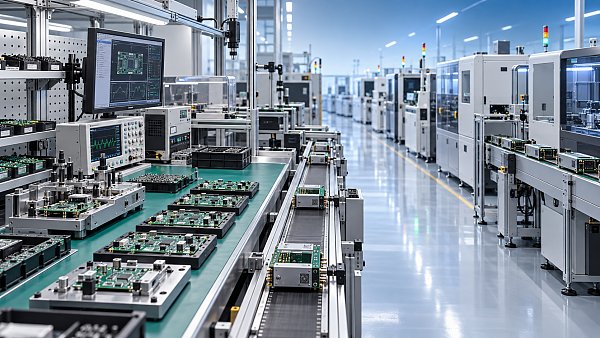
For business evaluators weighing production strategy, low volume manufacturing for electronics can create better commercial outcomes when demand, design maturity, or supply conditions remain uncertain.
Mass production lowers unit cost only after a company commits capital, tooling, inventory, and supplier capacity. That commitment becomes risky when forecasts are still assumptions.
Low-volume production is not simply a smaller version of high-volume manufacturing. It is a different operating model designed for learning, control, and faster decisions.
For smart electronics, industrial devices, healthcare technology, and connected equipment, the right production scale often depends more on market evidence than engineering ambition.
The central question is not whether mass production is cheaper per unit. It is whether its total risk-adjusted cost is justified by reliable demand.
Business evaluators should compare production choices through working capital, lead time, design change exposure, compliance requirements, supplier resilience, and expected product lifecycle.
In many cases, low volume manufacturing for electronics provides a disciplined bridge between prototype validation and a confident scale-up decision.
Start With the Decision That Actually Matters
The most useful starting point is to define the decision being evaluated. Is the company testing demand, serving a specialized customer, replacing an obsolete product, or preparing expansion?
Each situation changes the appropriate manufacturing strategy. A product with uncertain adoption should not be evaluated using the same assumptions as an established consumer device.
Procurement teams often focus first on quoted unit price. This can obscure costs related to excess stock, engineering changes, delayed launches, and quality failures.
A better comparison examines total landed cost over the product’s expected commercial life, including non-recurring engineering, tooling, testing, logistics, storage, and write-offs.
Low-volume production may have a higher assembly price, yet still deliver a lower total economic burden when product demand is limited or volatile.
This is especially relevant where annual demand ranges from dozens to several thousand units, depending on component complexity and manufacturing requirements.
Decision-makers should also ask how expensive it would be to reverse the decision. Recovering from underproduction differs greatly from unwinding excess inventory.
When the downside of holding unsold electronics is substantial, flexibility often has more strategic value than the theoretical savings of large production runs.
When Demand Is Too Uncertain for a Large Commitment
Uncertain demand is one of the strongest reasons to choose low volume manufacturing for electronics before committing to mass production.
Early forecasts may be influenced by sales optimism, distributor interest, pilot orders, or incomplete market research. None automatically proves sustained buying behavior.
Low-volume batches allow companies to test pricing, channel performance, product fit, installation complexity, and customer support needs with real market feedback.
This evidence is more valuable than a forecast because it shows whether customers will purchase, deploy, reorder, and recommend the product under normal conditions.
For enterprise electronics, a small number of customers can represent a large share of planned revenue. Losing one account may materially change volume assumptions.
Manufacturing in stages helps commercial teams adjust before inventory becomes a balance-sheet problem. It also protects cash for certification, software updates, and market development.
A staged approach is particularly suitable for new geographic markets where regulations, buying preferences, local support expectations, and distribution structures may differ.
Mass production becomes more appropriate when recurring demand is supported by contracts, replenishment patterns, qualified channels, and a stable understanding of customer requirements.
When the Product Design Will Continue to Change
Electronics designs rarely remain fixed during early commercialization. Field use can reveal issues involving thermal performance, firmware behavior, connectors, enclosure tolerances, or usability.
Large production runs magnify the cost of these discoveries. A minor board revision can leave thousands of assembled units needing rework, discounting, or disposal.
Low-volume manufacturing supports shorter design loops by limiting the number of units exposed to an unproven configuration at any one time.
Engineering teams can incorporate field findings into the next batch, improving reliability without disrupting an established high-volume production line.
This advantage matters when hardware and software evolve together. Firmware changes can expose limitations in memory, power management, sensors, communications modules, or component selection.
Product managers should distinguish between cosmetic refinement and changes that affect compliance, reliability, serviceability, security, or customer acceptance. The second category requires greater caution.
Low-volume suppliers are often better positioned to handle controlled engineering change orders, documentation updates, and traceable material substitutions across smaller batches.
Before scaling, companies should establish version control, approved component lists, test procedures, repair rules, and clear authority for accepting manufacturing changes.
When Specialized Applications Favor Flexibility Over Scale
Many electronics products are not designed for mass consumer markets. Their value comes from solving a narrow, high-consequence, or technically specific business problem.
Industrial controllers, laboratory instruments, medical accessories, communications equipment, energy monitoring systems, and defense-adjacent products may have limited but profitable demand.
These applications frequently require customization, longer product support, traceability, controlled documentation, or customer-specific interfaces that reduce the benefits of standard mass production.
A low-volume manufacturing model can accommodate variant management without forcing a company to hold excessive inventory across every possible configuration.
For evaluators, the critical metric is often contribution margin per customer solution, rather than the lowest possible cost per assembled circuit board.
A product with modest volumes may justify premium manufacturing practices when downtime, certification failure, safety exposure, or replacement delays carry significant commercial consequences.
Specialized buyers also value continuity. They may need the same electronics platform supplied for years, even after consumer component cycles have moved on.
In these conditions, supplier capability in lifecycle management, alternative sourcing, repair support, and controlled obsolescence can matter more than raw production throughput.
How Supplier Risk Changes the Production Calculation
Supplier selection is central to any low volume manufacturing for electronics decision because smaller orders can receive lower priority from volume-focused factories.
However, a specialized low-volume partner may offer stronger responsiveness, clearer communication, and more realistic engineering support than a factory optimized only for scale.
Business evaluators should assess whether the supplier can source components transparently, maintain traceability, manage approved alternates, and communicate allocation or obsolescence risks early.
Component availability remains a major concern in smart electronics supply chains. A quoted bill of materials can become unworkable if critical parts have extended lead times.
The supplier should explain its procurement approach, including authorized distribution, broker controls, incoming inspection, counterfeit prevention, and approval processes for substitutions.
Quality systems also deserve direct examination. Relevant evidence includes inspection records, functional test coverage, defect reporting, corrective-action practices, and serial-level traceability where required.
Low-volume orders can be an effective way to qualify a supplier before awarding larger business. They reveal communication quality, documentation discipline, and execution under real conditions.
This staged relationship reduces dependency risk and gives procurement teams practical evidence before making a long-term sourcing commitment.
Assess Tooling, Testing, and Unit Economics Together
Mass production economics are often built around tooling amortization, automated processes, panel utilization, and high purchasing volumes. These benefits require sufficient output to be meaningful.
For a low-demand product, dedicated tooling can raise break-even volume beyond the realistic market opportunity. The apparent unit-cost advantage may never be achieved.
Business evaluators should request a cost model that separates recurring unit cost from non-recurring engineering, fixtures, programming, test development, certification support, and tooling.
This makes the decision auditable. It also prevents suppliers from presenting an attractive assembly price while shifting essential costs into later project stages.
Testing deserves particular attention. A low-volume product without robust test coverage can create expensive field failures that erase any manufacturing savings.
Functional testing, in-circuit testing, burn-in, calibration, visual inspection, and end-of-line verification should match the device’s risk profile and intended application.
For regulated or mission-critical devices, the cost of traceable test records may be justified even when the annual production quantity remains small.
The right objective is not minimal manufacturing spend. It is the lowest credible cost of delivering a reliable product to the intended customer.
Use Low-Volume Production to Improve Time-to-Market
Time-to-market is frequently treated as a marketing issue, but it is also a manufacturing decision. Delayed production can postpone revenue, customer learning, and competitive positioning.
Large-volume programs often require longer planning cycles because suppliers need forecasts, material commitments, tooling approval, line scheduling, and more extensive production validation.
Low-volume manufacturing can shorten the path to market by allowing smaller material purchases, flexible scheduling, and focused production engineering for the first release.
This does not mean quality standards should be reduced. It means the program should prioritize validated essentials before investing in scale-specific optimization.
A practical launch strategy may begin with a controlled batch for selected customers, followed by a review of quality data, installation results, and demand signals.
The resulting feedback can improve the next build while commercial teams refine pricing, service models, training materials, and channel requirements.
For companies entering fast-moving technology segments, this learning speed can be more valuable than a marginal reduction in cost per unit.
Speed should still be governed by clear release criteria. A product should not be shipped merely because a manufacturer can assemble it quickly.
Build a Clear Scale-Up Trigger Before You Begin
Low-volume manufacturing works best when it is treated as a deliberate phase, not an indefinite substitute for manufacturing strategy.
Before the first build, leadership should define the evidence that would justify moving toward higher volumes, partial automation, or dedicated production capacity.
Useful triggers include repeat orders, forecast accuracy, stable product revisions, component availability, adequate gross margin, customer retention, and a demonstrated supplier quality record.
The threshold should be financial as well as operational. A company needs enough predictable demand to recover tooling and inventory investment within an acceptable timeframe.
Procurement, engineering, finance, and commercial leaders should agree on these conditions early. Otherwise, scale decisions may be driven by optimism or supplier pressure.
It is also useful to define stop conditions. If quality failures rise, demand weakens, or core components become constrained, the program may need revision before expansion.
This governance makes low-volume production more valuable because each batch produces information that supports a better next decision.
Rather than asking whether small production is temporary, executives should ask whether each production stage is reducing uncertainty at an acceptable cost.
A Practical Evaluation Framework for Business Teams
Business evaluators can use a simple framework when comparing low-volume and mass-production options: demand confidence, design stability, supply risk, capital exposure, and service requirements.
Demand confidence measures whether orders are proven, repeatable, and supported by credible customer commitments rather than broad market interest alone.
Design stability assesses whether hardware, firmware, enclosure, testing, and compliance documentation are mature enough to avoid costly revision after release.
Supply risk covers component lead times, single-source dependencies, supplier visibility, geographic exposure, and the ability to qualify alternatives without compromising product performance.
Capital exposure includes tooling, inventory, deposits, minimum order quantities, warehouse costs, and the financial impact of obsolete or unsold finished goods.
Service requirements address repairability, spare parts, warranty exposure, customer-specific variants, documentation, and the expected lifetime of the installed product base.
When several of these factors remain uncertain, low volume manufacturing for electronics is usually the more disciplined commercial choice.
When they are stable and demand is demonstrably repeatable, mass production can then deliver its intended advantages without creating disproportionate operational risk.
Conclusion: Choose the Scale That Matches the Evidence
Mass production is valuable when demand is dependable, designs are stable, supply is secure, and volume can absorb the investment required for efficiency.
Until those conditions exist, low-volume production can protect capital, accelerate learning, support design refinement, and provide a realistic basis for supplier qualification.
For business evaluators, the strongest decision is rarely based on unit price alone. It is based on the total risk and opportunity attached to each production path.
Low volume manufacturing for electronics makes the most sense when flexibility produces better evidence, better control, and a stronger route toward profitable scale.
Get weekly intelligence in your inbox.
No noise. No sponsored content. Pure intelligence.
 Sep 16, 2026When Low-Volume Electronics Manufacturing Makes More Sense Than Mass ProductionWhen Low-Volume Electronics Manufacturing Makes More Sense Than Mass Production
 Sep 15, 2026Wholesale WiFi Smart Switches: What Buyers Should Verify Before OrderingWholesale WiFi Smart Switches: What Buyers Should Verify Before Ordering
 Sep 14, 2026How to Select IoT Sensors for Reliable Monitoring in Harsh Industrial EnvironmentsHow to Select IoT Sensors for Reliable Monitoring in Harsh Industrial Environments
 Sep 13, 2026How Procurement Teams Can Improve Supplier Reliability With Supply Chain VisibilityHow Procurement Teams Can Improve Supplier Reliability With Supply Chain Visibility
 Sep 12, 2026Smart Manufacturing Trends 2026: What Leaders Should Prioritize for ROISmart Manufacturing Trends 2026: What Leaders Should Prioritize for ROI
 Sep 11, 2026B2B Market Analysis: How Buyers Evaluate Suppliers, Pricing, and Delivery RiskB2B Market Analysis: How Buyers Evaluate Suppliers, Pricing, and Delivery Risk
 Sep 10, 2026Residential Solar Kits in Canada: How to Size a System for Your Home and ClimateResidential Solar Kits in Canada: How to Size a System for Your Home and Climate
 Sep 09, 2026How to Specify a Syringe Assembly Line for High-Volume Sterile ProductionHow to Specify a Syringe Assembly Line for High-Volume Sterile Production
 Sep 08, 2026How to Evaluate Warehouse Robotics System Suppliers for Reliable Multi-Site DeploymentHow to Evaluate Warehouse Robotics System Suppliers for Reliable Multi-Site Deployment
 Sep 07, 2026Renewable Geothermal Energy Explained: How It Works for Heating and PowerRenewable Geothermal Energy Explained: How It Works for Heating and Power
 Sep 07, 2026How to Choose an Industrial Packaging Robot Manufacturer for Your Production LineHow to Choose an Industrial Packaging Robot Manufacturer for Your Production Line
 Sep 05, 2026How to Evaluate a Turnkey Hydro Turbine Generator Supplier for Remote Power ProjectsHow to Evaluate a Turnkey Hydro Turbine Generator Supplier for Remote Power Projects
 Sep 04, 2026Automated Ultrasonic Welding for Thermoplastic Assemblies: Process Controls That MatterAutomated Ultrasonic Welding for Thermoplastic Assemblies: Process Controls That Matter
 Sep 03, 2026Energy Forecasting for Grid Planning: Sizing Solar and Storage CapacityEnergy Forecasting for Grid Planning: Sizing Solar and Storage Capacity
 Sep 02, 2026Which Metrics Should an Energy Analytics Dashboard Track for Factory Energy Management?Which Metrics Should an Energy Analytics Dashboard Track for Factory Energy Management?
 Sep 01, 2026How Warehouse Voice Picking Improves Accuracy and Throughput in Order FulfillmentHow Warehouse Voice Picking Improves Accuracy and Throughput in Order Fulfillment
 Aug 31, 2026How to Automate Dropshipping Order Processing Without Overselling StockHow to Automate Dropshipping Order Processing Without Overselling Stock
 Aug 30, 2026How to Evaluate a Smart Lighting Supplier for Multi-Site Commercial ProjectsHow to Evaluate a Smart Lighting Supplier for Multi-Site Commercial Projects
 Aug 29, 2026Recent Advances in Smart Manufacturing and Materials Reshaping Factory InvestmentRecent Advances in Smart Manufacturing and Materials Reshaping Factory Investment
 Aug 29, 2026Selecting Lightweight Aluminum Extrusions for Strength-Critical Industrial DesignsSelecting Lightweight Aluminum Extrusions for Strength-Critical Industrial Designs
 Aug 29, 2026Vertical Powder Anodizing Explained: Process Controls for Uniform Coating QualityVertical Powder Anodizing Explained: Process Controls for Uniform Coating Quality
 Aug 29, 2026PV Module Product Due Diligence: What Buyers Should Verify Before ContractingPV Module Product Due Diligence: What Buyers Should Verify Before Contracting
 Aug 29, 2026Solar Design for Challenging Terrain: Managing Slope, Soil, and Shading RisksSolar Design for Challenging Terrain: Managing Slope, Soil, and Shading Risks
 Aug 29, 2026IS 16444 Smart Meter Requirements: Key Functions, Tests, and ComplianceIS 16444 Smart Meter Requirements: Key Functions, Tests, and Compliance
 Aug 29, 2026Rehabilitation Equipment Market Outlook: Demand Drivers and Growth SegmentsRehabilitation Equipment Market Outlook: Demand Drivers and Growth Segments
 Aug 29, 2026When Does Container Handling Automation Deliver ROI in Port Yard Operations?When Does Container Handling Automation Deliver ROI in Port Yard Operations?
 Aug 29, 2026Customs API Integration: A Practical Checklist for Automated Trade ComplianceCustoms API Integration: A Practical Checklist for Automated Trade Compliance