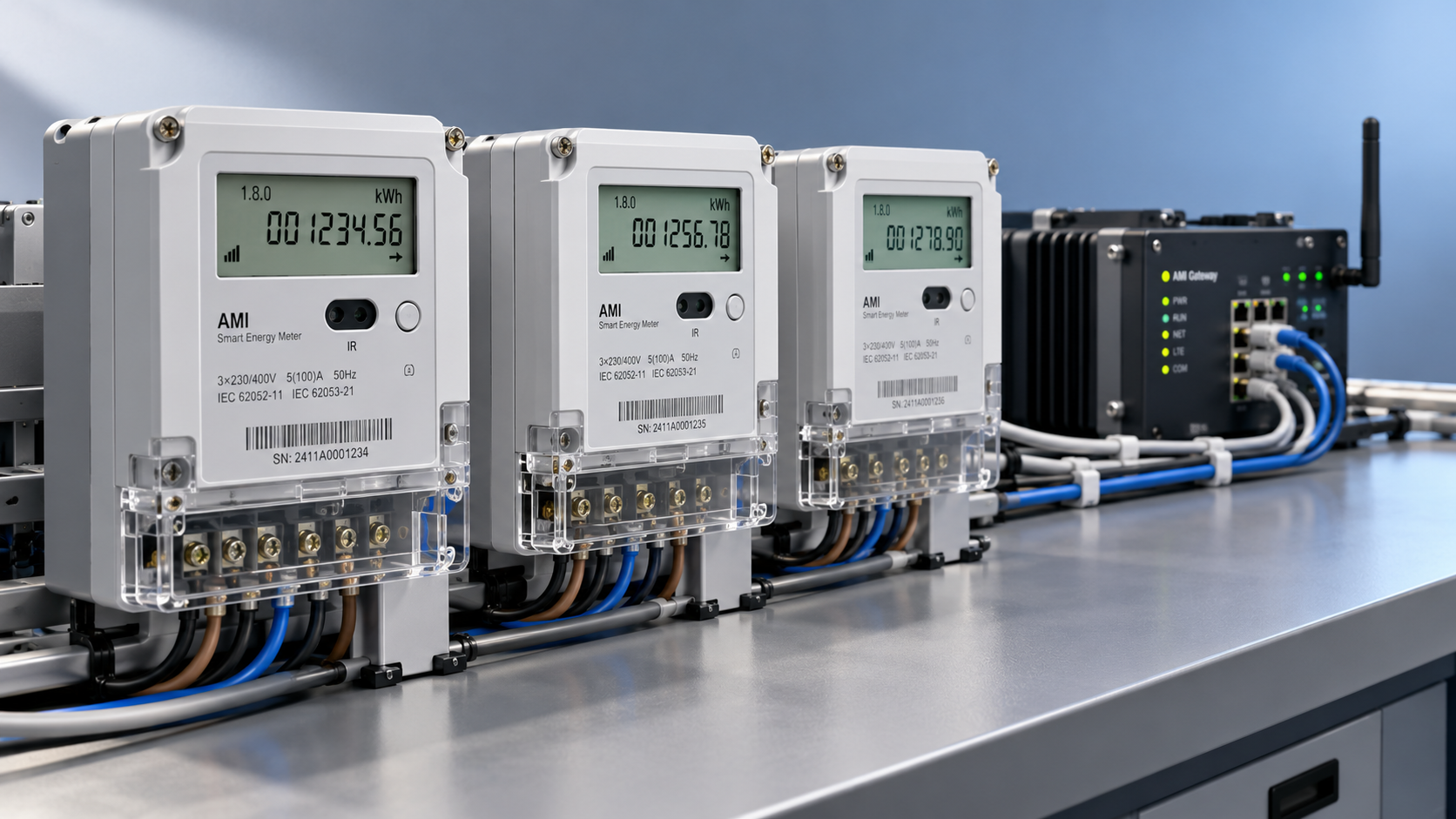
IS 16444 Smart Meter Requirements: Key Functions, Tests, and Compliance
Why IS 16444 Matters Beyond a Meter Specification
For quality control and safety professionals, an IS 16444 smart meter assessment is not simply a documentation exercise. The standard sits at the intersection of metering accuracy, electrical safety, communications capability, tamper resistance, and long-term field reliability. A meter can appear compliant on a supplier datasheet while still creating significant deployment risk if its test evidence is incomplete, its communications implementation is poorly controlled, or its production consistency has not been demonstrated.
IS 16444 is generally associated with AC static direct-connected watt-hour smart meters for Class 1 and Class 2 applications in India. In practical terms, it is relevant where a utility, distribution company, EPC contractor, meter manufacturer, or procurement team needs a meter that can measure energy reliably while supporting the operational functions expected in a modern advanced metering infrastructure environment.
The central procurement question is therefore not merely, “Does this product carry an IS 16444 reference?” It is: “Can this meter consistently meet the required performance and safety conditions in the actual network, installation environment, communication architecture, and service life expected by the project?”
Start With Scope: What the Standard Does and Does Not Decide
IS 16444 provides a core product framework for smart electricity meters, particularly direct-connected static meters used on low-voltage AC systems. It addresses the meter as an electrical measurement device with smart functions, rather than treating connectivity as a separate optional accessory.
That distinction matters. In conventional metering, buyers could focus mainly on accuracy class, rated voltage, rated current, display readability, and sealing arrangements. Smart-meter deployment adds further operational dependencies: interval data recording, event capture, remote data exchange, time synchronization, load control interfaces where applicable, firmware management, and interoperability with head-end and meter-data systems.
However, compliance with one product standard does not automatically prove that a meter will work successfully in every AMI project. Communication profiles, utility-specific functional specifications, cybersecurity requirements, data models, installation rules, and backend integration criteria may be governed by separate requirements. Teams should avoid assuming that an IS 16444 certificate alone resolves these interfaces.
- Product conformity concerns the meter’s construction, measurement, safety, and specified smart capabilities.
- System interoperability concerns whether the meter exchanges data correctly with the selected communications and head-end environment.
- Field suitability concerns local voltage quality, climate, enclosure exposure, installation workmanship, and operating behavior.
- Commercial acceptability concerns traceable test evidence, production quality, service arrangements, spare parts, and corrective-action capability.
This layered view is especially important for buyers approving new suppliers. A technically capable meter vendor may still be unsuitable if it cannot maintain configuration control across production lots, support utility-specific firmware versions, or provide credible evidence that its factory testing reflects the delivered product.
Core Functions Quality Teams Should Examine
The smart functions expected under IS 16444 should be reviewed as operational controls, not as a checklist of marketing features. Their value lies in the quality and integrity of the data they provide during billing, network monitoring, revenue protection, and customer service.
Energy Measurement and Accuracy
Accuracy remains the foundation. Class 1 and Class 2 designations indicate different permissible measurement performance levels under defined test conditions. For procurement purposes, the accuracy class should match the application rather than be treated as a generic quality ranking. A utility may require tighter performance for certain customer categories, loss-reduction programmes, or commercial arrangements, while a different installation group may be adequately served by another class.
Review the complete accuracy evidence, including tests at relevant current points, voltage conditions, power factors, and direction of energy flow where applicable. One of the common mistakes in supplier evaluation is accepting a single “accuracy passed” statement without examining the conditions under which the result was obtained. Metering performance can be affected by low-load behavior, distorted waveforms, voltage variation, temperature, current transformer arrangements outside the direct-meter scope, and firmware settings.
Load Profile, Time, and Data Integrity
A smart meter must record more than cumulative energy. Load-profile data, time-of-use registers, billing parameters, maximum demand records, and event histories may all influence utility operations and customer billing. These functions depend on a reliable real-time clock, defined interval handling, memory retention, and appropriate treatment of clock drift or synchronization events.
For quality assurance, the key point is traceability. The supplier should be able to show how time is set, how clock error is controlled, what occurs after loss of auxiliary conditions, how data is retained during interruptions, and whether parameter changes are auditable. A meter that retains measurements but loses the context of when they occurred can generate disputes that are difficult to resolve later.
Tamper and Event Recording
Smart-meter specifications commonly include event detection related to conditions such as terminal cover opening, magnetic influence, neutral disturbance, reverse energy flow, current reversal, power failure, and abnormal supply behavior. The precise expected events, thresholds, and reporting treatment should be confirmed against the applicable edition of the standard and the buyer’s project specification.
Tamper functionality is often overstated in commercial presentations. Detection does not necessarily mean prevention, and an event log does not prove intent or establish liability on its own. False positives can also burden field teams and undermine confidence in the programme. The relevant question is whether event detection has been tested against realistic installation conditions and whether the head-end system presents those events in a way that enables disciplined investigation.
Communication Capability Is Not the Same as Interoperability
Smart meters may use RF mesh, cellular, PLC, optical ports, or other communication paths depending on the project design. IS 16444-related compliance should be considered alongside the communication and protocol requirements specified by the purchaser. In India, DLMS/COSEM-based practices and related Indian standards are frequently relevant to meter data exchange, but the applicable requirements must be verified for the particular tender, utility, and system architecture.
QC teams should request evidence that the communication module, meter firmware, security keys, and data model correspond to the actual offered configuration. A type-tested base meter combined with a later communication-module change may create a material compliance question. The same concern applies where a supplier uses one firmware build for approval testing and another build for mass supply.
Tests That Deserve More Than a Certificate Review
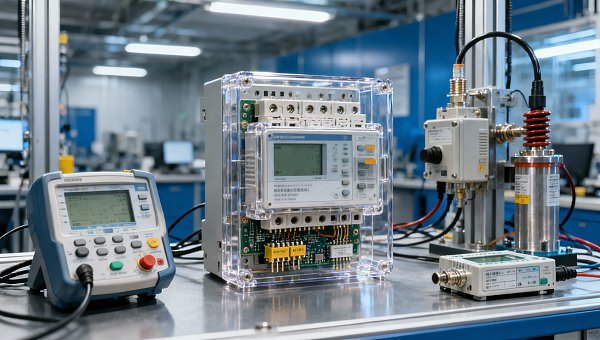
Certification documents are important, but they are only the starting point. A robust review examines test reports, laboratory competence, sample identity, report dates, standard edition, deviations, and links between tested samples and current production.
Electrical safety testing deserves particular attention because field failures may be driven by installation realities rather than normal laboratory operation. Loose terminal connections, conductor size variation, uneven tightening torque, overheating, moisture ingress, voltage surges, and unauthorized handling can all expose weaknesses that are not obvious in a basic visual inspection.
Where the contract permits, incoming inspection should include a risk-based sample plan that checks terminal construction, labels, sealing provisions, display operation, serial-number traceability, communication identity, firmware version, and basic functional behavior. High-risk projects may justify witness testing or factory audits before the first large production release.
Compliance Risks Hidden in the Supply Chain
The most consequential compliance failures often arise after the original type test. Smart meters are assembled products containing metrology components, printed circuit boards, communication modules, displays, relays in relevant designs, plastic enclosures, terminals, seals, and embedded software. A change in any of these can affect conformity.
Procurement teams should establish a formal change-control requirement. Suppliers should disclose changes to critical components, PCB layout, software, metrology ICs, communication hardware, enclosure material, terminal design, manufacturing location, and calibration procedures before shipment. The contract should also define whether a change requires notification, buyer approval, partial revalidation, or renewed third-party testing.
Another recurring issue is the difference between a sample and production output. A supplier may provide a compliant approval sample but lack sufficient calibration discipline, end-of-line testing, traceable work instructions, or environmental controls for volume production. Review the manufacturer’s quality system in operational terms: calibration records, test-station controls, rejection trends, firmware loading controls, serial-number management, corrective-action records, and final inspection release criteria.
For imported meters or cross-border component supply, document control becomes even more important. The buyer should be able to connect each delivered meter to its manufacturing batch, test status, software revision, module identity, and applicable compliance documentation. This traceability reduces the cost and uncertainty of a field investigation if failures emerge after commissioning.
How Safety Managers Should Assess Deployment Conditions
A meter can meet its declared standard requirements and still be poorly matched to the site. Safety and quality managers should assess the installation environment before finalizing the technical specification. This includes supply characteristics, expected voltage fluctuation, earthing practice, available panel space, cable routing, ambient temperature, moisture exposure, accessibility, sealing procedures, and the competence of installation contractors.
Particular caution is warranted in locations with frequent outages, high surge exposure, informal service modifications, or limited communications coverage. These conditions do not necessarily make smart-meter deployment unsuitable, but they change what must be tested and monitored. A project that treats communication failures, event alarms, and power interruptions as exceptional may produce misleading performance metrics in a challenging network.
Commissioning acceptance should therefore test a meaningful operational chain: meter energization, measurement verification, local display, communications registration, data arrival at the head-end system, time synchronization, event reporting, and record retrieval. Testing only the meter at the installation point leaves a gap between component compliance and usable system performance.
A More Defensible Approval Process
For supplier approval, the strongest approach is to combine document review with configuration verification and targeted testing. First, identify the exact meter variant: accuracy class, rated voltage and current, communication method, relay arrangement if any, firmware version, protocol profile, and enclosure configuration. Then confirm that the compliance evidence applies to that exact variant or that deviations have been formally assessed.
Next, separate mandatory standard requirements from buyer-specific operational requirements. This prevents a common tender-stage problem in which utility expectations are assumed to be covered by the base product standard. Finally, use pilot deployment data to validate the assumptions that laboratory reports cannot fully answer: communication availability, event quality, field installation errors, heat behavior, billing-data consistency, and service response.
The value of IS 16444 is that it provides a disciplined baseline for evaluating smart-meter quality and safety. Its limitation is that it cannot substitute for engineering judgment about the wider metering system. For teams responsible for approving a meter before large-scale deployment, the most useful decision is not simply whether a certificate exists, but whether the product, software, test evidence, manufacturing controls, and deployment conditions tell one consistent and traceable compliance story.
Get weekly intelligence in your inbox.
No noise. No sponsored content. Pure intelligence.
 Oct 24, 2026Tesla Q3 2026 Storage Deployments Rank Second Highest as Revenue Falls 16%Tesla Q3 2026 Storage Deployments Rank Second Highest as Revenue Falls 16%
 Oct 24, 2026Freight Forwarding Services Pricing: Comparing Quotes Beyond Base RatesFreight Forwarding Services Pricing: Comparing Quotes Beyond Base Rates
 Oct 23, 2026IndexBox Issues Off-Grid Solar Outlook to 2035, Forecasting 8.2% CAGRIndexBox Issues Off-Grid Solar Outlook to 2035, Forecasting 8.2% CAGR
 Oct 23, 2026NSF/ANSI 49 Biosafety Cabinets: Product Certification vs. Field TestingNSF/ANSI 49 Biosafety Cabinets: Product Certification vs. Field Testing
 Oct 22, 2026Mitsubishi Electric Develops Industry-First Humanoid Robot–CNC Machining SystemMitsubishi Electric Develops Industry-First Humanoid Robot–CNC Machining System
 Oct 22, 2026Aerospace Aluminum Machining: How to Control Distortion in Thin-Wall PartsAerospace Aluminum Machining: How to Control Distortion in Thin-Wall Parts
 Oct 21, 2026Genesis Energy commissions 200 MWh battery storage system at HuntlyGenesis Energy commissions 200 MWh battery storage system at Huntly
 Oct 21, 2026Buying AMI Smart Meters Wholesale: Compatibility Checks and Total CostsBuying AMI Smart Meters Wholesale: Compatibility Checks and Total Costs
 Oct 20, 2026Werner Enterprises Issues Q3 Earnings Warning as Costs RiseWerner Enterprises Issues Q3 Earnings Warning as Costs Rise
 Oct 20, 2026Are Digital Twins Viable for SMEs? Costs, Use Cases, and Data RequirementsAre Digital Twins Viable for SMEs? Costs, Use Cases, and Data Requirements
 Oct 19, 2026Choosing a Wholesale Servo Motor Exporter: Traceability and Warranty ChecksChoosing a Wholesale Servo Motor Exporter: Traceability and Warranty Checks
 Oct 18, 2026Syringe Manufacturing Equipment: Evaluating Throughput and Assembly AccuracySyringe Manufacturing Equipment: Evaluating Throughput and Assembly Accuracy
 Oct 17, 2026Air Freight Forwarding Services: How to Compare Quotes for Urgent ShipmentsAir Freight Forwarding Services: How to Compare Quotes for Urgent Shipments
 Oct 16, 2026Wholesale Solar Panels: How to Compare Bulk Quotes by Total Landed CostWholesale Solar Panels: How to Compare Bulk Quotes by Total Landed Cost
 Oct 15, 2026Supply Chain Intelligence for Sourcing: How to Vet New SuppliersSupply Chain Intelligence for Sourcing: How to Vet New Suppliers
 Oct 14, 2026How energy costs shape smart manufacturing investment in EuropeHow energy costs shape smart manufacturing investment in Europe
 Oct 14, 2026How skills shortages slow smart manufacturing in Southeast AsiaHow skills shortages slow smart manufacturing in Southeast Asia
 Oct 14, 2026How CNC wire-cut machining maintains tight tolerances in thick partsHow CNC wire-cut machining maintains tight tolerances in thick parts
 Oct 14, 2026Can automated feeding stabilize metal forming in smart factories?Can automated feeding stabilize metal forming in smart factories?
 Oct 14, 2026Can CT inspection detect internal defects in metal additive parts?Can CT inspection detect internal defects in metal additive parts?
 Oct 14, 2026When does additive manufacturing reduce lead time for spare parts?When does additive manufacturing reduce lead time for spare parts?
 Oct 14, 2026How production volume affects ROI on an automated painting lineHow production volume affects ROI on an automated painting line
 Oct 14, 2026What data does manufacturing bottleneck analysis consulting need?What data does manufacturing bottleneck analysis consulting need?
 Oct 14, 2026When should you hire a consultant for manufacturing bottlenecks?When should you hire a consultant for manufacturing bottlenecks?
 Oct 14, 2026What Are Electronics Exporters' Top Supply Chain Resilience Gaps in 2026?What Are Electronics Exporters' Top Supply Chain Resilience Gaps in 2026?
 Oct 14, 2026How Do You Measure AI Adoption Maturity in a Traditional Factory?How Do You Measure AI Adoption Maturity in a Traditional Factory?
 Oct 14, 2026Are Chinese AI-Assisted Surgical Devices Gaining Global Trust?Are Chinese AI-Assisted Surgical Devices Gaining Global Trust?