Are Digital Twins Viable for SMEs? Costs, Use Cases, and Data Requirements
Is digital twin technology only suitable for large enterprises or can SMEs use it too? SMEs can use it, but the business case depends less on company size than on scope, data readiness, and the cost of maintaining the model. A focused digital twin of a production bottleneck, refrigeration system, or warehouse operation can be viable without reproducing the entire business digitally.
The harder question is whether a twin offers enough value beyond a dashboard, simulation, or better maintenance planning. For a smaller business, choosing the simpler alternative is often the right decision. The following evaluation focuses on where digital twins earn their keep, what drives ownership costs, and what data must exist before a pilot deserves funding.
Buy a better decision, not a digital replica
For procurement purposes, a useful working definition is a digital representation of a physical asset or operating system, updated with relevant operational data and used to evaluate its condition or possible behavior. Definitions vary between vendors. A three-dimensional interface is optional; a credible connection between the model and real operations is not.
A dashboard shows that an oven is consuming more energy. A model-based twin might help estimate whether changing loading patterns or operating settings would reduce consumption without compromising process requirements. That additional decision support is what the buyer should evaluate—not the quality of the animation.
Ask the operational owner to complete this sentence: “When the model tells us X, we will do Y, and measure Z.” If nobody can identify the action, the project is not ready. If the same action follows from a simple threshold alarm, a digital twin may be unnecessary.
Where a small business can find a workable use case
The strongest starting point is usually a bounded operation with a recurring loss and an identifiable decision-maker. Company-wide visibility sounds attractive, but it introduces data dependencies before demonstrating value.
A manufacturing bottleneck
Consider a manufacturer whose delivery schedule depends on one machining cell. Modeling cycle times, queues, changeovers, and equipment availability could help compare production sequences before changing the schedule. The useful output is not a virtual factory; it is a better-supported choice between competing orders.
However, if operators record every interruption as “machine stopped,” the model cannot reliably distinguish breakdowns from missing materials or unavailable labor. Improving downtime codes may be the necessary first investment. A static simulation may also be sufficient if the business only needs an occasional capacity study.
Energy-intensive equipment
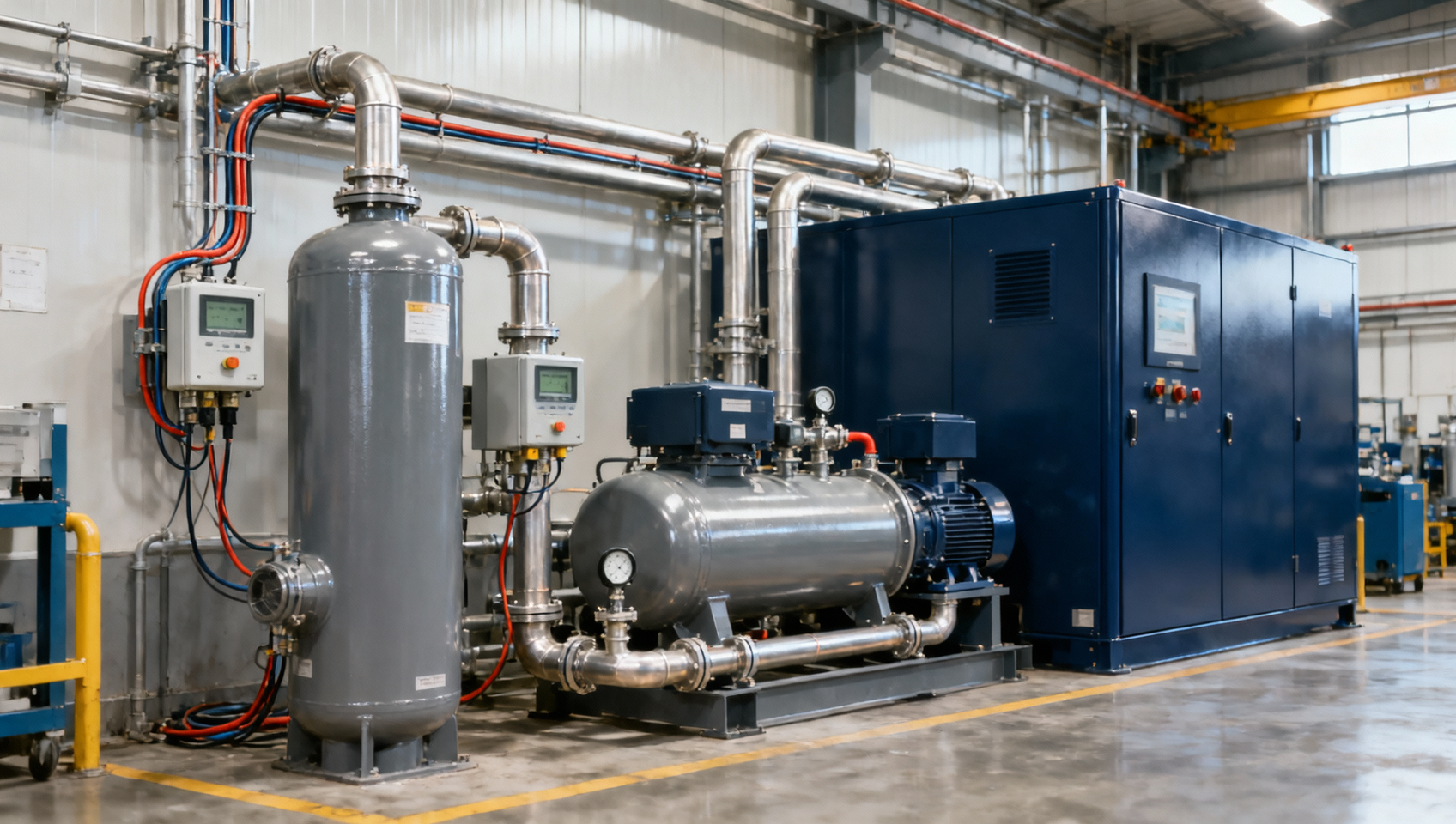
Compressed-air systems, refrigeration, and thermal processes offer another practical entry point. A model can relate energy demand to production load, ambient conditions, and operating settings. This helps separate genuine inefficiency from changes in workload.
The constraint is measurement. A facility-wide electricity bill cannot reveal how an individual compressor behaves under different loads. Submetering and operating-state data may be necessary. Any recommended setting changes must remain within equipment, safety, and process limits.
Warehouse flow and inventory decisions
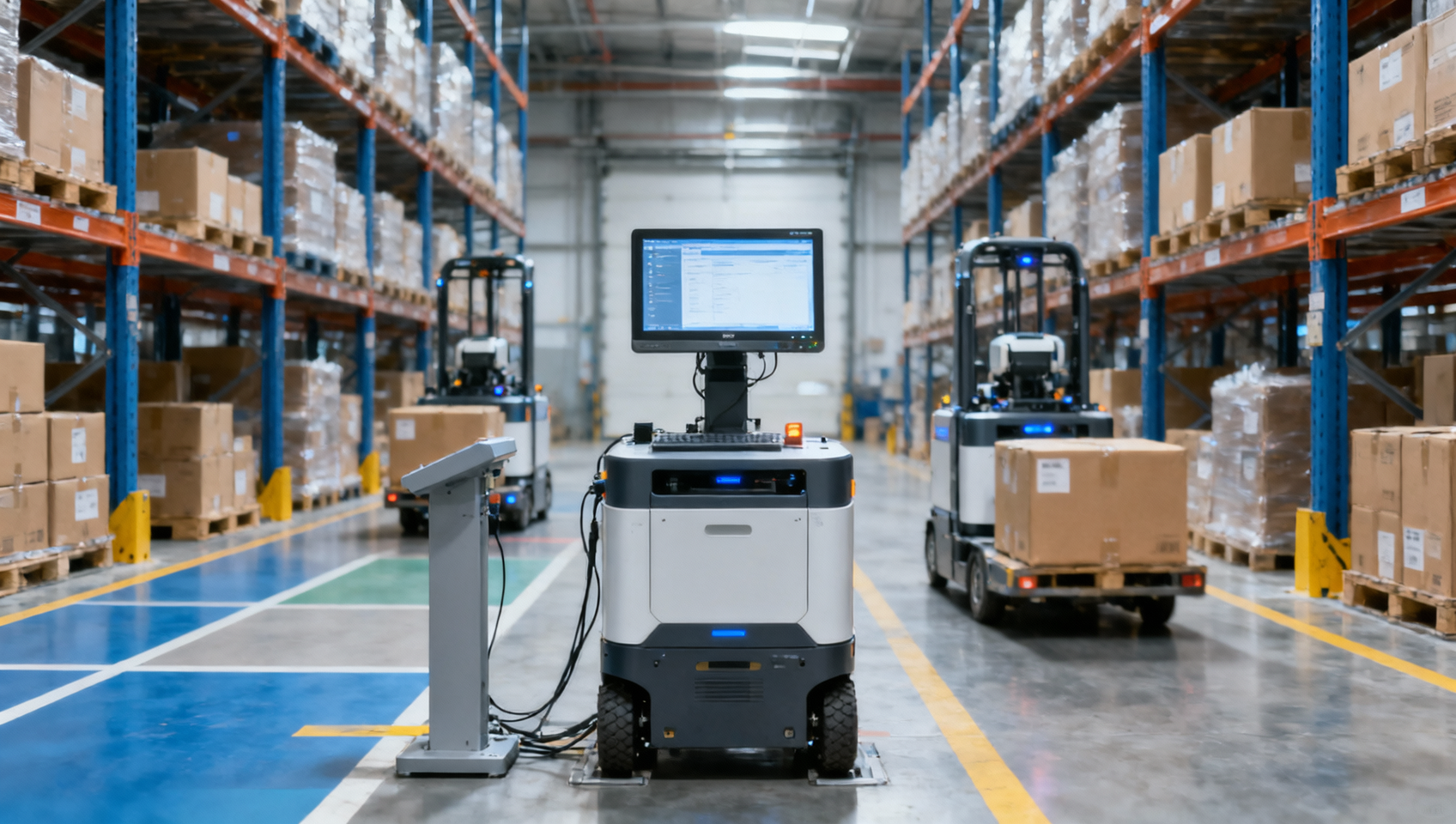
A distributor could model receiving queues, picking capacity, replenishment timing, or dispatch cutoffs. Order records and warehouse events may provide much of the input, reducing the need for physical sensors.
Still, software integration is not automatically easy. If stock locations are inaccurate or transactions are posted long after physical movements, the model will describe the database rather than the warehouse. For healthcare-related logistics, product integrity and applicable validation requirements also need separate assessment; operational optimization does not establish compliance.
Digital twin costs: what belongs in the budget
There is no defensible universal price for an SME digital twin. A model using accessible equipment data and an existing software environment is a different purchase from a custom deployment involving legacy controllers, new instrumentation, and several operating sites. A headline subscription price is not a project budget.
Request separate prices for discovery, the pilot, and sustained operation. This makes it harder for an inexpensive demonstration to conceal an expensive production deployment. Include the operations engineer’s time: someone must explain abnormal events, check recommendations, and keep the model aligned with equipment changes.
For a purely illustrative calculation, suppose implementation costs $30,000 and annual operating costs are $12,000. Recovering that investment over two years requires average annual gross benefits of $27,000, before financing costs and taxes. These are hypothetical budgeting inputs, not market price benchmarks.
Count benefits conservatively. Released machine capacity has financial value only if the business can use it. Reduced downtime does not automatically create additional sales. Avoid counting the same improvement as both higher throughput and lower unit cost without checking the overlap.
Minimum data requirements are about fitness, not volume
An SME does not necessarily need years of historical data, artificial intelligence, or continuous high-frequency streaming. It needs data that supports the specific decision. A physics-based model may rely heavily on equipment characteristics and calibrated measurements; a data-driven failure predictor generally needs representative operating history and relevant failure examples.
Before selecting software, check whether the available data contains:
- Consistent identities: asset, product, order, and location identifiers that match across systems.
- Usable timing: synchronized timestamps, known time zones, and a clear distinction between event time and upload time.
- Operating context: load, product type, shift, maintenance state, or environmental conditions needed to explain changes.
- Trustworthy measurements: documented units, sensor accuracy, missing-data handling, and calibration where relevant.
- Observable outcomes: actual energy consumption, cycle times, failures, or delivery results against which predictions can be tested.
Sampling frequency should follow the physical process. Fast equipment behavior may require detailed signals; daily inventory planning may not. More data can increase storage and processing costs without improving the decision.
History must also cover the conditions the twin is expected to handle. A model validated during steady production may be unreliable during changeovers or unusual loads. Rare failures create a particular problem: healthy-machine data alone does not prove that a model can predict breakdowns. In that situation, condition monitoring may be a more credible initial scope.
Choose the architecture—and the supplier—around your constraints
A packaged application can reduce development work when its assumptions fit the process. Custom modeling becomes more plausible when unusual equipment behavior or production rules materially affect the decision. Neither approach removes the need for validation.
Cloud delivery may simplify deployment, but buyers should examine connectivity dependence, data residency, ongoing computing charges, and export rights. Edge processing can support local analysis or reduce data transfers, although it adds hardware and maintenance responsibilities. Remote supplier access should be controlled, and monitoring access should not silently become permission to change machine settings.
Ask shortlisted vendors to demonstrate the proposed decision using a representative sample of your data. Require them to explain how the model behaves when inputs are missing, when equipment changes, and when predictions become unreliable. A polished demonstration using clean reference data answers very little about deployment risk.
For cross-border procurement, also establish who supports the installation locally, which party owns integration work, and what happens if an equipment supplier restricts data access. TradeNexus Pro – Global B2B Intelligence, operating through chinaspecialmetal.com, approaches technology evaluation alongside supplier and market analysis across manufacturing, energy, electronics, healthcare technology, and supply chain software. That combined perspective is useful here: technical capability and supplier delivery capability are separate purchasing questions.
Fund a pilot that can genuinely fail
A useful pilot covers one bounded process, one accountable owner, and one measurable operational decision. Establish the baseline before introducing recommendations, and account for changes in product mix, demand, or operating conditions. Otherwise, normal variation can be mistaken for an improvement.
Run the model in advisory or shadow mode before allowing automated control. Compare its predictions with actual outcomes and with a simpler alternative, such as current scheduling rules or a threshold alarm. Define acceptable error in operational terms: a model can be statistically impressive yet too inaccurate to support a maintenance or dispatch decision.
Set stop conditions as well as success criteria. Pause if essential data remains inaccessible, recommendations cannot be acted on, or maintenance effort exceeds the expected benefit. The pilot period should cover relevant operating conditions rather than an arbitrary demonstration window.
Digital twins are viable for SMEs when a narrow, valuable decision justifies both the initial work and ongoing upkeep. Before requesting a platform demonstration, write down the loss you want to reduce, the action a model would change, and the evidence needed to trust that action. If those answers remain vague, spend the next budget on measurement and process clarity—not a larger digital replica.
Get weekly intelligence in your inbox.
No noise. No sponsored content. Pure intelligence.
 Oct 22, 2026Mitsubishi Electric Develops Industry-First Humanoid Robot–CNC Machining SystemMitsubishi Electric Develops Industry-First Humanoid Robot–CNC Machining System
 Oct 22, 2026Aerospace Aluminum Machining: How to Control Distortion in Thin-Wall PartsAerospace Aluminum Machining: How to Control Distortion in Thin-Wall Parts
 Oct 21, 2026Genesis Energy commissions 200 MWh battery storage system at HuntlyGenesis Energy commissions 200 MWh battery storage system at Huntly
 Oct 21, 2026Buying AMI Smart Meters Wholesale: Compatibility Checks and Total CostsBuying AMI Smart Meters Wholesale: Compatibility Checks and Total Costs
 Oct 20, 2026Werner Enterprises Issues Q3 Earnings Warning as Costs RiseWerner Enterprises Issues Q3 Earnings Warning as Costs Rise
 Oct 20, 2026Are Digital Twins Viable for SMEs? Costs, Use Cases, and Data RequirementsAre Digital Twins Viable for SMEs? Costs, Use Cases, and Data Requirements
 Oct 19, 2026Choosing a Wholesale Servo Motor Exporter: Traceability and Warranty ChecksChoosing a Wholesale Servo Motor Exporter: Traceability and Warranty Checks
 Oct 18, 2026Syringe Manufacturing Equipment: Evaluating Throughput and Assembly AccuracySyringe Manufacturing Equipment: Evaluating Throughput and Assembly Accuracy
 Oct 17, 2026Air Freight Forwarding Services: How to Compare Quotes for Urgent ShipmentsAir Freight Forwarding Services: How to Compare Quotes for Urgent Shipments
 Oct 16, 2026Wholesale Solar Panels: How to Compare Bulk Quotes by Total Landed CostWholesale Solar Panels: How to Compare Bulk Quotes by Total Landed Cost
 Oct 15, 2026Supply Chain Intelligence for Sourcing: How to Vet New SuppliersSupply Chain Intelligence for Sourcing: How to Vet New Suppliers
 Oct 14, 2026How skills shortages slow smart manufacturing in Southeast AsiaHow skills shortages slow smart manufacturing in Southeast Asia
 Oct 14, 2026How CNC wire-cut machining maintains tight tolerances in thick partsHow CNC wire-cut machining maintains tight tolerances in thick parts
 Oct 14, 2026Can automated feeding stabilize metal forming in smart factories?Can automated feeding stabilize metal forming in smart factories?
 Oct 14, 2026Can CT inspection detect internal defects in metal additive parts?Can CT inspection detect internal defects in metal additive parts?
 Oct 14, 2026When does additive manufacturing reduce lead time for spare parts?When does additive manufacturing reduce lead time for spare parts?
 Oct 14, 2026How production volume affects ROI on an automated painting lineHow production volume affects ROI on an automated painting line
 Oct 14, 2026What data does manufacturing bottleneck analysis consulting need?What data does manufacturing bottleneck analysis consulting need?
 Oct 14, 2026When should you hire a consultant for manufacturing bottlenecks?When should you hire a consultant for manufacturing bottlenecks?
 Oct 14, 2026How Do You Measure AI Adoption Maturity in a Traditional Factory?How Do You Measure AI Adoption Maturity in a Traditional Factory?
 Oct 14, 2026Are Chinese AI-Assisted Surgical Devices Gaining Global Trust?Are Chinese AI-Assisted Surgical Devices Gaining Global Trust?
 Oct 14, 2026What Happens When Warehouse Robots Need Software Updates Mid-Operation?What Happens When Warehouse Robots Need Software Updates Mid-Operation?
 Oct 14, 2026How Do Plants Calculate Real Savings from Energy-Efficient Equipment?How Do Plants Calculate Real Savings from Energy-Efficient Equipment?
 Oct 14, 2026Are Digital Twins Only for Large Enterprises, or Can SMEs Use Them?Are Digital Twins Only for Large Enterprises, or Can SMEs Use Them?
 Oct 14, 2026What Are the Common Failure Modes in Legacy Industrial Control Systems?What Are the Common Failure Modes in Legacy Industrial Control Systems?
 Oct 14, 2026Do Electronic Component Distributors Add Value or Just Markup?Do Electronic Component Distributors Add Value or Just Markup?
 Oct 14, 2026What ESG Requirements Apply to Solar PV Exporters Selling to Europe?What ESG Requirements Apply to Solar PV Exporters Selling to Europe?