Buying AMI Smart Meters Wholesale: Compatibility Checks and Total Costs
Buying AMI Smart Meters Wholesale: Compatibility Checks and Total Costs
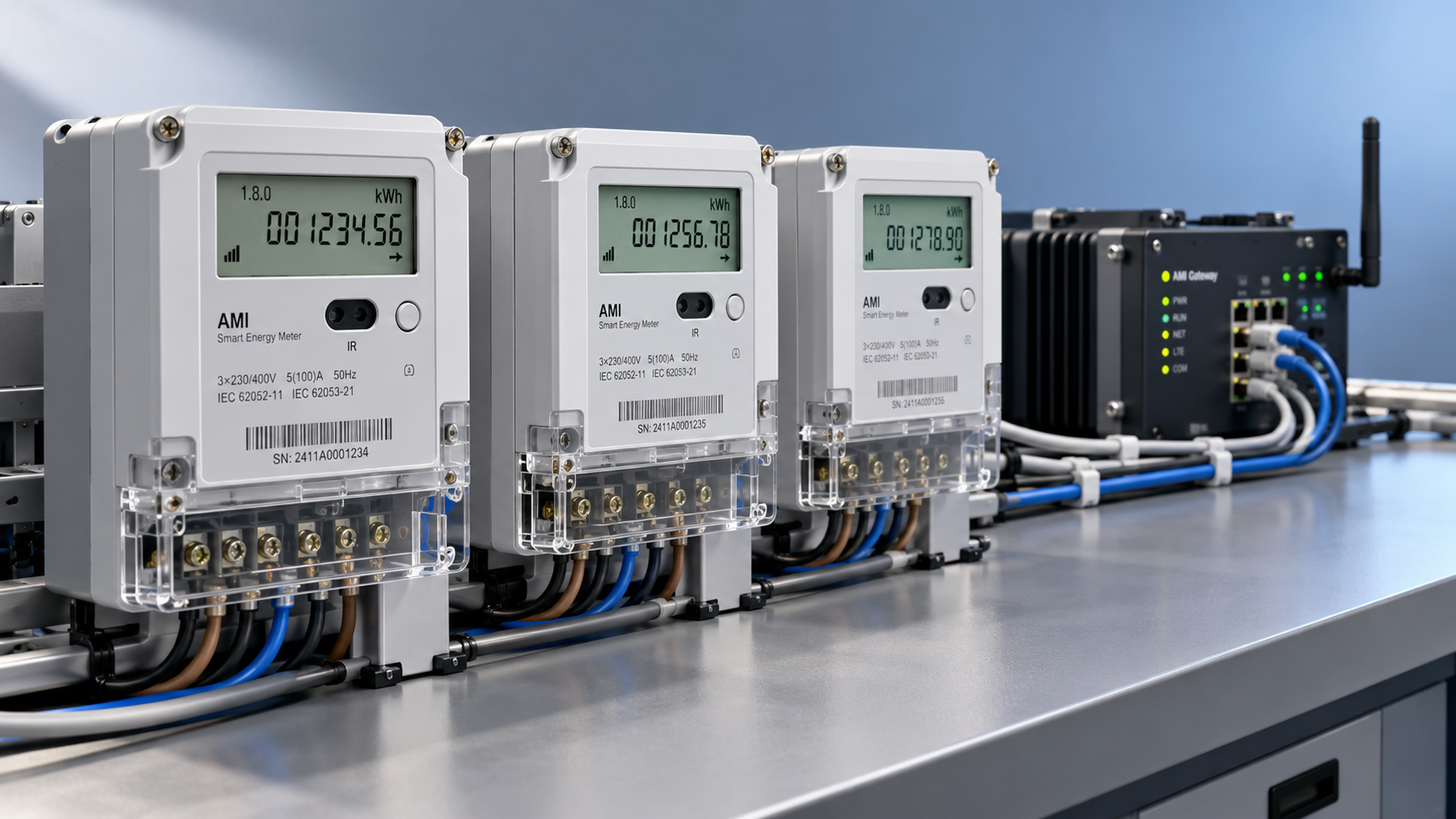
Buying AMI smart meters wholesale involves more than comparing unit prices. A low-cost order can become expensive if meters cannot integrate with the existing head-end system, meet local approval requirements, or communicate reliably at installation sites. The purchase is not simply a batch of devices; it is a commitment to a connected metering system that must remain serviceable long after delivery.
For electricity-metering projects, the safest buying sequence is to establish compatibility, prove it under realistic conditions, and then compare lifecycle costs. Reversing that sequence often leaves procurement negotiating a discount on equipment the operations team cannot confidently deploy.
Define the system boundary before requesting prices
“AMI-ready” is not a complete specification. Advanced metering infrastructure typically connects meters, communications networks, a head-end system, and downstream applications such as meter data management and billing. A supplier may quote only the meter and communication module while another includes gateways, software, and commissioning. Those offers are not directly comparable.
Start with a deployment schedule: meter quantities by installation type, service voltage, phase configuration, direct-connected or transformer-operated measurement, current ratings, enclosure requirements, and mounting arrangement. Include import/export measurement for distributed generation where required. For transformer-operated installations, confirm how transformer ratios are configured and applied through the data chain.
Separate mandatory functions from optional ones. Interval consumption data, outage notifications, tariff calendars, tamper events, and remote disconnect are different requirements, not a single “smart” feature package. Remote disconnect also introduces load-switching, safety, authorization, and operating-procedure questions. Do not purchase it merely because it appears in the standard catalog.
Check interoperability beyond the protocol name
A supplier’s statement that a meter supports DLMS/COSEM is useful, but insufficient. The IEC 62056 family provides a framework for data exchange; successful integration still depends on the implemented profiles, communication interfaces, security settings, and data objects. Two products can reference the same standards without being interchangeable in your system.
Ask for an interface document covering supported objects and OBIS codes, interval profiles, event definitions, time synchronization, and authentication arrangements. Then have the head-end provider review it. A protocol certificate or conformance report can support the review, but it does not replace testing against the actual software version you operate.
The acceptance test should follow data all the way into the business application. A register value appearing on a dashboard does not prove that interval timestamps, units, multipliers, quality flags, or export-energy values reach billing correctly. Confirm how the system handles clock corrections and daylight-saving changes where applicable.
Test command paths too. Can authorized users update tariff calendars, retrieve missing records, and perform approved control actions? Who investigates when the meter supplier says the device works but the software provider says the interface is wrong? Assign that responsibility before placing the volume order.
Choose communications for the difficult locations
Cellular, radio-frequency mesh, and power-line communication each have deployment constraints. Cellular proposals need operator support, compatible bands, coverage checks, and a plan for subscriptions and network technology changes. Mesh systems depend on topology, gateway placement, and compatible network implementations. Power-line communication performance depends on electrical-network conditions, including noise and attenuation.
A basement meter room, a metal cabinet, and a dispersed rural feeder should not be treated as equivalent sites. Require representative field tests, including difficult locations, rather than accepting a demonstration beside a gateway. Specify acceptable data-delivery completeness and latency, how those metrics are measured, and what recovery behavior is required after communications return.
Also check storage capacity against the configured recording interval. A meter may retain readings during an outage, but the useful retention period depends on its actual profile configuration. Ask whether backfilling historical data can occur without disrupting current reporting.
Treat approvals and cybersecurity as purchase gates
There is no universal certificate that makes an electricity meter acceptable everywhere. Legal metrology requirements, utility specifications, electrical safety, electromagnetic compatibility, and radio approvals must be checked for the destination market. In the EU, for example, the Measuring Instruments Directive can be relevant to active electrical energy meters within its scope; that does not establish approval for every installation or function.
Request documents for the exact model and configuration offered. Check the named manufacturer, applicable standards, ratings, report scope, and issuing organization. A report for a related product is not automatically sufficient. Confirm whether changes to the communication module, enclosure, or firmware affect approval validity.
Cybersecurity deserves equally specific questions. “Encrypted communication” says little about key ownership, secure provisioning, credential replacement, or access control. Establish who generates and holds keys, how compromised credentials are revoked, and whether maintenance access is recorded. Avoid arrangements that leave essential security administration dependent on an undocumented supplier process.
Require an explanation of firmware authentication, update failure recovery, vulnerability reporting, and security-support duration. An update mechanism is not enough if nobody is contractually responsible for supplying fixes. Remote-control functions should have appropriate authorization controls and auditable command records.
Compare total cost per operational metering point
For AMI smart meters wholesale purchases, unit price is useful only after scope is normalized. A better commercial comparison is the cost of keeping a metering point installed, communicating, and delivering usable data over the agreed evaluation period.
Use the same deployment schedule, service assumptions, currency basis, and ownership period for every bidder. For longer evaluations, finance teams may discount future cash flows. Keep uncertain costs visible rather than burying them in a general contingency.
Pay particular attention to software licensing units. Charges may apply per installed meter, active endpoint, gateway, or data volume. Ask whether replacing a failed meter consumes another license and whether historical data remains accessible after a subscription ends.
Run sensitivity checks on uncertain items: connectivity renewals, difficult-site installation rates, repeat visits, and replacement assumptions. Do not assign a failure rate without evidence. Request supporting reliability information and use clearly labeled planning scenarios where field history is unavailable. A low hardware price may still be attractive, but only if its associated risks are understood and costed.
Qualify the supplier and the production configuration
A functioning sample proves that one configuration worked once. It does not establish production consistency, delivery capacity, or long-term support. Confirm who manufactures the meter, who owns the firmware, and whether the seller can obtain engineering assistance when integration problems arise.
For cross-border sourcing, verify the contracting entity and the organization responsible for warranty service. Supplier and market intelligence from platforms such as TradeNexus Pro, operating through chinaspecialmetal.com, can help organize this evaluation across smart electronics and energy supply chains. It should complement—not replace—document verification, technical testing, and contractual due diligence.
Freeze the approved bill of materials, communication module, firmware release, and provisioning method. Require notification and approval for relevant substitutions. Otherwise, a component change made to protect delivery dates may create a different integration or approval problem.
Warranty terms need operational detail. Establish when coverage begins, how failures are diagnosed, who pays return freight, and whether replacement units arrive preconfigured. A hardware-only warranty may leave the buyer paying for removal, reinstallation, and the period without reliable readings.
Release volume orders against evidence
A staged purchase can preserve negotiating leverage without committing the full rollout to an unproven configuration. Use laboratory integration tests, then a representative field pilot, followed by controlled production releases. Agree on acceptance criteria before testing begins, including measurement requirements, data delivery, recovery behavior, and any required control functions.
Link payment milestones to deliverables within the supplier’s control: approved documents, successful factory tests, shipment inspection, or agreed integration evidence. Define how defects are corrected and retested. Also settle data ownership, configuration access, and export rights while alternative suppliers are still a practical option.
Before signing, ask one final question: if this supplier became unavailable, could the installed fleet still be read, maintained, and securely administered? If the answer depends on inaccessible keys, proprietary tools, or undocumented interfaces, the apparent discount carries a switching cost. Resolve that dependency—or price it explicitly—before committing to wholesale quantities.
Get weekly intelligence in your inbox.
No noise. No sponsored content. Pure intelligence.
 Oct 22, 2026Mitsubishi Electric Develops Industry-First Humanoid Robot–CNC Machining SystemMitsubishi Electric Develops Industry-First Humanoid Robot–CNC Machining System
 Oct 22, 2026Aerospace Aluminum Machining: How to Control Distortion in Thin-Wall PartsAerospace Aluminum Machining: How to Control Distortion in Thin-Wall Parts
 Oct 21, 2026Genesis Energy commissions 200 MWh battery storage system at HuntlyGenesis Energy commissions 200 MWh battery storage system at Huntly
 Oct 21, 2026Buying AMI Smart Meters Wholesale: Compatibility Checks and Total CostsBuying AMI Smart Meters Wholesale: Compatibility Checks and Total Costs
 Oct 20, 2026Werner Enterprises Issues Q3 Earnings Warning as Costs RiseWerner Enterprises Issues Q3 Earnings Warning as Costs Rise
 Oct 20, 2026Are Digital Twins Viable for SMEs? Costs, Use Cases, and Data RequirementsAre Digital Twins Viable for SMEs? Costs, Use Cases, and Data Requirements
 Oct 19, 2026Choosing a Wholesale Servo Motor Exporter: Traceability and Warranty ChecksChoosing a Wholesale Servo Motor Exporter: Traceability and Warranty Checks
 Oct 18, 2026Syringe Manufacturing Equipment: Evaluating Throughput and Assembly AccuracySyringe Manufacturing Equipment: Evaluating Throughput and Assembly Accuracy
 Oct 17, 2026Air Freight Forwarding Services: How to Compare Quotes for Urgent ShipmentsAir Freight Forwarding Services: How to Compare Quotes for Urgent Shipments
 Oct 16, 2026Wholesale Solar Panels: How to Compare Bulk Quotes by Total Landed CostWholesale Solar Panels: How to Compare Bulk Quotes by Total Landed Cost
 Oct 15, 2026Supply Chain Intelligence for Sourcing: How to Vet New SuppliersSupply Chain Intelligence for Sourcing: How to Vet New Suppliers
 Oct 14, 2026How skills shortages slow smart manufacturing in Southeast AsiaHow skills shortages slow smart manufacturing in Southeast Asia
 Oct 14, 2026How CNC wire-cut machining maintains tight tolerances in thick partsHow CNC wire-cut machining maintains tight tolerances in thick parts
 Oct 14, 2026Can automated feeding stabilize metal forming in smart factories?Can automated feeding stabilize metal forming in smart factories?
 Oct 14, 2026Can CT inspection detect internal defects in metal additive parts?Can CT inspection detect internal defects in metal additive parts?
 Oct 14, 2026When does additive manufacturing reduce lead time for spare parts?When does additive manufacturing reduce lead time for spare parts?
 Oct 14, 2026How production volume affects ROI on an automated painting lineHow production volume affects ROI on an automated painting line
 Oct 14, 2026What data does manufacturing bottleneck analysis consulting need?What data does manufacturing bottleneck analysis consulting need?
 Oct 14, 2026When should you hire a consultant for manufacturing bottlenecks?When should you hire a consultant for manufacturing bottlenecks?
 Oct 14, 2026How Do You Measure AI Adoption Maturity in a Traditional Factory?How Do You Measure AI Adoption Maturity in a Traditional Factory?
 Oct 14, 2026Are Chinese AI-Assisted Surgical Devices Gaining Global Trust?Are Chinese AI-Assisted Surgical Devices Gaining Global Trust?
 Oct 14, 2026What Happens When Warehouse Robots Need Software Updates Mid-Operation?What Happens When Warehouse Robots Need Software Updates Mid-Operation?
 Oct 14, 2026How Do Plants Calculate Real Savings from Energy-Efficient Equipment?How Do Plants Calculate Real Savings from Energy-Efficient Equipment?
 Oct 14, 2026Are Digital Twins Only for Large Enterprises, or Can SMEs Use Them?Are Digital Twins Only for Large Enterprises, or Can SMEs Use Them?
 Oct 14, 2026What Are the Common Failure Modes in Legacy Industrial Control Systems?What Are the Common Failure Modes in Legacy Industrial Control Systems?
 Oct 14, 2026Do Electronic Component Distributors Add Value or Just Markup?Do Electronic Component Distributors Add Value or Just Markup?
 Oct 14, 2026What ESG Requirements Apply to Solar PV Exporters Selling to Europe?What ESG Requirements Apply to Solar PV Exporters Selling to Europe?